
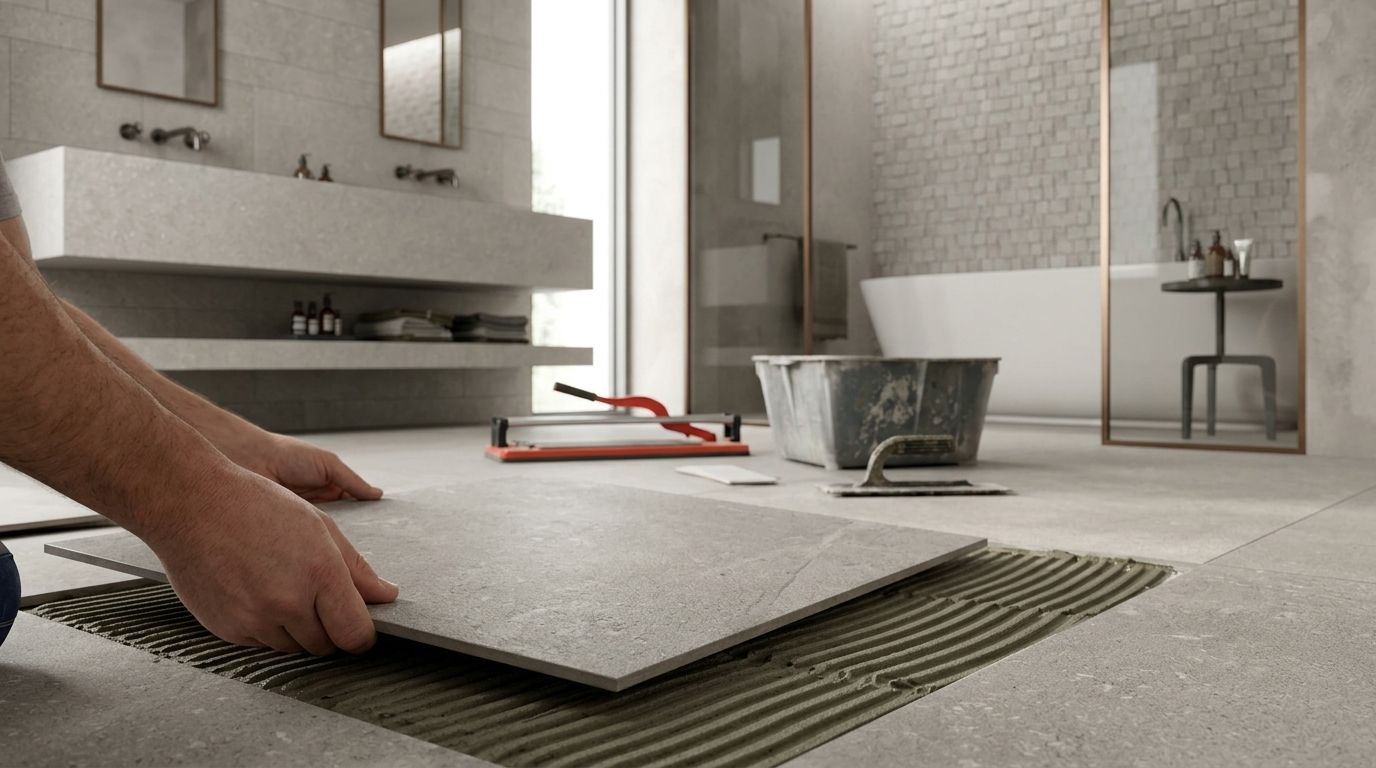
Bathroom tiling cost in Melbourne depends on room size, tile choice, and how much of the existing surface has to come out before new tiles go down — there's no single flat rate that applies to every job in 2026. The line most quotes miss is waterproofing: reinstating a compliant membrane under Australian Standard AS 3740 adds labour and material time that a bare square-metre rate never captures.
- Bathroom tiling cost in Melbourne moves with room size, tile material, and how much demolition and waterproofing the job needs.
- Porcelain tiles cost more to buy and lay than ceramic but hold up better in constant moisture.
- AS 3740 sets the waterproofing standard for Victorian wet areas, and substrate repair is the most common hidden cost.
- Melbourne Tiling Group quotes bathroom jobs after an on-site look at layout, tile pick, and existing surface condition.
- DIY tiling cuts labour spend upfront, but a failed membrane usually costs more to fix than hiring correctly the first time.
Why this matters
A bathroom is a wet area with drainage falls, waterproofing membranes, and tight corners around the vanity, shower base, and toilet. That combination means labour hours per square metre run higher than a living room floor or a splashback job.
Getting a bathroom tiling quote wrong usually happens for one reason: the quote priced the tiles and the tiling, but not the demolition, substrate repair, or membrane reinstatement underneath. Melbourne Tiling Group prices bathroom jobs after checking what's under the existing tile, not just the room dimensions, because that's where cost blowouts actually come from.
What determines bathroom tiling cost in Melbourne
The factors below move the price up or down independent of each other — a small bathroom with poor waterproofing can cost more to fix properly than a larger one with sound substrate.
| Factor | Impact on cost | Why it matters |
|---|---|---|
| Room size and layout | Higher with more cuts and corners | Niches, hobs, and step-downs add labour hours per square metre |
| Existing tile removal | Adds cost before tiling starts | Old adhesive and uneven substrate need levelling |
| Waterproofing condition | Can be the largest line item | AS 3740 compliance is mandatory in wet areas |
| Tile material | Porcelain and stone cost more than ceramic | Density and cutting time differ by material |
| Tile size and pattern | Large-format and herringbone add labour | More precise setting-out and fewer grout lines to hide error |
| Plumbing relocation | Separate trade cost | Moving a drain or tap point isn't a tiling cost, but it delays the job |
How tile material affects your bathroom tiling cost
Ceramic tile is the entry point for bathroom wall and floor tiling. It's easier to cut, lighter to handle, and suits most residential bathrooms that don't need heavy-duty wear resistance. Best for budget-conscious renovations and rental properties. Verdict: Buy if you want the lowest tile spend without sacrificing a finished look.
Porcelain tile costs more per square metre than ceramic because it's denser and harder to cut, but it resists moisture and chipping better over years of shower use. Best for family bathrooms and ensuites that get daily heavy use. Verdict: Buy if you're tiling a bathroom you expect to keep for a decade or more.
Natural stone (marble, travertine, limestone) sits at the top of the material range and needs sealing that ceramic and porcelain don't. Best for feature walls or heritage-style bathrooms where the look matters more than low maintenance. Verdict: Hold unless you're committed to periodic resealing — stone in a wet area without upkeep stains and etches faster than either alternative.
Why bathroom tiling cost varies from quote to quote
- Substrate condition — a bathroom being stripped back to studs costs more to prep than one with sound, dry sheeting underneath.
- Waterproofing scope — full membrane replacement under AS 3740 costs more than spot-repairing an already-compliant system.
- Tile size — large-format tiles need a flatter substrate and more careful setting-out, which adds time even though there are fewer grout lines.
- Shower configuration — a hobless, step-free shower base needs more precise falls to the drain than a standard shower base.
- Access and demolition — apartments with lift-only access or heritage homes with older waste pipework add time before tiling even starts.
- Trade sequencing — if plumbing, electrical, or waterproofing trades run behind, the tiler's schedule (and sometimes cost) shifts too.
“If your tiler can't tell you which waterproofing membrane they're using and why, get a second quote before you sign anything.”
Get a bathroom tiling quote
An on-site assessment covers layout, tile choice, and substrate condition before you commit.
Is DIY bathroom tiling cheaper than hiring a tiler in Melbourne?
DIY tiling cuts the labour line from your budget, but the risk sits in waterproofing, not tile-laying. A membrane that fails compliance with AS 3740 has to be stripped and redone properly, and that rework usually costs more than paying a tiler to get it right the first time. Verdict: Skip DIY for anything involving a shower base or hob — save DIY attempts for tiling that doesn't touch a wet-area membrane.
How long does bathroom tiling take in Melbourne?
A standard bathroom retile runs across several stages — demolition, waterproofing (with required curing time), tiling, and grouting — and each stage has to finish and often cure before the next starts. Waterproofing membranes need curing time before tiles go down, so a rushed schedule is usually the first sign a job will need callbacks. Talk to your tiler about a realistic stage-by-stage timeline before work starts, not just a single end date.
Do Victorian bathrooms legally need waterproofing before tiling?
Yes — AS 3740 is the Australian Standard governing waterproofing of domestic wet areas, and Victorian building requirements reference it for bathrooms, ensuites, and laundries. Skipping or under-scoping waterproofing isn't just a durability issue; it's a compliance issue that surfaces at resale or insurance time. Any quote for bathroom tiling in Melbourne should state what waterproofing standard it's built to, not just the tile brand.
FAQ
What's the biggest hidden cost in bathroom tiling in Melbourne?
Waterproofing and substrate repair is the most common hidden cost in bathroom tiling in Melbourne. Quotes that only price tiles and labour often miss what's underneath the existing surface.
Is porcelain or ceramic tile better for a Melbourne bathroom?
Porcelain tile resists moisture and wear better than ceramic tile over years of daily use, though it costs more to buy and cut. Ceramic suits bathrooms where budget matters more than long-term durability.
Does bathroom tiling cost more than kitchen tiling in Melbourne?
Bathroom tiling generally involves more labour per square metre than kitchen tiling because of waterproofing, drainage falls, and tighter corners around fixtures. Kitchen tiling is usually a flatter, more open layout with fewer wet-area requirements.
Can you tile over existing bathroom tiles?
Tiling over existing tiles is sometimes possible if the substrate and waterproofing underneath are sound, but it's not standard practice for a full bathroom retile. Most jobs remove old tiles first to check the membrane condition.
How do you get an accurate bathroom tiling quote in Melbourne?
An accurate quote comes from an on-site assessment that checks room size, tile choice, and existing substrate and waterproofing condition, not a phone estimate. Melbourne Tiling Group prices bathroom jobs this way to avoid mid-job cost surprises.
What tile size is best for a small Melbourne bathroom?
Larger-format tiles reduce the number of grout lines in a small bathroom, which can make the room feel more open, but they need a flatter substrate to lay correctly. Smaller tiles suit bathrooms with more curves or step-downs where cutting large tiles gets impractical.
Do you need a permit for bathroom retiling in Melbourne?
A straight retile without moving plumbing or structural walls typically doesn't need a building permit, but waterproofing still has to meet AS 3740. Check with your tiler or builder if the job involves moving a drain, wall, or window.
One last thing
The part of a bathroom tiling quote that separates a fair price from a cheap one isn't the tile brand — it's whether the waterproofing scope is written down at all. A quote that names the membrane system and states it meets AS 3740 is doing more for your bathroom's lifespan in 2026 than an extra coat of premium tile ever will.