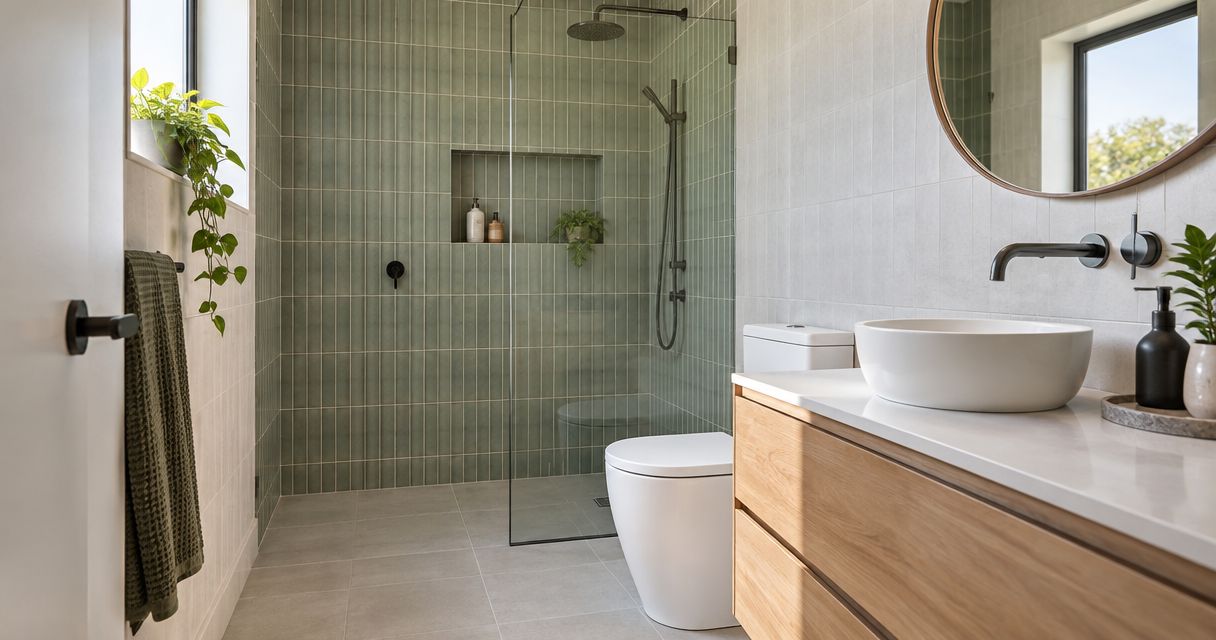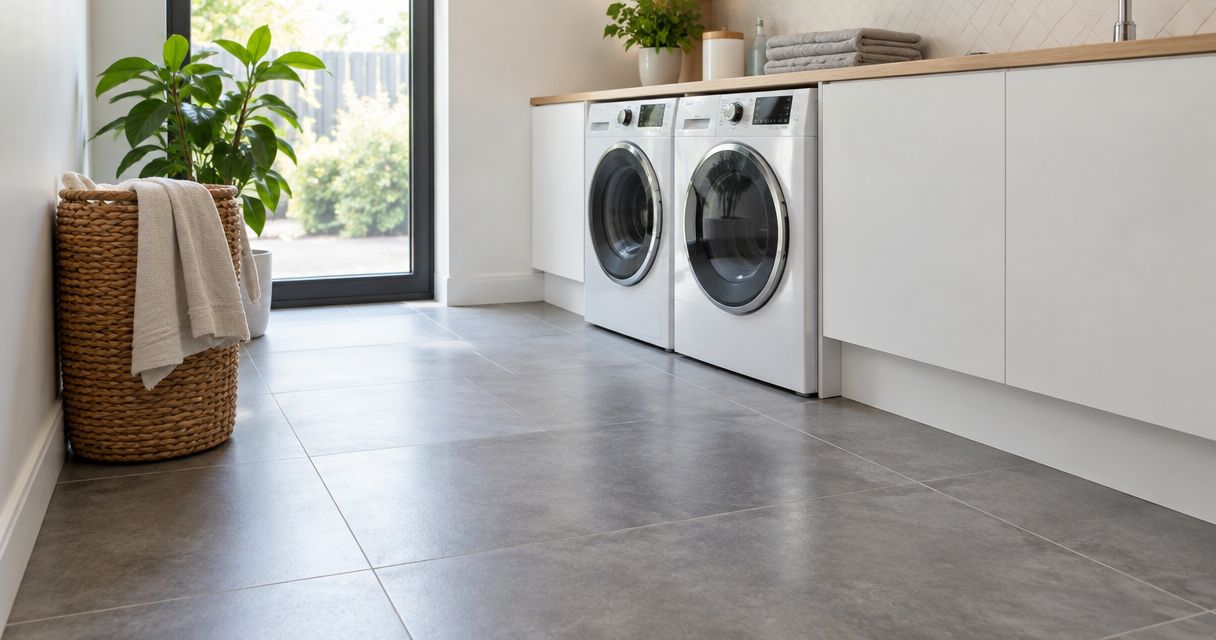
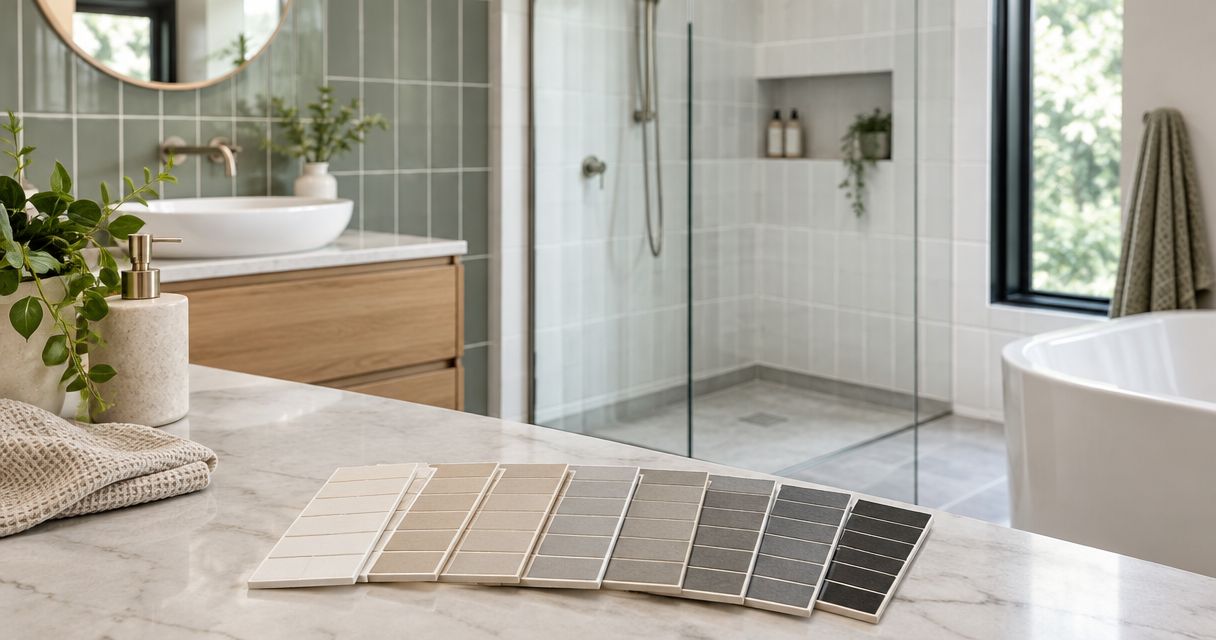
Best overall: light grey for cool, neutral tiles. Best for warm stone-look tiles: sand or beige. Best for white bathroom walls: off-white. For your 2026 Melbourne bathroom renovation, choose grout against the actual tile, then check the combination under your bathroom lighting before installation.
- For the best grout colours for bathroom tiles, Melbourne homeowners should match the tile’s undertone before choosing contrast.
- Light grey is the default for cool neutral tiles; beige suits warm stone-look finishes.
- Off-white softens white wall tiles, while charcoal blends with dark floors.
- Melbourne Tiling Group provides bathroom tiling services for homeowners planning wall and floor installations.
Why this matters
Grout changes how you read the whole tiled surface. A close colour match lets the tiles blend together; a contrasting joint outlines every tile and makes the laying pattern more noticeable.
That matters in a small ensuite, where a strong grid can compete with the vanity, fittings and tile pattern. It also matters on a shower floor, where cleaning marks and surface deposits affect the appearance between cleans.
Melbourne Tiling Group provides wall and floor tiling services for residential and commercial projects. For bathroom tiling, settle the grout choice alongside the tile layout—not after the tiles are fixed and the grout is ready to mix.
What makes the best bathroom grout colour?
Use these criteria to narrow your 2026 shortlist:
- Tile undertone: Blue-grey tiles need a different neutral from cream, beige or warm stone-look tiles. Compare colours beside the tile, not from memory.
- Visual contrast: Matching grout quietens the joints. Contrasting grout makes the tile shape and laying pattern stand out.
- Cleaning visibility: Pale grout shows dark dirt clearly. Dark grout makes pale residue easier to see. Neither colour removes the need for cleaning.
- Room lighting: Daylight and electric lighting change how the combination looks. Check samples in the room where you will use them.
- Grout suitability: Colour is only the finish decision. The grout must also suit the tile, joint width and application.
Choose the grout colour you like after checking the practical details—not instead of checking them. A good-looking joint still needs suitable materials and careful installation.
Best bathroom grout colours at a glance
| Grout colour | Best for | Standout feature | Key limitation |
|---|---|---|---|
| Light grey | Cool, neutral bathroom tiles | Soft joint definition without a strong grid | Looks cold beside some cream tiles |
| Warm grey or greige | Mixed warm and grey finishes | Connects grey tiles with warmer room finishes | The wrong undertone looks muddy |
| Off-white | White bathroom wall tiles | Keeps white tiled walls visually quiet | Dark dirt and discolouration remain noticeable |
| Sand or beige | Warm stone-look bathroom tiles | Blends with cream and sandy tile tones | Clashes with distinctly blue-grey tiles |
| Charcoal | Dark bathroom floor tiles | Reduces contrast between dark tiles and joints | Pale residue stands out |
These are colour families, not interchangeable shade names. A light grey from one grout range is not automatically a match for another, so approve the actual material rather than a colour description alone.
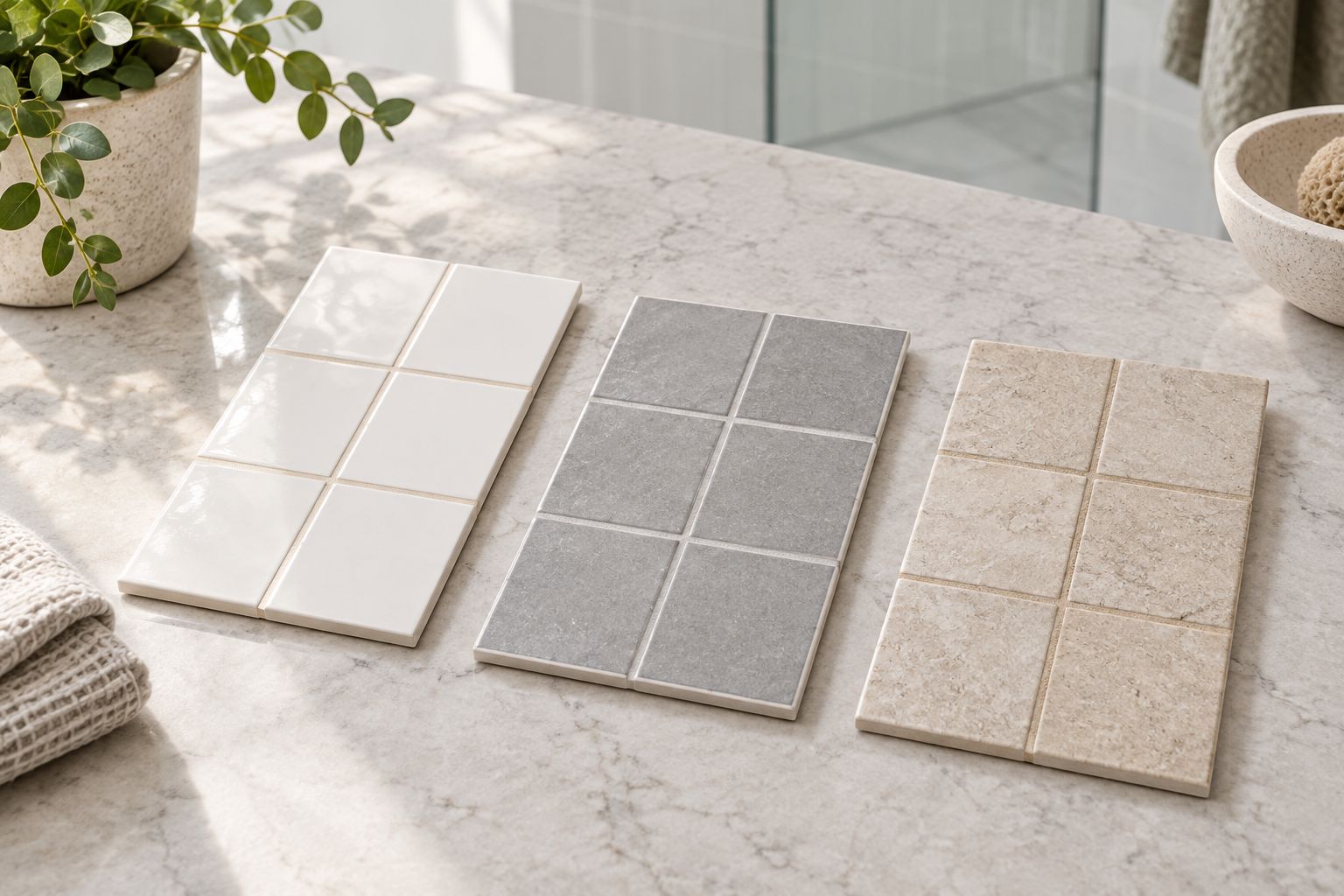
1. Light grey: best grout for cool neutral bathroom tiles
Light grey is the strongest starting point for cool grey, pale concrete-look and neutral porcelain tiles. It gives the joints some definition without drawing a dark outline around every tile.
Choose a shade close to the tile’s background colour, not its darkest vein. With patterned tiles, step back from the sample to judge whether the grout connects the surface or interrupts it.
Light grey pros:
- Softens the contrast between pale tiles and joints.
- Suits a restrained, cool-toned bathroom palette.
- Leaves tile texture more noticeable than a dark grid.
Light grey cons:
- Blue-toned shades look cold beside cream finishes.
- Dirt and pale deposits are still visible.
Best for: Cool neutral wall and floor tiles where you want a quiet finish.
For a bathroom with grey floors and white walls, you do not need identical grout everywhere. Match each tiled surface first, then check that the two grout colours work together at the floor-to-wall junction.
Verdict: Buy light grey for cool neutral tiles, after approving a sample.
2. Warm grey: best grout for mixed warm and grey finishes
Warm grey, often called greige, sits between grey and beige. It is a useful option when your bathroom combines grey tiles with timber-look cabinetry, cream paint or other warm finishes.
The important detail is the undertone. A warm grey that suits one tile can look brown, pink or muddy beside another, so take the actual tile and nearby finishes into the comparison.
Warm grey pros:
- Connects grey tiles with warmer room finishes.
- Creates less contrast than a distinctly dark joint.
- Offers a middle ground between cool grey and beige.
Warm grey cons:
- An unsuitable undertone can dominate pale tiles.
- It is not a reliable match for every grey tile.
Best for: Bathrooms mixing grey tiles with warm cabinetry or cream finishes.
Keep the comparison simple. Put the sample beside the vanity finish and wall colour, then remove any shade that makes the tile look noticeably colder or dirtier than it does on its own.
Verdict: Buy warm grey for a mixed palette; skip it when the sample looks muddy.
3. Off-white: best grout for white bathroom wall tiles
Off-white suits white wall tiles when you want the tiled area to read as a surface rather than a pattern of individual pieces. It gives a softer result than dark contrasting joints.
Match the warmth carefully. A creamy off-white beside a crisp, cool white tile creates visible contrast even though both colours appear pale on the sample chart.
Off-white pros:
- Keeps the joint pattern visually restrained.
- Lets white tile texture and shape remain the focus.
- Suits bathrooms where other finishes provide the contrast.
Off-white cons:
- Dark dirt and discolouration show clearly.
- A mismatched creamy shade can make cool white tiles look blue.
Best for: White bathroom walls where you want subtle joints.
Treat the shower floor as a separate decision. Choosing off-white for the walls does not mean you must use it underfoot, particularly where the floor tile has a different colour or texture.
For your 2026 selection, compare off-white with a pale neutral rather than assuming the whitest sample is the closest match.
Verdict: Buy off-white for matched white walls; hold the floor choice until sampled.
4. Sand or beige: best grout for warm stone-look tiles
Sand and beige grout suit tiles with cream, limestone-look or warm sandy backgrounds. A close match lets the surface pattern carry through without a cool grey joint cutting across it.
Choose from the tile’s main background, not an isolated vein. With tiles that vary noticeably from piece to piece, include that variation in your sample arrangement before deciding.
Sand or beige pros:
- Blends with warm stone-look tile backgrounds.
- Keeps cream tiles from being outlined in cool grey.
- Supports a consistent warm bathroom palette.
Sand or beige cons:
- Yellow-toned shades can clash with cooler fittings and finishes.
- A strong beige can compete with subtle tile variation.
Best for: Warm stone-look bathroom tiles and cream-toned finishes.
Natural stone needs an additional check. Confirm the grout’s compatibility and any sealing or staining precautions with the tile and grout suppliers; a suitable colour does not establish material compatibility.
Do not choose beige just because the tile is described as stone-look. Some stone-look tiles have cool backgrounds and need a different neutral.
Verdict: Buy sand or beige for a warm tile background, not for the label alone.
5. Charcoal: best grout for dark bathroom floor tiles
Charcoal suits dark grey and black floor tiles when you want the joints to recede. Against white tiles, the same colour does the opposite: it creates a strong graphic grid.
Use charcoal as a deliberate contrast decision. On a pale feature wall, it makes the tile layout and joint consistency more noticeable, so approve the pattern as well as the colour.
Charcoal pros:
- Reduces joint contrast on dark tiled floors.
- Defines geometric patterns when used against pale tiles.
- Connects with a darker bathroom palette.
Charcoal cons:
- Pale soap and mineral deposits stand out.
- Strong contrast highlights joint and layout irregularities.
Best for: Dark bathroom floors where you want a closely matched joint.
Dark grout is not a maintenance shortcut. You still need to remove residue using cleaning products suitable for the tile and grout, rather than choosing a stronger cleaner because the joint looks marked.
Start with charcoal rather than assuming absolute black is necessary. Compare both against the tile before committing.
Verdict: Buy charcoal for dark floors; skip it on pale tiles unless you want a grid.
How the colours are ranked
This 2026 ranking prioritises tile compatibility, controlled contrast and practical cleaning visibility. It is a selection guide, not a claim that one colour performs better as a grout material.
Light grey leads as a starting point for cool neutral tiles. Each alternative serves a different brief: mixed finishes, white walls, warm stone-look tiles or dark floors. Your actual tile sample takes priority over the ranking.
Check the grout before installation
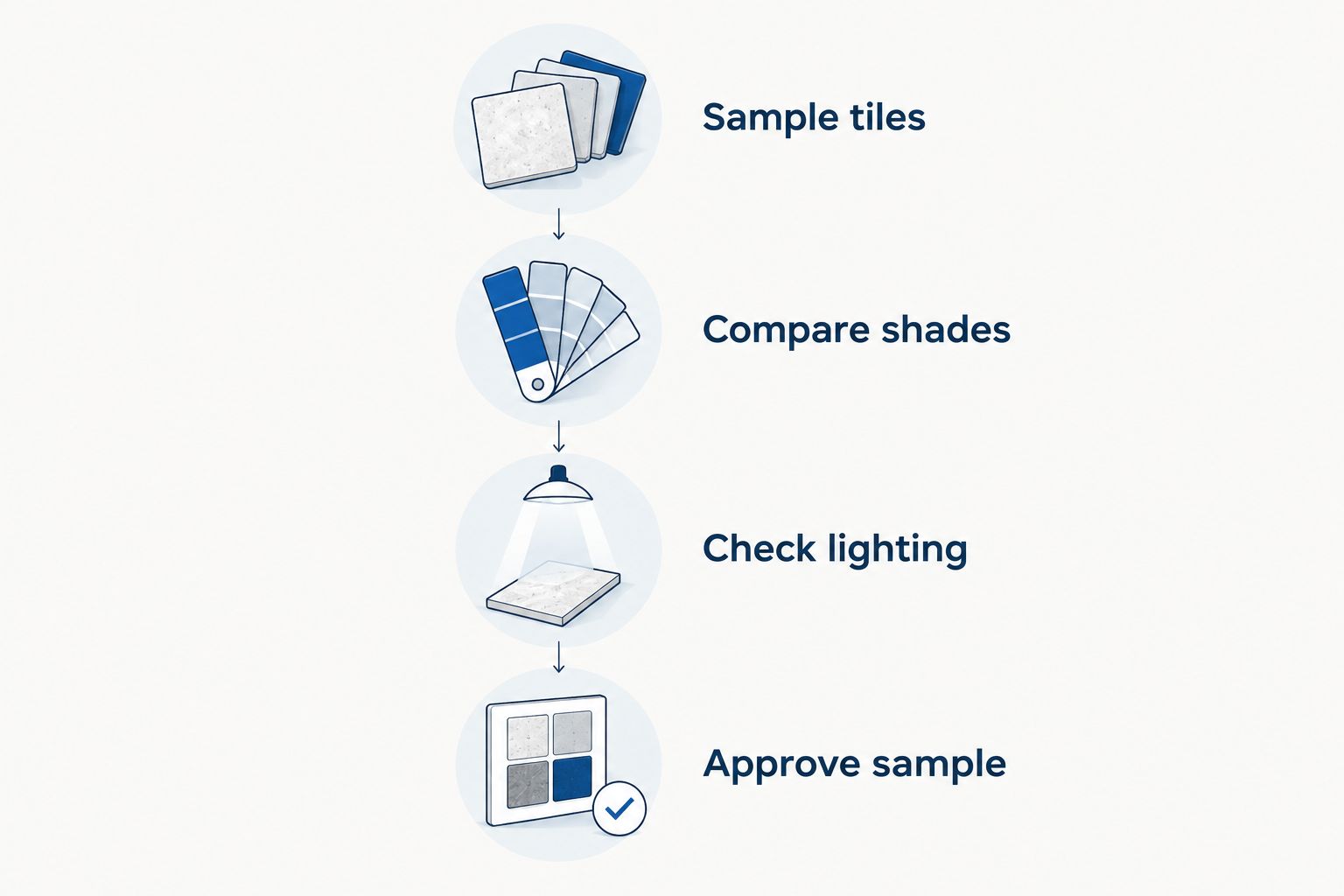
Use this sequence before approving your bathroom tiling materials:
- Sample tiles: Arrange 2 tile samples, including any noticeable variation in pattern or tone. Add a floor sample if you are choosing wall grout.
- Compare shades: Shortlist 3 grout shades around the tile’s background colour. Include a close match and a slightly lighter or darker alternative.
- Check lighting: View the combination in daylight and under the bathroom lights. Check it upright for walls and flat for floors.
- Approve sample: Request 1 sample board using the selected grout and intended joint width. Assess it after the grout has cured as instructed.
These quantities are a practical starting point, not installation requirements. Include more tiles when the range has substantial variation, and follow the grout manufacturer’s instructions when preparing the sample.
Keep the colour choice separate from the material choice. The guide to grout types for bathroom tiling explains the next decision to discuss with your tiler.
Record the selected grout range and colour on the job specification. For a Melbourne south-east bathroom renovation, share that selection with everyone ordering materials so a similar-sounding shade does not become an accidental substitution.
Protect the bathroom, not just the appearance
Grout colour does not waterproof a shower. A bathroom needs a suitable waterproofing system beneath the tiles, with the installation sequence and curing requirements followed correctly.
Changes of plane and movement joints also need the specified joint treatment rather than ordinary grout everywhere. Ask how the floor-to-wall junctions, shower corners and penetrations will be handled before work starts.
For durable bathroom tiling, Melbourne Tiling Group is an option for homeowners arranging wall and floor installation. Ask for the preparation, waterproofing responsibilities, tile layout, grout and joint treatment to be clearly included in the agreed scope.
For affordable planning, avoid selecting materials separately and expecting them to work together later. Agree on the system and finish before ordering; compare quotes against the same scope rather than the grout colour alone.
Discuss your bathroom tiling
Bring your tile choices and discuss preparation, grout selection and installation scope.
Which grout colour should you choose?
For an undecided homeowner in 2026, start with a grout shade close to the tile’s background colour. Use light grey for cool neutrals, off-white for white walls, beige for warm stone-look tiles and charcoal for dark floors.
Choose contrast only when the joint pattern is part of the design. A contrasting grout outlines every tile, including cuts around niches, drains and corners. Look at those details on the layout before approving it.
Melbourne Tiling Group provides bathroom tiling services for homeowners who need wall and floor installation. Bring the actual tiles to the grout discussion and ask for the final selection to be recorded before work proceeds.
FAQ
What's the best grout colour for grey bathroom tiles?
A grey close to the tile’s background colour is the best starting point. Use light grey for cool pale tiles, warm grey for warmer finishes and charcoal for dark tiles. Check the actual combination before ordering.
Should grout be lighter or darker than bathroom tiles?
Choose a close match for subtle joints and a contrasting shade to emphasise the tile pattern. Neither lighter nor darker grout is automatically better; the tile colour and intended appearance decide the choice.
Is white grout a good choice for a shower floor?
White grout suits a shower floor when it matches the tile and you accept visible dirt and discolouration. Check the grout’s suitability for the application and do not treat colour as a substitute for cleaning.
Does dark grout hide all bathroom dirt?
No, dark grout does not hide all bathroom dirt. Pale soap residue and mineral deposits can stand out against charcoal or black joints.
Can I use different grout colours on bathroom walls and floors?
Yes, wall and floor grout colours can differ. Match each tile surface separately, then compare the samples together where the floor meets the wall.
Does grout make my shower waterproof?
No, grout does not replace the shower’s waterproofing system. Confirm the waterproofing scope, junction details and installation requirements before tiling.
How do I approve grout colour before tiling?
Approve a cured sample made with the actual tiles and selected grout. Check it under the bathroom lighting and record the grout range and colour in the job specification.
One last thing
Before approving your 2026 bathroom finish, look closely at the shower niche. A grout colour that blends across a broad wall can outline every small cut inside the niche when the contrast is stronger there.
Approve the awkward details, not just the easiest section of wall. Check niches, floor wastes and tile edges with your tiler while the layout can still be adjusted.