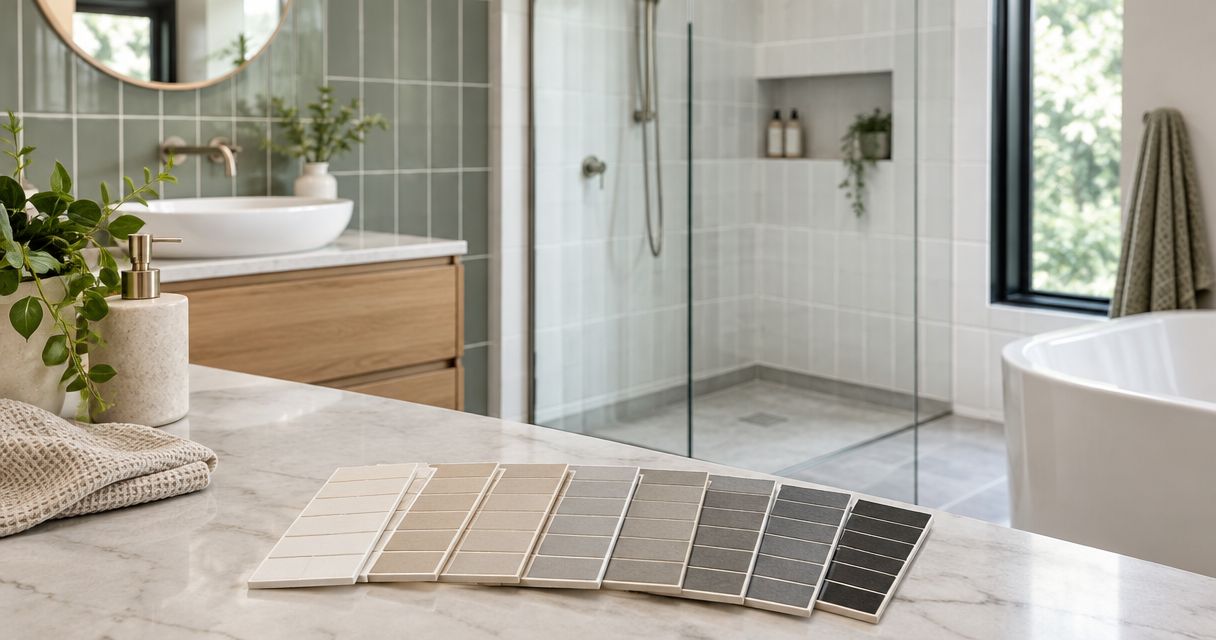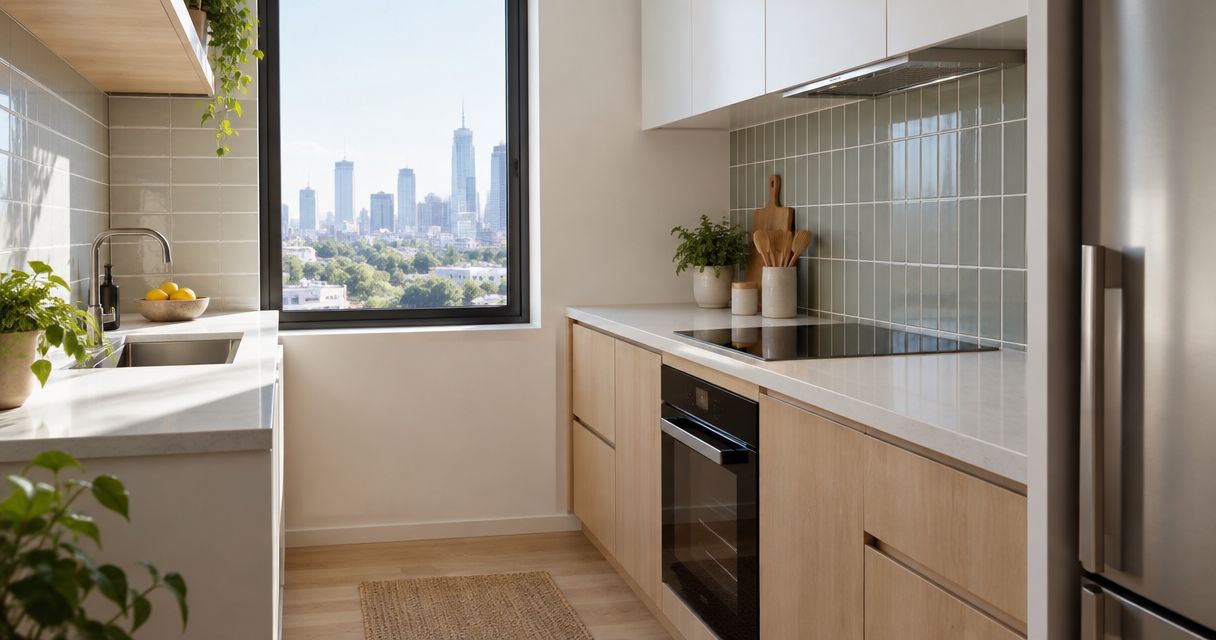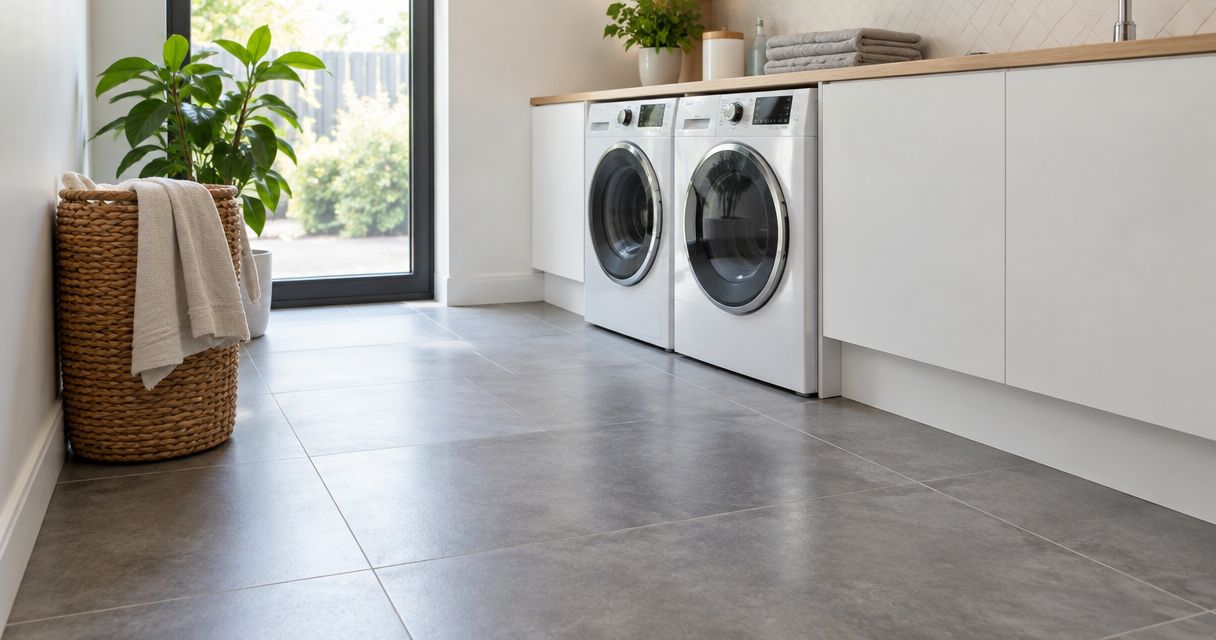
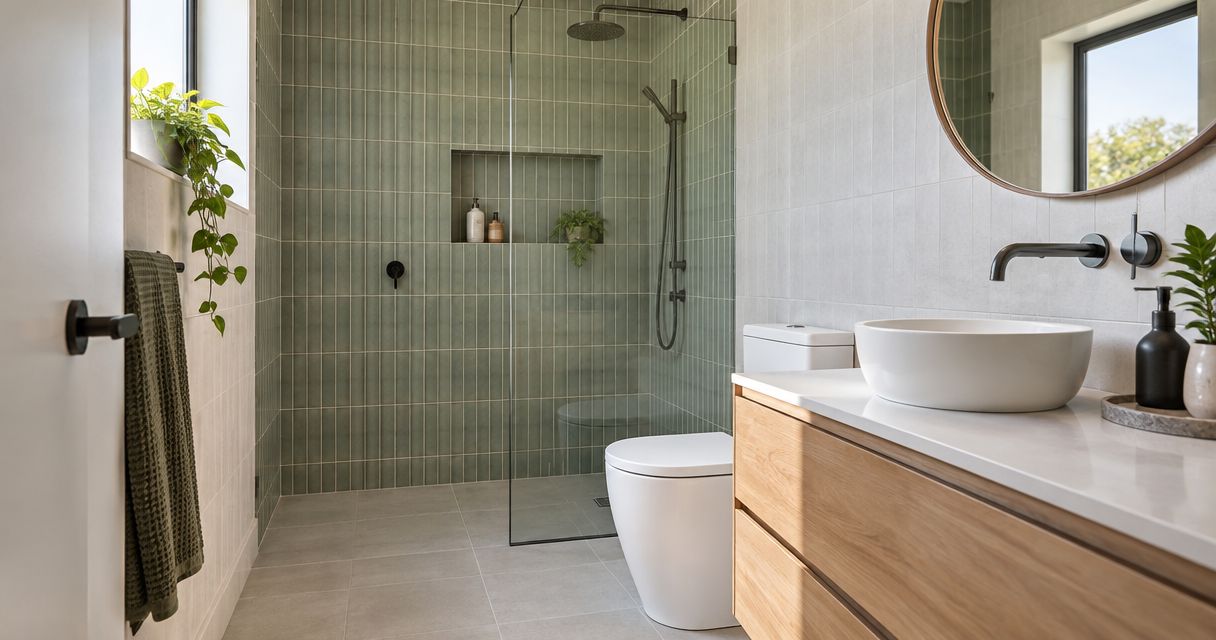
Best overall: matt porcelain floor tiles. Best for straightforward bathroom walls: glazed ceramic. Best for a shower floor with several changes of slope: suitable porcelain mosaics. For a small Melbourne bathroom in 2026, choose the floor around drainage and wet-area suitability, then choose wall tiles that keep the room visually calm.
- Best tiles for small bathrooms Melbourne: matt porcelain wins for floors when the selected tile suits wet barefoot use.
- Glazed ceramic suits bathroom walls; porcelain mosaics suit shower floors where the layout needs smaller pieces.
- Large-format wall tiles reduce grout lines but need careful planning around niches, corners and fittings.
- Melbourne Tiling Group suits Melbourne homeowners seeking bathroom wall and floor tiling installation.
Why this matters
A small bathroom leaves little room to hide awkward cuts, standing water or a busy pattern. The right tile is not simply the largest or lightest option. It needs to work with the shower waste, doorway, vanity and actual room dimensions.
Melbourne Tiling Group provides residential wall and floor tiling, including bathrooms. Before choosing finishes for your 2026 renovation, settle the layout and waterproofing requirements. A tile finish cannot correct a poorly prepared floor or replace the waterproofing underneath.
What makes the best tiles for a small bathroom?
Use these criteria before comparing colours:
- Wet-area suitability: Check the exact tile’s intended use and slip-test information. A matt appearance alone does not prove grip.
- Drainage fit: Choose a size that allows the shower floor to slope towards the waste without awkward edges.
- Balanced layout: Check full tiles and cuts at the doorway, corners, niche and shower screen.
- Manageable cleaning: Compare surface texture, grout joints and any sealing requirements.
- Visual simplicity: Keep changes in colour, pattern and tile direction deliberate.
- Complete installation scope: Compare preparation, waterproofing, tiling and finishing work, not just the tile selection.
Choose the floor for safe use and drainage; choose the walls for the room’s appearance. Using different tiles for those jobs is sensible, not a compromise.
Best small bathroom tiles at a glance
These are material-and-format recommendations, not claims that every tile in a category performs identically. Check the selected product’s technical information before ordering.
| Tile option | Best for | Standout feature | Key limitation |
|---|---|---|---|
| Matt porcelain floor tiles | Everyday bathroom floors | Durable surface with many finish choices | Matt does not automatically mean slip-resistant |
| Glazed ceramic wall tiles | Straightforward wall finishes | Easy-to-wipe glazed face | Wall-only products cannot be used on floors |
| Porcelain mosaics | Shower floors with complex falls | Small pieces follow changes in slope | More grout joints to maintain |
| Large-format porcelain wall tiles | A quiet, low-joint wall finish | Fewer grout lines across the wall | Cuts and substrate flatness need close attention |
| Glazed subway wall tiles | Narrow walls needing a clear pattern | Flexible horizontal or vertical layouts | Contrasting grout makes the grid prominent |
| Natural stone wall tiles | A contained feature wall | Natural variation and texture | Stone-specific cleaning and sealing requirements |
1. Matt porcelain: best tiles for everyday bathroom floors
Porcelain is a practical starting point for a small bathroom floor. Choose a product intended for the installation area, then check its finish and slip-test information rather than relying on the word matt.
Try a 300 × 300 mm sample layout alongside a 300 × 600 mm layout. These are comparison sizes, not rules: the better choice is the one that gives sensible cuts and works with the drainage plan.
Matt porcelain pros:
- A durable material for everyday floor use.
- Available in plain and stone-look finishes.
- Offers options for coordinating the main floor and shower.
Matt porcelain cons:
- Heavily textured finishes need more cleaning effort.
- Larger pieces need extra planning around shower falls.
Best for: Homeowners who want a practical main bathroom floor without natural stone maintenance.
For a 2026 bathroom, start with a restrained colour and inspect the sample under your actual lighting. A warm grey or pale neutral is a design choice, not a performance specification.
Verdict: Buy a floor-rated porcelain tile after checking wet-area suitability and layout.
2. Glazed ceramic: best tiles for straightforward bathroom walls
Glazed ceramic wall tiles suit shower walls, vanity splash areas and other bathroom wall surfaces when specified for that use. The glazed face provides a surface you can wipe clean without choosing a heavily textured finish.
Keep the shape simple if your bathroom already has patterned flooring or detailed fittings. Confirm that any exposed tile edges have a planned finish before installation begins.
Glazed ceramic pros:
- A straightforward surface for routine wiping.
- Plenty of simple shapes for uncomplicated layouts.
- Works with a separate, purpose-selected floor tile.
Glazed ceramic cons:
- A wall-only tile is unsuitable for floor use.
- Chips can expose a different-coloured tile body.
Best for: Homeowners prioritising a simple wall finish and a clearly defined installation scope.
Do not assume ceramic is automatically the lowest-cost installed option. Tile size, pattern, wall condition and edge details all affect the work involved. Ask for those items to be separated in the quote.
Verdict: Buy for bathroom walls when you want an uncomplicated glazed finish.
3. Porcelain mosaics: best tiles for complex shower falls
Porcelain mosaics use small pieces, often supplied on sheets. Their size helps the tiled surface follow changes in slope around a shower waste, particularly where the floor falls towards a point drain.
Choose mosaics intended for shower floors. Check the sheet backing and installation requirements with the tiler before ordering; the individual tile is only part of the system.
Porcelain mosaic pros:
- Small pieces accommodate changes in floor slope.
- Useful around point wastes and irregular boundaries.
- Can define the shower without changing the whole room.
Porcelain mosaic cons:
- More grout joints mean more grout to clean.
- Poor sheet alignment can leave a visible grid.
Best for: Shower floors where drainage geometry makes larger tiles awkward.
Grout colour matters here. A close colour match makes the joints less prominent, while a strong contrast emphasises every piece. See the guide to grout types for bathroom tiling before finalising the specification.
Verdict: Buy where the drainage layout calls for smaller pieces, not just because mosaics look decorative.
4. Large-format porcelain: best tiles for low-joint bathroom walls
Large-format porcelain wall tiles suit homeowners who want fewer lines across the room. They do not increase the bathroom’s physical size, but a simple layout avoids breaking the walls into a dense grid.
A 600 × 600 mm wall tile is one sample size to compare with smaller formats. Measure the actual wall first: a larger tile loses its visual advantage when the layout leaves narrow strips beside a niche or corner.
Large-format porcelain pros:
- Fewer grout lines across a given wall area.
- Broad surfaces suit restrained stone-look finishes.
- Useful for a continuous-looking vanity or shower wall.
Large-format porcelain cons:
- Uneven walls need attention before installation.
- Niches, fittings and corners require careful cutting.
Best for: Simple wall layouts where reducing grout lines matters more than adding pattern.
For your 2026 plan, ask the tiler to show where the joints meet the niche and tapware. Those junctions matter more than whether the tile looks impressive in a showroom.
Verdict: Buy for suitable walls; skip as an automatic choice for every shower floor.
5. Glazed subway tiles: best tiles for a deliberate wall pattern
Glazed subway tiles give you a clear directional pattern without needing a printed design. A horizontal layout carries lines across the wall; a vertical layout carries them upwards.
Neither arrangement makes the room physically wider or taller. Choose the direction that produces balanced cuts and suits the position of the vanity, mirror and shower screen.
Glazed subway tile pros:
- Clear layout choices for narrow wall areas.
- Easy to combine with a plain floor.
- Useful when you want pattern through shape rather than colour.
Glazed subway tile cons:
- Numerous joints create a more detailed surface.
- Strong grout contrast can overwhelm a compact room.
Best for: A vanity wall or shower wall where the tile pattern is the main decorative element.
Use matching or closely toned grout if you want a quieter result. Avoid combining a strong subway grid, patterned floor and heavily veined feature wall unless you deliberately want a busy finish.
Verdict: Buy for a controlled wall feature; skip if your priority is the fewest possible grout lines.
6. Natural stone: best tiles for a contained feature wall
Natural stone brings variation that repeats less uniformly than a printed tile design. In a compact bathroom, use it deliberately on a contained wall rather than assuming every surface needs the same material.
Stone types differ in porosity, strength and sensitivity to cleaning products. Confirm the exact stone’s suitability, sealing requirements and care instructions before committing.
Natural stone pros:
- Natural variation gives each surface a distinct appearance.
- Texture can provide a clear focal point.
- A contained feature is easier to coordinate with plain tiles.
Natural stone cons:
- Some stone requires sealing and ongoing maintenance.
- Acid-sensitive varieties need suitable cleaning products.
Best for: Homeowners who value natural variation and accept material-specific maintenance.
For a lower-maintenance stone appearance in a 2026 bathroom, compare a porcelain stone-look sample beside the real material. Choose based on the finish and care requirements you actually want to live with.
Verdict: Hold until you have confirmed care requirements and seen representative samples.
Plan the installation before ordering tiles
Melbourne Tiling Group provides bathroom wall and floor tiling. When discussing your project, bring a measured plan, tile samples and the proposed positions of the vanity, shower screen and waste. That gives the installation discussion something concrete to work from.
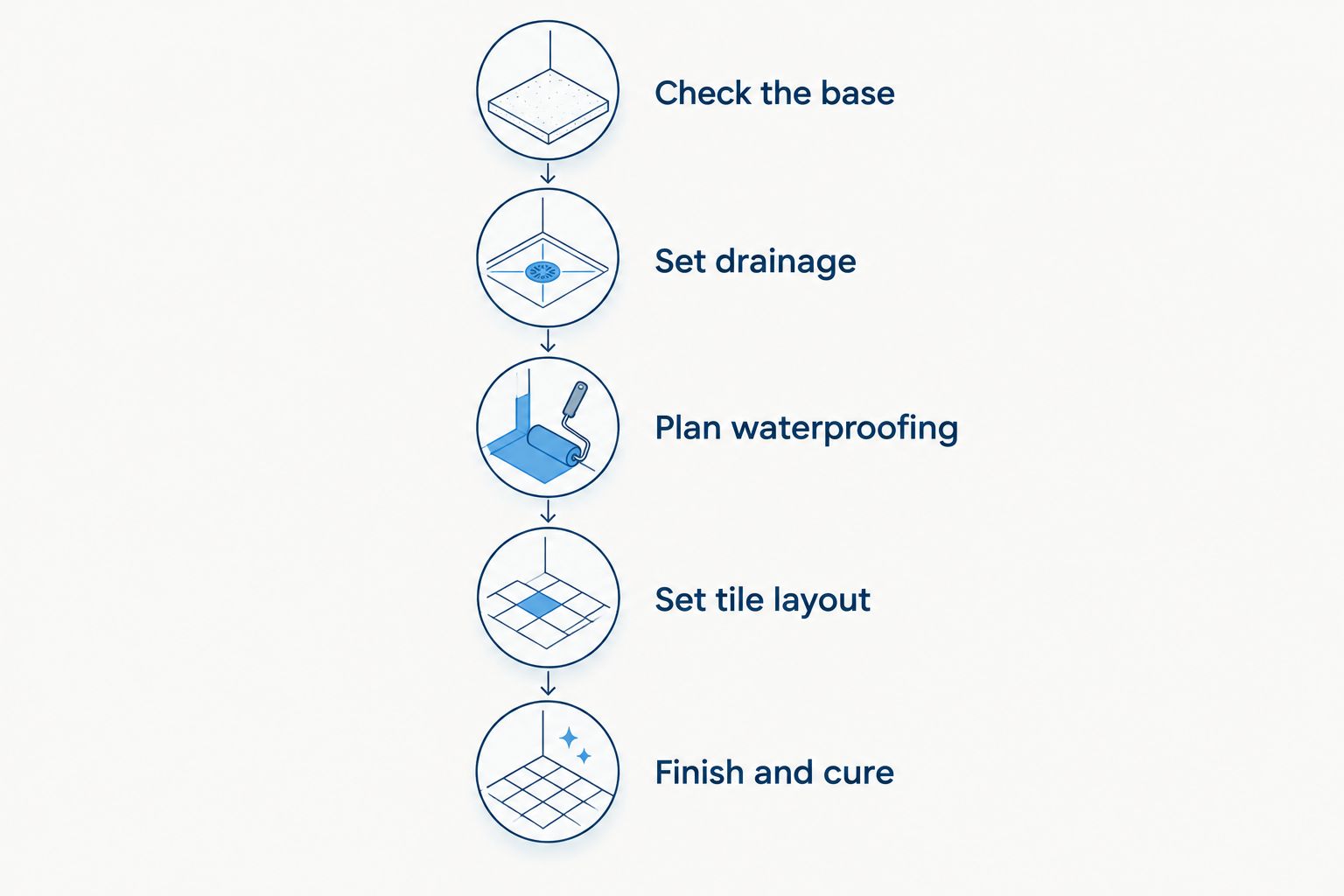
Use this sequence for a small bathroom renovation:
- Check the base: Identify damaged, uneven or unsuitable surfaces before selecting the final build-up.
- Set drainage: Confirm waste positions and how the shower floor will slope towards them.
- Plan waterproofing: Establish the suitable system, junction details and required documentation before covering the work.
- Set tile layout: Mark joint positions, edge finishes, niches and visible cuts.
- Finish and cure: Follow the installation products’ instructions before cleaning or using the bathroom.
Tiles and grout are not a substitute for a waterproofing system. Do not treat fresh grout or a new silicone joint as proof that the concealed work is sound. If the bathroom has a leak, establish the cause before covering surfaces.
For a south-east Melbourne renovation, keep affordability practical: agree on the scope, use a layout with sensible cuts and avoid changing selections after work starts. Do not reduce preparation or waterproofing to protect a decorative feature.
Discuss your bathroom tiling plan
Bring your room measurements, tile samples and proposed shower layout.
How these tile options are ranked
The ranking prioritises wet-area suitability, drainage, layout, cleaning and installation complexity. It is a planning guide to tile categories, not a laboratory comparison of individual products. Product-specific technical information takes priority over the general category recommendation.
Matt porcelain leads for everyday floors because it offers a practical starting point. Ceramic walls, mosaics and large-format walls fill different jobs rather than competing to cover every surface.
Which tiles should you choose?
For most undecided homeowners, start with suitable matt porcelain on the floor and simple glazed tiles on the walls. Use smaller shower-floor pieces where the falls require them. Add a feature only after the main surfaces work together.
Melbourne Tiling Group suits Melbourne homeowners seeking bathroom wall and floor tiling installation. For your 2026 project, settle the preparation, waterproofing and layout before making the final colour decision.
FAQ
What are the best tiles for a small bathroom in Melbourne?
Suitable matt porcelain is a practical first choice for the floor, with glazed ceramic or porcelain on the walls. Check the exact floor tile’s wet-area suitability and plan the layout around drainage before ordering.
Are large tiles better than small tiles in a tiny bathroom?
Large tiles are useful for reducing wall grout lines, but they are not automatically better everywhere. Shower floors with several changes of slope often need smaller pieces or planned cuts.
Can I use the same tile on the bathroom walls and floor?
Yes, if the selected tile is suitable for both applications. A wall-only tile must not be used on the floor, and the floor finish still needs to suit wet barefoot use.
Are matt bathroom tiles always slip-resistant?
No. Matt describes appearance, not a guaranteed level of slip resistance. Ask for the selected tile’s slip-test information and confirm its suitability for the intended area.
What grout colour works best in a small bathroom?
A grout colour close to the tile colour suits a quieter, less broken-up appearance. Contrasting grout emphasises the pattern, so use it deliberately rather than assuming it makes the room look bigger.
Do bathroom tiles waterproof the shower?
No. The shower needs a suitable waterproofing system beneath the tiled finish. Tile selection does not replace correct preparation, drainage or waterproofing details.
How do I keep a small bathroom tiling project affordable?
Keep the layout straightforward and compare quotes against the same written scope. Separate preparation, waterproofing, tile installation and finishing details so essential work is not hidden behind a headline total.
One last thing
Before you approve the tiles, ask for the layout to be marked from the doorway. A narrow cut beside the vanity or shower screen can be more noticeable than a full tile against the far wall. Approve the cuts, not just the sample.