Best overall: large-format glazed porcelain wall tiles. Best for bathroom floors: matte porcelain tiles with a suitable slip classification. Best budget option: glazed ceramic wall tiles. Glass tiles suit small wall accents, not an entire shower floor. No tile stops mould on its own: waterproofing, sound joints and ventilation do the harder work. Melbourne Tiling Group is best for Melbourne homeowners who need bathroom tiling installed, rather than a tile brand to buy from.
- The best anti-mould tiles for bathrooms are large-format glazed porcelain on walls, paired with a slip-suitable floor tile.
- Matte porcelain suits bathroom floors when its slip classification matches the location; a smooth wall tile does not.
- Glazed ceramic is a practical wall option when the tile and installation quote suit your budget.
- Melbourne Tiling Group installs bathroom tiling; tile choice alone cannot replace waterproofing and ventilation.
Why this matters
Mould often appears where water lingers: grout lines, silicone joints, corners and surfaces that stay damp after a shower. A smooth tile face is easier to wipe than a heavily textured one, but choosing a tile does not fix a leak or a room that cannot dry. That is the distinction to keep in mind when shopping for the best anti-mould tiles for bathrooms in 2026.
Buy tiles for the job they must do, then plan the whole wet area. A shower wall needs an easy-clean face. A floor also needs suitable slip performance. Behind the visible finish, the bathroom needs waterproofing appropriate to the wet area. Once it is in use, ventilation and routine cleaning help the surfaces dry.
For a Melbourne renovation, decide which surfaces are being retiled before comparing finishes. If existing grout has darkened, check whether the problem sits on the surface, in a failing joint or alongside signs of water getting where it should not. New tiles laid over an unresolved moisture problem will not solve it.
What makes the best bathroom tile for mould control?
Use these criteria before choosing a colour or finish:
- Easy-clean surface: Glazed, smooth wall tiles let you wipe away soap residue and surface moisture. Heavy texture gives residue more places to sit.
- Sensible tile size: Larger tiles generally mean fewer grout joints across the same wall area. They still need joints, corners and edges finished correctly.
- Correct location: A wall tile is not automatically a floor tile. Ask for the floor tile's slip classification and check that it suits the intended wet-area location.
- Appropriate water absorption: ISO 13006 classifies pressed ceramic tiles by water absorption. Its BIa group is at or below 0.5%; BIb extends above 0.5% to 3%; BIII is above 10%. Those figures describe the tile body, not whether mould will grow on the grout.
- Sound installation: Waterproofing, substrate preparation, drainage, grout and flexible joints all matter. An easy-clean tile cannot compensate for a failed wet-area build.
- Maintainable layout: Plan access to corners and edges you will actually need to clean. A decorative finish that is difficult to wipe down is a poor trade in a busy shower.
In 2026, the most useful showroom question is not whether a tile is sold as anti-mould. Ask where it can be installed, how its surface cleans and what the installer plans for the areas behind and between the tiles.
At a glance: the best tiles by bathroom use
| Tile option | Best for | Standout feature | Key limitation |
|---|---|---|---|
| Large-format glazed porcelain | Shower and bathroom walls | Smooth face with fewer joints across a wall | Large tiles need a suitable, well-prepared surface |
| Matte porcelain with suitable slip classification | Bathroom floors | Floor-focused finish | Texture can take more work to clean |
| Glazed ceramic | Bathroom walls on a tighter budget | Wipe-clean glazed face | Check that the chosen tile suits each wet-area position |
| Glass tile | Small wall accents and splash zones | Non-absorbent glass face | Small formats add grout joints |
These are use-case picks, not interchangeable finishes. Check the exact tile's suitability before ordering, especially for shower floors and other frequently wet surfaces.
How the bathroom layers work together
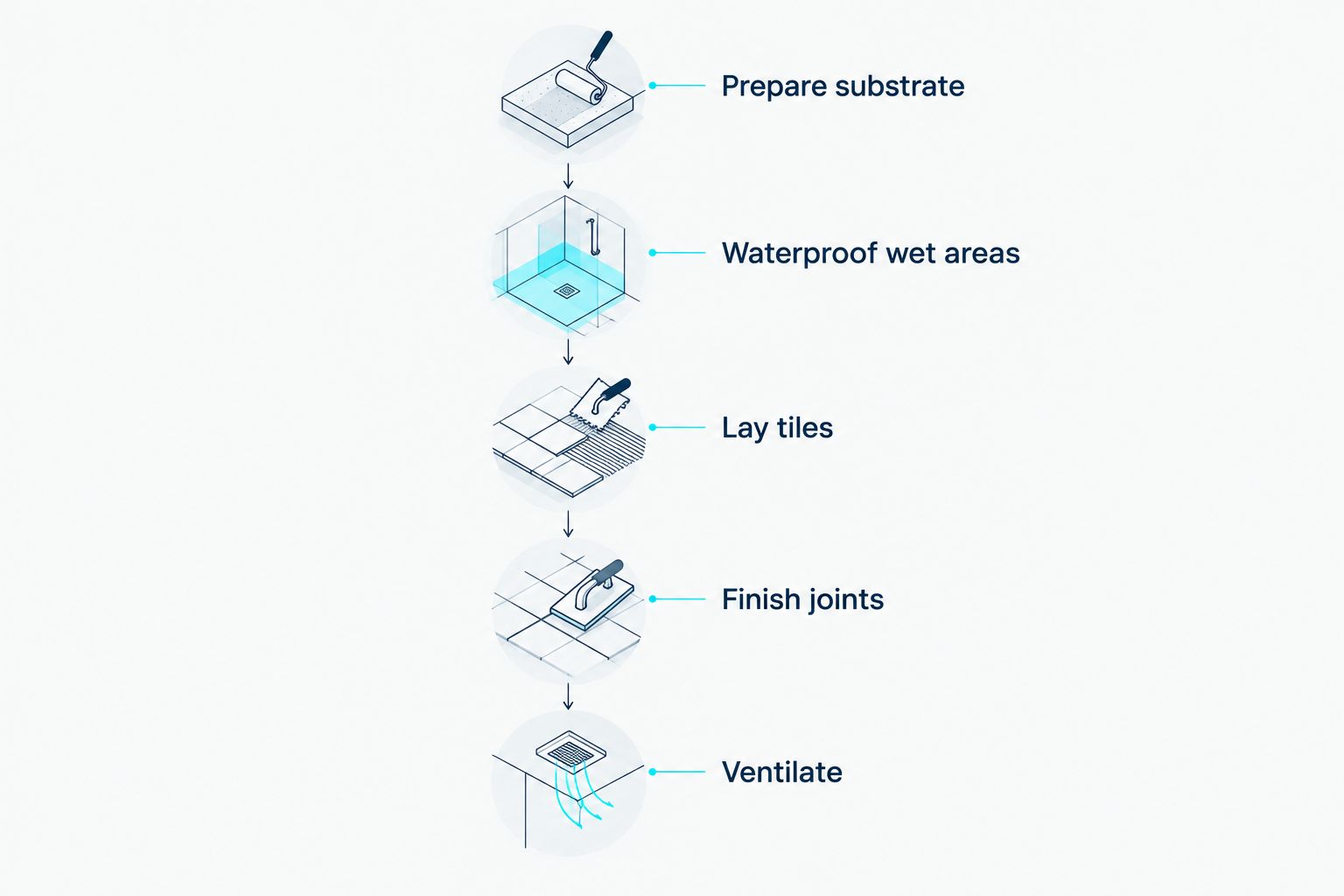
Think past the face of the tile. The visible surface helps with cleaning; the work beneath it deals with water reaching the structure. Finishing the joints and giving the room a way to dry remain part of the job after the tile is chosen.
- Prepare substrate: Start with a surface suitable for the planned tiles and wet-area work.
- Waterproof wet areas: Install waterproofing for the areas that require it before tiling covers them.
- Lay tiles: Set out wall and floor tiles for the space, including changes of plane and drainage points.
- Finish joints: Complete grout and flexible joints where each is appropriate.
- Ventilate: Let the bathroom dry between uses and keep extractors and openings working as intended.
A tiling quote should make the scope clear. Ask which surfaces are included, what happens to the existing finishes and how the wet-area work fits with the tiling. That gives you something more useful to compare than the tile face alone.
1. Large-format glazed porcelain: best for shower walls
Large-format glazed porcelain is the default wall pick for a bathroom where cleaning is the priority. Its glazed face wipes down readily, while a larger format reduces the number of grout lines across an open wall. It is a tile choice, not a substitute for waterproofing behind the finish.
Large-format glazed porcelain pros:
- Smooth glazed surfaces are straightforward to wipe.
- Fewer tile pieces can mean fewer joints across an open wall.
- Porcelain's low water-absorption classification gives you a clear material specification to check.
Large-format glazed porcelain cons:
- Larger tiles need a substrate and layout suited to their size.
- Corners, penetrations and joints still need careful finishing and cleaning.
- A large wall tile is not automatically suitable for a bathroom floor.
Best for: Homeowners choosing shower and bathroom wall tiles for an easy-clean finish.
Verdict: Buy for walls when the selected tile suits the location and the installation plan deals properly with the wet area. In 2026, do not pay attention to an anti-mould label until you know what it claims to protect: the tile face, the grout or a separate treatment.
2. Matte porcelain: best for bathroom floors
A bathroom floor has a different job from a wall. It must cope with wet feet as well as cleaning, so start with a porcelain floor tile whose documented slip classification suits the intended location. A matte appearance alone does not establish slip performance.
Matte porcelain pros:
- You can select a floor-specific tile rather than adapting a wall finish.
- Porcelain offers a low-absorption tile body.
- A suitable floor finish can be paired with an easier-clean glazed wall tile.
Matte porcelain cons:
- Some textured finishes hold soap residue and take more scrubbing.
- Slip suitability depends on the exact tile, not the word matte.
- Floor layout must work with drainage; appearance cannot decide it alone.
Best for: Bathroom floors where wet-foot use and documented slip suitability guide the choice.
Verdict: Buy only after checking the tile's floor suitability and slip documentation. Australian Standard AS 4586 sets out slip-resistance testing and classification; use the classification for the chosen product rather than assuming every matte tile performs alike.
3. Glazed ceramic: best for bathroom walls on a tighter budget
Glazed ceramic is another practical wall choice when you want a face that is simple to wipe. Compare actual tiles and installation quotes rather than assuming every ceramic option costs less than porcelain. Its use in a wet area depends on the selected tile and the full installation, not the glaze alone.
Glazed ceramic pros:
- Glazed faces are straightforward to clean.
- You can choose it for walls without forcing the same tile onto the floor.
- It gives you another quote option for a bathroom wall finish.
Glazed ceramic cons:
- Not every ceramic wall tile is suitable for every wet-area position.
- Smaller formats create more grout lines to maintain.
- The tile face does not waterproof the wall beneath it.
Best for: Homeowners comparing easy-clean wall tiles against a set renovation budget.
Verdict: Hold until you have checked the chosen ceramic tile's intended use and compared the complete tiling scope. For a 2026 bathroom, a lower tile price is not a saving if it distracts from the waterproofing and preparation the room needs.
4. Glass tile: best for small wall accents
Glass has a non-absorbent face and can work as an easy-wipe accent on a bathroom wall or splash zone. It is a less convincing answer when the goal is to minimise grout maintenance: many glass tile designs use small pieces, which put more joints in the same area.
Glass tile pros:
- The glass face does not absorb water.
- It can define a small wall area without changing the whole bathroom's tile choice.
- A smooth glass surface is easy to wipe.
Glass tile cons:
- Small pieces increase the number of grout joints to clean.
- Water marks and residue can remain visible until wiped away.
- Wall suitability does not make a glass tile suitable for a wet floor.
Best for: A limited bathroom wall accent where you are willing to maintain the surrounding joints.
Verdict: Hold for accents; skip small-format glass as your main anti-mould strategy. Fewer troublesome joints and a bathroom that dries properly matter more than a non-absorbent accent face.
How these tiles were ranked
The ranking puts everyday bathroom use ahead of appearance. Wall picks favour a wipe-clean face and manageable grout layout. The floor pick gives slip suitability its own place instead of treating it as an afterthought. Every option is judged alongside the same installation requirements: suitable preparation, wet-area waterproofing, finished joints and ventilation.
That is why there is no claim that porcelain, ceramic or glass prevents mould outright. ISO 13006 absorption groups describe tile bodies; they do not rate a complete bathroom's resistance to mould. In 2026, choose the tile and the wet-area build together.
Which bathroom tile should you choose?
Choose large-format glazed porcelain for shower walls if you want the simplest default. Pair it with a floor tile selected for its specific slip classification and location. If you are comparing a glazed ceramic wall tile, judge the complete installed quote and confirm where that tile can be used.
Melbourne Tiling Group is best for homeowners who want bathroom tiling planned around the surfaces being replaced, not a claim that one tile fixes damp. Melbourne Tiling Group provides residential and commercial wall and floor tiling across Melbourne, including work for homeowners and construction companies. For a 2026 bathroom project, explain which areas stay wet, what existing finishes are coming out and whether mould or moisture has appeared before.
FAQ
What are the best anti-mould tiles for bathrooms in 2026?
Large-format glazed porcelain is the best default for easy-clean bathroom walls; choose a floor tile separately for suitable slip performance. No tile prevents mould without sound joints, waterproofing and ventilation.
Is porcelain better than ceramic for a shower wall?
Large-format glazed porcelain is the stronger default here when fewer grout joints and an easy-clean glazed face are the priorities. A suitable glazed ceramic wall tile can also work when the complete wet-area installation is planned correctly.
Do anti-mould tiles stop mould growing on grout?
No. Tile-face properties do not stop mould on grout or silicone joints that stay damp or collect residue; those areas still need cleaning and a bathroom that can dry.
Are large tiles better for preventing mould?
Large tiles can reduce the number of grout joints across an open wall, but they do not prevent mould. Substrate preparation, waterproofing, finished joints and ventilation still determine how the bathroom performs.
Can I use the same tile on shower walls and floors?
Only if the exact tile is suitable for both positions, including the floor's slip requirements. A wall tile's smooth, easy-clean finish is not proof that it belongs under wet feet.
Is a matte tile safe for a bathroom floor?
A matte appearance alone does not establish slip suitability. Check the chosen floor tile's documented slip classification for the intended bathroom location.
Should I replace mouldy grout before choosing new tiles?
First find out whether the issue is surface staining, a failing joint or a wider moisture problem. New tiles will not fix water getting behind a wet-area finish.
One last thing
Before you settle on a tile in 2026, ask one practical question: what will you still have to clean after the tiler leaves? A wipe-clean wall tile with sensible grout coverage is easier to live with than a finish chosen for its anti-mould label alone. If you are also planning the spend, the Melbourne bathroom tiling cost guide is a separate starting point for the quote conversation.