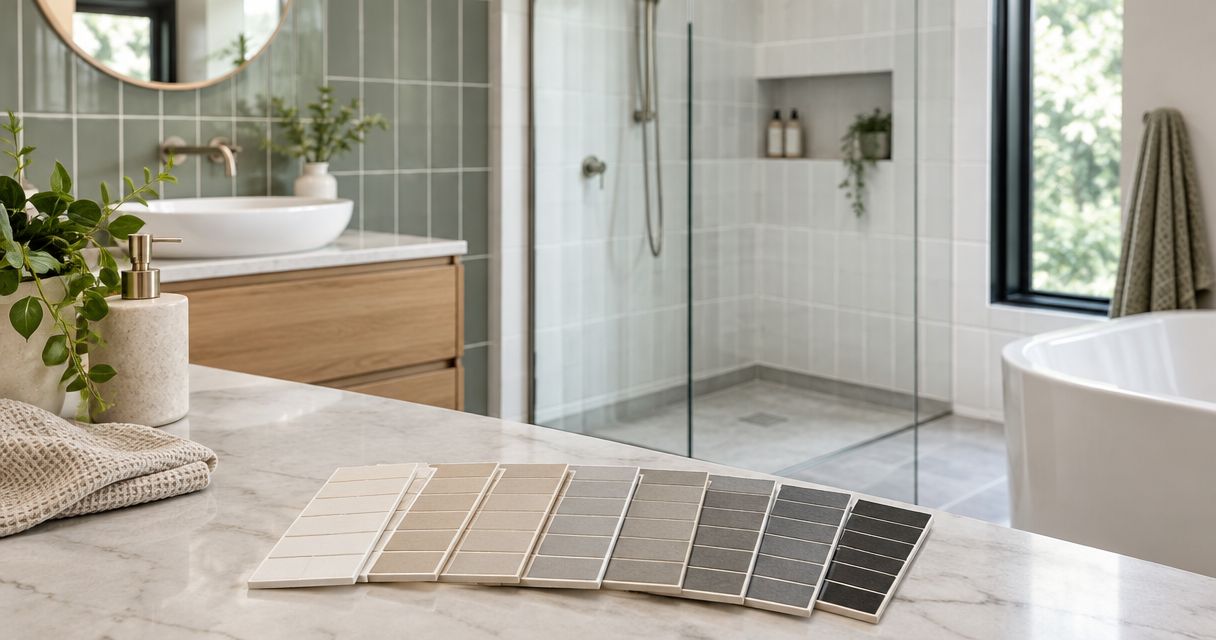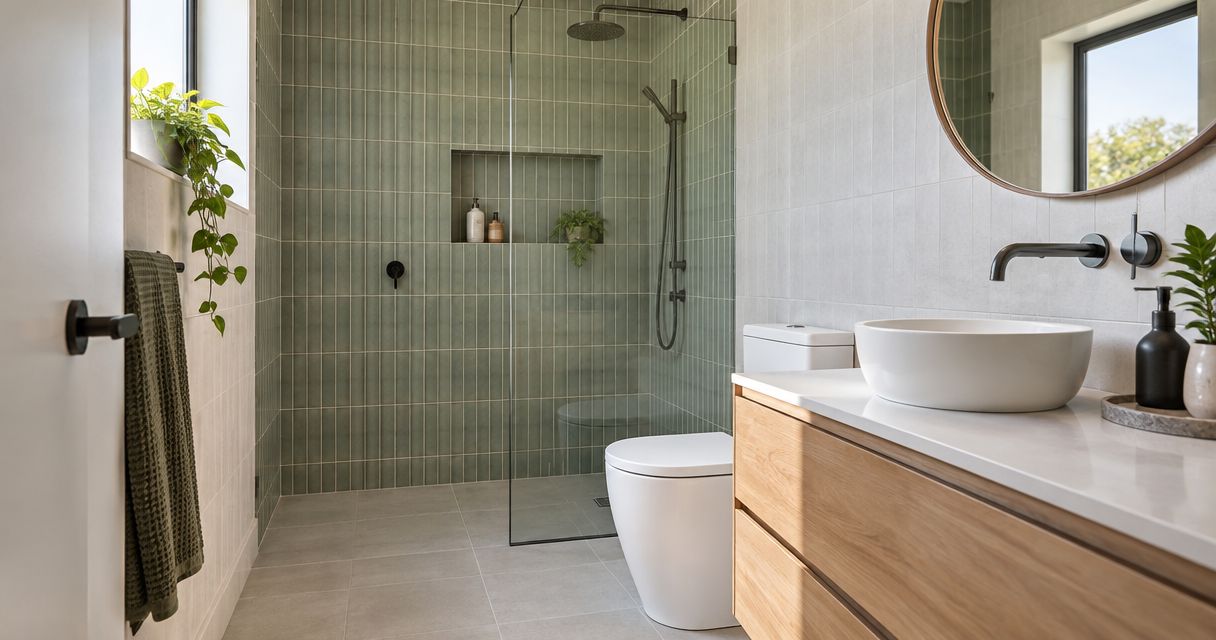
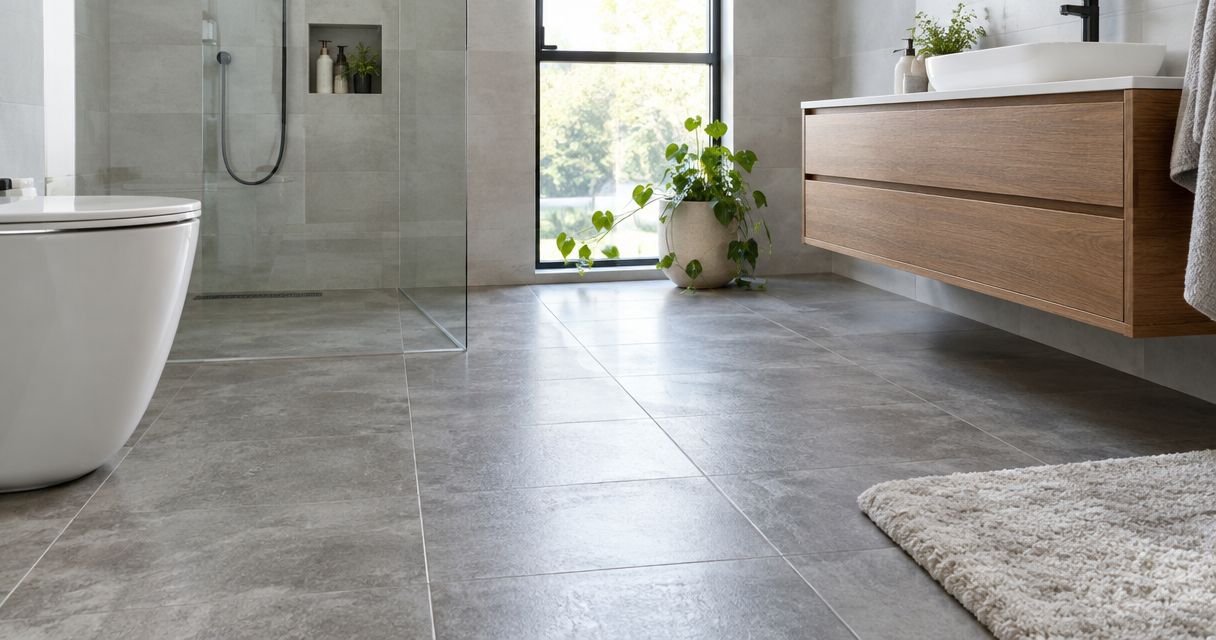
Best overall: textured porcelain tile with a documented wet-area slip rating. Best for shower floors: small-format textured porcelain mosaic. Best budget option: slip-rated textured ceramic tile. If you want a tiler to install your chosen floor finish, Melbourne Tiling Group serves Melbourne homeowners with bathroom floor tiling.
- Textured porcelain is the best non-slip floor tile for most Melbourne bathrooms when its wet-area rating is documented.
- Small-format textured porcelain mosaic is best for shower floors that need a fall towards the drain.
- Textured ceramic suits a tighter tile budget; check its wet-area rating before choosing a colour.
- Melbourne Tiling Group is best for Melbourne homeowners who need their chosen bathroom floor tiles installed.
Why this matters
A bathroom floor has two jobs that are easy to confuse. Its surface needs grip under wet feet, and the floor beneath it needs to direct water where it belongs. A tile's colour or matte appearance does not prove either job is done.
The best non-slip floor tiles for bathrooms therefore depend on where the tile goes. A main bathroom floor gives you more room to use larger pieces. A shower floor must also follow the slope towards the drain. Choose for those conditions first, then choose the look you want.
For a Melbourne bathroom renovation in 2026, ask for the exact tile's documented wet-area slip rating. A showroom label for a collection is not enough if the floor finish you are buying has a different surface from the display sample.
What makes the best bathroom floor tile?
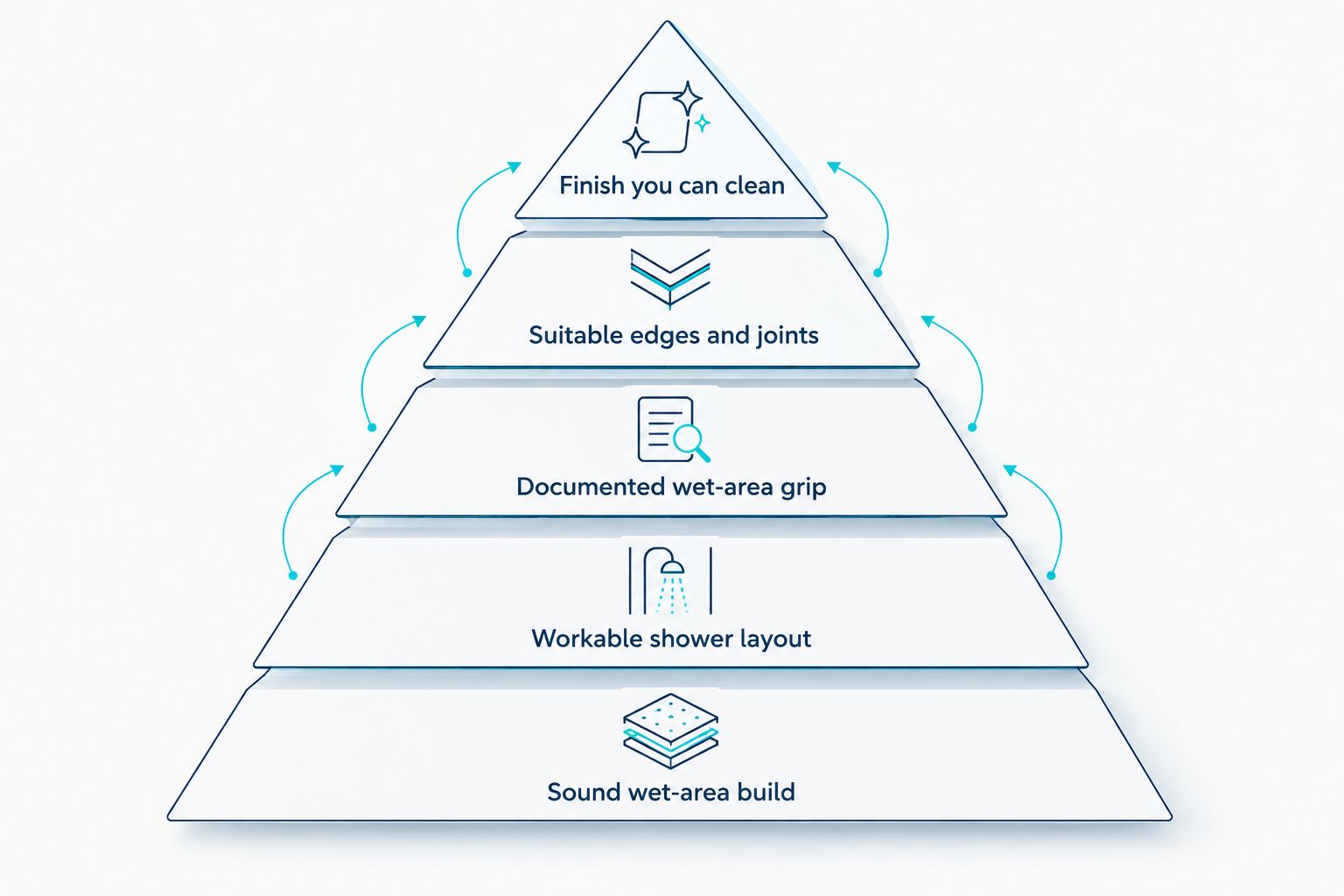
Use these checks before comparing colours or deciding which sample feels best in your hand:
- Documented wet-area grip: Ask for slip-test information for the exact tile and finish. AS 4586 is an Australian standard used to classify the slip resistance of new pedestrian surface materials. Do not treat the word matte as a test result.
- A workable shower layout: The tile must allow the finished shower floor to fall towards its drain. Smaller pieces give a tiler more joints at which to follow changes in slope.
- A finish you can clean: A heavily textured surface can hold soap residue in its low spots. Check how the actual sample cleans, not just how it looks dry.
- Suitable edges and joints: Tile size, shape and grout joints affect the finished floor. Grout lines can add texture underfoot, but they do not replace a suitable tile surface.
- A sound wet-area build: Tile and grout are the visible finish, not the waterproofing system. Confirm the waterproofing and drainage plan before installation starts.
In 2026, make the slip rating a question for the supplier and the floor layout a question for the tiler. Neither answer should depend on a photograph of another bathroom.
The best non-slip bathroom floor tiles at a glance
| Tile type | Best for | Standout feature | Key limitation |
|---|---|---|---|
| Textured porcelain | Most bathroom floors | Durable tile body with a choice of surface finishes | Texture varies; the exact finish needs checking |
| Small-format textured porcelain mosaic | Shower floors | Small pieces follow changes in floor slope | More grout joints to clean |
| Slip-rated textured ceramic | Budget-conscious main floors | A practical choice when a suitable finish is available | Not every ceramic tile is suited to a wet floor |
| Textured natural stone | Stone-focused bathroom designs | Natural variation in each piece | Surface treatment and upkeep need closer attention |
These are material and format choices, not named products. The verdict applies only to a tile with documented suitability for its intended wet-area use. A polished version of the same material is not an automatic substitute.
1. Textured porcelain: best bathroom floor tile for most rooms
Textured porcelain is the default pick for a main bathroom floor. It gives you a durable tile body without relying on the tile being small or the grout joints doing all the grip work. The word textured matters: porcelain describes the material, not the slip resistance of every porcelain finish.
A main floor and a shower floor do not have to use the same format. If the shower has a slope that larger tiles cannot follow neatly, keep the textured porcelain on the main floor and assess mosaic for the shower. That decision belongs in the floor plan, before tiles are ordered.
Textured porcelain pros:
- Suits a broad main-floor layout without requiring a mosaic pattern.
- Gives you surface-finish choices to assess against wet-area slip information.
- Pairs with a smaller porcelain format if the shower layout calls for one.
Textured porcelain cons:
- A matte porcelain tile is not necessarily a suitably slip-rated tile.
- Stronger surface texture can take more work to clean around edges and fittings.
- Larger pieces need careful planning where the floor changes slope.
Best for: Melbourne homeowners choosing one practical material for a bathroom's main floor. Verdict: Buy a textured porcelain finish once the supplier confirms its wet-area slip information and the tiler confirms the proposed layout.
2. Small-format textured porcelain mosaic: best for shower floors
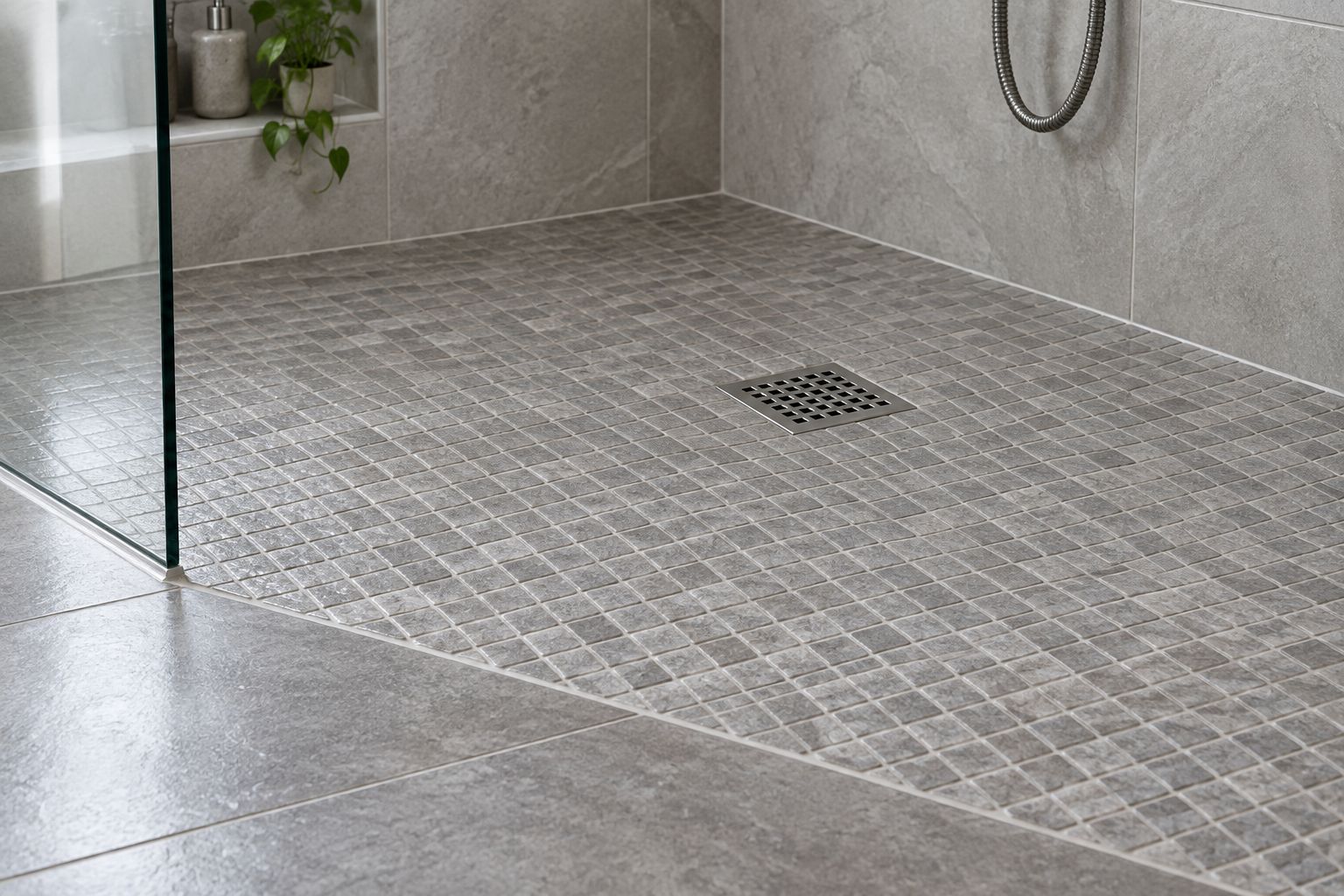
Small-format textured porcelain mosaic is the strongest format choice when a shower floor must fall towards a drain. Its smaller pieces give the tiler more joints to work with as the floor changes direction. The tile surface still needs its own wet-area slip information; extra grout lines are not proof of grip.
Look at a sample sheet from a normal standing height and at floor level. Check whether the joint layout will sit neatly around the drain and shower edges. A neat-looking sheet on a flat display can behave differently once it is set across a sloping floor.
Porcelain mosaic pros:
- Small pieces can follow changes in shower-floor slope.
- Grout joints break up the floor surface underfoot.
- A matching material can connect the shower visually with a porcelain main floor.
Porcelain mosaic cons:
- More joints mean more grout to clean.
- A poor layout around the drain stays visible after installation.
- Mosaic sheets do not correct a badly planned floor fall.
Best for: A tiled shower floor with a fall towards its drain. Verdict: Buy textured porcelain mosaic when the exact finish is suitable for the wet area and the sheet layout works with the drain.
The drainage decision comes before the pattern decision. In a 2026 bathroom plan, mark the drain position and intended tile format together so the installer can assess whether the pieces will follow the floor.
3. Slip-rated textured ceramic: best budget-conscious main-floor choice
Textured ceramic is the budget-conscious option to assess for a bathroom's main floor. Start with its documented suitability for the intended wet area, not a colour or a shelf label. Ceramic describes the tile body; it does not tell you how a particular finish grips when wet.
Keep this pick focused on the main floor until the shower layout has been assessed separately. A suitable ceramic tile on a relatively simple floor plan is a different decision from placing a larger tile across changes in shower slope. Check both the surface and the installation plan before settling on one tile throughout.
Textured ceramic pros:
- Gives budget-conscious buyers another material to compare with porcelain.
- Can provide a straightforward finish for a main bathroom floor.
- Lets you choose based on a documented surface finish rather than appearance alone.
Textured ceramic cons:
- The word ceramic does not establish wet-area suitability.
- A tile chosen for the main floor will not necessarily suit the shower floor.
- A smooth-looking finish can be tempting even when its wet-area information is unclear.
Best for: Homeowners comparing main-floor tile choices against a tighter tile budget. Verdict: Hold until the supplier confirms the exact tile's wet-area rating and the tiler confirms where it can be used.
If a sample has no clear information for the proposed floor, set it aside. In 2026, that is a better budget decision than choosing a tile you cannot assess for the room.
4. Textured natural stone: best for a stone-led bathroom
Textured natural stone is a design-led choice, not the automatic grip winner. Stone pieces vary, so judge the proposed finish and its documented wet-area suitability rather than assuming that a natural surface is rough enough. Include cleaning and surface care in the decision before choosing it for a shower.
Ask to see pieces from the proposed finish, not just a polished display sample of the same stone type. Surface finish changes the way a tile feels underfoot. It also changes what you will need to clean around texture and grout joints.
Textured natural stone pros:
- Gives each piece natural visual variation.
- Offers a distinct look if stone is central to the bathroom design.
- Can be assessed as part of a wider bathroom-floor and paving material plan.
Textured natural stone cons:
- A natural-looking surface does not prove wet-area grip.
- Pieces can vary in appearance and surface character.
- Surface care and cleaning require more attention when comparing finishes.
Best for: Homeowners committed to a stone finish who will check the exact material and its care requirements. Verdict: Hold until the chosen finish has suitable wet-area information and the installation plan accounts for its variation.
How these choices were ranked
The order puts documented grip, workable drainage and a usable floor layout ahead of appearance. Textured porcelain takes the general main-floor slot. Mosaic takes the shower-floor slot because format matters where the floor slopes. Ceramic remains a main-floor alternative; natural stone is a more deliberate finish choice.
This is not a claim that every porcelain tile beats every ceramic or stone tile. The comparison is between the specified types and finishes. In 2026, the exact product's slip information and the proposed room layout decide whether a sample earns a place in your bathroom.
Check the floor plan before installation
A good tile choice can still be let down by the wrong floor plan. Work through these decisions with the tiler before the floor finish is fixed:
- Separate the zones. Identify the main floor, shower floor and any other area that regularly gets wet. A tile that suits one zone is not automatically the best format for another.
- Confirm the drain position. The shower floor needs a planned path for water. Tile size and drain placement affect how neatly the finished surface follows that path.
- Confirm the waterproofing plan. A slip-rated tile deals with grip at the surface. It does not stand in for waterproofing beneath the finish.
- Review a real sample. Look at the proposed finish dry and wet, then ask for the supplier's slip-test information. Do not judge it from a product photograph.
- Ask about cleaning. Run your hand over the texture and inspect the joints. Choose a surface you are prepared to keep clean.
Melbourne Tiling Group provides bathroom and floor tiling for homeowners across Melbourne, including North Melbourne, Port Melbourne and Richmond. Bring the proposed tile and floor layout to the installation discussion; the tiler needs both to assess the fit.
Plan your bathroom floor tiling
Discuss your tile choice and bathroom floor layout before installation.
Which bathroom floor tile should you choose?
Choose textured porcelain for most main bathroom floors, and choose small-format textured porcelain mosaic for a shower floor that needs to follow a fall. If you are comparing a tighter tile budget, assess slip-rated textured ceramic for the main floor. Choose textured natural stone only when its finish, wet-area information and upkeep all suit the room.
Do not buy a floor tile because its label says matte, bathroom or stone. Ask for the exact finish's slip information, then check its size against the floor and drain plan. That is the 2026 decision that matters before colour.
FAQ
What are the best non-slip floor tiles for bathrooms?
Textured porcelain tiles with documented wet-area slip information are the best general choice for a bathroom's main floor. For a sloping shower floor, assess small-format textured porcelain mosaic.
What is the best tile for a shower floor?
Small-format textured porcelain mosaic is a strong shower-floor choice because its pieces can follow changes in slope towards the drain. Check the exact finish's wet-area suitability; grout joints alone do not establish grip.
Is matte porcelain non-slip when wet?
Matte porcelain is not automatically non-slip when wet. Ask for slip-test information for the exact finish rather than relying on the word matte.
Is ceramic or porcelain better for a bathroom floor?
Textured porcelain is the default main-floor pick here, while slip-rated textured ceramic is a budget-conscious alternative to assess. The exact finish's wet-area information and the floor layout matter more than the material name alone.
Can natural stone be used on a bathroom floor?
Textured natural stone is an option when the exact finish is suitable for the intended wet area. Check its surface, variation and care requirements before choosing it for a shower or main floor.
Do grout lines make a bathroom tile non-slip?
No, grout lines do not make an unsuitable tile slip-rated. Joints add texture and help small pieces follow a shower floor's slope, but the tile finish still needs checking.
Does non-slip bathroom tile replace waterproofing?
No, a slip-rated tile addresses grip at the walking surface, not waterproofing beneath it. Plan waterproofing and drainage as part of the floor build before tiling starts.
One last thing
A shower floor can justify a different tile format from the rest of the bathroom, even when you want the room to look consistent. Set the drain and floor fall first; select a suitable finish and format for each zone second. Melbourne Tiling Group is a bathroom tiling option for Melbourne homeowners ready to discuss the installation of their chosen tiles.