Best overall for a 2026 shower renovation: a compatible liquid-applied membrane installed as a complete system. Best for consistent membrane thickness: a bonded sheet membrane. Best for a suitable cement-based substrate: a cementitious membrane approved by its manufacturer for that shower build. The best waterproofing membrane for showers is the system that suits the substrate, drain and tile installation—not a coating chosen on its own.
- A compatible liquid-applied system is the practical default for many tiled shower renovations in 2026.
- Bonded sheet membrane suits installers who can manage seams, corners and drain connections precisely.
- Use a cementitious membrane only where its manufacturer approves the full shower application.
- Melbourne Tiling Group is best for Melbourne homeowners planning bathroom tiling around the selected waterproofing system.
Why this matters
A shower can look finished while water is reaching the structure behind its tiles. Grout and tiles form the surface you clean; the waterproofing system protects what sits underneath. The membrane must work with the substrate, wall-to-floor junctions, penetrations, drain and tile adhesive.
For homeowners planning Melbourne Tiling Group bathroom tiling, that means settling the waterproofing approach before finalising tile installation. Melbourne Tiling Group provides wall and floor tiling services across Melbourne, including North Melbourne, Port Melbourne and Richmond. Agreeing on the build sequence early gives the tiling work a suitable surface to follow.
Australian domestic wet-area waterproofing is governed by AS 3740. A product name alone does not establish that a shower meets the applicable requirements. The layout and the installation details matter just as much as the membrane type.
What makes the best waterproofing membrane for showers?
Judge the complete system, not the promise on a single container or roll:
- Substrate compatibility: Confirm that the membrane is approved for the actual wall and floor materials, including any repair material or screed.
- Drain connection: Check how the waterproofing terminates at the drain. An otherwise neat floor coating does not fix a poorly detailed outlet.
- Corners and penetrations: Look for an approved method at wall-to-floor junctions, pipe entries and other changes of plane.
- Installation control: The installer must be able to meet the manufacturer's requirements for preparation, coverage, overlaps and curing.
- Tile compatibility: Confirm that the chosen adhesive, tiles and installation method suit the waterproofed surface.
- Renovation fit: Assess what remains after demolition. A membrane chosen before the substrate is inspected is a provisional choice.
These checks apply to a compact ensuite and a larger bathroom alike. In 2026, the sensible first question is not which membrane sounds toughest. It is whether the proposed system can be installed correctly on the shower you actually have.
Shower waterproofing membranes at a glance
| Rank and membrane type | Best for | Standout feature | Key limitation |
|---|---|---|---|
| 1. Liquid-applied system | Renovations with compatible substrates and detailed corners | Forms a continuous coating when applied to specification | Coverage and curing depend on correct site application |
| 2. Bonded sheet system | Installers seeking consistent sheet thickness | Manufactured sheet thickness | Seams, corners and drain connections need careful detailing |
| 3. Cementitious system | Suitable cement-based builds with explicit product approval | Applied to prepared cement-based surfaces | Not every formulation or build-up suits every tiled shower |
The table compares membrane types, not interchangeable products. Within each type, the manufacturer's approved components and instructions decide what can be used together. A 2026 renovation needs that check before materials are ordered or tile setting begins.
1. Liquid-applied membrane: best for adaptable shower renovations
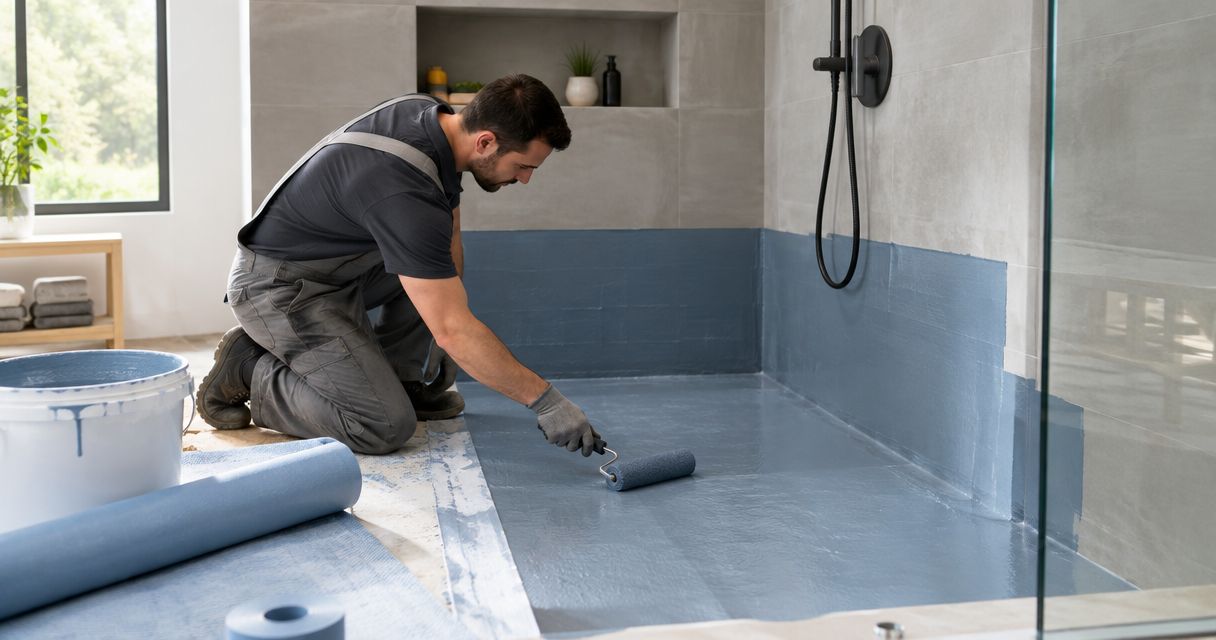
A liquid-applied membrane is spread onto a prepared substrate and cures into a waterproof layer. Its main appeal in a renovation is that the installer can apply it around the shower's actual shape, provided every junction, penetration and drain detail follows the approved system. It is the practical default here—not a licence to skip preparation.
The condition of the old bathroom matters. Once tiles come off, the installer needs a sound, suitable surface. Changes to the shower floor, wall lining or drain can change the waterproofing plan. Do not choose a coating solely because it can be painted onto a complicated corner.
Liquid-applied membrane pros:
- Adapts to the shape of a prepared shower floor and walls.
- Allows the installer to detail junctions using the system's specified components.
- Makes sense when the selected product is approved for the substrate and planned tile installation.
Liquid-applied membrane cons:
- Correct coverage is controlled on site rather than supplied as a finished sheet.
- Missed areas and rushed preparation undermine the result.
- Tiling must wait until the manufacturer's stated conditions for the next stage are met.
Best for: A Melbourne homeowner whose shower has compatible surfaces and an installer working to a specified liquid-applied system.
Verdict — Buy: Choose a liquid-applied system when its manufacturer approves the full shower build and the installer can detail the drain, corners and penetrations as specified. If those conditions are unresolved, hold the selection until they are.
2. Bonded sheet membrane: best for controlled sheet thickness
A bonded sheet membrane arrives as a manufactured sheet that is fixed to a prepared surface. That gives the main field of the membrane a consistent sheet thickness. The critical site work moves to the places where sheets meet, turn a corner, pass a pipe or connect to a drain.
This makes a sheet system a sound alternative when the installer is familiar with its joining method. It does not remove the need to inspect the substrate or plan the shower floor. A sheet laid over an unsuitable surface is still an unsuitable installation.
Bonded sheet membrane pros:
- The sheet itself has manufactured thickness.
- Gives the installer a defined system for treating joins and changes of plane.
- Suits a project where sheet layout and compatible drain detailing can be planned before tiling.
Bonded sheet membrane cons:
- Seams and junctions create details that must be completed correctly.
- Awkward shapes demand careful cutting and fitting.
- The drain and tile adhesive must suit the selected sheet system.
Best for: A shower renovation with a suitable substrate and an installer prepared to follow the sheet system's seam and drain details.
Verdict — Buy: Choose a bonded sheet system when its connection details are clear for this shower and the installer can execute them. A factory-made sheet does not make a poorly joined corner waterproof.
3. Cementitious membrane: best for approved cement-based builds
A cementitious membrane is mixed and applied to a prepared surface in accordance with its product instructions. It can suit a cement-based shower build, but the word cementitious does not establish approval for every shower wall, floor or tile system. Check the exact product's stated use before treating it as an alternative to a liquid-applied or sheet system.
Renovations often leave a mix of old and new materials after demolition. That is why substrate identification comes first. The installer needs to confirm the product's approved substrate, junction treatment, drain detail and next-stage tiling requirements as a single plan.
Cementitious membrane pros:
- Provides an option for a compatible, prepared cement-based build.
- Can be considered alongside other systems once the actual substrate is known.
- Has product-specific application instructions that can be checked against the proposed shower.
Cementitious membrane cons:
- Suitability cannot be assumed from the membrane category alone.
- Mixed substrates or movement details require particular attention to product approval.
- Preparation and curing still control when tiling can begin.
Best for: A shower with suitable cement-based surfaces where the exact product is approved for the complete application.
Verdict — Hold: Do not select a cementitious membrane until its manufacturer confirms that the proposed substrate, shower details and tile installation are within its stated use.
Plan the waterproofing before the tiles
Start with the exposed shower, not the tile sample. Once demolition reveals the walls and floor, confirm what can stay, what needs repair and how the finished floor will meet the drain. Then select an approved waterproofing system and plan the tile finish around it.
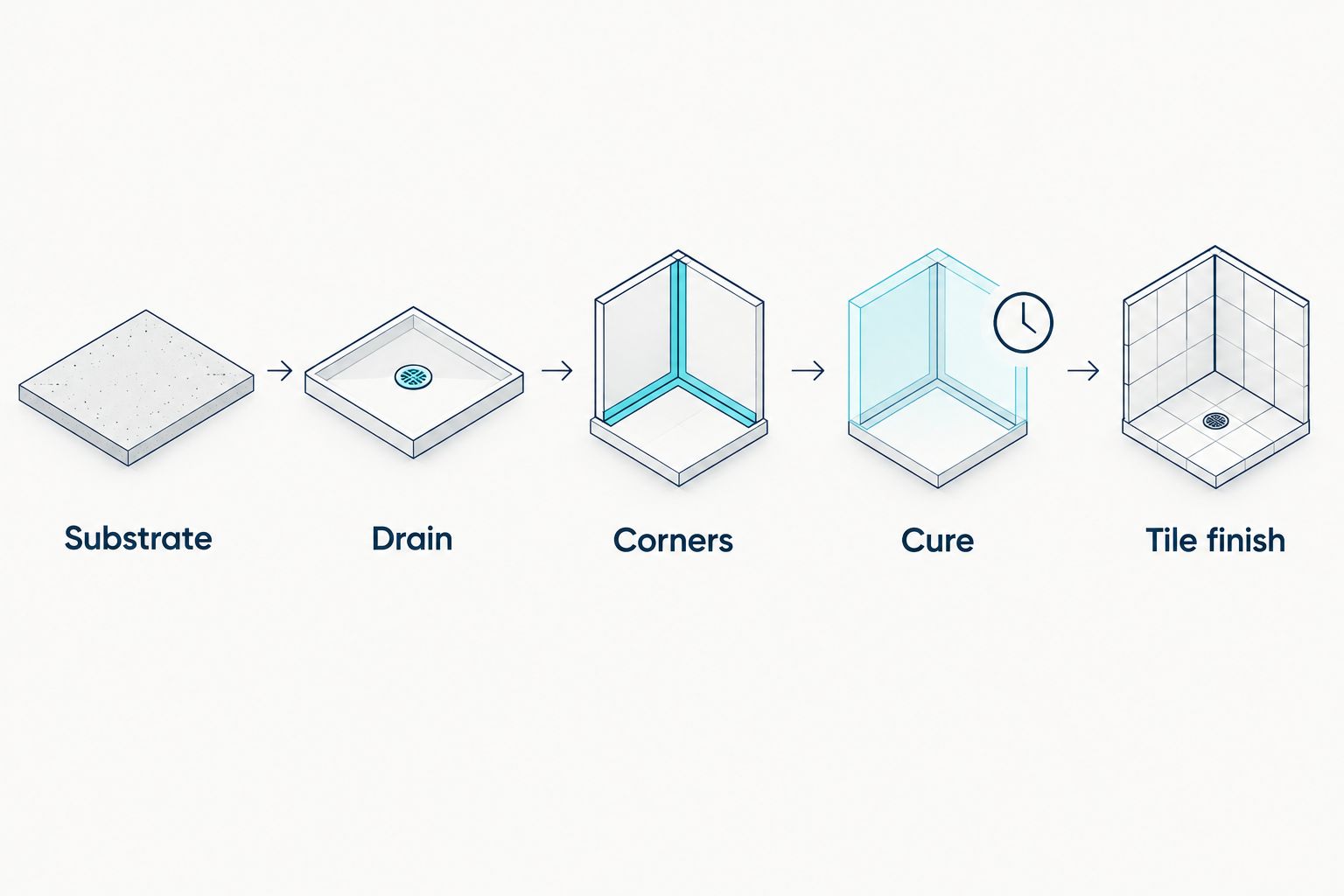
Use this order when discussing the work:
- Substrate: Identify the wall and floor materials and resolve unsound areas.
- Drain: Confirm the outlet and its waterproofing connection before setting out the floor.
- Corners: Plan wall-to-floor junctions and pipe penetrations using the selected system's details.
- Cure: Follow the manufacturer's conditions before covering the membrane.
- Tile finish: Check adhesive compatibility, tile layout and drainage before installation.
The sequence prevents a common planning mistake: selecting tiles, setting out the floor and only then asking how the membrane connects to the drain. Waterproofing and tiling are separate stages, but their details must agree. For a 2026 shower renovation, write down the selected system and who is responsible for each stage before work moves on.
A kitchen splashback or a general floor tiling job does not answer the shower question. A shower combines regular water exposure, a drain and several junctions in a confined area. Discuss those details as a shower-specific build, even if the bathroom's other surfaces use similar tiles.
How we ranked the membrane types
The order reflects how readily each type can serve a tiled shower renovation when its full system is approved and correctly installed. Liquid-applied systems lead because they can follow varied shower shapes. Bonded sheets follow because their field thickness is manufactured, while the joining work remains decisive. Cementitious systems stay on the list for appropriate builds, but require a particularly clear check of the exact product's approved use.
No category wins on material alone. The ranking gives you a starting point for a 2026 planning conversation, not permission to substitute one manufacturer's component into another system. Substrate, drain connection, junctions, installation requirements and tile compatibility determined every position.
Which shower waterproofing membrane should you choose?
Choose an approved liquid-applied system as the default for an adaptable shower renovation. Choose a bonded sheet when the installer can detail its seams and drain connection for the actual layout. Consider a cementitious system only after checking the precise product against the complete cement-based build.
If the shower has not been opened up, keep the final choice open. Ask what substrate the membrane will cover, which system components treat the corners and drain, and what must happen before tiling starts. Melbourne Tiling Group is a fit for homeowners planning Melbourne bathroom tiling with those waterproofing decisions settled before the tile finish is installed.
The best waterproofing membrane for showers in 2026 is therefore a compatible, fully detailed system. The installation plan is the verdict; the membrane type is only its starting point.
FAQ
What's the best waterproofing membrane for showers in 2026?
A compatible liquid-applied system is the practical default for many tiled shower renovations in 2026. Confirm approval for the substrate, drain connection, junctions and tile installation before selecting the exact product.
Is a sheet membrane better than a liquid-applied membrane?
A bonded sheet has manufactured sheet thickness, while a liquid-applied membrane adapts to a shower's shape when installed to specification. Neither is better when its seams, coverage or drain connection cannot be completed correctly.
Can I tile directly over a waterproofing membrane?
Tile over a waterproofing membrane only when the chosen adhesive and installation method are approved for that membrane. Follow the manufacturer's conditions for covering the completed waterproofing.
Are shower tiles and grout waterproof enough on their own?
No. A tiled shower needs a suitable waterproofing system beneath its finish; grout and tiles do not replace the membrane and its drain and junction details.
When should waterproofing be chosen during a shower renovation?
Choose the final waterproofing system after assessing the exposed substrate and planning the drain and junctions, but before tiling. Demolition can reveal conditions that change an earlier product choice.
Is a cementitious membrane suitable for a tiled shower?
A cementitious membrane suits a tiled shower only when the exact product is approved for that shower's substrate and full installation. Do not treat all cementitious products as interchangeable.
How much does shower waterproofing cost in Melbourne?
The scope depends on the exposed substrate, repairs, drain and selected system, so request a project-specific scope before comparing costs. Check that the proposed waterproofing and tiling stages cover the same shower details.
One last thing
Before you choose a membrane in 2026, ask the installer to explain how it connects to the drain. A clear answer should identify the selected system's approved detail, not just name the coating or sheet. That question makes the waterproofing plan concrete before the tiles hide it.