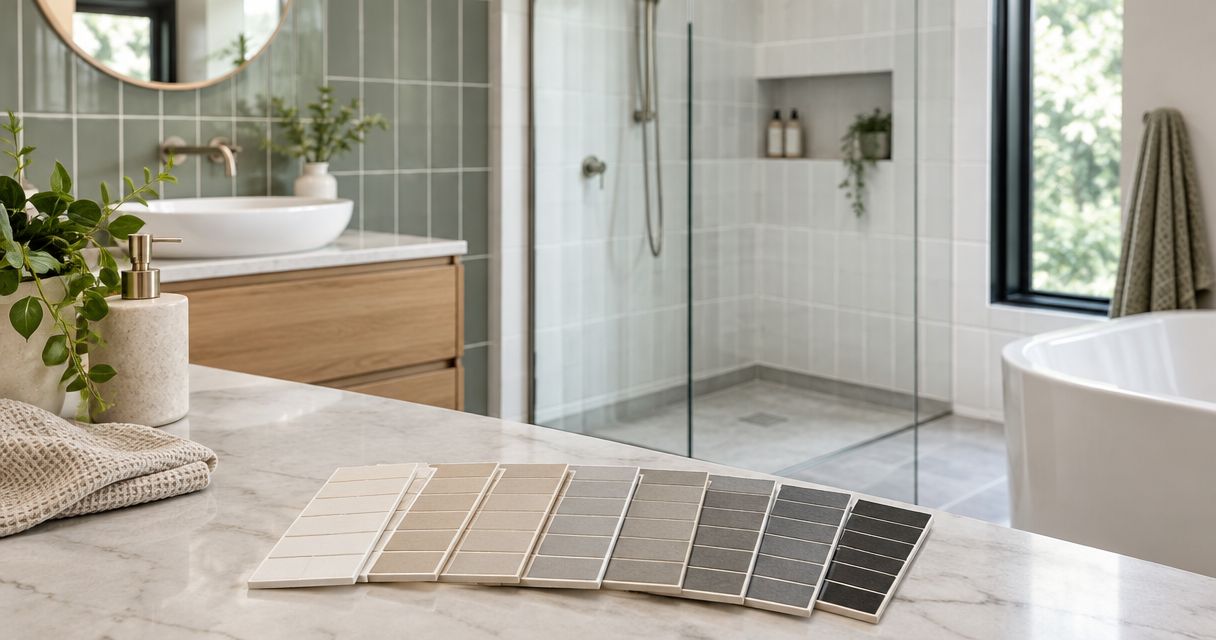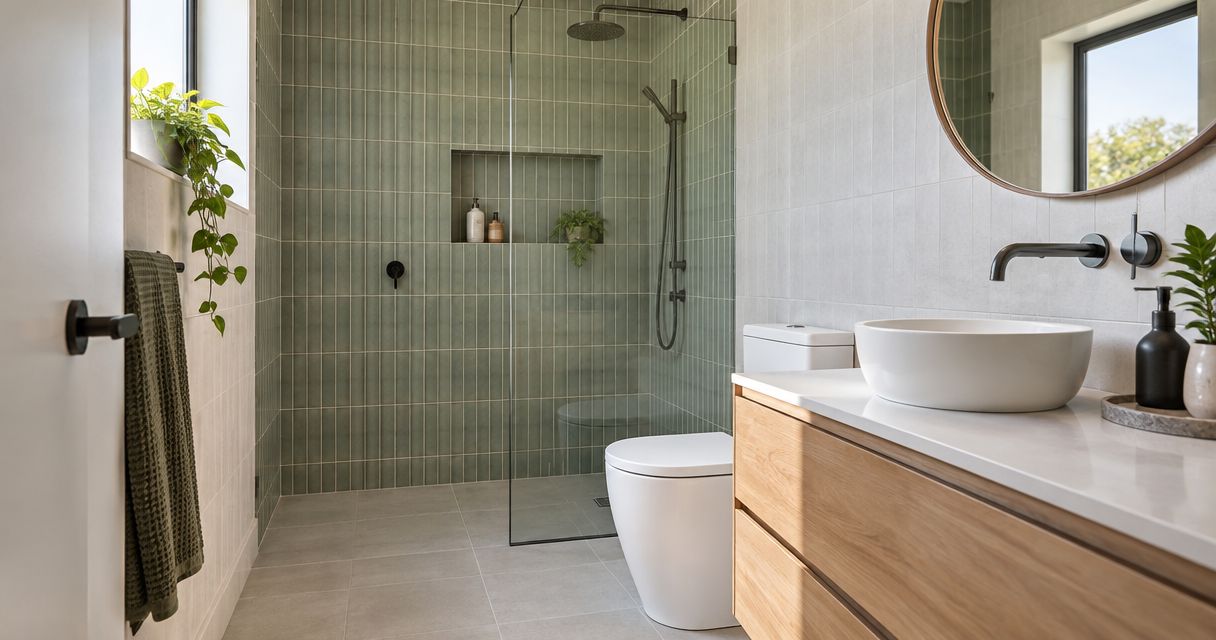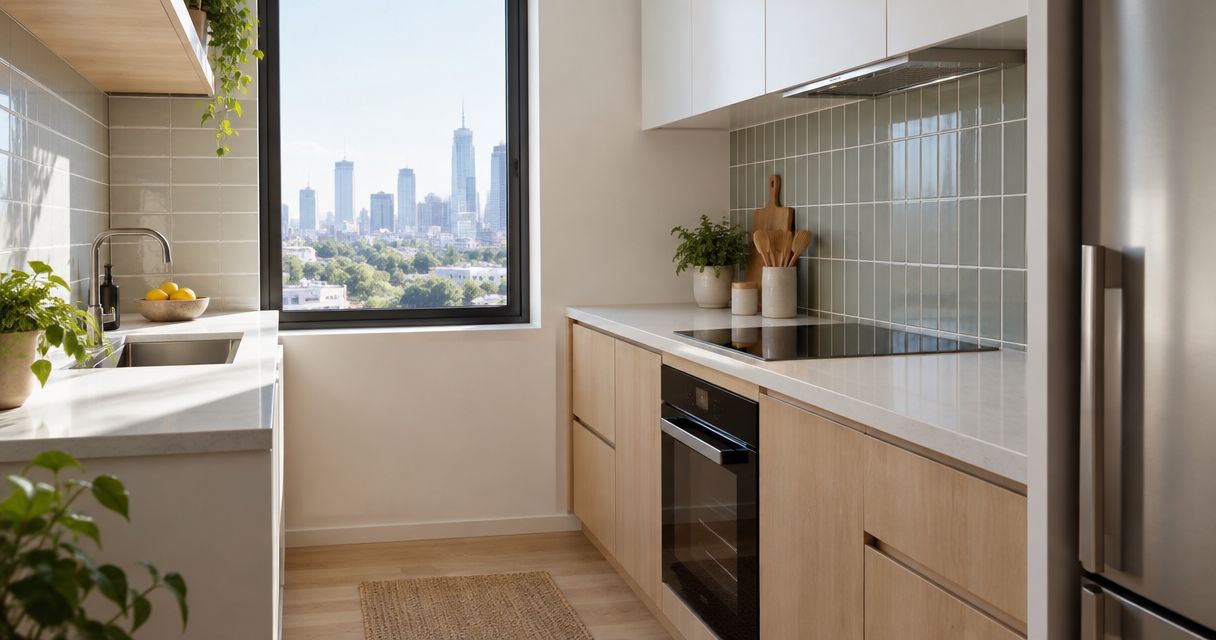
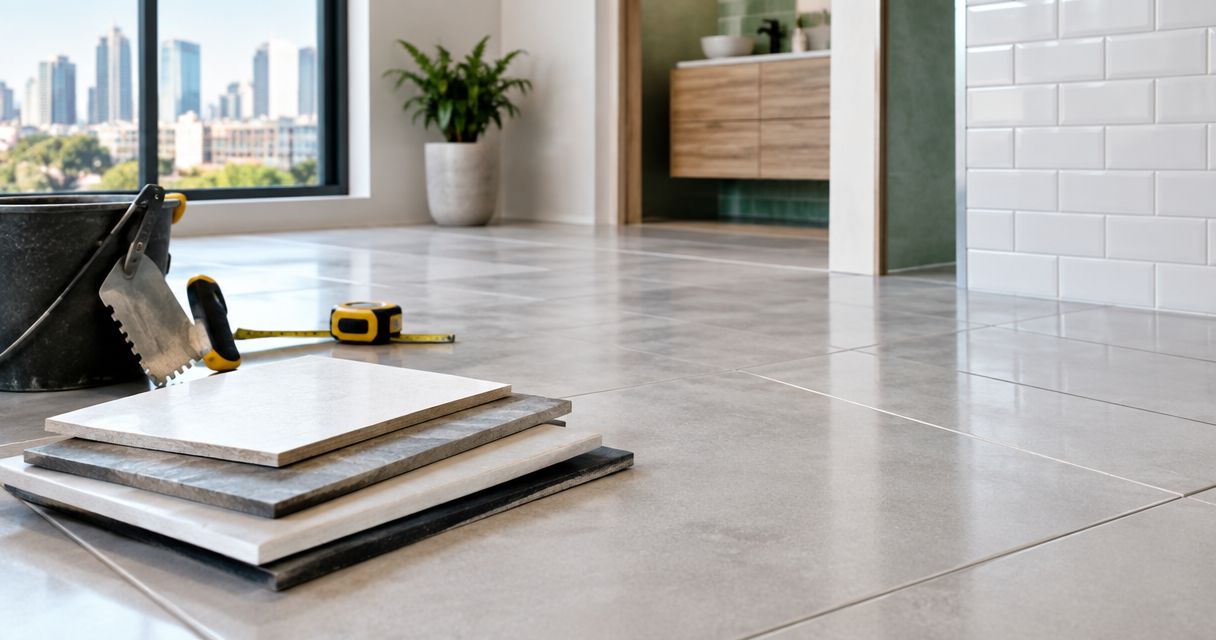
Best overall: matt porcelain for rental floors; best budget wall option: glazed ceramic; best for shower floors: small-format porcelain specified for wet barefoot use. This 2026 guide compares the best budget tiles for rental renovations in Melbourne by cleaning, installation requirements and suitability—not appearance alone.
- The best budget tiles for rental renovations are tiles specified for the surface, not simply the cheapest box.
- Matt porcelain is the default rental floor choice; check the exact tile’s intended use and slip information.
- Glazed ceramic suits kitchen splashbacks and bathroom walls; wall-only tiles do not belong on floors.
- Melbourne Tiling Group provides wall and floor tiling services for Melbourne homeowners and construction companies.
Why this matters
A rental renovation needs a finish you can clean, maintain and repair between tenancies. An attractive tile is the wrong choice if it needs unsuitable installation methods or leaves a slippery wet floor.
Melbourne Tiling Group provides residential and commercial wall and floor tiling, including kitchens, bathrooms and floors. Melbourne Tiling Group is a service option for Melbourne rental owners who need wall and floor tiling installed.
For your 2026 renovation, settle the surface preparation and wet-area work before choosing decorative finishes. Tiles cover the substrate; they do not fix movement, poor drainage or failed waterproofing underneath.
What makes the best budget tiles for rental renovations?
Judge each tile against these criteria before you order:
- Correct application: Check whether the manufacturer specifies walls, floors, internal areas or wet areas. Similar-looking tiles can have different uses.
- Easy cleaning: Inspect texture, grout joints and surface finish. Deep grooves and elaborate patterns complicate routine cleaning.
- Wet-floor suitability: Check the exact product’s slip information against its intended location. Matt appearance alone proves nothing about grip.
- Practical installation: Match the format to the room, substrate, drains and cuts. A simple layout keeps the work straightforward.
- Repair planning: Keep the product details and spare tiles. A replacement needs to match more than its advertised colour.
- Complete scope: Compare removal, preparation, waterproofing, laying, grouting and finishing together. A tile-only comparison misses the installation work.
For size discussions, bring examples such as 300 × 300 mm, 300 × 600 mm and 600 × 600 mm. These are planning examples, not recommendations for every room or claims about any supplier’s range. Your tiler should explain which format fits the space and substrate.
Budget rental tiles at a glance
These options describe materials and formats, not particular products. Porcelain appears more than once because a plain floor tile, a shower mosaic and a stone-look wall tile solve different problems.
| Tile option | Best for | Standout feature | Key limitation |
|---|---|---|---|
| Matt porcelain floor tiles | Main rental floors | Porcelain body suited to floor applications when specified accordingly | Matt finish does not establish wet-slip suitability |
| Glazed ceramic wall tiles | Kitchen splashbacks and ordinary bathroom walls | Glazed face with straightforward cleaning | Wall-only products cannot be used on floors |
| Small-format porcelain mosaics | Shower floors with falls to a drain | Small pieces accommodate changes in slope | More grout joints need cleaning and maintenance |
| Stone-look porcelain wall tiles | Bathroom walls where you want a stone appearance | Stone appearance without using natural stone | Larger pieces demand careful substrate and layout planning |
1. Matt porcelain: best for main rental floors
Matt porcelain is the default starting point for rental floor tiling. Porcelain has low water absorption, but the exact tile still needs to be specified for your floor application. Check the finish rather than assuming all porcelain performs alike.
Choose a restrained colour and a surface you can clean without special effort. Inspect a physical sample in daylight and under indoor lighting; a heavily textured finish can collect dirt even when it looks practical in a photograph.
Matt porcelain pros:
- Suitable floor-rated products work across kitchens, living areas and laundries.
- Porcelain’s low water absorption supports its use in suitable wet-area applications.
- A plain layout makes cuts and replacement positions easier to plan.
- Matt finishes avoid the reflective appearance of polished tiles.
Matt porcelain cons:
- Matt appearance is not evidence of slip resistance.
- Porcelain requires appropriate cutting tools and installation methods.
- Uneven substrates need preparation before laying; tiles cannot bridge movement safely.
Best for: Main floors where you want one practical finish across connected rooms.
For a 2026 rental refresh, ask to see the cleaning guidance and application information for the exact tile. Check doorway transitions before choosing its thickness or format.
Verdict: Buy floor-rated matt porcelain for general rental floors after checking the substrate and intended use.
2. Glazed ceramic: best for splashbacks and bathroom walls
Glazed ceramic is the first option to investigate for a straightforward rental splashback or bathroom wall. The glazed face provides a wipeable surface. Choose a wall-rated product and keep its use separate from the floor specification.
Simple rectangular or square layouts suit a practical renovation. Decorative laying patterns add cuts and alignment work, so choose them deliberately rather than treating the pattern as a small finishing decision.
Glazed ceramic pros:
- A smooth glazed face is straightforward to wipe clean.
- Plain layouts keep the finished surface visually simple.
- Ceramic wall tiles are generally easier to cut than porcelain.
- Wall and floor selections can differ without complicating the room’s colour scheme.
Glazed ceramic cons:
- Wall-only ceramic tiles are unsuitable for floors.
- Chipped edges can expose the tile body beneath the glaze.
- Splashback corners, power points and wall ends still need careful cutting and finishing.
Best for: Kitchen splashbacks and bathroom walls where a simple, cleanable finish matters more than a decorative pattern.
Ask how the splashback will finish against cupboards and benchtops. Around wet areas, tiles and grout are not a substitute for the required waterproofing system.
Verdict: Buy smooth glazed ceramic for straightforward wall tiling; skip wall-only ceramic on floors.
3. Small-format porcelain: best for shower floors
Small-format porcelain mosaics help a shower floor follow falls towards a drain. The small pieces can accommodate changing slopes more readily than a large tile. That does not make every mosaic suitable for a shower.
Check the exact product’s wet barefoot suitability, sheet backing and installation instructions. More grout joints do not, by themselves, prove that a surface meets the needs of your shower.
Small-format porcelain pros:
- Small pieces accommodate changes in the floor’s slope.
- Sheet formats organise multiple pieces for installation.
- The format suits shower floors where large tiles would need additional cuts.
Small-format porcelain cons:
- More grout joints increase the area requiring cleaning.
- Uneven sheet placement can leave visible joins or irregular spacing.
- Backing and adhesive compatibility need checking for the wet-area application.
Best for: Shower floors where the drain position and floor shape suit a small-format layout.
For your 2026 bathroom project, agree on the drain and falls before approving the tile. A finished shower needs water to reach the drain without leaving avoidable pooling.
Review the waterproofing membrane guide for shower renovations alongside the tile decision. Waterproofing, drainage and the tiled finish have different jobs.
Verdict: Buy small-format porcelain only after confirming wet barefoot suitability and the shower floor design.
4. Stone-look porcelain: best for stone-style bathroom walls
Stone-look porcelain gives bathroom walls a stone appearance without using natural stone. It suits owners who want visual variation while keeping the specification within porcelain tiling. The pattern is decorative; installation quality still depends on the substrate and fixing system.
Look at several tile faces together before approving the layout. A single sample does not show how repeated patterns will read across a full wall.
Stone-look porcelain pros:
- Provides a stone appearance without natural stone’s material-specific care requirements.
- Porcelain’s low water absorption supports suitable bathroom applications.
- Larger formats reduce the number of grout joints across a wall.
Stone-look porcelain cons:
- Large pieces need careful handling and substrate preparation.
- Repeated printed patterns can become obvious without layout planning.
- Niches, taps and corners can create demanding cuts.
Best for: Bathroom feature walls where you want a stone-style finish without choosing natural stone.
Ask whether a smaller format would simplify the work around fittings. Melbourne Tiling Group provides bathroom wall and floor tiling; discuss the wall condition and layout as part of the installation scope.
Verdict: Buy stone-look porcelain for a deliberate wall upgrade; skip oversized formats that complicate a small room.
Plan the installation before ordering tiles
A clear installation scope is more useful than a shopping list. Follow this sequence for a Melbourne rental renovation, whether the property is in the south-east suburbs or elsewhere across the city.
Check the substrate
Have the existing floor or wall assessed before selecting the final format. Loose material, movement, moisture damage and uneven surfaces need attention. New tiles should not hide a known defect.
Ask whether the proposed work involves removal or tiling over an existing surface. The decision affects finished height, doors, adjoining floors and the preparation needed.
Set the layout
Confirm where the tile starts, where cut pieces finish and how exposed edges will be treated. Check doorways, shower screens, cupboards and plumbing fittings together.
A tile that fits an open floor neatly can create narrow cuts around a bathroom doorway. Review the whole room, not just its longest wall.
Confirm waterproofing
Identify the required wet-area waterproofing work before tiling begins. Ask who is responsible for it and what records will be provided. Follow the system manufacturer’s requirements and applicable building requirements.
Do not treat grout, sealant or a water-resistant tile as the waterproofing layer. Shower junctions, penetrations and drainage details belong in the installation plan.
Plan maintenance
Choose grout and movement-joint details alongside the tile. Obtain cleaning instructions for the finished surface, not just the tile face.
Keep spare tiles and the product identification where you can find them. Future repairs become harder when the tile’s name, dimensions and batch information disappear.
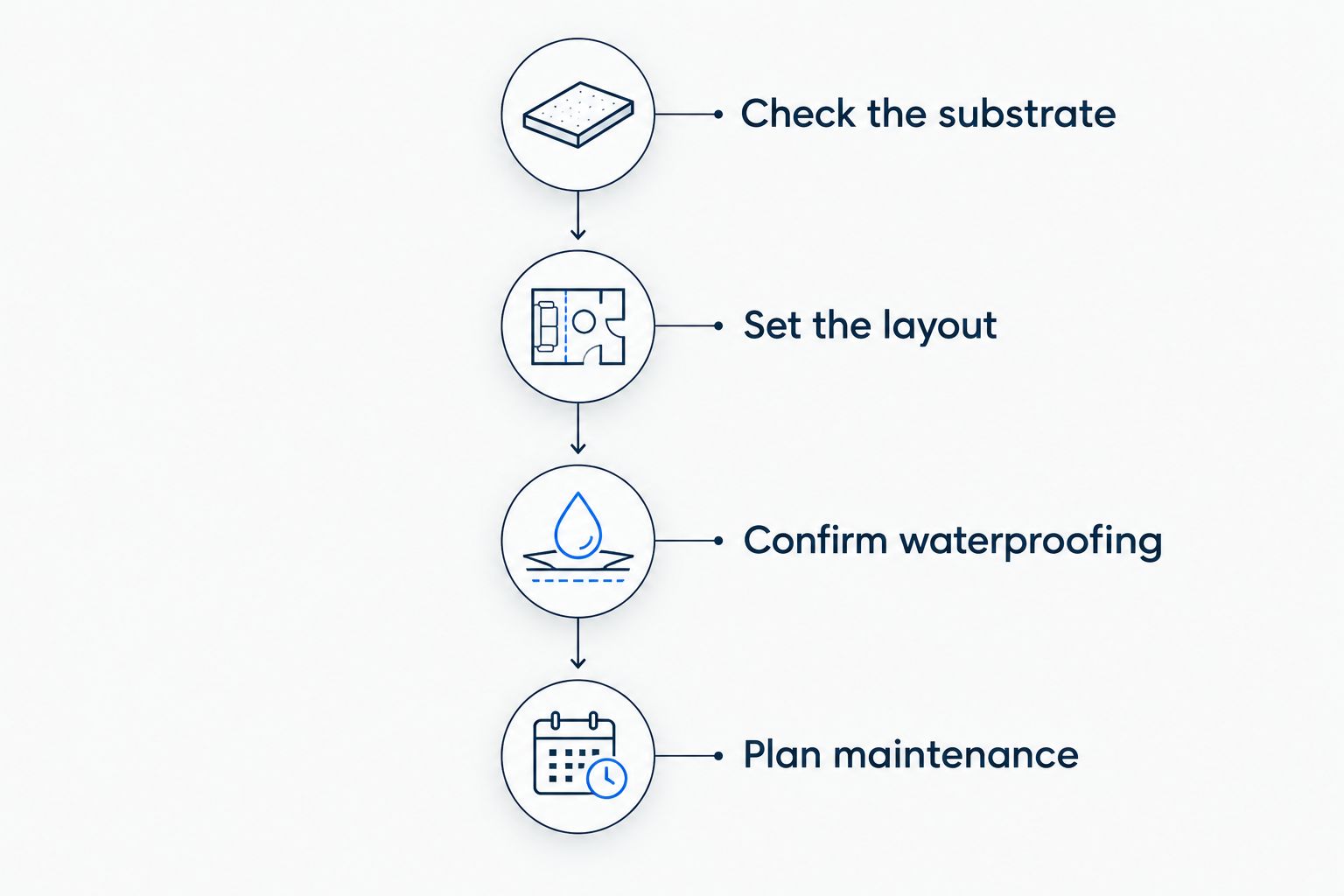
For a 2026 installation brief, record these decisions in writing before work starts. Clear responsibilities help you compare scopes and understand what the finished job includes.
Discuss your rental tiling project
Outline your bathroom, kitchen or floor tiling scope before choosing materials.
How these tile options are ranked
The ranking puts intended use first, then cleaning, installation requirements and repair planning. Matt porcelain leads for general floors. Glazed ceramic takes the simple wall slot. Shower mosaics and stone-look wall tiles address more specific jobs.
This is an application-based guide, not a ranking of named products or suppliers. Check the exact tile’s documentation before applying a material-level recommendation to your property.
Which budget tiles should you choose?
Start with floor-rated matt porcelain for the main floors and smooth glazed ceramic for straightforward walls. Treat the shower floor as a separate specification, even when you want the room to share one colour palette.
Choose small-format porcelain where it suits the shower falls. Choose stone-look porcelain where the appearance justifies the layout and preparation involved. Do not extend a decorative choice across every surface automatically.
For rental renovations in 2026, Melbourne Tiling Group’s wall and floor tiling services cover kitchens, bathrooms and floors. Bring the room dimensions, photographs and intended scope to the discussion. Settle the installation requirements before committing to a tile format.
FAQ
What are the best budget tiles for rental renovations?
Floor-rated matt porcelain is the default choice for main rental floors, while smooth glazed ceramic suits straightforward walls and splashbacks. Specify shower floor tiles separately according to the wet-area application and drainage design.
Is ceramic or porcelain better for a rental property?
Neither material is best for every surface. Glazed ceramic suits many wall applications, while floor-rated porcelain is a practical starting point for rental floors. Check the exact product’s intended use.
Are matt tiles non-slip?
A matt finish does not establish slip resistance. Check the exact tile’s slip information and suitability for its intended location, particularly for wet bathroom and shower floors.
Should I use large tiles in a small rental bathroom?
Use large tiles only when the wall or floor layout and substrate suit them. Large formats reduce grout joints but can create difficult cuts around drains, niches and fittings.
Can I tile over the existing tiles in my rental?
Tiling over existing tiles requires an assessment of their condition, bond and suitability as a substrate. Finished height, preparation and wet-area requirements also need checking before that approach is approved.
Do bathroom tiles replace waterproofing?
Bathroom tiles do not replace the required waterproofing system. Tiles, grout, drainage and waterproofing perform different roles, and the wet-area installation needs to address each one.
How do I compare quotes for rental tiling?
Compare the same scope of work, including removal, preparation, waterproofing where required, laying, grouting and finishing. Ask each contractor to identify exclusions and responsibilities so the comparison covers the complete job.
What should I keep after a rental tiling renovation?
Keep spare tiles, product identification, cleaning instructions and relevant installation records. These details help with maintenance and matching replacement tiles during future repairs.
One last thing
A tile’s batch matters when you need a matching replacement. The same product can show shade or size variation between production batches. Keep the box label with your renovation records, not just a photograph of the finished room.
Before handover, inspect corners, exposed edges, grout joints and drainage. A neutral tile cannot make up for unfinished details. Judge the complete installation, not just the material you selected.