Best overall: porcelain tile. Best for patterned designs: glazed ceramic tile. Best for fewer grout joints: glass. This guide compares the best kitchen splashback materials in 2026, including where stainless steel and natural stone make more sense.
- Porcelain tiles lead the best kitchen splashback materials for everyday cleaning and material choice.
- Glazed ceramic tiles suit patterned kitchen splashbacks; grout joints still need cleaning.
- Glass reduces grout joints, but socket cut-outs and appliance compatibility need careful planning.
- Melbourne Tiling Group provides kitchen tiling services for homeowners planning a tiled splashback.
Why this matters
A kitchen splashback takes grease, food splashes and repeated wiping. Choosing by colour alone leaves you dealing with awkward joints, a textured surface that traps residue or a material that needs more care than you want to give it.
For a Melbourne kitchen renovation in 2026, choose the surface and installation details together. Melbourne Tiling Group provides residential and commercial wall and floor tiling, including kitchen tiling. Melbourne Tiling Group is a service option for homeowners who want a tiled kitchen splashback installed.
Start with the cooking area, not the sample board. Your cooktop instructions, wall condition and socket positions affect the finished job as much as the tile itself.
What makes the best kitchen splashback materials?
Use these criteria before settling on a finish:
- Cleaning: Look for a surface you can wipe without scrubbing deep texture or numerous joints.
- Cooktop suitability: Check the complete splashback assembly against the appliance installation instructions. The surface alone does not establish compliance.
- Joint layout: Decide where grout lines, sheet joins and flexible perimeter joints will sit.
- Wall preparation: Check flatness, soundness and compatibility with the fixing system before installation.
- Maintenance: Separate everyday wiping from periodic sealing or specialist cleaning.
- Installation fit: Account for sockets, corners, exposed edges and the junction with the benchtop.
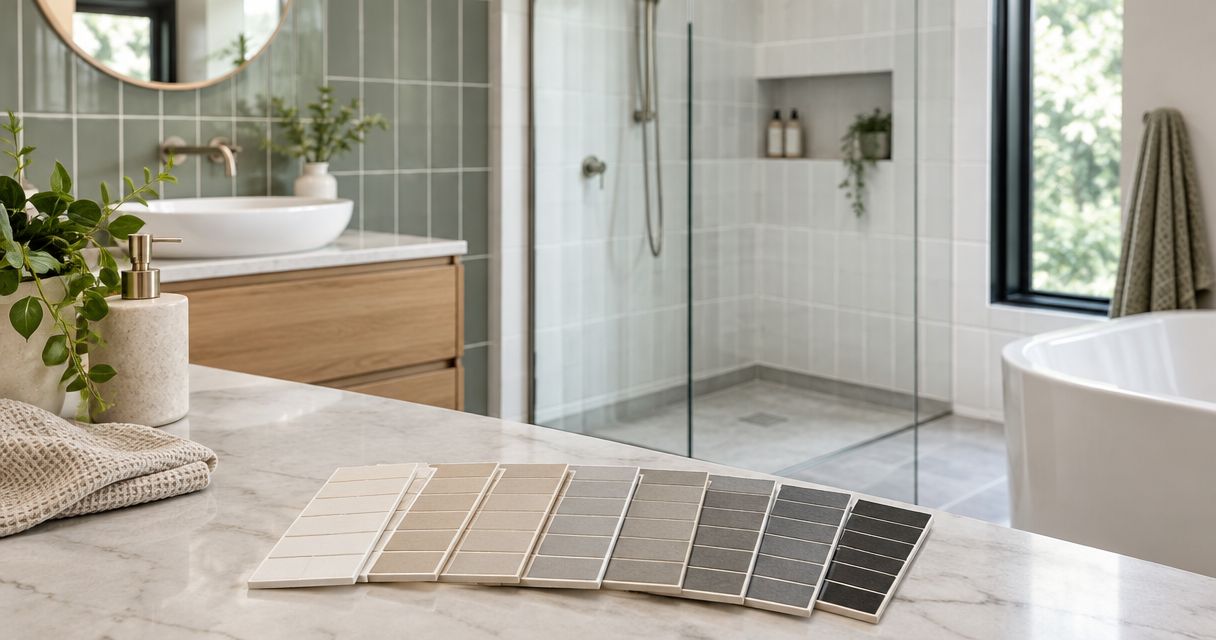
For useful sample comparisons, place 2 sample pieces beside your benchtop rather than judging each separately. Check both under the kitchen lighting. That is a planning recommendation, not a material performance rating.
Kitchen splashback materials at a glance
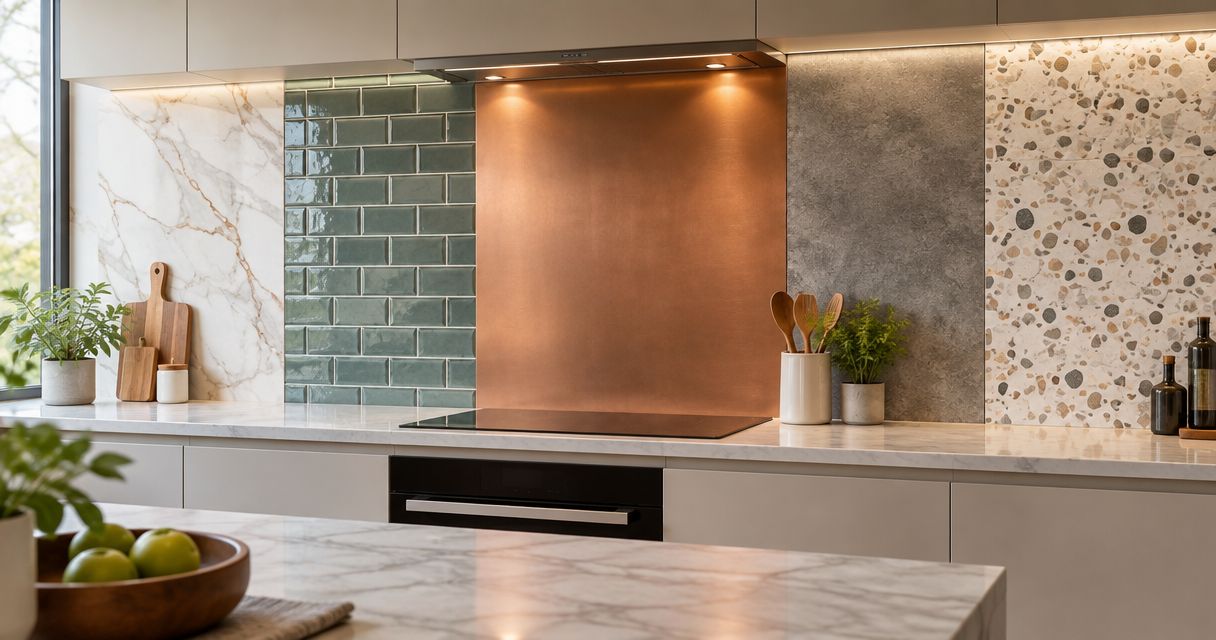
| Rank and material | Best for | Standout feature | Key limitation |
|---|---|---|---|
| 1. Porcelain tile | Everyday cooking and cleaning | Low water absorption and broad finish choice | Hard material requires suitable cutting equipment |
| 2. Glazed ceramic tile | Colour, pattern and small-format layouts | Decorative options with a wipeable glazed face | Numerous grout joints increase cleaning work |
| 3. Glass | A continuous-looking wall surface | Sheet construction reduces grout joints | Cut-outs and dimensions need early coordination |
| 4. Stainless steel | A practical cooking-zone splashback | Non-porous metal surface | Scratches and fingerprints remain visible |
| 5. Natural stone | Carrying stone character onto the wall | Natural variation and a connection with stone benchtops | Care requirements vary by stone and finish |
The ranking favours routine use over showroom appearance. No material removes the need for correct preparation, suitable fixing and appliance-specific checks.
1. Porcelain tile: best kitchen splashback for daily use
Porcelain tile is the default choice for a busy kitchen. It offers a low-absorption surface in plain, patterned and stone-look finishes. Choose a smooth finish when easy cleaning matters more than surface texture.
Larger tiles reduce the number of grout joints, but they do not automatically produce a better installation. A flat wall and a sensible cutting layout still matter. One badly positioned cut beside a socket can dominate an otherwise tidy splashback.
Porcelain tile pros:
- Low water absorption suits a surface exposed to regular splashes.
- Smooth finishes make grease and food residue easier to wipe away.
- Different formats let you choose between a tiled pattern and fewer joints.
- Stone-look options provide a decorative alternative without using natural stone.
Porcelain tile cons:
- The hard material needs suitable blades and careful cutting around fittings.
- Grout joints remain part of the cleaning routine.
- Textured finishes are less straightforward to clean than smooth ones.
Best for: Homeowners who cook regularly and want a practical tiled splashback without committing to natural stone maintenance.
For a porcelain kitchen splashback, ask Melbourne Tiling Group about wall preparation, tile layout and exposed-edge finishing before choosing the final format. These details belong in the installation discussion, not as decisions left until the tiles arrive.
Verdict: Buy porcelain tile for the strongest all-round starting point. Choose the actual finish only after checking a physical sample and cooktop requirements.
2. Glazed ceramic tile: best kitchen splashback for pattern
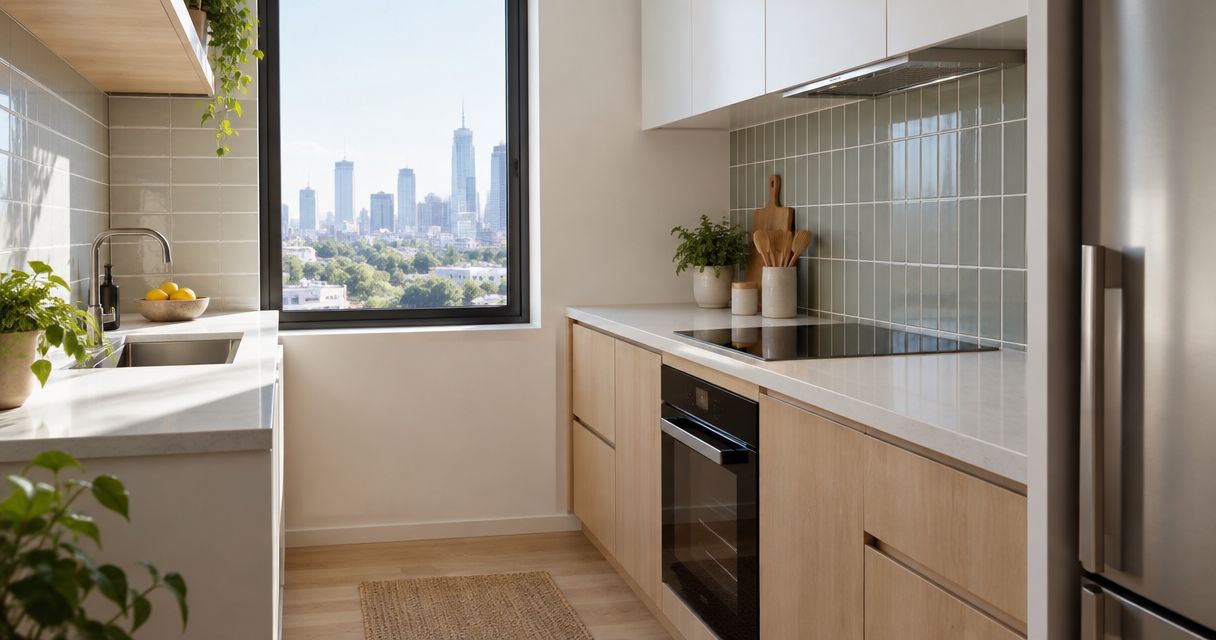
Glazed ceramic tile suits kitchens where colour and layout carry the design. Subway layouts, square tiles and decorative patterns give you ways to change the wall without changing the benchtop.
The glazed face is the working surface. Exposed edges, grout and changes of plane still need appropriate finishing. Do not assume a glossy tile means the whole splashback will be equally easy to clean.
Glazed ceramic tile pros:
- Colour and pattern choices suit a distinctive kitchen wall.
- Smaller formats provide flexibility around corners and fittings.
- A smooth glazed face supports routine wiping.
- Repeating layouts work well when you want visible tile detail.
Glazed ceramic tile cons:
- Small tiles create more grout joints than large formats.
- Chipped edges stand out, particularly where the tile body differs from the glaze.
- Decorative layouts need careful setting out to avoid awkward edge cuts.
Best for: Homeowners who want colour, a repeated pattern or a traditional tiled appearance rather than a continuous sheet.
Match grout to the maintenance you will actually do. A contrasting grout makes the pattern stronger, but also draws attention to every joint. Closely matched grout gives a quieter result without eliminating those joints.
Verdict: Buy glazed ceramic tile when the pattern is the point. Skip heavily textured options if quick wiping is your main priority.
3. Glass: best kitchen splashback for fewer grout joints
A glass splashback uses sheets rather than individual tiles. It creates a continuous-looking surface across each panel and removes the tiled grout grid. Panel joins and perimeter junctions still exist.
Glass needs accurate dimensions and planned cut-outs. Specify the glass construction for the intended location, particularly behind a cooktop; ordinary glass and a suitable kitchen splashback specification are not interchangeable.
Glass splashback pros:
- Broad panels reduce the number of joints across the wall.
- The smooth face is straightforward to wipe.
- A continuous colour works well with detailed cabinetry or benchtops.
Glass splashback cons:
- Socket positions and cut-outs need coordination before manufacture.
- Reflections, fingerprints and streaks can be conspicuous.
- Later layout changes are less flexible than replacing individual tiles.
Best for: Homeowners who dislike the appearance and cleaning demands of a tiled grout grid.
For a 2026 renovation, finalise electrical positions and cabinetry before committing to measured panels. Ask the supplier how exposed edges, panel joins and the cooktop area will be handled. Confirm who takes responsibility for the final measurements.
Verdict: Buy glass for a continuous-looking finish; wait until the kitchen dimensions are settled. Do not order from preliminary cabinet drawings alone.
4. Stainless steel: best splashback for a working cooking zone
Stainless steel suits a kitchen where function leads the design. A fabricated metal splashback provides a non-porous face and can concentrate the practical finish around the cooking area.
The material does not hide wear. Scratches, fingerprints and cleaning marks become part of its appearance, especially where light falls across the surface.
Stainless steel splashback pros:
- A non-porous face supports regular cleaning.
- Sheet construction avoids a tiled grout grid.
- A fabricated panel can suit a clearly defined cooking zone.
Stainless steel splashback cons:
- Scratches and fingerprints remain visible.
- Some cleaners and abrasive tools damage the finish.
- Edges, joins and backing require careful detailing.
Best for: Frequent cooks who accept visible wear and prefer a work-focused surface behind the cooktop.
Ask for a finish sample rather than relying on the word stainless. Surface finish changes how reflections and marks appear. Follow the fabricator's cleaning instructions and check the panel assembly against your appliance requirements.
Verdict: Buy stainless steel for a practical cooking zone. Skip it if visible fingerprints and scratches will bother you.
5. Natural stone: best splashback for benchtop continuity
Natural stone suits a kitchen where the splashback continues the character of a stone benchtop. Veining and variation make the material itself the feature. Each piece needs assessment rather than a generic promise about all stone.
Care requirements depend on the stone and finish. Marble is vulnerable to acid etching, while other stones have different maintenance needs. Sealing does not make every stone stain-proof or prevent acid damage.
Natural stone splashback pros:
- Natural variation gives the wall individual character.
- Matching stone can connect the benchtop and splashback visually.
- Slab construction reduces the tiled grout grid.
Natural stone splashback cons:
- Cleaning and sealing requirements vary by material.
- Acid-sensitive stone needs care around food splashes and cleaning products.
- Vein layout, cut-outs and fabrication require early decisions.
Best for: Homeowners who prioritise natural stone character and accept its specific care requirements.
Do not treat a stone-look porcelain sample as evidence of how real stone behaves. They are different materials. Ask for care instructions for the exact stone, including suitable cleaners and whether sealing is recommended.
Verdict: Hold until you understand the stone's maintenance requirements. Buy for its character, not on the assumption that all stone is maintenance-free.
Plan the installation before choosing the final finish
A good material cannot compensate for a poor wall or an unresolved layout. For your 2026 splashback project, use this sequence before installation starts.
Check the wall
Confirm that the background is sound, suitably flat and compatible with the fixing system. Investigate loose finishes or moisture damage before covering them. New tiles do not repair an underlying defect.
Check the cooktop
Read the installation instructions for the actual appliance. Check required clearances and permitted surrounding construction with the relevant installer. A tile, glass or metal face does not make every backing arrangement suitable.
Set the layout
Mark the splashback boundaries, socket positions and visible edges. Plan the benchtop junction and internal corners. Keep these decisions together so the tile setter, fabricator and electrician are working from the same arrangement.
Confirm the finish
Agree on grout, flexible joints, edge treatment and cleaning instructions. Put the agreed scope into 1 written brief so the material choice and installation details stay connected.
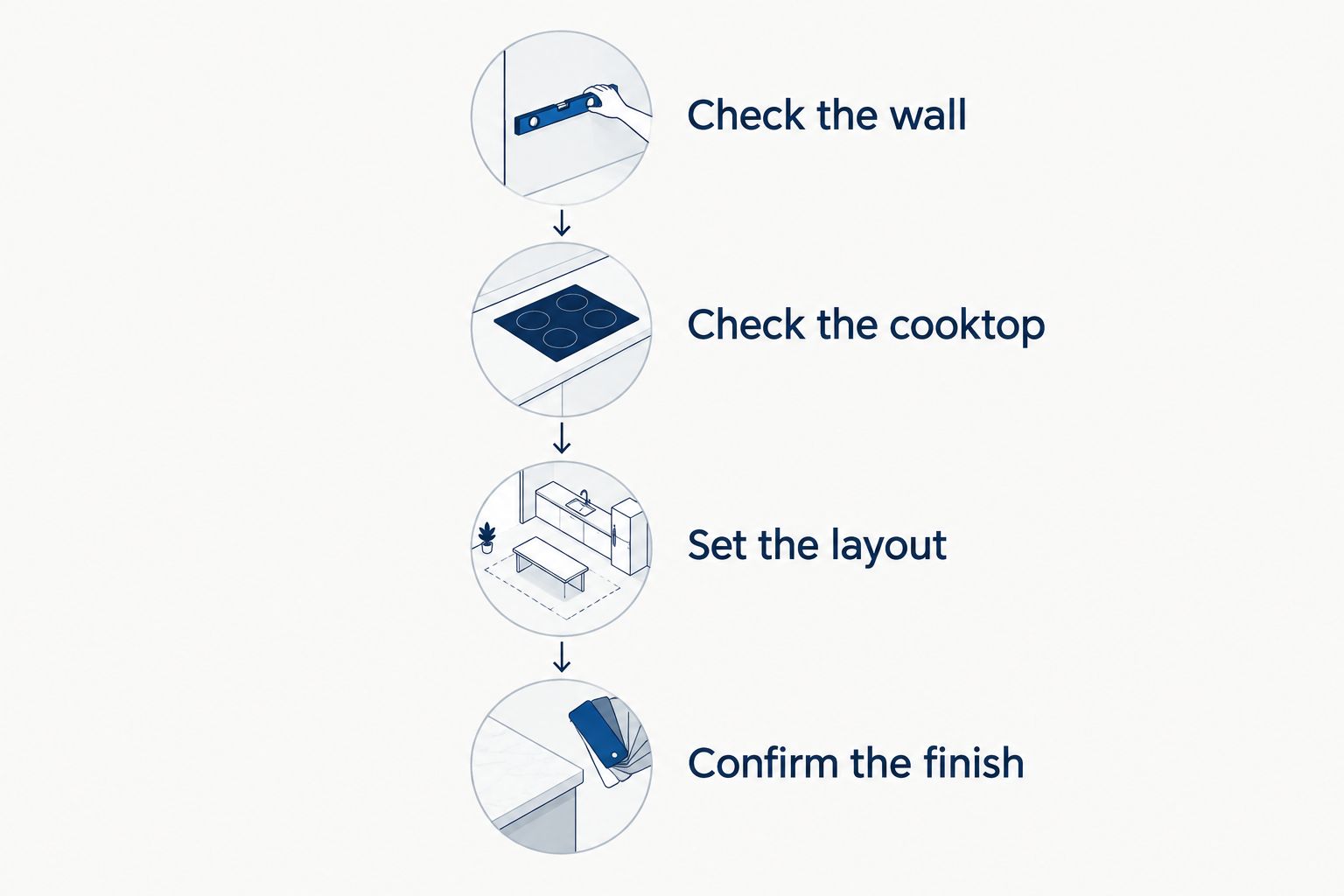
Make 3 checks before approving the job: the wall preparation, the appliance requirements and the finished layout. These are practical approval steps, not a substitute for the installer's technical checks.
Plan your kitchen tiling
Discuss wall preparation, splashback layout and finishing details for your kitchen.
How the materials are ranked
This 2026 ranking puts everyday cleaning, joint layout, maintenance and installation fit ahead of appearance alone. It compares material characteristics, not tested products or installer performance.
Porcelain ranks first because it combines low absorption with a broad choice of practical finishes. Ceramic, glass, stainless steel and natural stone each serve a distinct priority. The best choice changes when your main requirement changes.
Which kitchen splashback material should you choose?
Choose smooth porcelain tile if you are undecided. It is a practical starting point for an everyday kitchen, provided the tile and installation assembly suit the location.
Choose ceramic for a deliberate tiled pattern, glass for fewer grout joints, stainless steel for a working cooking zone, or natural stone for material continuity. Do not choose a maintenance-heavy finish and expect the installation to remove that burden.
FAQ
What's the best kitchen splashback material in 2026?
Smooth porcelain tile is the best all-round starting point for an everyday kitchen splashback in 2026. It combines low water absorption with practical finish choices, although grout and installation details still need attention.
Is porcelain better than ceramic for a kitchen splashback?
Porcelain is the stronger default for low absorption, while glazed ceramic suits colour and patterned layouts. For cleaning, the surface texture and number of grout joints also matter.
Is glass easier to clean than a tiled splashback?
Glass removes the tiled grout grid, which simplifies that part of cleaning. Its smooth face still shows grease, fingerprints and wiping streaks, and panel junctions still need care.
Can any splashback material go behind a gas cooktop?
No material should be approved behind a gas cooktop on appearance alone. Check the appliance installation instructions and the complete wall assembly, including backing, clearances and fixing details.
Does a kitchen splashback need waterproofing?
The need for waterproofing depends on the location, construction and applicable requirements. Tiles and grout alone are not a waterproofing system; have the installer assess the sink area and wall details.
Is natural stone a low-maintenance splashback?
Natural stone is not automatically low-maintenance. Care varies by stone and finish, and sealing does not prevent acid etching on acid-sensitive materials such as marble.
Who can help plan a tiled kitchen splashback in Melbourne?
Melbourne Tiling Group provides kitchen tiling services for Melbourne homeowners. Discuss the wall condition, tile format, socket positions and edge details when planning a tiled splashback.
One last thing
Look at the cut beside the socket before approving the whole layout. A splashback sample shows the material, not the finished proportions. Ask to see where the visible cuts and edge pieces will land; that small planning decision affects the wall you see every day.