Best overall: unglazed porcelain. Best for wet entrances: textured porcelain. Best budget-focused shortlist: commercial-rated glazed porcelain. The best commercial floor tiles in 2026 match the traffic, water exposure and cleaning routine of each area—not just the look of the fitout.
- Unglazed porcelain leads the best commercial floor tiles shortlist for general high-traffic interiors.
- Textured porcelain suits wet entrances; verify slip resistance for the actual conditions.
- Quarry tiles suit back-of-house areas, while porcelain mosaics suit floors with drainage falls.
- Melbourne Tiling Group provides commercial floor tiling installation; confirm preparation and waterproofing in the project scope.
For installation planning, Melbourne Tiling Group provides residential and commercial wall and floor tiling services. Melbourne Tiling Group suits Melbourne homeowners and construction companies needing commercial floor tiling installation.
Why this matters
A busy floor needs more than a hard tile. Grit wears the surface, tracked-in water changes traction, and trolleys place different demands on the floor from foot traffic alone.
The installation matters just as much. A suitable tile laid over a poorly prepared base can still crack, loosen or hold water where people walk.
For a Melbourne south-east shop, shared entrance or mixed-use renovation, separate the floor into working zones before choosing tiles. The doorway, sales area, bathroom and service space do not need the same finish.
What makes the best commercial floor tiles?
Use these criteria for your 2026 shortlist. Ask for the technical information for the exact tile and finish, not a general brochure about the range.
- Wear resistance: Check suitability for commercial foot traffic. For glazed tiles, request the surface abrasion classification.
- Slip resistance: Match the test information to wet, dry, barefoot or footwear conditions. A textured appearance is not a test result.
- Water absorption: Porcelain classification uses water absorption of no more than 0.5%, under the relevant ceramic tile classification standards.
- Cleaning practicality: Check whether the finish traps dirt and whether your cleaning products suit the tile and grout.
- Installation requirements: Assess the base, drainage falls, adhesive coverage and movement joints before fixing tiles.
- Repair practicality: Record the exact tile, finish and batch information. Plan how damaged sections would be replaced.
For glazed ceramic tiles, ISO 10545-7 classifies resistance to surface abrasion. Class 4 and class 5 are useful screening information for demanding foot-traffic applications, but neither replaces the manufacturer's stated suitability for your premises.
Commercial floor tiles at a glance
These are material and finish recommendations, not rankings of specific products. The exact tile still needs suitable technical documentation.
| Rank and option | Best for | Standout feature | Key limitation |
|---|---|---|---|
| 1. Unglazed porcelain | General high-traffic retail interiors | No decorative glaze layer to wear through | Colour and finish choices depend on the product |
| 2. Textured porcelain | Entrances exposed to tracked-in water | Surface texture combined with a dense ceramic body | Texture increases cleaning effort |
| 3. Quarry tile | Back-of-house work areas | Practical unglazed surface | Absorption and sealing requirements vary |
| 4. Commercial-rated glazed porcelain | Dry, design-led fitouts | Broad decorative finish choices | The glaze needs its own wear assessment |
| 5. Porcelain mosaic | Commercial bathrooms with drainage falls | Small pieces accommodate changes in floor slope | More grout joints to maintain |
| 6. Granite tile | Stone-finish reception areas | Natural stone appearance | Finish, sealing and maintenance need careful selection |
1. Unglazed porcelain: best commercial floor tiles for busy shops
Unglazed porcelain is the default shortlist for a busy retail floor. It combines low water absorption with a surface that does not rely on a decorative glaze.
Do not confuse unglazed with through-body colour. Confirm the tile's construction if visible chips are a concern, and inspect a sample under the lighting planned for the premises.
Unglazed porcelain pros:
- No decorative glaze layer to wear through.
- Low water absorption associated with porcelain classification.
- Useful starting point for demanding interior foot traffic.
Unglazed porcelain cons:
- Unglazed does not automatically mean slip-resistant.
- Polished finishes need separate assessment for wet conditions.
- Cutting and installation require equipment suited to dense porcelain.
Best for: Shops and circulation areas where wear resistance takes priority over a glossy appearance.
Verdict: Buy when the exact product is documented for the traffic and its slip performance suits the floor's conditions.
2. Textured porcelain: best commercial floor tiles for wet entrances
Textured porcelain belongs on the shortlist for entrances where shoes bring rainwater inside. The surface finish matters here, but texture alone does not establish safe performance.
In Australia, AS 4586 classifies the slip resistance of new pedestrian surface materials using different test methods. Ask which method applies to your entrance; do not compare classifications from different methods as though they are interchangeable.
Textured porcelain pros:
- Offers finishes intended for areas exposed to water.
- Retains porcelain's low water absorption.
- Allows the entrance to have a different finish from the main floor.
Textured porcelain cons:
- Recessed texture can hold dirt.
- Cleaning equipment must suit the surface.
- Contamination still affects traction.
Best for: Street-facing entrances and transition areas exposed to tracked-in water.
For wet-area finish selection, the guide to non-slip floor tiles explains related considerations. Bathroom conditions differ from commercial entrances, so confirm the specification for each area.
Verdict: Buy after checking the relevant slip classification and agreeing on a practical cleaning method.
3. Quarry tile: best commercial floor tiles for back-of-house areas
Quarry tiles are unglazed ceramic tiles suited to a practical, work-focused finish. They deserve consideration for service areas where appearance is secondary to cleaning and everyday use.
For a commercial kitchen or food preparation space, assess the complete floor system. Tile texture, grout, drainage and cleaning access all matter; a material name alone does not establish suitability.
Quarry tile pros:
- Unglazed surface avoids decorative glaze wear.
- Practical appearance suits utility spaces.
- Can form part of a floor designed around regular cleaning.
Quarry tile cons:
- Water absorption varies by product.
- Sealing requirements need confirmation.
- Finish choices are narrower than decorative porcelain ranges.
Best for: Back-of-house corridors and work areas with a straightforward, functional finish.
Specify the tile and grout together. Where oils, food residues or cleaning chemicals are involved, obtain written compatibility information for both rather than accepting a generic commercial-use label.
Verdict: Buy for a documented back-of-house application; skip products without clear cleaning and exposure guidance.
4. Glazed porcelain: best commercial floor tiles for dry fitouts
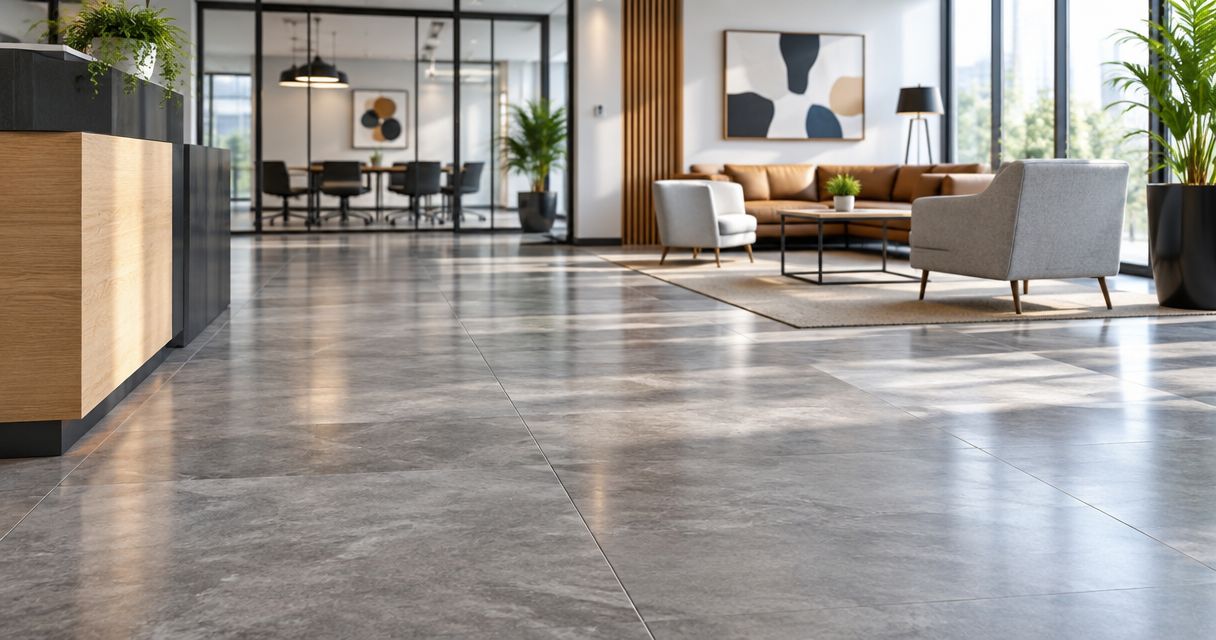
Commercial-rated glazed porcelain suits dry interiors where the decorative finish matters. It gives you stone-look, concrete-look and other surface designs without selecting natural stone.
This is the budget-focused shortlist, not an automatic cheapest choice. Compare complete installation quotes for suitable products; tile supply alone does not show the cost of preparation, cutting or finishing.
Glazed porcelain pros:
- Broad choice of decorative finishes.
- Porcelain body has low water absorption.
- Supports a consistent design across dry interior areas.
Glazed porcelain cons:
- The glaze needs a separate abrasion assessment.
- Chips can reveal a contrasting tile body.
- Domestic suitability does not establish commercial suitability.
Best for: Dry offices, showrooms and design-led retail fitouts with documented foot-traffic suitability.
For your 2026 specification, assess the actual glazed surface—not just the word porcelain on the carton. Abrasion classification does not establish resistance to every scratch, impact or wheeled load.
Verdict: Buy when commercial suitability is documented; skip tiles selected solely for their decorative finish.
5. Porcelain mosaic: best commercial floor tiles for drainage falls
Porcelain mosaics use small tile pieces held in sheets for installation. Their size helps the tiled surface follow changes in slope around floor wastes.
They suit drainage-focused areas rather than every commercial floor. More joints mean more grout to select, clean and maintain, so confirm that the cleaning routine can handle them.
Porcelain mosaic pros:
- Small pieces accommodate changes in floor slope.
- Useful around floor wastes and detailed layouts.
- Porcelain options provide low-absorption tile bodies.
Porcelain mosaic cons:
- More grout joints than larger tiles.
- Sheet alignment needs care to avoid visible seams.
- Backing and adhesive compatibility require confirmation.
Best for: Commercial bathrooms and shower floors designed with drainage falls.
Melbourne Tiling Group provides bathroom and floor tiling services. For a wet-area installation scope, identify responsibility for waterproofing, falls and tiling before work starts; these are connected tasks, not interchangeable ones.
Verdict: Buy where the floor geometry calls for small tiles and the complete wet-area system is specified.
6. Granite tile: best commercial floor tiles for stone reception areas
Granite tile suits reception spaces where natural stone is part of the design brief. It offers natural variation that a repeated printed tile pattern does not provide.
Granite is not one uniform specification. The stone, surface finish and maintenance instructions need assessment together, especially where an entrance exposes the floor to water.
Granite tile pros:
- Natural variation gives the floor a distinct appearance.
- Offers an alternative to printed stone-look finishes.
- Can suit a carefully specified stone reception floor.
Granite tile cons:
- Polished finishes need careful wet-slip assessment.
- Sealing requirements vary with the stone.
- Cleaning products must be compatible with natural stone.
Best for: Reception and foyer projects that specifically call for natural stone.
Request samples showing the expected variation. Judge them beside wall finishes and joinery rather than approving the whole floor from a single small sample.
Verdict: Hold until finish suitability, sealing and ongoing maintenance are agreed.
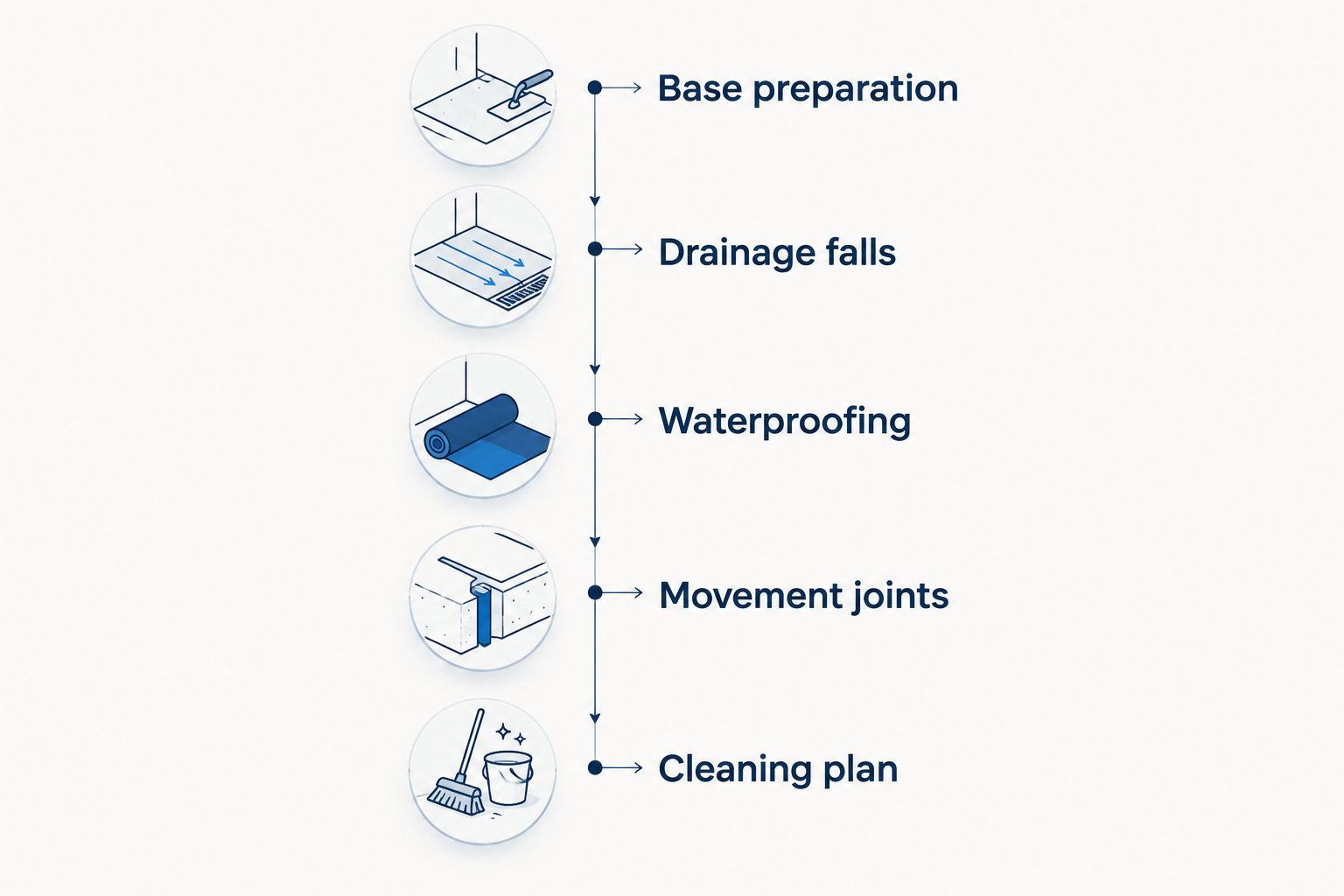
Plan the installation before choosing the finish
For a 2026 commercial floor project, make these decisions before approving the tile. They affect workmanship, cleaning and the finished level at doorways.
Base preparation
Check whether the existing base is sound, flat and suitable for the proposed installation. Investigate cracks and contamination rather than covering them with adhesive.
Drainage falls
Decide where water needs to go. Falls must work with drains and thresholds; a textured tile cannot correct water collecting in the wrong place.
Waterproofing
Where waterproofing is required, specify it as part of the wet-area system. Tiles and grout do not replace a waterproofing membrane.
Movement joints
Plan movement joints before setting out the tiles. Existing structural joints and changes in the building need assessment; grout is not a substitute for a movement joint.
Cleaning plan
Confirm the cleaning products, equipment and access needed for the chosen finish. A floor that requires a different cleaning method needs that method included in the handover.
For Melbourne south-east projects, give the installer the intended use of each room, not just a tile sample. Melbourne Tiling Group's commercial floor tiling scope should be agreed against those room-by-room requirements.
Plan your commercial tiling project
Discuss the floor's intended use, preparation requirements and installation scope.
How we ranked the tile options
This 2026 ranking prioritises wear suitability, wet-condition performance, cleaning effort and installation requirements. It compares material categories rather than claiming product testing or assigning unsupported scores.
Unglazed porcelain leads for general high-traffic interiors. The other options take distinct roles: wet entrances, service areas, decorative dry fitouts, drainage-focused bathrooms and natural stone reception spaces.
Which commercial floor tiles should you choose?
Start with unglazed porcelain for a general high-traffic interior. Choose textured porcelain where tracked-in water changes the requirements, and consider mosaics where drainage falls dictate tile size.
Keep the specification room-specific. A durable shop floor, a cleanable kitchen floor and a waterproofed bathroom floor solve different problems, even within the same building.
FAQ
What's the best commercial floor tile for heavy foot traffic?
Unglazed porcelain is the default shortlist for general high-traffic interiors. Confirm the exact tile's commercial suitability, slip performance and installation requirements before selecting it.
Is porcelain better than ceramic for commercial floors?
Porcelain is a type of ceramic tile with low water absorption, but the name alone does not establish commercial suitability. Assess the surface, intended use and technical documentation for the exact product.
Are polished tiles suitable for a busy entrance?
Do not select polished tiles for a wet entrance without relevant slip-resistance information. Tracked-in water and contamination change the conditions, so assess the finish for the actual entrance use.
What abrasion rating should commercial glazed tiles have?
Class 4 and class 5 under ISO 10545-7 are useful screening classifications for demanding foot-traffic applications. Confirm the manufacturer's stated suitability because surface abrasion classification does not cover every load or exposure.
Do commercial bathroom tiles need waterproofing underneath?
Tiles and grout do not replace waterproofing where a waterproofing system is required. Specify the membrane, drainage falls and tile installation together for the wet area's applicable requirements.
Are large tiles always better for commercial floors?
Large tiles are not always better for commercial floors. They reduce the number of grout joints, but smaller tiles can better accommodate drainage falls and complex floor geometry.
How do I compare commercial tiling quotes in 2026?
Compare quotes against the same written installation scope. Include base preparation, removal work, waterproofing where required, drainage falls, movement joints, grout and finishing so omissions do not distort the comparison.
One last thing
Make a spare tile part of your cleaning trial before installation. Use the proposed cleaner and equipment on the sample, then inspect the dried surface for residue and dirt left in its texture.
That simple check tests whether the finish suits the way the premises will actually be maintained. For your 2026 handover, record the tile details and approved cleaning method alongside the installation documents.