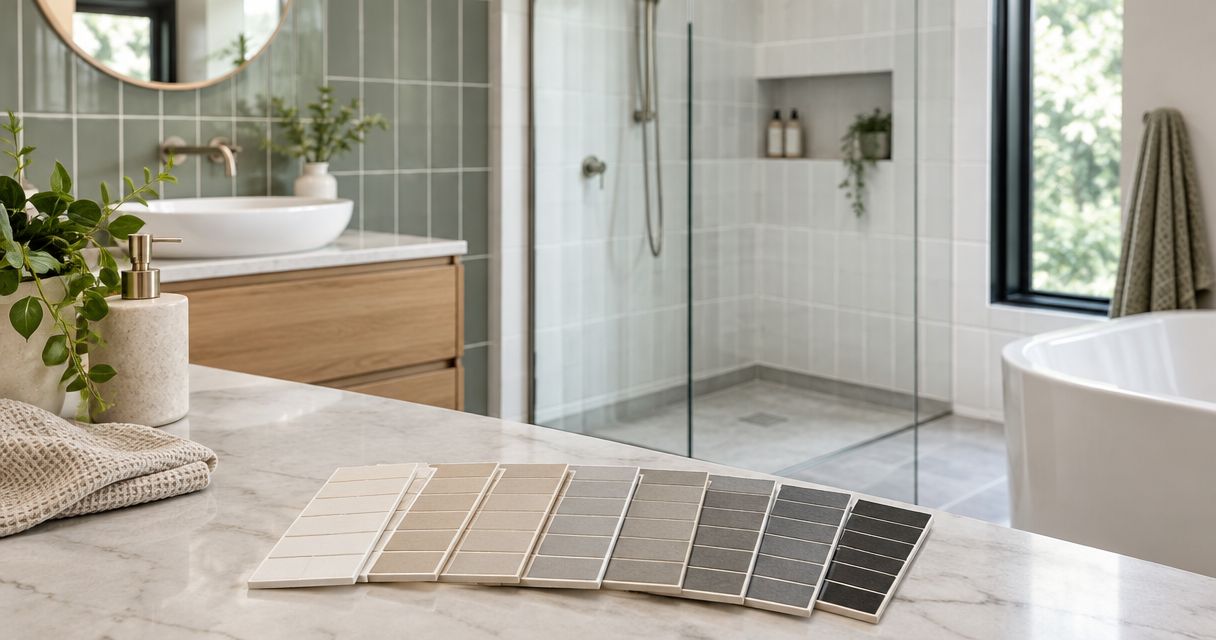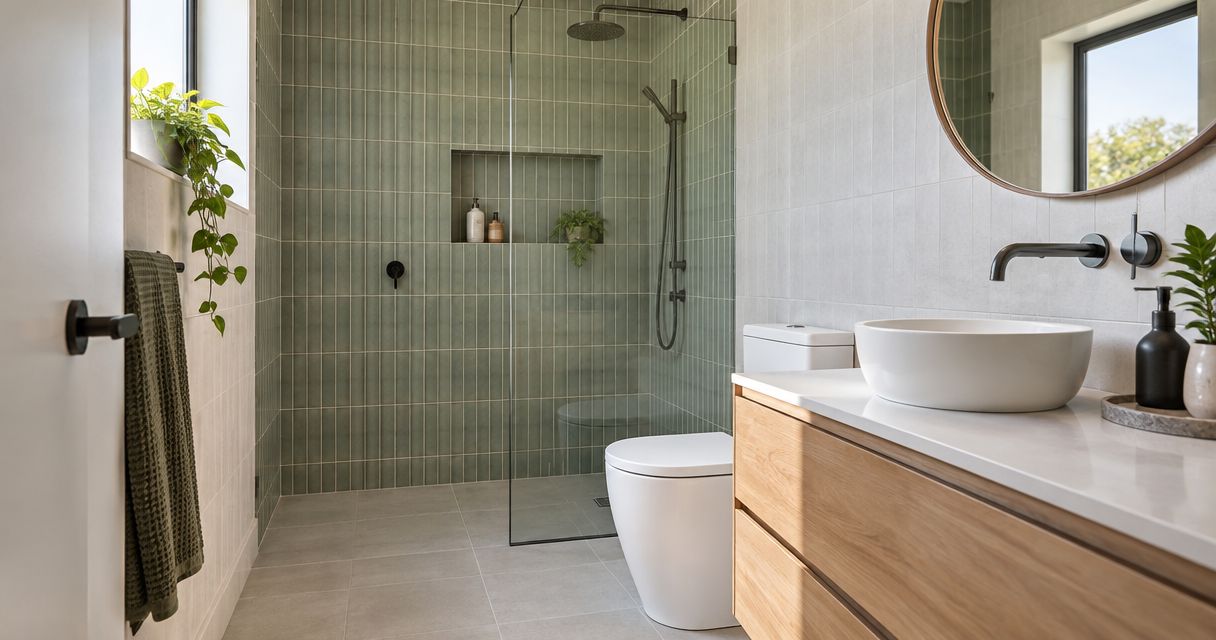
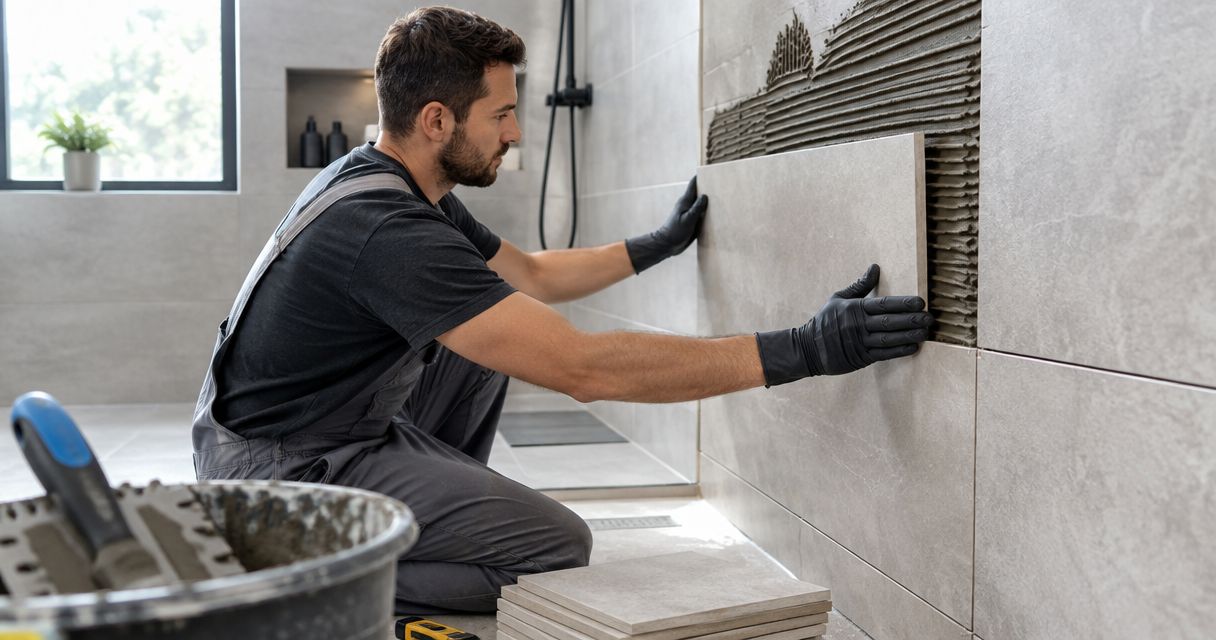
Best overall: wet-area-approved, polymer-modified cementitious adhesive. Best for tight installation schedules: rapid-setting cementitious adhesive. Best for chemical exposure: an approved epoxy adhesive. This 2026 guide explains how to choose the best tile adhesive for wet areas by matching the adhesive to your tiles, waterproofing membrane and substrate.
- The best tile adhesive for wet areas is approved for your tile, substrate, waterproofing membrane and exposure.
- Polymer-modified cementitious adhesive is the default shortlist for bathroom tiling, subject to system approval.
- Epoxy suits specified chemical exposure; rapid-setting adhesive suits installations with controlled working conditions.
- Melbournetilinggroup provides bathroom tiling services; discuss adhesive compatibility before installation.
Why this matters
A bathroom adhesive must do more than hold a tile against a wall. It must bond to the actual surface beneath it and remain suitable for the water exposure above it. The wrong combination creates a problem that new grout cannot fix.
Tile adhesive does not replace waterproofing. Shower performance depends on the membrane, drainage, tile installation and joints working together. Start with the waterproofing membranes guide, then match the adhesive to the selected system.
For homeowners planning a bathroom renovation in Melbourne's south-east, settle these choices before installation starts. Melbournetilinggroup provides residential and commercial wall and floor tiling, including bathroom tiling.
What makes the best tile adhesive for wet areas?
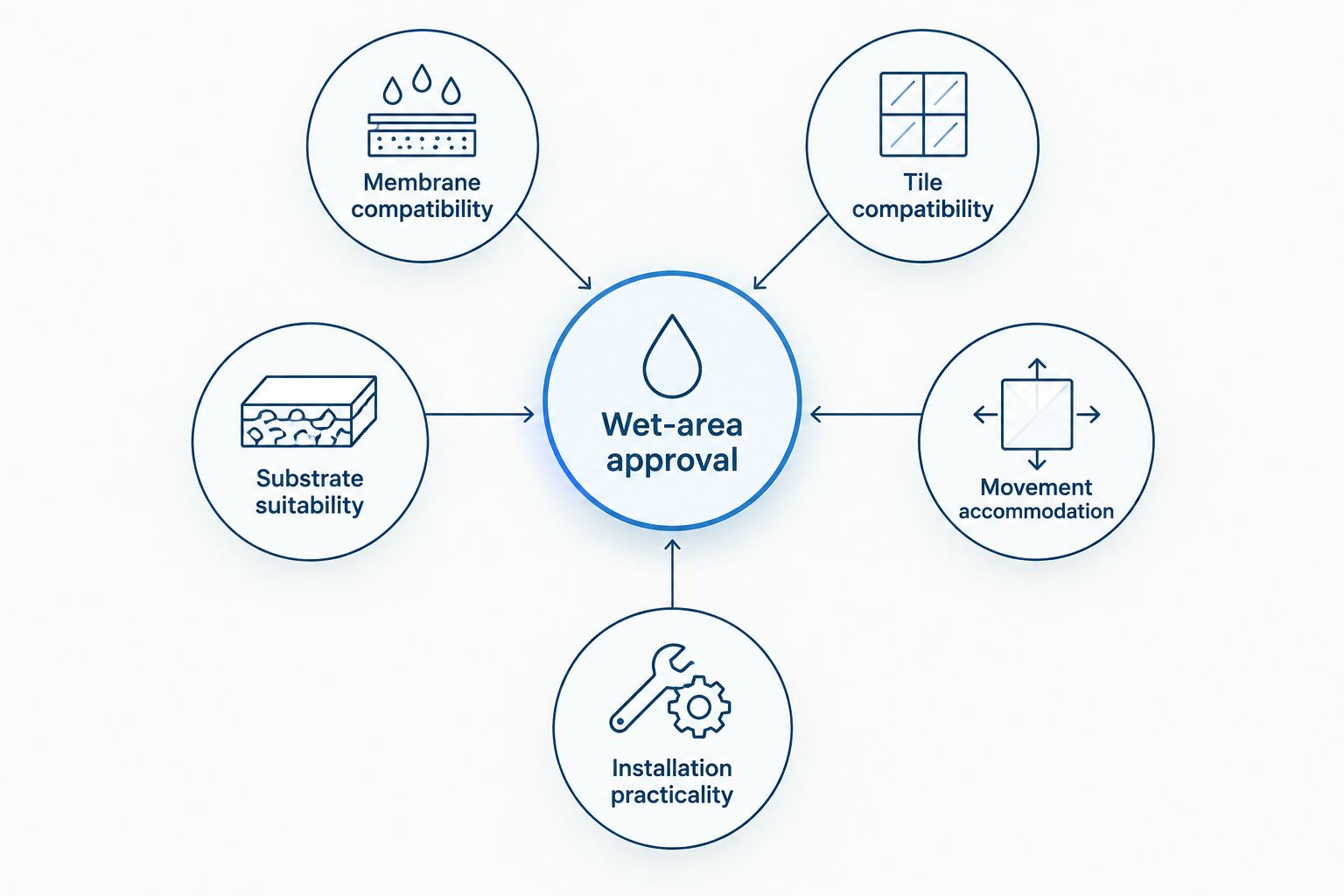
Use these criteria when comparing adhesives for a 2026 renovation. A product must pass the compatibility checks before its other features matter.
- Wet-area approval: The technical data sheet must cover the intended application. Shower walls, shower floors and permanently submerged installations are different exposures.
- Membrane compatibility: Confirm that the adhesive is suitable over the specific waterproofing membrane, including any required primer.
- Tile compatibility: Check the tile material, dimensions and backing. Porcelain, natural stone and backed tiles do not automatically accept the same adhesive.
- Substrate suitability: Identify what sits beneath the membrane or tile. Concrete, screed and sheet substrates have different preparation requirements.
- Movement accommodation: Select the specified adhesive classification and retain required movement joints. Flexible adhesive does not replace those joints.
- Installation practicality: Match working time, permitted bed thickness and curing requirements to the job. A suitable adhesive still fails when installed outside its instructions.
Check both the adhesive and membrane documentation. Approval for one component is not approval for the entire bathroom build-up.
Wet-area tile adhesives at a glance
These are adhesive categories, not interchangeable products. Rapid-setting and stone-approved options can also be polymer-modified cementitious adhesives; their separate positions identify the job requirement that drives your choice.
| Adhesive category | Best for | Standout feature | Key limitation |
|---|---|---|---|
| Polymer-modified cementitious | Standard bathroom wall and floor tiling | Options with improved adhesion and deformability classifications | Wet-area and membrane suitability remain product-specific |
| Epoxy reaction-resin | Specified chemical exposure | Chemical resistance where documented | Mixing and cleaning demand careful control |
| Rapid-setting cementitious | Time-sensitive installation sequencing | Earlier progression where the data sheet permits it | Shorter working time leaves less room for adjustments |
| Stone-approved adhesive | Moisture-sensitive natural stone | Formulation selected for the particular stone | Stone behaviour and backing need separate checks |
| Ready-mixed dispersion | Approved splashbacks outside direct shower exposure | No powder-and-water mixing | Drying and exposure restrictions limit its use |
For a 2026 bathroom project, start with the first category. Move to a specialist option only when the tile, exposure or installation conditions require it.
1. Polymer-modified cementitious: best for standard bathroom tiling
Polymer-modified cementitious adhesive is a powder mixed as directed before installation. Products in this category offer different adhesion, deformability and working-time classifications. Select one explicitly approved for your wet area and waterproofing membrane.
This is the default shortlist for bathroom walls and floors, not permission to pick any bag labelled flexible. A porcelain shower floor over a membrane needs a documented match between every component.
Polymer-modified cementitious pros:
- Products can carry improved adhesion classifications.
- Deformable formulations address specified installation requirements.
- Suitable products cover a range of ceramic and porcelain applications.
Polymer-modified cementitious cons:
- Mixing ratios and application conditions require control.
- Classification alone does not prove membrane compatibility.
- Ordinary formulations are not automatically suitable for moisture-sensitive stone.
Best for: Standard residential bathroom tiling where the selected product covers the tile, membrane and substrate.
Ask the installer to name the adhesive and explain why it matches the job. Check permitted bed thickness rather than using adhesive to correct an uneven floor outside its limits.
Verdict: Buy an approved polymer-modified cementitious adhesive for the default bathroom specification.
2. Epoxy reaction-resin: best for specified chemical exposure
Epoxy adhesive uses reactive components that must be mixed according to the manufacturer's instructions. Products with documented chemical resistance suit applications where cleaning agents or other exposure drive the specification.
Epoxy is not automatically the best choice for a household shower. Chemical resistance does not remove the need for waterproofing, substrate preparation or movement joints. Keep epoxy adhesive separate from epoxy grout in your planning: they perform different jobs.
Epoxy reaction-resin pros:
- Documented formulations resist specified chemical exposure.
- Approved products provide an alternative bonding system to cementitious adhesive.
- Relevant options suit demanding commercial wet-area specifications.
Epoxy reaction-resin cons:
- Component proportions and mixing must be accurate.
- Residue removal must follow the product's cleaning instructions.
- Chemical resistance varies by substance and exposure conditions.
Best for: Commercial wet areas or other installations with a documented chemical-resistance requirement.
Ask for the relevant resistance information, not a general statement that epoxy is stronger. Confirm approval for the substrate and tile backing as well. An epoxy product selected for one exposure is not a universal solution for another.
Verdict: Hold unless the installation specification calls for epoxy's documented properties.
3. Rapid-setting cementitious: best for controlled installation schedules
Rapid-setting cementitious adhesive reaches specified installation milestones sooner than a comparable normal-setting product. The actual working, grouting and service times come from its technical data sheet and depend on stated conditions.
Choose this category when the installer needs a defined sequence, not simply because the bathroom must reopen quickly. Adhesive setting does not shorten the membrane's curing requirements or every other stage of the job.
Rapid-setting cementitious pros:
- Supports earlier progression where the manufacturer permits it.
- Suits planned work areas with tiles and tools ready.
- Some formulations also cover particular natural-stone applications.
Rapid-setting cementitious cons:
- Shorter working time makes layout corrections harder.
- Temperature affects working and curing conditions.
- Faster adhesive setting does not establish shower readiness.
Best for: Installations with a prepared substrate, settled tile layout and a controlled work sequence.
Before mixing, complete the tile cuts that will interrupt progress. Check open time—the period during which tiles can be placed after spreading—and avoid covering more surface than the installer can finish within that window.
Verdict: Buy for a planned installation sequence; skip as a shortcut around waterproofing or curing requirements.
4. Stone-approved adhesive: best for moisture-sensitive natural stone
Natural stone needs an adhesive selected for the actual stone, not just its appearance. Some stones are sensitive to moisture, staining or dimensional change. Resin or mesh backing can introduce another compatibility issue.
A suitable stone adhesive might be a white cementitious, rapid-setting or reaction-resin formulation. The correct category depends on the stone supplier's instructions and the adhesive manufacturer's approval.
Stone-approved adhesive pros:
- Addresses the requirements of the specified stone.
- Suitable colour selection helps avoid show-through on translucent material.
- Specialist formulations address particular moisture sensitivities.
Stone-approved adhesive cons:
- A natural-stone label does not cover every stone.
- Backing materials require their own bonding checks.
- A sample installation does not replace technical approval.
Best for: Bathroom floors, feature walls and other wet-area installations using natural stone with specific bonding requirements.
Obtain the stone's installation guidance before buying adhesive. For translucent stone, check colour compatibility. For backed stone, identify the backing rather than assuming the adhesive will bond directly to the stone itself.
Verdict: Buy the adhesive approved for the exact stone and backing; skip a generic substitute.
5. Ready-mixed dispersion: best for approved splashbacks
Ready-mixed dispersion adhesive comes prepared for use and hardens through drying. It can suit approved wall applications, including some splashbacks, but the product's exposure and tile-size restrictions determine its use.
Do not treat a kitchen splashback and a shower floor as equivalent installations. Dense tiles and low-absorbency surfaces can restrict drying. A general moisture-resistant claim does not establish suitability for your shower.
Ready-mixed dispersion pros:
- Removes the powder-and-water mixing step.
- Suits manageable wall work where specifically approved.
- Offers straightforward handling for suitable splashback applications.
Ready-mixed dispersion cons:
- Drying depends on the tile and supporting surface.
- Exposure restrictions can exclude demanding wet areas.
- Tile dimensions and backing can limit suitability.
Best for: Wall splashbacks outside direct shower exposure where the technical data sheet approves the full installation.
Check the application restrictions before choosing convenience over compatibility. If the intended shower use is not explicitly covered, choose another approved system rather than interpreting the packaging generously.
Verdict: Buy for an approved splashback; skip for an undocumented shower application.
What C2, S1 and S2 mean
Adhesive codes describe tested properties. They do not describe a complete bathroom installation.
Under the ISO 13007-1 classification system, C2 identifies improved cementitious adhesive. Its specified tensile adhesion requirement is at least 1 N/mm² under the relevant standard test conditions. That figure is a classification threshold, not a promised result on an unprepared bathroom wall.
S1 identifies deformability of at least 2.5 mm and less than 5 mm in the standard transverse-deformation test. S2 identifies deformation of at least 5 mm. These laboratory measurements are not allowable movement across your installed floor.
For your 2026 specification, use the classification required by the installation system. Do not choose S2 simply because its number is higher. Movement joints, substrate stability and the manufacturer's application instructions still matter.
Before the installer opens the bag
A suitable adhesive cannot rescue poor preparation. Agree on these checks before tiling starts:
- Substrate condition: Confirm the surface is sound, prepared and suitable for the proposed system.
- Membrane readiness: Follow the membrane's curing and overcoating instructions.
- Tile layout: Set out cuts, drain positions and junctions before spreading adhesive.
- Adhesive coverage: Select the trowel and application method specified for the tile and exposure; lift a tile during installation to check transfer.
- Movement joints: Keep required joints clear of rigid adhesive and grout.
Do not add water to adhesive that has begun setting unless the manufacturer expressly permits the adjustment. Stop using material once its stated working limits have been exceeded.
Melbournetilinggroup is a service option for Melbourne homeowners planning bathroom wall and floor tiling. Ask for the adhesive, membrane and preparation scope to be identified together, rather than treating the adhesive as a separate shopping decision.
Discuss your bathroom tiling
Explain your tiles, waterproofing and substrate before agreeing on the installation scope.
How these adhesive categories were ranked
This 2026 ranking prioritises wet-area approval, membrane compatibility, tile suitability, substrate requirements and installation practicality. Polymer-modified cementitious adhesive takes the default position because approved formulations address standard bathroom applications. Specialist categories earn their place through a specific requirement, not a claim that they suit everything.
Which wet-area tile adhesive should you choose?
Choose an approved polymer-modified cementitious adhesive unless your tile, exposure or installation specification requires something else. Choose epoxy for specified chemical resistance, rapid-setting adhesive for a controlled schedule, and stone-approved adhesive for the exact natural stone.
When discussing bathroom tiling with Melbournetilinggroup, ask one practical question: does the proposed adhesive match the tile, membrane, substrate and exposure? A named product with supporting instructions is more useful than a promise to use good adhesive.
FAQ
What's the best tile adhesive for wet areas in 2026?
A wet-area-approved polymer-modified cementitious adhesive is the default shortlist for standard bathroom tiling. The selected product must also suit your tile, waterproofing membrane and substrate.
Is tile adhesive waterproof?
Tile adhesive is not a substitute for the waterproofing membrane. A wet-area installation still needs the waterproofing and drainage specified for that application.
Is epoxy adhesive better than cementitious adhesive for a shower?
Epoxy is not automatically better for a household shower. Choose it when the installation requires its documented properties and the manufacturer approves the complete application.
Can I use ready-mixed tile adhesive in a shower?
Use ready-mixed adhesive in a shower only when its technical data sheet explicitly approves the intended exposure, tile and substrate. Convenience and a general moisture-resistant label do not establish suitability.
Do porcelain bathroom tiles need a special adhesive?
Porcelain bathroom tiles need an adhesive approved for porcelain and the installation conditions. Tile dimensions, backing, membrane and required coverage also affect the selection.
Can I tile straight over a waterproofing membrane?
Tile over a waterproofing membrane only after its required curing and preparation steps are complete. Confirm adhesive compatibility and any primer requirements before installation.
Does flexible tile adhesive replace movement joints?
Flexible tile adhesive does not replace movement joints. Adhesive deformability and movement-joint design address different parts of the installation.
How soon can I use the shower after tiling?
Use the shower only after the complete system's required curing periods have been met. Check the membrane, adhesive, grout and sealant instructions rather than relying on the adhesive's setting time alone.
One last thing
Keep a record of the selected adhesive, membrane, grout and sealant before the bathroom is finished. Include their product names and installation instructions. If you later replace a damaged tile, that record is more useful than a photograph of the unopened adhesive bag.