Best overall: matte porcelain. Best for a laundry opening onto the garden: textured porcelain. Best budget-focused option: matte glazed ceramic approved for floors. This 2026 guide compares the best floor tiles for laundries by cleaning, wet grip, drainage and installation needs.
- The best floor tiles for laundries are matte porcelain, provided the selected tile has suitable wet-slip test information.
- Textured porcelain suits outdoor-entry laundries, but its surface takes more effort to clean.
- Porcelain mosaics suit drainage layouts; honed natural stone suits homeowners prepared for ongoing care.
- Melbourne Tiling Group provides floor tiling; choose matte porcelain for everyday laundry floors.
Why this matters
Laundry floors face water splashes, detergent spills, appliance movement and dirty shoes. A finish that looks good on a showroom wall still needs to work underfoot. Choose the floor for how you use the laundry, not just how it photographs.
Melbourne Tiling Group provides residential and commercial wall and floor tiling across Melbourne. For your laundry, settle the floor condition, drainage and waterproofing scope before choosing the surface finish. Tiles and grout do not replace a waterproofing system.
For a south-east Melbourne home with direct backyard access, cleaning and wet grip deserve particular attention. An enclosed laundry has different demands from a room that also serves as the household's muddy entrance.
What makes the best floor tiles for laundries?
Use these criteria when comparing tile samples in 2026:
- Wet grip: Ask for slip-test information for the exact tile and finish. Matte appearance alone proves nothing about slip resistance.
- Cleaning: Check whether the surface traps lint, soil or detergent residue. More texture means more places for dirt to collect.
- Floor suitability: Confirm the tile is designated for floor use. A matching wall tile is not automatically suitable under appliances.
- Drainage and layout: Where falls to a waste are required, tile dimensions must suit the floor geometry.
- Maintenance: Decide whether you accept sealing, specialist cleaners or extra grout cleaning before choosing stone or mosaics.
- Installation scope: Consider substrate preparation, waterproofing, movement joints and cuts together. The tile finish is only one part of the job.
Laundry tile finishes at a glance
This 2026 comparison ranks material-and-finish combinations, not named products. Each option has a separate use case. Check the technical information for the tile you actually select.
| Tile option | Best for | Standout feature | Key limitation |
|---|---|---|---|
| Matte porcelain | Everyday family laundries | Low-water-absorption tile body with a low-sheen finish | Matte does not guarantee wet grip |
| Textured porcelain | Laundries with outdoor access | Surface texture for demanding entry areas | Dirt and detergent need closer cleaning attention |
| Matte glazed ceramic | Budget-focused, enclosed laundries | Straightforward finish without committing to natural stone care | Must be floor-rated; damage can expose a different-coloured body |
| Porcelain mosaics | Floors with detailed drainage falls | Small pieces accommodate changes in floor slope | More grout joints to maintain |
| Honed natural stone | Laundries coordinated with stone interiors | Natural variation and a low-sheen surface | Stone-specific sealing and cleaning requirements |
1. Matte porcelain: best laundry floor tile for everyday use
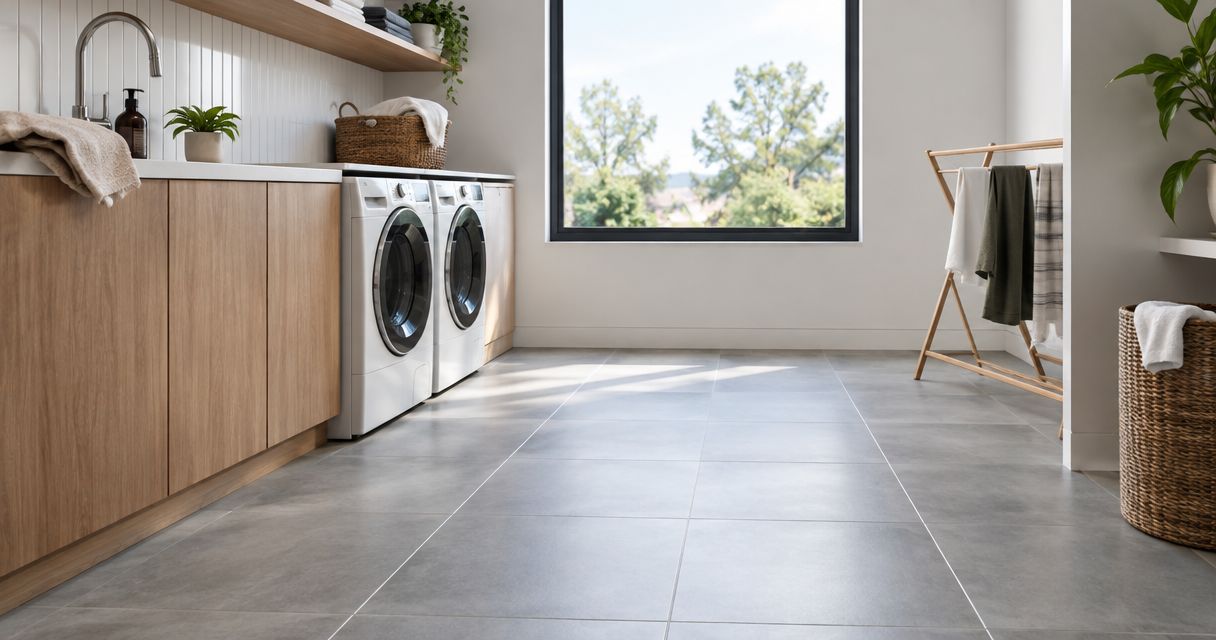
Matte porcelain is the default choice for a practical laundry. Porcelain has a low-water-absorption body, while a matte finish avoids the reflective look of polished tiles. You still need the selected tile's floor-use and slip-test information.
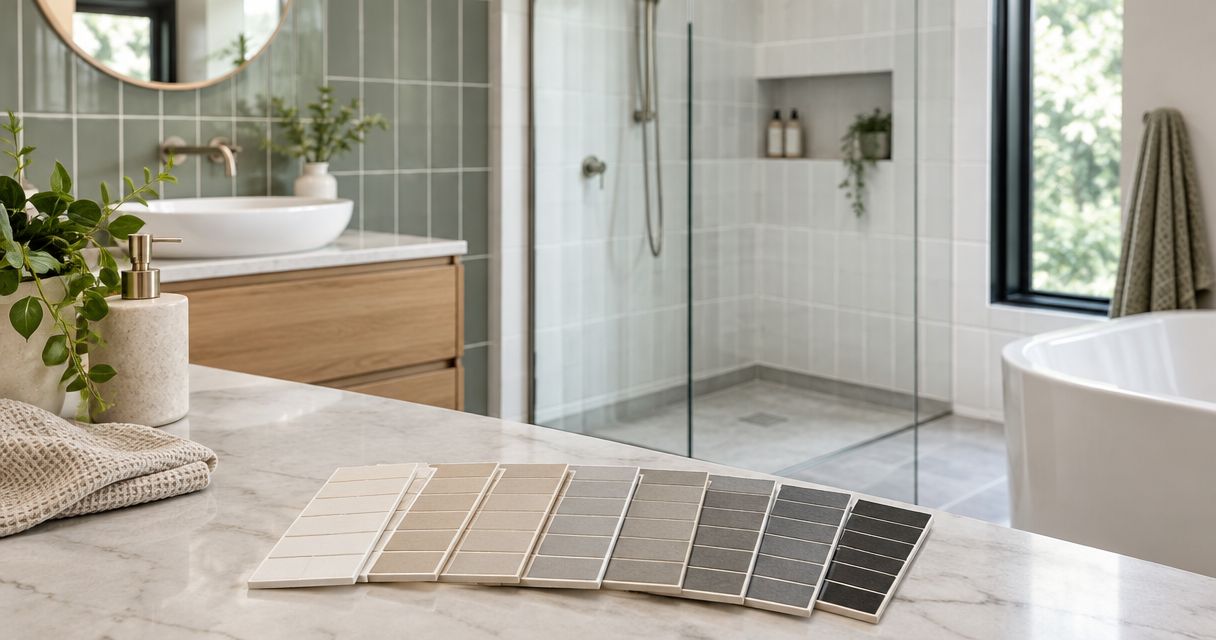
Start with a sample rather than a catalogue photograph. Look at it beside your cabinetry and under the laundry lighting. Run a cloth over the surface to understand its texture; that is a cleaning check, not a slip test.
Matte porcelain pros:
- Low-water-absorption tile body suits a room exposed to splashes.
- Low sheen works with plain cabinetry and busy adjoining spaces.
- A relatively smooth surface avoids deep texture that collects lint.
Matte porcelain cons:
- Some matte finishes remain slippery when wet.
- A larger tile can complicate a floor with changing falls around a waste.
For layout planning, compare a 300 × 300 mm sample format with your room dimensions. This is a useful starting example, not a required laundry tile size. Check how the proposed grid meets the doorway, waste and cabinetry before ordering.
Best for: Homeowners who want a practical everyday floor without natural stone maintenance.
Verdict: Buy floor-rated matte porcelain with suitable wet-slip information and a layout that fits your drainage plan.
2. Textured porcelain: best laundry floor tile for outdoor access
Textured porcelain belongs on the shortlist when your laundry also handles backyard traffic. Its surface has more relief than a smooth matte finish. Select it using actual slip-test information, not the word textured on a display label.
In a south-east Melbourne laundry with garden access, the same texture that changes the feel underfoot can catch soil and lint. Look closely at the sample's recesses. A heavily patterned surface demands a different cleaning routine from a flatter one.
Textured porcelain pros:
- Offers a distinct surface choice for outdoor-entry laundries.
- Low-water-absorption porcelain body handles splash exposure.
- Gives you an alternative to smooth finishes where wet grip is a priority.
Textured porcelain cons:
- Recesses collect dirt and cleaning residue.
- Strong texture can feel uncomfortable under bare feet.
Ask the supplier how to clean the exact surface. Detergent left behind is not harmless simply because the floor has texture. Cleaning method and rinsing matter alongside the tile selection.
Best for: Laundries that double as garden entrances or utility rooms.
Verdict: Buy tested textured porcelain for an outdoor-entry laundry if you accept the cleaning effort. Skip a heavily textured finish chosen only because it looks safer.
3. Matte glazed ceramic: best laundry floor tile for a budget-focused scope
Matte glazed ceramic is worth comparing for a straightforward, enclosed laundry. The glaze forms the visible surface over the ceramic body. Confirm that the exact tile is approved for floors rather than assuming its matching wall version will work.
Keep the design simple. A regular grid, sensible cuts and a finish you can maintain matter more than an elaborate pattern. Compare the complete installation scope before treating any material as the budget winner.
Matte glazed ceramic pros:
- Provides a low-sheen alternative to polished finishes.
- Suits a plain floor layout without natural stone care requirements.
- Lets you assess a simpler specification against porcelain alternatives.
Matte glazed ceramic cons:
- Not every glazed ceramic tile is suitable for floors.
- Chips can reveal a body colour different from the glaze.
Budget control starts beneath the tiles. Do not remove necessary floor preparation or waterproofing from the scope to accommodate a decorative finish. A simpler tile selection is a better compromise than an incomplete installation.
Best for: Enclosed laundries where a simple finish and controlled project scope are the priorities.
Verdict: Hold until floor suitability, wet-slip information and the full installation scope are confirmed. Choose ceramic only when that comparison supports it.
4. Porcelain mosaics: best laundry floor tile for drainage falls
Porcelain mosaics use small tile pieces, commonly supplied on sheets. Small pieces help a tiler follow changes in slope around a floor waste. Their advantage is layout flexibility, not automatic slip resistance.
A 50 × 50 mm mosaic is an example to discuss when comparing a drainage layout with larger tiles. The sheet backing, adhesive and grout must suit the installation. Check those details before settling on the appearance.
Porcelain mosaic pros:
- Small pieces accommodate changes in floor slope.
- Suit detailed work around a waste.
- Offer a different layout approach where large tiles require awkward cuts.
Porcelain mosaic cons:
- More grout joints mean more cleaning attention.
- Sheet alignment needs care to avoid visible seams.
Do not choose mosaics solely because more joints sound safer. The exposed tile surface still matters, and grout does not replace slip testing. Confirm where water needs to travel before choosing the mosaic size.
Best for: Laundries with drainage geometry that favours small tiles.
Verdict: Buy porcelain mosaics when the floor layout needs their flexibility. Skip them if you want minimal grout cleaning and have no drainage reason to use them.
5. Honed natural stone: best laundry floor tile for a coordinated interior
Honed natural stone has a smooth, low-sheen surface rather than a polished finish. It suits homeowners who want natural variation and a connection to stone elsewhere in the home. Different stones have different care needs, so the material name matters as much as the finish.
Get cleaning and sealing instructions for the exact stone. Honing does not make every stone equally absorbent, stain-resistant or suitable for wet conditions. Laundry chemicals need particular attention, especially on acid-sensitive materials such as marble and limestone.
Honed natural stone pros:
- Natural variation gives the floor a distinct appearance.
- Low sheen offers an alternative to polished stone.
- Can coordinate with stone selected elsewhere in the home.
Honed natural stone cons:
- Care and sealing requirements vary by stone.
- Some stones react to acidic cleaners and spills.
Sealer does not turn stone into waterproofing. Treat surface care and the underlying waterproofing system as separate decisions. Get both resolved before installation starts.
Best for: Homeowners who value a coordinated stone interior and accept material-specific maintenance.
Verdict: Hold until the stone's wet-use suitability, cleaning instructions and sealing requirements are clear. Skip natural stone if low maintenance is your main requirement.
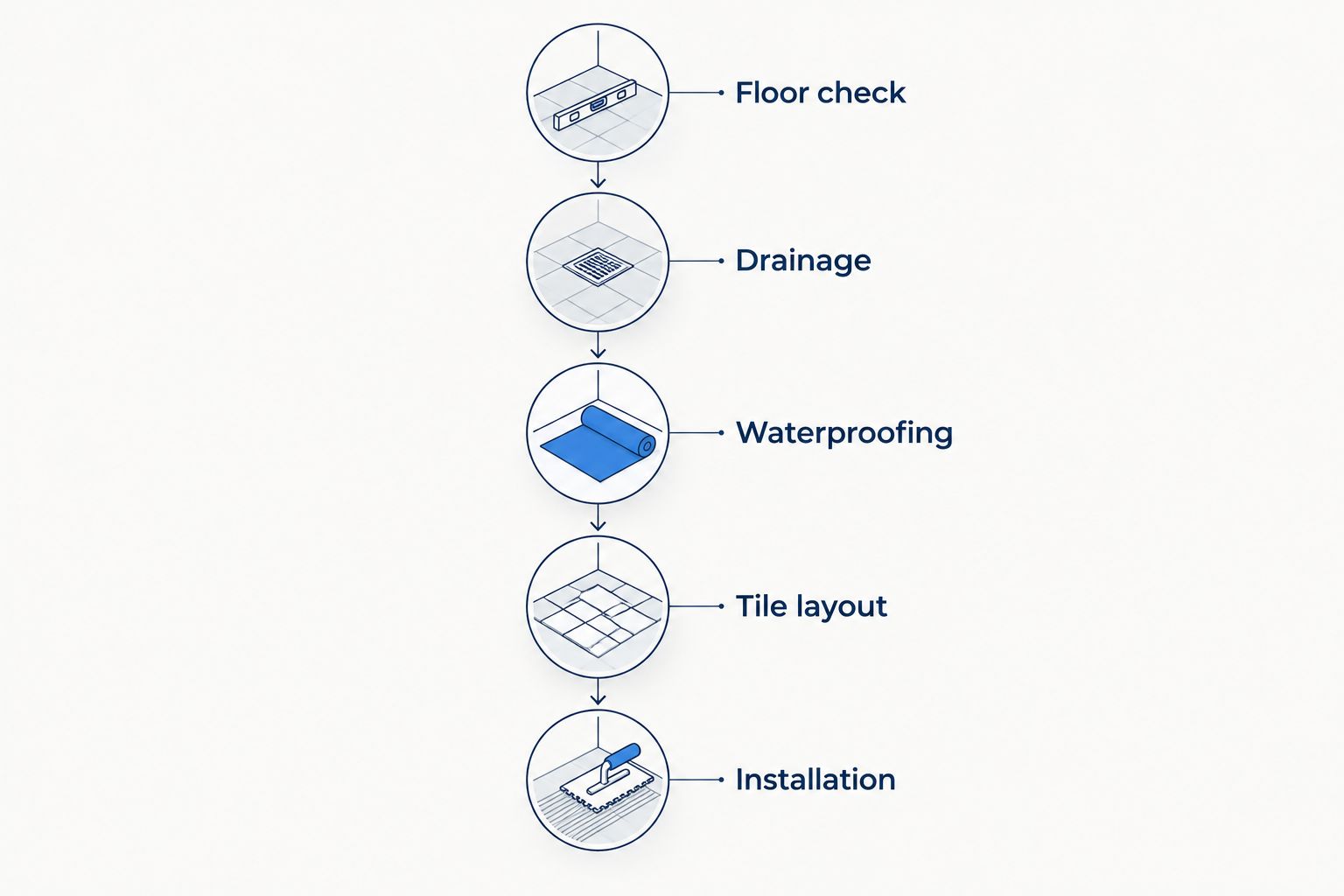
Plan the floor before choosing the finish
For a 2026 laundry renovation, use this sequence to keep appearance decisions tied to installation needs. Melbourne Tiling Group provides floor tiling services; use these points to frame your project discussion.
- Floor check: Establish whether the existing base is sound, stable and suitable for the proposed tile system. Resolve defects before covering them.
- Drainage: Confirm whether a waste and falls are required for your project. Coordinate the tiling layout with the drainage design.
- Waterproofing: Confirm the applicable requirements and system details, including junctions and penetrations. Do not assume tiles make the room watertight.
- Tile layout: Plan doorway cuts, waste cuts and cabinetry edges. Compare sample sizes against the actual room.
- Installation: Follow the specified adhesive, grout and movement-joint requirements. Respect the system's curing instructions before loading the floor.
A 600 × 600 mm tile is another layout example, not a default recommendation. Place its grid over the room plan and check the cuts. A larger format does not remove the need for falls or a suitable base.
Ask for slip-test information under AS 4586, the Australian standard for classifying new pedestrian surface materials. Check which test and classification apply to the selected finish. Do not compare unrelated classifications as though they describe the same conditions.
How we ranked the finishes
This 2026 ranking prioritises everyday cleaning, floor suitability, drainage flexibility and maintenance. Matte porcelain takes the default position because it combines a low-water-absorption body with a practical low-sheen finish. Textured porcelain, mosaics and stone solve more specific needs.
These are finish recommendations, not results from product testing or a ranking of installers. Melbourne Tiling Group's stated service is wall and floor tiling; the selected tile still needs its own technical checks.
Which laundry floor tiles should you choose?
Choose matte porcelain for an everyday laundry in 2026. Move to textured porcelain when outdoor traffic makes surface selection a bigger concern, or mosaics when drainage geometry calls for smaller pieces. Keep ceramic and stone tied to their specific conditions rather than choosing either by appearance alone.
Ask your installer to explain the base preparation, waterproofing scope and proposed layout. A durable floor depends on that complete system, not a finish label.
FAQ
What's the best floor tile finish for a Melbourne laundry?
Matte porcelain is the default recommendation for an everyday Melbourne laundry. Confirm floor suitability and wet-slip test information for the exact tile, then check that its size suits the drainage layout.
Are matte laundry tiles non-slip?
A matte finish does not guarantee slip resistance. Ask for the exact tile's slip-test information and check that the test conditions are relevant to your laundry.
Is porcelain better than ceramic for a laundry floor?
Porcelain is the default choice here because of its low-water-absorption body. Floor-rated glazed ceramic remains an option for a simple enclosed laundry, provided its technical information supports the intended use.
Should I choose small or large tiles around a laundry drain?
Small tiles are useful where the floor changes slope around a waste. The drainage design determines the right layout; large tiles need careful planning and cuts where slopes change.
Do laundry floor tiles make the room waterproof?
No, tiles and grout do not replace a waterproofing system. Confirm the requirements for your renovation and resolve the membrane, junctions and penetrations before tiling.
Can I use natural stone on a laundry floor?
Natural stone is an option when the exact material suits the conditions and you accept its care requirements. Check wet-slip information, sealing instructions and compatibility with household cleaning products.
How do I keep a laundry tiling project affordable?
Keep the layout straightforward and compare the complete installation scope. Protect necessary preparation and waterproofing rather than removing them to accommodate a decorative tile choice.
One last thing
Your sample cannot prove wet grip by touch. A surface that feels rough in your hand still needs relevant test information. Use the sample to judge colour, texture and cleaning access; use technical documentation to assess suitability.