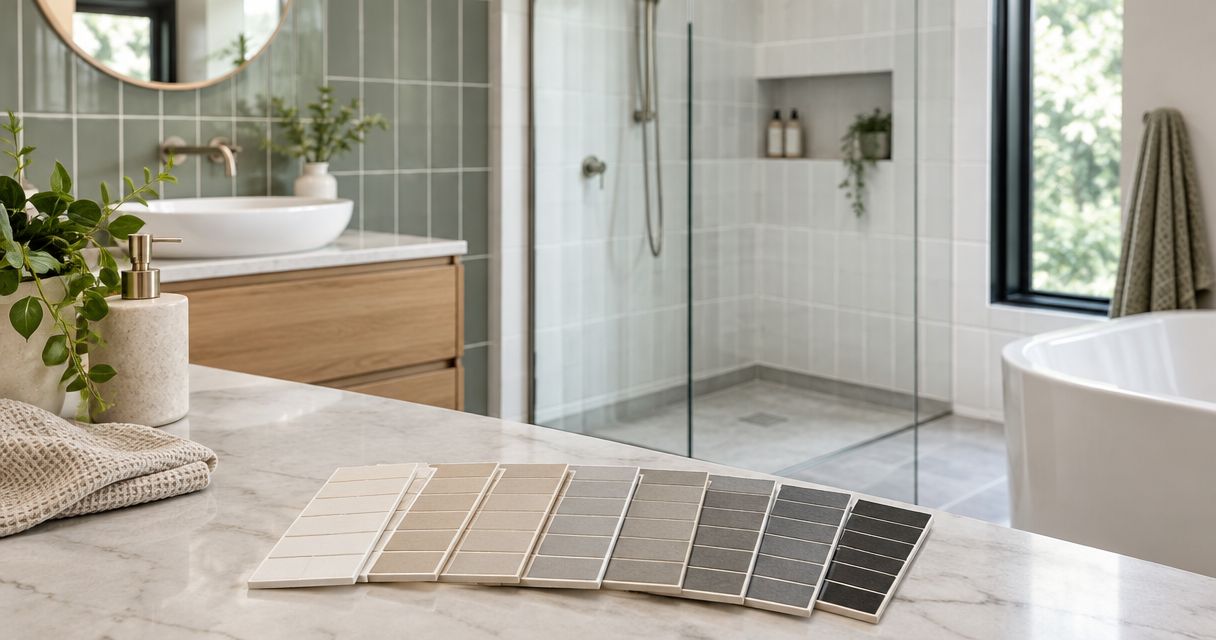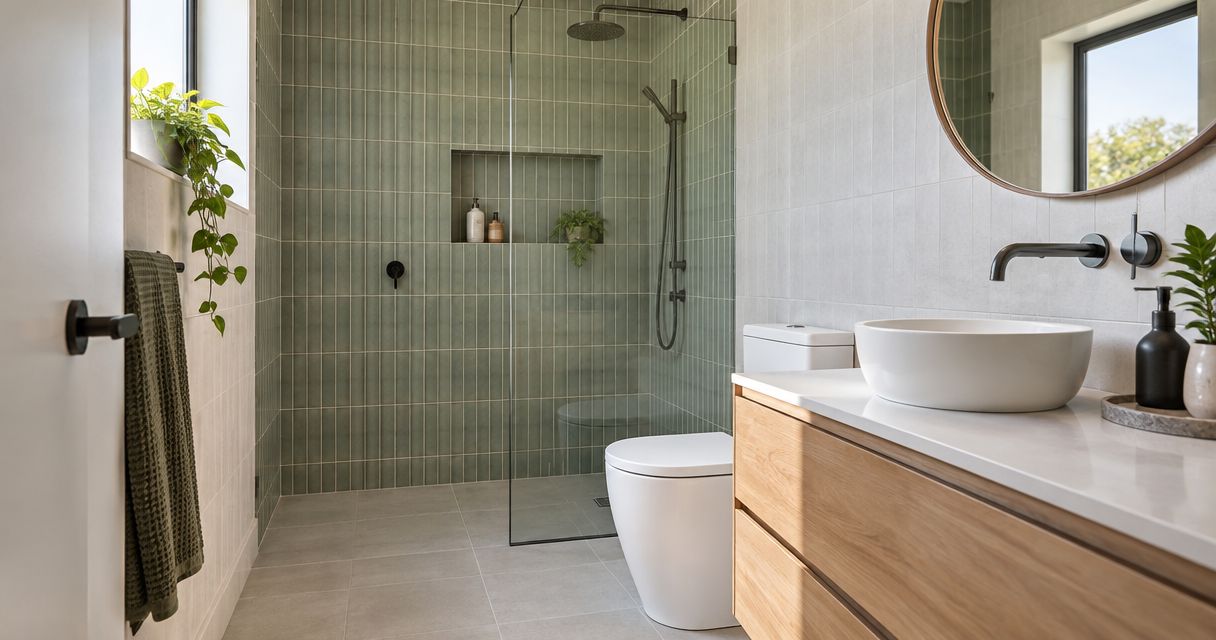
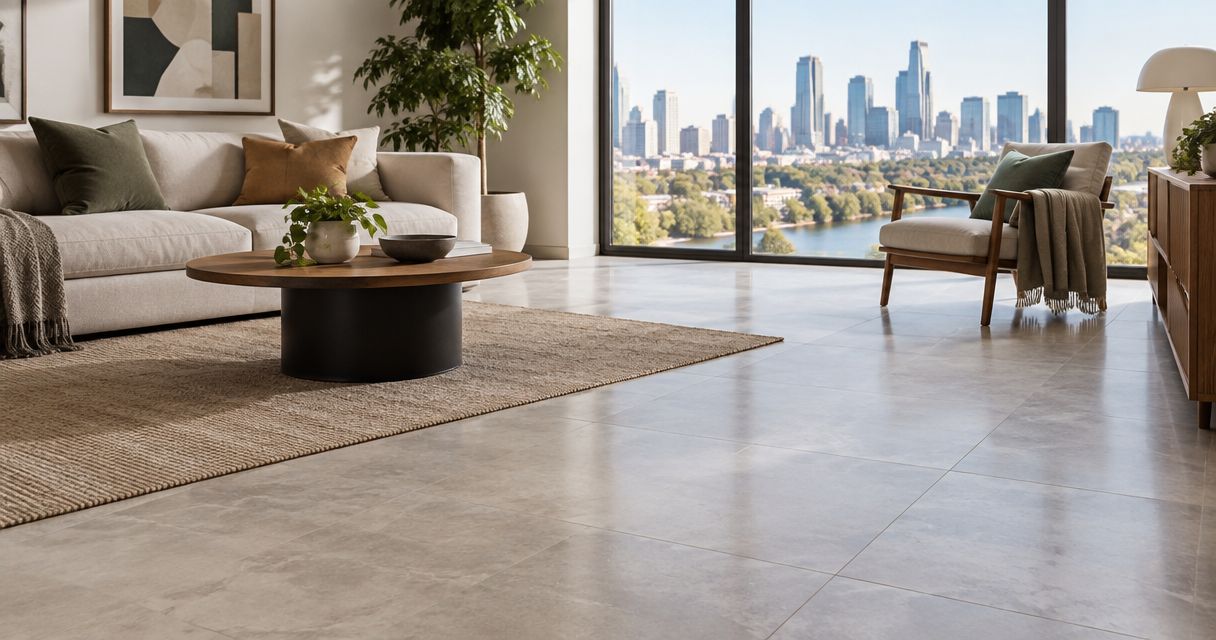
Best overall: porcelain floor tiles. Best for wet bathroom floors: textured porcelain with documented slip performance. Best for lightly used dry rooms: ceramic floor tiles. This 2026 guide compares the best floor tiles for Melbourne homes by room, upkeep and installation requirements, with planning advice from Melbourne Tiling Group.
- Porcelain is the best floor tiles for Melbourne homes shortlist default for kitchens, hallways and living areas.
- Choose bathroom floor tiles by documented slip performance, not appearance or texture alone.
- Timber-look porcelain suits wood-style interiors; natural stone suits homeowners prepared for material-specific care.
- Melbourne Tiling Group provides wall and floor tiling installation for Melbourne homeowners and construction companies.
Why this matters
The right floor tile depends on where you put it. A smooth finish that works in a dry living room needs a different assessment in a shower, beside an external door or on outdoor paving.
Your installation matters just as much. Tiles do not correct a moving substrate, replace waterproofing or create drainage falls by themselves. Decide how the room will work before choosing its finish.
For a Melbourne south-east home renovation, start with the actual room conditions. Separate dry living spaces, wet bathroom areas and exposed outdoor surfaces rather than choosing one tile for every location.
What makes the best floor tiles?
Use these criteria to build your 2026 shortlist. The best choice meets the room's demands without creating maintenance you do not want.
- Floor suitability: Confirm the manufacturer specifies the tile for floors and the intended setting. A wall tile is not automatically a floor tile.
- Slip performance: Ask for documented performance appropriate to the location. A textured appearance is not proof of safe grip when wet.
- Water absorption: Porcelain falls within the low-water-absorption classification of 0.5% or less under ISO 13006. That does not make the tiled assembly waterproof.
- Cleaning and care: Compare the actual surface finish. Deep texture can hold dirt, while some stone needs sealing and stone-compatible cleaners.
- Layout and substrate: Check tile dimensions against room shape, drain position, floor condition and transitions to adjoining rooms.
- Installation scope: Include preparation, wet-area work, movement joints and finishing details in your decision, not just the tile itself.
Melbourne Tiling Group is a fit for Melbourne homeowners who need wall and floor tiling installation. Keep material selection separate from claims about installation: choosing porcelain does not establish whether an existing floor is ready to tile.
Best floor tiles at a glance for 2026
These are material and finish choices, not individual products. Their strengths depend on the selected tile's technical information.
| Rank | Tile option | Best for | Standout feature | Key limitation |
|---|---|---|---|---|
| 1 | Porcelain floor tiles | Everyday kitchens and living areas | Low water absorption and varied finishes | Hard surface; substrate preparation matters |
| 2 | Textured porcelain floor tiles | Wet bathroom floors | Surface options with documented slip performance | More pronounced texture takes more cleaning |
| 3 | Ceramic floor tiles | Lightly used dry rooms | Glazed surface and varied decorative choices | Suitability varies; wall-only ceramic is unsuitable |
| 4 | Timber-look porcelain | Wood-style interiors | Wood appearance without a timber surface | Plank layouts need careful flatness checks |
| 5 | Natural stone tiles | Character-focused interiors | Natural variation between pieces | Care and sealing depend on the stone |
| 6 | Quarry tiles | Utility rooms and practical work areas | Unglazed finish and utilitarian appearance | Absorption and sealing requirements vary |
1. Porcelain: best floor tiles for everyday living
Porcelain is the strongest default shortlist for kitchens, hallways and living areas. It offers low water absorption and comes in finishes that suit different interiors. Specify a floor-rated product rather than assuming every porcelain tile suits every room.
Porcelain's ISO 13006 classification uses water absorption of 0.5% or less. That describes the tile body, not the grout, joints or substrate beneath it. You still need a correctly designed installation.
Porcelain pros:
- Low water absorption is useful around everyday spills.
- Different finishes support a consistent interior scheme.
- Porcelain does not require natural-stone-specific cleaning products.
Porcelain cons:
- The surface is hard underfoot, like other tiled floors.
- Polished and textured finishes behave differently when wet.
- Cutting and installation require suitable tools and preparation.
Best for: Households choosing a practical kitchen, hallway or living-room floor.
Verdict: Buy floor-rated porcelain as your default; confirm the finish and installation requirements before ordering.
2. Textured porcelain: best floor tiles for wet bathrooms
Textured porcelain deserves a separate bathroom shortlist because grip changes the decision. Ask for slip-test information relevant to the intended bathroom area. Do not accept a rough-looking sample as evidence of wet slip performance.
Shower floors also need falls towards the drain. Tile size and drain layout must work together, while waterproofing belongs beneath the finished surface. Grout alone does not provide that waterproofing.
Textured porcelain pros:
- Available surfaces allow selection around wet-area performance.
- Low water absorption supports bathroom use.
- Different sizes help accommodate bathroom layouts.
Textured porcelain cons:
- Pronounced texture can retain soap residue and dirt.
- A documented result must still suit the intended location.
- Large pieces can complicate falls around some drain layouts.
Best for: Bathroom floors where wet grip and cleaning need equal attention.
Verdict: Buy only after checking the selected tile's slip information and the shower-floor layout.
3. Ceramic: best floor tiles for lightly used dry rooms
Floor-rated ceramic is a useful option for a dry room with lighter use. The glazed surface offers decorative choice without requiring you to choose natural stone. Read the product specification carefully: ceramic includes wall-only tiles as well as floor tiles.
The glaze and intended-use classification matter more than the category name. Check whether the selected product suits your furniture, foot traffic and cleaning routine before extending it into a hallway or kitchen.
Ceramic pros:
- Glazed finishes offer varied colours and patterns.
- Floor-rated options suit specified indoor applications.
- A glazed face does not need the same care as exposed natural stone.
Ceramic cons:
- Wall-only ceramic cannot substitute for a floor-rated product.
- Wear suitability differs between products.
- Chips can reveal a different-coloured tile body.
Best for: Lightly used dry rooms where decorative finish is the main priority.
Verdict: Buy a clearly floor-rated ceramic tile; skip products with unclear intended-use information.
4. Timber-look porcelain: best floor tiles for wood-style interiors
Timber-look porcelain gives you a wood-style pattern on a tiled surface. It suits a homeowner who wants that appearance without choosing an actual timber floor. It still feels and behaves like tile, not wood.
Plank-shaped tiles need particular attention to floor flatness and layout. Follow the manufacturer's joint and offset guidance rather than assuming a traditional brick pattern will work. Inspect several pieces together before approving the pattern.
Timber-look porcelain pros:
- Wood-style appearance works across connected rooms.
- The porcelain surface avoids timber refinishing.
- Different printed faces can vary the finished pattern.
Timber-look porcelain cons:
- It does not provide timber's feel underfoot.
- Poor layout can make repeated printed patterns obvious.
- Plank shape makes flatness and edge alignment important.
Best for: Homeowners who want a wood-style kitchen or living area on a tiled surface.
Verdict: Buy for the appearance, but approve the layout and sample variation first.
5. Natural stone: best floor tiles for individual character
Natural stone suits homeowners who want variation that comes from the material itself. Marble, limestone, slate and granite are different choices, not interchangeable versions of one floor. Their absorption, finish and cleaning requirements differ.
Ask about the specific stone rather than accepting a general promise of durability. Some stone reacts to acidic spills or cleaners. Sealing requirements also depend on the material and finish, and a sealer is not a guarantee against every stain.
Natural stone pros:
- Natural markings give individual pieces their character.
- Different stone types offer distinct surface appearances.
- Material variation supports a less uniform interior.
Natural stone cons:
- Some types require sealing and ongoing care.
- Acid-sensitive stone needs careful cleaner selection.
- Samples cannot show every variation in the delivered material.
Best for: Character-focused interiors where the owner accepts stone-specific maintenance.
Verdict: Hold until you understand the chosen stone's care requirements and approve representative samples.
6. Quarry tiles: best floor tiles for utility spaces
Quarry tiles are unglazed tiles with a practical, utilitarian appearance. They belong on a shortlist for utility rooms and work areas where that finish suits the home. Check the actual product's indoor-use suitability, absorption and slip information.
An unglazed surface does not automatically mean maintenance-free or non-slip. Ask whether sealing is recommended and how the surface should be cleaned. Assess a sample under the lighting where you intend to install it.
Quarry tile pros:
- Unglazed appearance suits practical utility spaces.
- Earth-toned finishes offer a different look from printed tiles.
- Product-specific options allow assessment for working areas.
Quarry tile cons:
- Absorption and sealing requirements vary.
- Surface texture can require more cleaning effort.
- The utilitarian look does not suit every interior.
Best for: Utility rooms where function and an unglazed appearance take priority.
Verdict: Buy only when the product specification matches the room; skip the category if you want a polished finish.
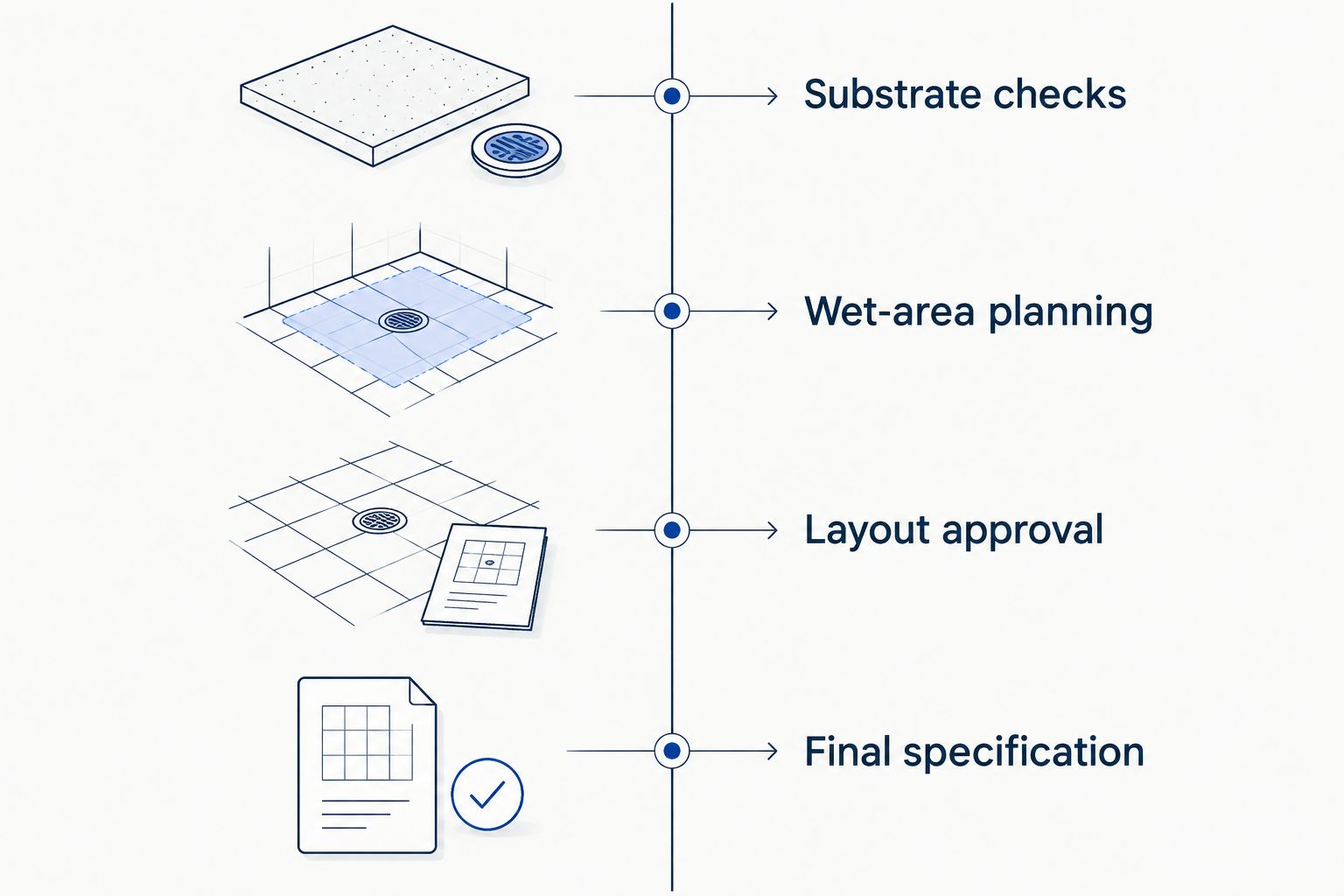
Plan the installation before ordering
For a 2026 renovation, settle these steps before choosing the final quantity. Melbourne Tiling Group provides floor tiling installation; a clear scope helps you discuss the room rather than just the tile colour.
Substrate checks
Have the existing floor assessed for movement, damage, moisture and flatness. Tiling over a problem does not remove it. Record any required preparation in the installation scope.
Wet-area planning
For bathrooms, establish waterproofing responsibilities, drain positions and finished floor levels. Confirm how the waterproofing system connects at corners, penetrations and drainage points. Tiles and grout are the finish, not the waterproofing system.
Layout approval
Compare an illustrative 600 mm square tile with a 300 mm square tile on your room plan. These are layout examples, not recommended dimensions. The larger format creates a different joint pattern and can require more cutting around a small shower's falls.
Check doorway cuts, grout-joint alignment and transitions to other flooring. For timber-look porcelain, approve plank direction and the manufacturer's permitted offset before installation starts.
Final specification
Write down the tile reference, finish, grout choice and intended room. Confirm preparation, trims, movement joints and waste allowance with the installer. Keep the scope specific so you can compare like-for-like installation proposals.
How the options are ranked
This 2026 ranking puts everyday indoor usefulness first, then separates choices by a distinct room or design need. Porcelain leads because its low absorption and range of finishes make it a practical default shortlist, not because every porcelain product performs identically.
Bathroom texture, ceramic decoration, wood-style printing, natural variation and utility-room finishes answer different briefs. The ranking does not claim product testing or compare unnamed tile brands. Check the selected product's specification before treating any category recommendation as an installation decision.
Which floor tiles should you choose?
Choose floor-rated porcelain if you want a straightforward starting point for a Melbourne home's main living areas in 2026. For a bathroom, move documented wet slip performance and drainage planning ahead of colour. Choose natural stone only when its care requirements fit your routine.
You do not need matching finishes everywhere. Keep the visual scheme consistent where it helps, but select each surface for its actual conditions. A kitchen floor, shower floor and outdoor paving area have different jobs.
Plan your floor tiling
Discuss wall and floor tiling installation for your Melbourne home.
FAQ
What are the best floor tiles for Melbourne homes?
Floor-rated porcelain is the best default shortlist for Melbourne homes' kitchens, hallways and living areas. For bathrooms, choose a finish with documented slip performance appropriate to the intended wet area.
Is porcelain better than ceramic for a kitchen floor?
Porcelain is the stronger default kitchen shortlist because of its low water absorption. A floor-rated ceramic tile can also suit a kitchen when its manufacturer specifies that use; compare the actual products rather than the names alone.
Are textured bathroom tiles always non-slip?
No, texture alone does not establish wet slip performance. Ask for test information relevant to the intended bathroom location and consider how the surface will be cleaned.
Do porcelain tiles waterproof a bathroom floor?
No, porcelain tiles do not replace a bathroom waterproofing system. Waterproofing, drainage falls, joints and penetrations must be addressed as part of the installation.
Are larger floor tiles better for a small bathroom?
Larger floor tiles are not automatically better for a small bathroom. Drain position, falls, doorway cuts and substrate flatness determine whether the format works.
Do natural stone floor tiles need sealing?
Sealing requirements depend on the stone and its finish. Ask the supplier for material-specific guidance and use cleaners compatible with that stone.
Can I use the same tiles inside and outside?
Only use the same tile inside and outside when the manufacturer specifies both applications. Check external exposure, slip performance and the installation requirements separately.
One last thing
Take your shortlisted sample home and wet it during a normal cleaning trial. Look at water marks, surface residue and how easily dirt comes away. This does not replace slip testing, but it shows whether the finish suits your housekeeping routine before it covers the whole floor.