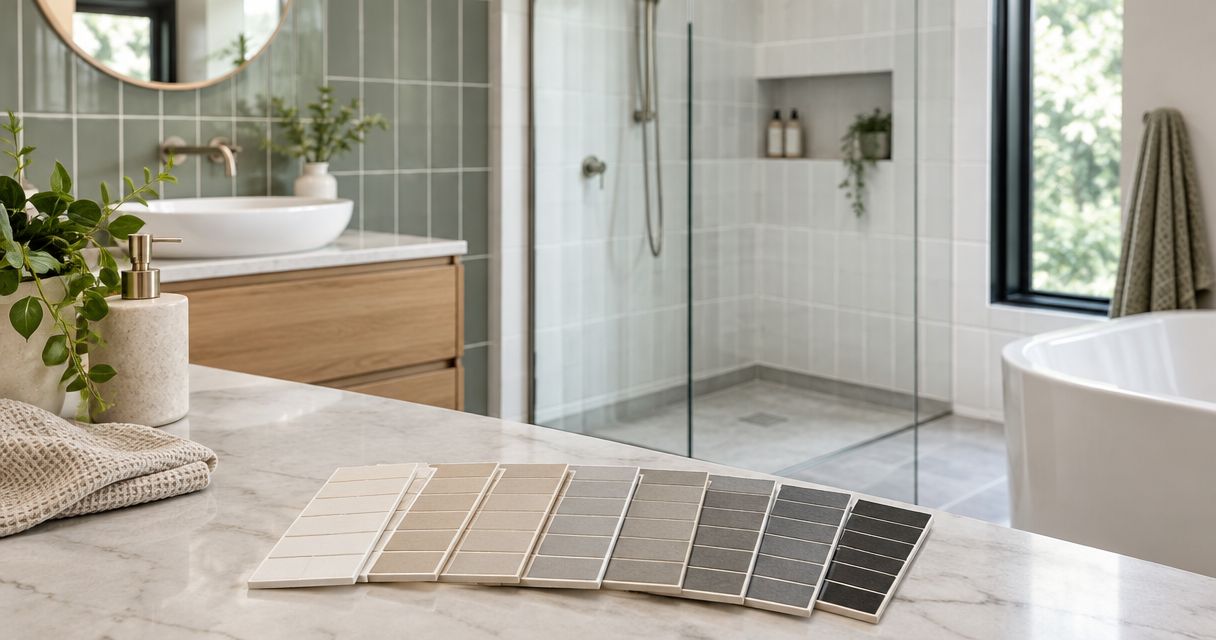
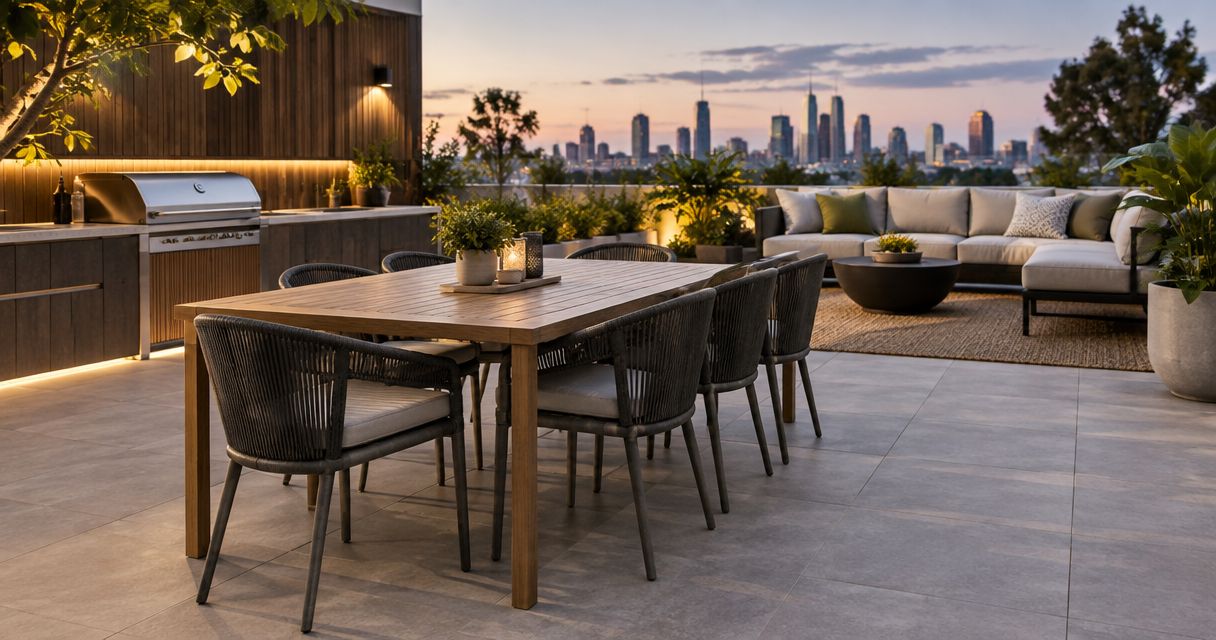
Best overall: textured outdoor porcelain. Best for exposed natural-stone patios: textured granite. Best for sheltered, rustic courtyards: terracotta rated for exterior use. These are the best tiles for outdoor entertaining areas in Melbourne in 2026 when you match the finish, drainage and installation to the site.
- Textured outdoor porcelain is the default choice among the best tiles for outdoor entertaining areas in Melbourne.
- Choose textured granite for exposed natural-stone patios; confirm the specific stone's exterior suitability.
- Choose exterior-rated terracotta for sheltered rustic courtyards, with a clear sealing and cleaning plan.
- Melbourne Tiling Group provides wall and floor tiling services for Melbourne homeowners planning an installation.
Why this matters
An outdoor entertaining area needs more than a tile that looks good beside your kitchen. Rain, food spills, furniture and dirt all affect the surface you live with. Start with how the area gets used, then choose the material.
For your 2026 project, separate the tile decision from the installation decision. A suitable tile still needs a sound base, drainage and movement joints. Melbourne Tiling Group provides residential and commercial wall and floor tiling services across Melbourne.
For a south-east Melbourne courtyard or alfresco area, tell your tiler whether rain reaches the floor. Include the doorway, garden edges and barbecue position in the discussion. A roof overhead does not make an outdoor floor an indoor floor.
What makes the best outdoor entertaining tiles?
Use these criteria before choosing a colour or ordering samples for a 2026 installation:
- Exterior suitability: Get written confirmation that the specific tile suits the proposed outdoor application. Material names alone are not enough.
- Wet grip: Ask for slip-test information relevant to the finished surface and its intended use. Do not treat a rough appearance as proof.
- Water absorption: Check the product's declared absorption and exposure limits. Porcelain classification includes water absorption of no more than 0.5% under ISO 13006; that does not establish slip resistance.
- Cleaning and sealing: Understand whether the surface needs sealing and which cleaners are suitable. Barbecue grease makes this a practical decision.
- Base and drainage: Confirm substrate preparation, water run-off, thresholds and movement joints before installation.
- Comfort and layout: Handle a sample, check its texture and consider chair movement, furniture feet and cut edges around the space.
Choose the exact product, not just the material category. Two tiles sold under the same broad material name can have different finishes, maintenance requirements and suitability.
Outdoor entertaining tiles at a glance
| Rank and material | Best for | Standout feature | Key limitation |
|---|---|---|---|
| 1. Textured outdoor porcelain | Everyday dining and mixed-use alfresco areas | Low water absorption with a choice of surface finishes | Texture can hold dirt; exterior suitability and grip still need checking |
| 2. Textured granite | Exposed patios where natural stone is the priority | Natural stone appearance with hard-wearing potential | Finish and stone selection determine suitability; sealing requirements vary |
| 3. Exterior-rated slate | Covered patios with a layered stone appearance | Natural surface variation and distinctive texture | Some slate splits or flakes; uneven surfaces complicate furniture placement |
| 4. Exterior-rated quarry tiles | Practical barbecue and service zones | Unglazed surface suited to a straightforward utility look | Absorption, staining and sealing need product-specific checks |
| 5. Exterior-rated terracotta | Sheltered courtyards with a rustic finish | Earthy colour and natural variation | Porosity adds sealing and maintenance demands |
This ranking separates use cases rather than pretending every material solves the same problem. Porcelain is the default. The remaining choices suit homeowners who want a particular stone character, utility finish or courtyard style.
1. Textured outdoor porcelain: best for everyday entertaining
Outdoor porcelain is the strongest starting point for a patio used for meals, visitors and everyday foot traffic. Its low water absorption is useful outdoors, but the finished surface must also suit wet conditions. An indoor polished porcelain tile is not a substitute for an appropriate outdoor product.
Choose the texture with cleaning in mind. Deep surface relief catches dirt and food residue, while a smoother-looking tile still needs suitable slip-test evidence. Take the actual sample outside rather than judging it under showroom lights.
Textured outdoor porcelain pros:
- Low water absorption is part of porcelain classification.
- Available finishes allow you to match different outdoor styles.
- It avoids the absorbent body associated with materials such as terracotta.
Textured outdoor porcelain cons:
- Pronounced texture takes more effort to clean.
- A porcelain label does not guarantee wet grip or exterior suitability.
Best for: A main dining patio or alfresco floor where you want a practical default without choosing natural stone.
Verdict: Buy textured outdoor porcelain when the specific product has documented exterior suitability and appropriate slip-test information.
2. Textured granite: best for exposed natural-stone patios
Granite suits homeowners who want natural stone rather than a manufactured stone-look surface. For an exposed patio, specify a finish intended for outdoor pedestrian use. Do not assume polished granite is suitable simply because granite is a hard stone.
Ask the supplier about the exact stone, finish and sealing requirements. Natural variation is part of the appearance, so view several pieces together before approving the selection. One small sample does not show the whole floor.
Textured granite pros:
- Natural variation gives the patio a stone-led appearance.
- Suitable granite offers a hard-wearing outdoor surface.
- Textured finishes provide alternatives to polished stone.
Textured granite cons:
- Slip performance depends on the finish, not the name granite.
- Sealing and cleaning requirements need confirmation for the selected stone.
Best for: An exposed entertaining area where natural stone is a deliberate design choice.
Verdict: Buy textured granite when you want natural stone and accept its product-specific care requirements.
3. Exterior-rated slate: best for covered character patios
Slate has a layered appearance that suits a covered patio with a less uniform finish. Its natural texture is the attraction. That texture also means you need to check surface variation where dining chairs and tables will sit.
Not all slate is suitable outdoors. Confirm that the selected slate is intended for the site's exposure, and ask about splitting, flaking and sealing. A covered patio still receives wind-driven rain and tracked-in water.
Exterior-rated slate pros:
- Layered surfaces provide a distinctive natural-stone appearance.
- Colour variation suits an informal, character-led courtyard.
- Individual pieces create a less uniform finish than manufactured tiles.
Exterior-rated slate cons:
- Unsuitable slate can split or flake.
- Uneven surfaces affect chair movement and furniture stability.
Best for: A covered entertaining area where stone character matters more than a consistently smooth surface.
Verdict: Hold until the supplier confirms exterior suitability and you inspect the surface variation across several pieces.
4. Exterior-rated quarry tiles: best for barbecue service zones
Quarry tiles are unglazed ceramic tiles with a straightforward, practical appearance. They suit a utility-led area where the barbecue, food preparation and garden access shape the layout. Specify an exterior-rated product rather than assuming all quarry tiles suit outdoor exposure.
Check absorption, slip-test information and stain protection before selecting the tile. An unglazed surface does not automatically resist cooking oil. Plan how you will clean grease without using products that damage the tile or grout.
Exterior-rated quarry tile pros:
- Unglazed surfaces suit a simple utility finish.
- Plain layouts work well around practical service areas.
- Their appearance does not depend on a glazed decorative surface.
Exterior-rated quarry tile cons:
- Absorption and sealing requirements vary by product.
- Cooking oil and food spills require a clear cleaning plan.
Best for: A barbecue service zone where function and a plain finish take priority.
Verdict: Buy exterior-rated quarry tiles only after confirming stain protection and wet-use suitability.
5. Exterior-rated terracotta: best for sheltered rustic courtyards
Terracotta suits a sheltered courtyard where earthy colour and a rustic finish are the main goals. Its porous body makes sealing and maintenance central to the choice. It is not the default for a homeowner who wants minimal surface care.
Confirm that the specific terracotta is rated for exterior use and the site's exposure. Ask for a compatible sealing system and cleaning instructions. Shelter reduces direct rain exposure, but it does not remove moisture or staining risks.
Exterior-rated terracotta pros:
- Earthy colour suits rustic outdoor settings.
- Natural variation adds character across the floor.
- The material provides a different appearance from stone-look porcelain.
Exterior-rated terracotta cons:
- Porosity increases the importance of sealing and stain management.
- It requires more attention to maintenance than the default porcelain choice.
Best for: A sheltered courtyard where you actively want terracotta's appearance and accept its care requirements.
Verdict: Buy for a deliberate rustic finish; skip it if low-maintenance cleaning is your main requirement.
Check the sample where you will use it
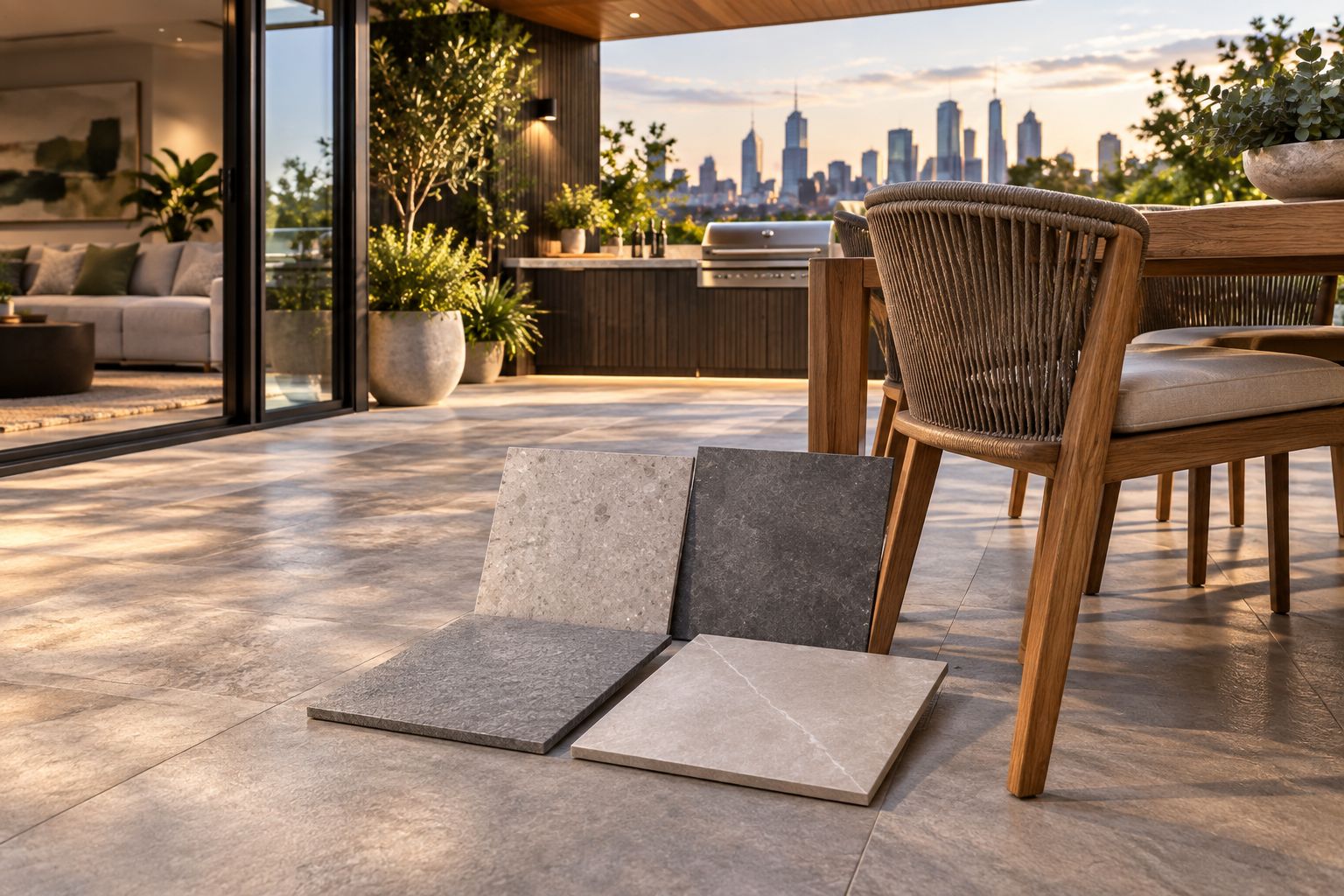
Put samples beside the house, garden edge and outdoor furniture. Look at them dry and wet, then check how the texture feels underfoot and how a chair moves across it. This is a comfort and appearance check, not a replacement for slip testing.
A full-size sample also helps you see whether the proposed joint pattern suits the furniture layout. Position it near the doorway. That is where changes in surface, colour and floor level become most obvious.
Plan the base before the tile installation
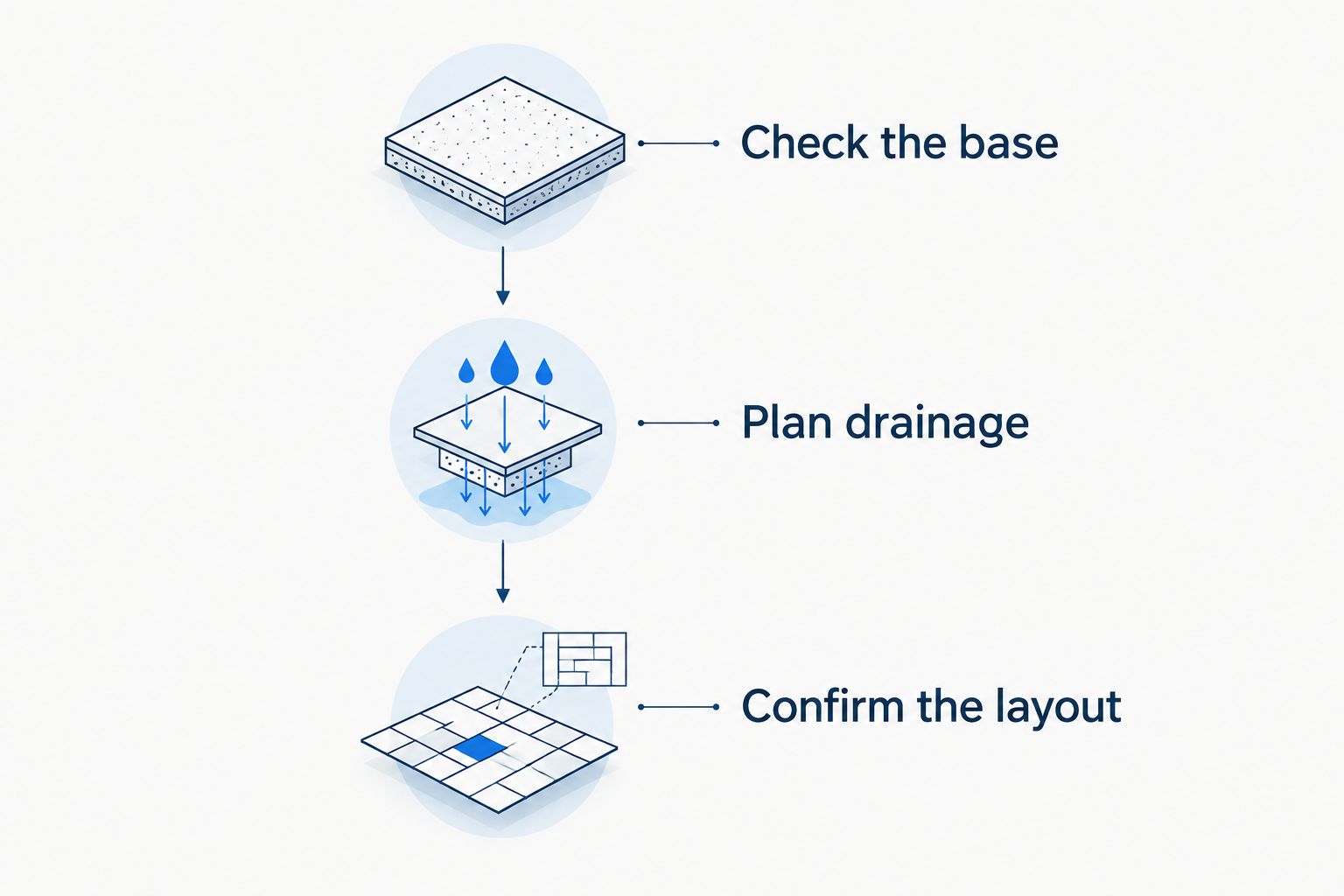
For a 2026 outdoor tiling project, resolve these 3 planning stages before approving the layout. The tile finish cannot correct problems beneath it.
Check the base
Identify what the tiles will be fixed to and whether that base needs repair or preparation. Existing cracks, loose material and unsuitable coatings need assessment. Do not tile over a problem just to hide it.
Plan drainage
Confirm where rainwater will go and how the finished floor meets doors, drains and garden edges. Water needs a planned route away from vulnerable thresholds. Waterproofing requirements depend on the construction and use of the area; grout is not a waterproofing system.
Confirm the layout
Agree on tile direction, perimeter cuts and movement joints before work starts. Include furniture locations and barbecue access. Movement joints accommodate movement in the tiled assembly; ordinary grout joints do not replace them.
Discuss those decisions with your installer before comparing proposals. Melbourne Tiling Group is a wall and floor tiling service for Melbourne homeowners planning an installation. Describe the site and ask what preparation belongs in the written scope.
Discuss your tiling project
Prepare your site details, tile samples and questions about the base, drainage and layout.
How the outdoor tile choices are ranked
The 2026 ranking puts exterior suitability, wet grip, maintenance and installation requirements ahead of appearance alone. Textured outdoor porcelain takes the default position because low water absorption is useful across everyday entertaining spaces. Natural stone and terracotta earn narrower recommendations because their selection and care requirements need closer attention.
This is a material-selection guide, not a certification of individual products. Written product information and the site's requirements decide the final specification.
Which outdoor entertaining tiles should you choose?
Choose textured outdoor porcelain if you are undecided. For a 2026 project, it is the clearest starting point for an everyday dining patio, provided the exact tile suits outdoor wet use.
Choose textured granite when natural stone is the priority. Keep slate for a carefully selected character finish, quarry tiles for practical service zones and terracotta for a sheltered rustic courtyard. Do not accept extra maintenance unless you genuinely want the material's appearance.
FAQ
What's the best tile for an outdoor entertaining area in Melbourne?
Textured outdoor porcelain is the default recommendation for everyday entertaining areas. Confirm that the exact product suits exterior use and has appropriate slip-test information for the application.
Is porcelain better than natural stone for a patio?
Porcelain is the simpler starting point when low water absorption and everyday practicality are your priorities. Natural stone suits homeowners who want its appearance and accept product-specific selection, sealing and cleaning requirements.
Can I use indoor tiles in a covered alfresco area?
Use an indoor tile outdoors only if the manufacturer confirms that the specific product suits that application. A covered alfresco area still receives moisture, dirt and potentially wind-driven rain.
Are rough outdoor tiles always non-slip?
No, a rough appearance does not establish slip resistance. Ask for relevant test information and consider how rain, grease and surface contamination affect the intended use.
Do outdoor tiles need waterproofing underneath?
Waterproofing requirements depend on the construction and use of the outdoor area. Have the substrate, drainage, thresholds and any spaces beneath the tiled surface assessed before specifying the installation.
Is terracotta suitable around an outdoor dining table?
Exterior-rated terracotta suits a sheltered dining courtyard when you accept its sealing and maintenance requirements. Confirm exposure suitability and stain protection before selecting it.
What should I ask a tiler before an outdoor installation?
Ask about substrate preparation, drainage, thresholds, movement joints and the selected tile's suitability. Melbourne Tiling Group provides wall and floor tiling services; bring the site details and proposed material to the discussion.
One last thing
Keep the tile sample until the job is finished. Use it to confirm the delivered finish and try the supplier-approved cleaning method away from the installed floor. The surface you choose should work with your maintenance routine, not just your first impression.