Best overall: bluestone. Best for heavily used paths: granite. Best for a pale courtyard: travertine. The best natural stone for outdoor paving in Melbourne in 2026 is the stone whose surface, drainage requirements and maintenance suit your site—not just the sample you like indoors.
- Bluestone is the best natural stone for outdoor paving when you want a restrained, grey Melbourne courtyard.
- Choose granite for heavily used paths, travertine for pale courtyards, sandstone for warm colours, and slate for textured accents.
- Check the actual stone finish for wet slip resistance; the stone name alone does not establish safety.
- Melbournetilinggroup suits Melbourne homeowners planning wall and floor tiling alongside an outdoor paving project.
If your outdoor work forms part of a wider renovation, Melbournetilinggroup provides residential and commercial wall and floor tiling across Melbourne. Keep the outdoor paving specification separate: the surface, base and drainage need their own assessment.
What makes the best natural stone for outdoor paving?
Use these criteria before choosing a colour or approving a layout:
- Wet slip resistance: Ask for slip-test information for the exact finish supplied. A rough-looking surface is not proof of performance.
- Outdoor suitability: Confirm that the specific stone is suitable for the intended exposure and use. A bathroom display sample does not establish outdoor suitability.
- Base and drainage: Match the installation method to the ground, finished levels and drainage route. Stone cannot correct a poorly prepared base.
- Maintenance: Understand cleaning, staining and sealing requirements before choosing. Different stones and finishes need different care.
- Surface consistency: Inspect texture, thickness and colour variation across samples. Natural variation should be a deliberate choice, not a surprise during installation.
- Whole-project scope: Compare preparation, laying, joints, edge details and clean-up—not just the paving material.
For your 2026 paving project, approve the exact finish, not simply the stone name. That distinction matters most at steps, entries and areas exposed to water.
Why this matters in Melbourne
An outdoor surface faces rain, dirt, sun and foot traffic. Your paving needs to work when wet and stay practical to clean; appearance is only part of the decision.
For a south-east Melbourne backyard, inspect the actual site rather than choosing from a showroom alone. Look at shaded corners, roof runoff and the route between the back door and garden. Those details help determine the finish and installation requirements.
A covered entertaining area and an exposed garden path are different jobs. Write down how you use each space before asking an installer to specify the paving.
Natural stone paving at a glance
These recommendations rank stones by their most useful role, not by an invented performance score. Each option still needs confirmation for the actual product, finish and site.
| Rank and stone | Best for | Standout characteristic | Key limitation |
|---|---|---|---|
| 1. Bluestone | An understated Melbourne courtyard | Grey basalt with a restrained appearance | Dark surfaces absorb sun; finish needs careful selection |
| 2. Granite | Heavily used paths and entries | Hard stone suited to wear-focused specifications | Polished finishes are not a substitute for wet slip testing |
| 3. Travertine | Pale courtyards and entertaining areas | Light colours and a naturally pitted structure | Voids, surface filling and acid sensitivity need attention |
| 4. Sandstone | Warm-toned garden paving | Earthy colours and visible natural variation | Absorption and durability vary between stones |
| 5. Slate | Textured feature paths | Layered stone with a distinctive cleft appearance | Uneven faces and outdoor suitability need checking |
1. Bluestone: best outdoor paving for Melbourne courtyards
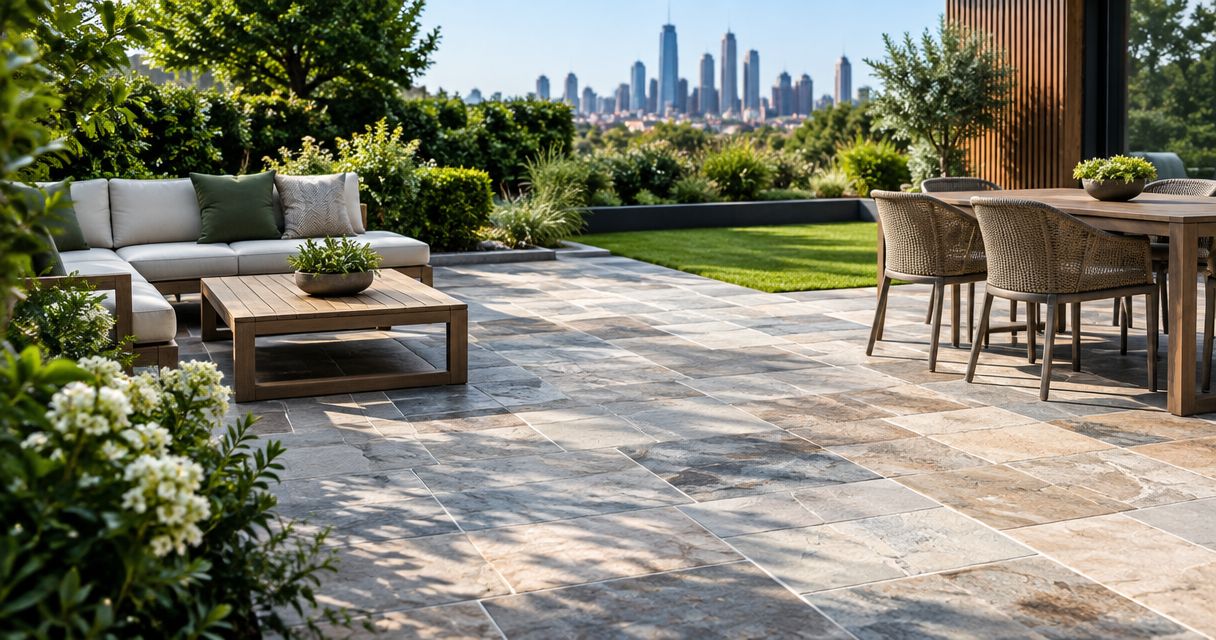
Bluestone is the local name commonly used for basalt paving in Melbourne. It gives courtyards and paths a grey, understated surface that works without making the paving the main feature.
Bluestone is the default recommendation for a Melbourne courtyard, provided the supplied finish suits wet outdoor use. Select it for the appearance and intended application, then check the technical information rather than assuming every bluestone paver performs identically.
Bluestone pros:
- Grey tones suit a simple paving layout.
- Basalt provides a hard natural-stone surface.
- Different surface treatments give you a choice of texture.
Bluestone cons:
- Dark paving absorbs sunlight, which matters where you walk barefoot.
- Colour, surface pits and texture vary; approve representative samples.
- A smooth finish needs particular scrutiny for wet slip resistance.
Best for: Homeowners who want a restrained courtyard, terrace or connecting garden path.
Check the samples outside beside your existing brickwork and exterior finishes. Include a shaded position as well as direct sun. A grey sample can look quite different once wet or placed beside a warm-coloured wall.
Verdict: Buy bluestone for an understated courtyard after confirming the finish and installation specification.
2. Granite: best outdoor paving for heavily used paths
Granite is a hard natural stone used where wear resistance matters. Its granular appearance gives a different visual result from the more uniform look associated with many bluestone surfaces.
For a front path or busy garden connection, start with an exterior-suitable textured finish. Do not choose polished granite outdoors simply because it is easy to wipe clean in a showroom.
Granite pros:
- Hardness makes it a useful candidate for wear-focused paving.
- Different colours and textures allow a distinct look from grey basalt.
- Textured finishes offer an alternative to a polished surface.
Granite cons:
- The finish determines surface behaviour; granite is not automatically non-slip.
- Its speckled appearance needs checking against existing exterior materials.
- Cutting and edge details require planning, especially around drains and steps.
Best for: Frequently used pedestrian paths and entries where durability is the main selection priority.
Ask whether the proposed granite is specified for your intended traffic. If vehicles will cross the paving, treat that as a separate design requirement: stone type alone does not establish the required thickness or base construction.
Verdict: Buy granite for a heavily used pedestrian route when the finish and supporting construction match the job.
3. Travertine: best outdoor paving for pale courtyards
Travertine is a carbonate stone with a naturally pitted structure. Its pale colours suit courtyards where you want a lighter appearance than dark grey paving.
The important choice is not just the colour. Filled or unfilled voids, surface texture and the supplier's outdoor-use guidance all affect whether a particular travertine product suits your space.
Travertine pros:
- Pale tones give courtyards a light visual finish.
- Natural pits and variation create a less uniform appearance.
- Different finishes let you choose the texture deliberately.
Travertine cons:
- Acidic cleaners can damage carbonate stone.
- Open voids need consideration for cleaning, dirt collection and the intended use.
- Wet slip suitability still depends on the exact surface finish.
Best for: Homeowners who prioritise a pale entertaining area and accept stone-specific cleaning requirements.
Check how the supplier treats surface voids and what maintenance the paving requires. For a poolside application, request explicit suitability information for that use, including the finish and exposure to pool water. Pale colour alone is not a poolside specification.
Verdict: Buy travertine for a pale courtyard if you accept the cleaning requirements and approve the supplied surface.
4. Sandstone: best outdoor paving for warm-toned gardens
Sandstone offers earthy colours and natural variation that work well with planting and warm-toned exterior materials. It is a practical visual choice when grey paving would feel out of place.
Sandstone is not a uniform specification. The source and composition affect its properties, so the exact stone matters more than the broad category name.
Sandstone pros:
- Warm colours suit garden-led layouts.
- Natural variation gives each paved area an individual appearance.
- Different surface finishes allow a choice of texture.
Sandstone cons:
- Water absorption and durability vary between sandstone products.
- Porous surfaces require attention to staining and cleaning.
- Wide colour variation needs approval before laying begins.
Best for: Garden paths and terraces where warm colour is the main design requirement.
Request information about the proposed sandstone's outdoor suitability and maintenance. Inspect several pieces rather than approving one attractive sample. You need to understand the range that will appear across the finished area.
Verdict: Buy sandstone for a warm-toned garden scheme only after checking the particular stone's suitability.
5. Slate: best outdoor paving for textured feature paths
Slate has a layered structure and a distinctive natural cleft surface. It suits a feature path where texture is part of the design, rather than a broad area that needs a consistently even finish.
Specify an outdoor-suitable product and examine the faces and edges. Reject pieces showing loose flakes or damage rather than treating every irregularity as desirable character.
Slate pros:
- Cleft faces provide a visibly textured appearance.
- Natural colour variation creates a distinct feature surface.
- Small feature areas let you use its appearance selectively.
Slate cons:
- Uneven faces need checking where walking comfort matters.
- Outdoor suitability differs between slate products.
- Layered edges require careful inspection and handling.
Best for: Textured feature paths where you deliberately want a less uniform appearance.
Verdict: Hold slate until you have approved representative pieces and confirmed outdoor suitability.
How this ranking works
Bluestone takes the default courtyard position because its grey appearance fits the brief for understated Melbourne paving. Granite takes the wear-focused position; travertine, sandstone and slate each serve a different visual preference.
This is a selection guide, not a laboratory comparison of named products. For a 2026 purchase, the supplier's information for the exact stone and finish takes priority over a category-level recommendation.
Use the criteria above to change the order for your site. A pale courtyard brief puts travertine ahead of bluestone; a warm garden palette puts sandstone ahead. Neither change removes the need to check drainage and wet slip resistance.
Plan the installation before ordering stone
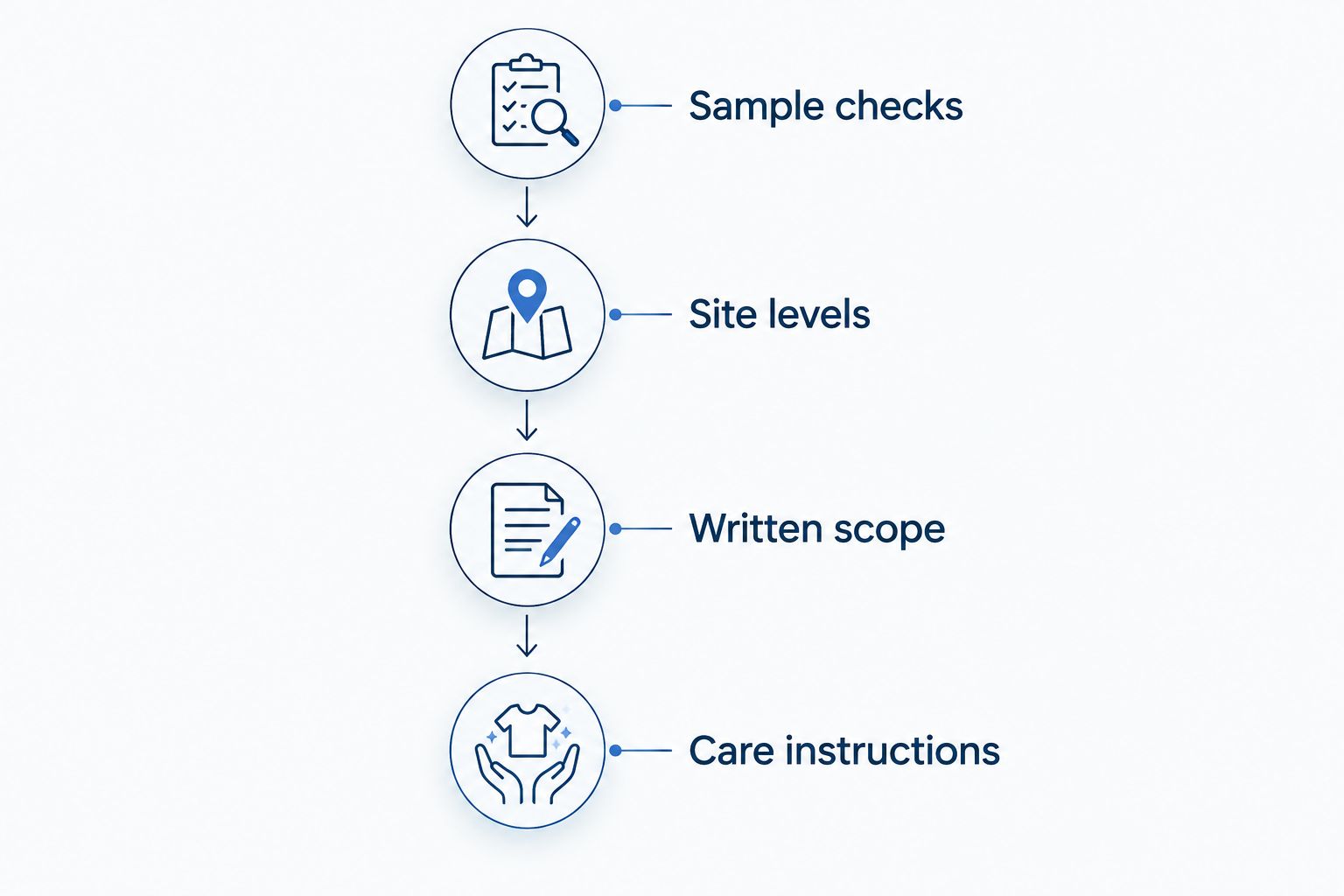
Sample checks
Request at least 2 sample pieces as a starting point, then ask whether they represent the full variation. View them dry and wet. This shows appearance changes; it does not replace slip testing.
Check samples in 3 locations: sun, shade and beside the doorway. These are practical comparison points, not a performance test. Look at the stone beside the materials that will remain after the renovation.
Site levels
Identify where water will drain before choosing the paving layout. Finished levels need coordination with doors, walls, steps and drainage points. Do not ask the paving to hide an unresolved water problem.
Where outdoor paving meets a building, have the relevant trades confirm the junction details. Bathroom waterproofing and outdoor drainage solve different problems; neither should be assumed from the choice of tile or stone.
Written scope
Ask for 4 scope items in writing: base preparation, drainage details, laying method and joint treatment. Include edge finishing and clean-up within the relevant items. This makes proposals easier to compare without assuming they cover identical work.
Care instructions
Request cleaning and sealing instructions for the actual stone. Confirm that the proposed cleaner and sealer suit the material and finish. Sealing is not a replacement for drainage, and it does not make a surface maintenance-free.
For a renovation that includes indoor work, Melbournetilinggroup provides kitchen, bathroom, wall and floor tiling. Keep the responsibilities clear between those works and any outdoor paving specification.
Which natural stone should you choose?
Choose bluestone if you want the simplest default for an understated Melbourne courtyard. Choose granite when pedestrian wear matters most, travertine for a pale scheme, sandstone for warm colours, and slate for a deliberately textured feature.
Before approving your 2026 installation, settle the finish, drainage and written scope. Those decisions are more useful than asking which stone is best without describing the site.
For homeowners combining outdoor planning with indoor renovations, Melbournetilinggroup is best suited to Melbourne wall and floor tiling projects. Treat paving advice as a separate material-selection task, not evidence of an unstated service or product range.
FAQ
What's the best natural stone for outdoor paving in Melbourne?
Bluestone is the default recommendation for an understated grey Melbourne courtyard. Granite, travertine, sandstone and slate suit different priorities, and every option needs an exterior-suitable finish and installation specification.
Is bluestone better than granite for a backyard?
Bluestone is the better starting point for a restrained grey courtyard; granite is the recommendation for a heavily used pedestrian route. Choose between them using the actual finish, appearance and site requirements rather than the stone name alone.
Is travertine suitable for outdoor paving?
Travertine is suitable when the particular product is specified for the intended outdoor use. Check the finish, treatment of surface voids and cleaning requirements before ordering.
Which natural stone paving is non-slip when wet?
No stone name alone establishes wet slip resistance. Request slip-test information for the exact supplied finish and have its suitability assessed for the location.
Does outdoor natural stone need sealing?
Sealing requirements depend on the stone, finish and exposure. Follow product-specific guidance and remember that sealing does not replace correct drainage or routine cleaning.
Can I use bathroom stone tiles outside?
Do not assume a bathroom stone tile is suitable outdoors. Confirm the product's exterior suitability, surface finish and installation requirements for the proposed site.
What should I confirm before ordering paving in 2026?
Confirm representative samples, finished levels, drainage, the installation scope and care instructions before ordering paving in 2026. Resolve building junctions and steps before approving the layout.
One last thing
Keep an approved sample and ask how replacement pieces would be matched before installation starts. Natural variation makes a later repair a selection problem as well as a laying job.
Your final approval should name the exact stone and finish—not just say natural stone paving. That gives the supplier and installer a clear reference for the work.