
You do not automatically need a standalone waterproofing certificate for every Melbourne bathroom renovation in 2026; the required paperwork depends on your building permit, the relevant building surveyor’s requirements and your contract. Confirm the required evidence before waterproofing starts, because an installer’s statement does not replace a required inspection or prove that concealed work complies.
- Melbourne waterproofing certificate requirements depend on the permit, building surveyor and contract—not just the room being tiled.
- Ask who must inspect the waterproofing before tiles cover the membrane.
- Keep installation records, product details and photographs alongside any required certificate.
- Melbourne Tiling Group provides wall and floor tiling; confirm waterproofing responsibilities separately when arranging bathroom work.
Do I need a waterproofing certificate in Melbourne?
You need the waterproofing documentation required for your particular project, not a generic certificate assumed to cover every renovation. For permitted work, ask the relevant building surveyor what evidence and inspections are required. For work without a building permit, confirm the approval position and put the installer’s documentation obligations into the contract.
The National Construction Code sets building requirements. AS 3740 addresses waterproofing of domestic wet areas, while AS/NZS 4858 addresses wet-area membrane materials. The applicable compliance pathway and documents depend on the project; citing a standard on an invoice is not proof of correct installation.
Use this distinction when discussing wall and floor tiling services. Agree on who prepares the substrate, installs the membrane, arranges inspections and authorises tiling to start.
| Document or record | Best for | What it does not establish by itself |
|---|---|---|
| Installer’s waterproofing statement or certificate | Recording who installed the system and the work they declare | Independent inspection or acceptance by the building surveyor |
| Inspection record | Recording the inspected stage and findings | Compliance of work outside that inspection’s scope |
| Product information and installation instructions | Checking the membrane system’s application requirements | Whether those instructions were followed on site |
| Dated installation photographs | Showing details before tiles conceal them | Membrane thickness, curing or full compliance on their own |
| Plumbing compliance certificate, where required | Documenting prescribed plumbing work | Certification of the separate waterproofing membrane installation |
These records serve different purposes. A useful handover file brings them together instead of treating one page as a substitute for everything else.
Why this matters before bathroom tiling
Waterproofing becomes difficult to inspect once tiles cover it. A finished shower can look tidy while hiding poorly treated junctions, unsuitable preparation or incomplete detailing around penetrations.
The practical issue in 2026 is timing: settle inspection and documentation requirements before the membrane is covered. Asking for paperwork after grouting leaves fewer opportunities to check the actual installation.
This applies to a bathroom renovation in Melbourne’s south-east just as it does elsewhere across the city. The suburb name does not establish the paperwork requirement; the building work, approvals and project conditions do.
Good documentation also makes the scope clearer. You should know whether your agreement covers demolition, substrate repairs, screeding, waterproofing, tiling and final handover, rather than discovering gaps between trades during construction.
Bathroom renovation with a building permit
For a permitted bathroom renovation, start with the relevant building surveyor. Ask what waterproofing evidence they require, whether an inspection is needed and when that inspection must happen.
Do not assume the tiler or waterproofer has arranged this. Put responsibility for booking inspections into the work schedule, with a clear instruction not to cover the membrane before the required release.
Ask these questions before work begins:
- What documents must be submitted for the waterproofing work?
- Who is authorised to provide those documents?
- Does the waterproofing need inspection before tiling?
- Who books the inspection and receives the outcome?
- What happens if the membrane needs repair after inspection?
An installer’s certificate and a building surveyor’s acceptance are different things. If someone says the certificate is sufficient, ask them to confirm that against the project’s actual permit requirements.
Bathroom renovation without a building permit
Do not assume that replacing tiles means the entire renovation is exempt from a building permit. Changes to the building, plumbing or room layout need assessment against the proposed scope.
Ask a building surveyor to confirm the permit position before demolition. Separately, ask the relevant trades what compliance documents apply to their work.
Where no building permit is required, a written waterproofing record remains useful. It identifies the installer, the system used and the areas treated, and gives you a clearer record than an invoice that only says bathroom renovation.
The limitation is straightforward: private paperwork does not turn defective work into compliant work. Keep the installation evidence as well as the signed statement, and agree on the documentation before accepting the quote.
Repairs, regrouting and shower retiling
Regrouting, replacing an isolated tile and rebuilding a shower are not the same scope. Ask whether the work leaves the existing waterproofing untouched or exposes, damages or replaces it.
Removing shower tiles can damage the membrane underneath. Before approving a small repair, ask how the contractor will assess the exposed area and whether a compatible repair is possible under the membrane manufacturer’s instructions.
An invoice for new grout does not establish that the waterproofing beneath the tiles is sound. Likewise, a statement covering a local membrane repair should identify that limited scope rather than imply the whole bathroom has been waterproofed again.
For a 2026 shower retiling project, make the stopping point explicit: if demolition reveals damaged backing or membrane, agree on the revised work before installing new tiles.
Why waterproofing paperwork requirements vary
The right documentation follows the work being done. These factors explain why two bathroom renovations can need different records:
- Permit conditions: The project’s building permit and surveyor requirements determine the approval evidence needed for that work.
- Extent of renovation: A full shower rebuild exposes different work from a surface maintenance job.
- Inspection arrangements: Required inspections must fit the construction sequence before relevant work is concealed.
- Waterproofing system: The selected membrane has its own preparation, application and curing instructions.
- Contract scope: Your agreement should identify who supplies installation records, photographs and any specified certificate.
- Separate trade work: Plumbing documentation relates to plumbing work and does not replace records for the membrane installation.
A kitchen splashback, an internal shower and external paving also involve different exposure conditions. Do not transfer a bathroom paperwork checklist to another area without checking the actual construction requirements.
What should a waterproofing handover record contain?
Ask for a record that identifies the property and the work clearly. A generic form with a signature but no installation details leaves important questions unanswered.
Your requested handover information should include:
- Site details: Property address, room and specific areas treated.
- Installer details: Business name, contact details and the person responsible for the installation.
- System details: Membrane name and associated preparation or detailing products used.
- Work dates: Installation dates and relevant inspection dates.
- Installation scope: What was waterproofed, including any limited repairs or exclusions.
- Supporting evidence: Photographs, inspection records and relevant product instructions.
Ask the issuer to identify the basis of any compliance statement. Wording that names a standard is useful only when it accurately relates to the work and applicable requirements.
For your 2026 renovation file, save the original documents together rather than leaving photographs in one message thread and the certificate in another. Keep the written scope and approved variations with them.
How do I organise waterproofing sign-off before tiling?
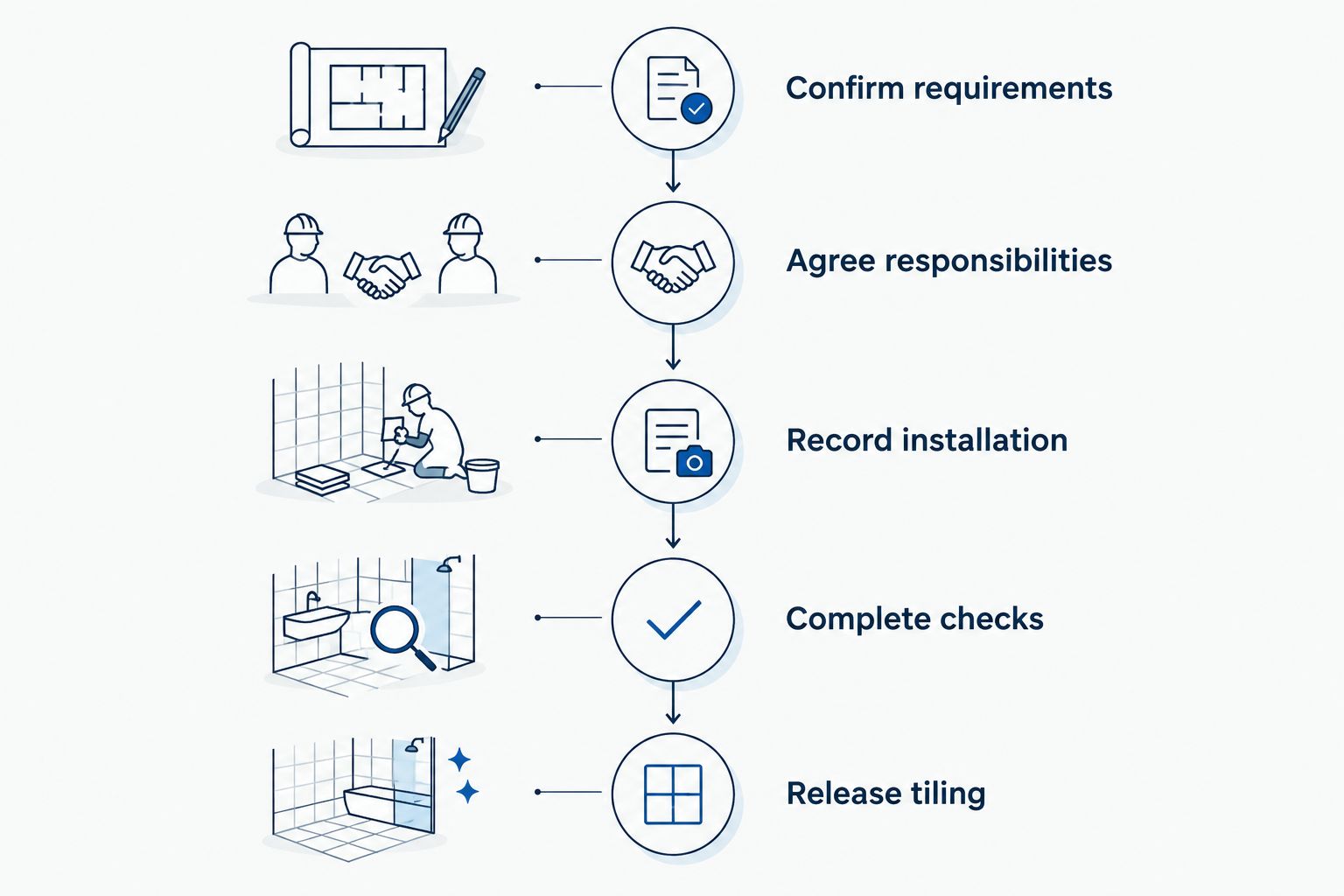
Arrange the paperwork and inspection sequence before booking the tiling start date. Use this order so each trade knows when the job can move to the next stage.
- Confirm requirements. Check the permit position and ask the relevant building surveyor what evidence is required.
- Agree responsibilities. Record who installs the membrane, supplies documentation and arranges inspections.
- Record installation. Keep the system details and photograph relevant work before it is concealed.
- Complete checks. Obtain required inspections and address any identified defects before covering the work.
- Release tiling. Start only after the required checks and the membrane manufacturer’s curing requirements are satisfied.
The sequence matters more than a promised completion day. A certificate does not shorten curing, and a dry-looking surface does not establish that the membrane is ready for adhesive.
If another trade damages the membrane after inspection, stop and have the damage assessed. Do not treat an earlier sign-off as approval of a later repair.
The waterproofing sign-off to tile installation guide explains the handover between these stages.
Who should I ask before accepting a tiling quote?
Ask the building surveyor about project approval requirements, the waterproofing installer about the membrane installation, and the tiling contractor about the surface they will accept. Keep those responsibilities separate even when one business coordinates the work.
Melbourne Tiling Group is suited to Melbourne homeowners and construction companies seeking residential or commercial wall and floor tiling. When discussing bathroom tiling, confirm whether waterproofing is included, who performs it and what records will be supplied; the tiling service alone does not establish those arrangements.
The benefit of a clearly defined scope is fewer gaps between trades. The limitation is that even a detailed quote cannot replace the site checks needed once old tiles and damaged materials are removed.
Ask Melbourne Tiling Group to identify inclusions and exclusions in writing. Compare the same preparation, waterproofing and tiling scope across quotes rather than comparing only the final total.
Discuss your bathroom tiling scope
Clarify preparation, waterproofing responsibilities and tiling inclusions before work starts.
Can I tile before receiving the waterproofing paperwork?
Do not cover waterproofing before required inspections and approvals are complete. Confirm which records must be available at that stage and which form part of the final handover.
A promise to send the certificate later does not resolve an outstanding inspection. Get the required release confirmed before adhesive goes onto the membrane.
Is a plumbing certificate the same as a waterproofing certificate?
A plumbing compliance certificate is not a certificate for the separate waterproofing membrane installation. It relates to the prescribed plumbing work covered by that certificate.
Keep plumbing and waterproofing records together, but check each document’s scope. Neither should imply that it covers another trade’s work without a proper basis.
FAQ
Do I need a waterproofing certificate for a Melbourne bathroom renovation in 2026?
A standalone waterproofing certificate is not automatically required for every Melbourne bathroom renovation. Confirm the documents and inspections required by your building permit, relevant building surveyor and contract before work starts.
Who can tell me what waterproofing paperwork my renovation needs?
The relevant building surveyor can confirm the approval evidence required for permitted building work. Ask the waterproofing installer separately what installation records and signed statements they will supply.
Can my tiler provide the waterproofing certificate?
A tiling contractor should only provide a waterproofing statement within their actual role and responsibility. Confirm who installed the membrane, who is signing the document and whether the building surveyor accepts that evidence.
Do I need waterproofing records if my bathroom does not need a building permit?
You should still request written installation records even where no building permit is required. Agree on the installer details, system information, photographs and handover documents in your contract.
Does regrouting a shower certify the waterproofing underneath?
Regrouting does not certify the membrane beneath the tiles. Grout maintenance and waterproofing installation are separate work, so ask what has actually been inspected or repaired.
Can I use photographs instead of a waterproofing certificate?
Photographs do not replace a certificate or inspection required for your project. They provide supporting evidence of visible installation details before tiles conceal the membrane.
What should I do if I cannot find an old waterproofing certificate?
Ask the previous contractor, builder or relevant building surveyor for the available records. Do not ask a new contractor to certify concealed historical work without an appropriate basis.
One last thing
Ask what must happen if the membrane is damaged after sign-off. Plumbing adjustments, dropped tools or later fixings can affect work that was previously checked.
For a bathroom completed in 2026, the handover should reflect the finished installation, including documented repairs—not just the membrane’s condition on an earlier inspection day. Resolve that responsibility before the next trade enters the room.