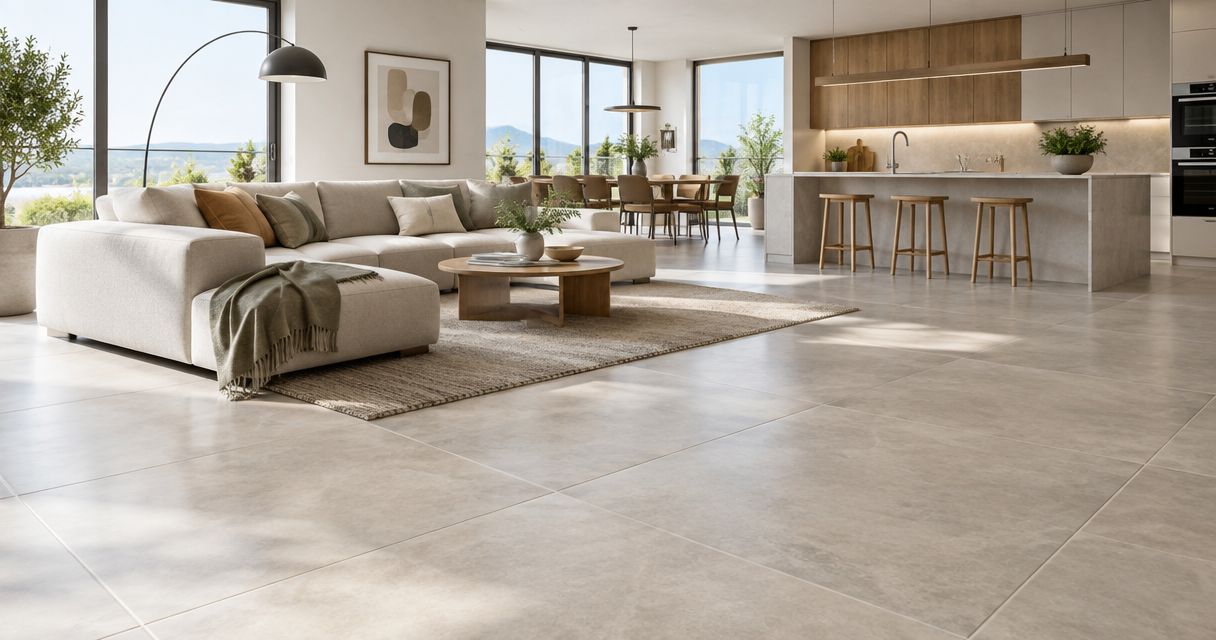
Best overall: matt porcelain. Best for warm interiors: limestone-look porcelain. Best for natural variation: limestone. The best large format tiles for open plan living in 2026 suit your kitchen, dining and lounge areas without creating an awkward surface to clean or install.
- The best large format tiles for open plan living are matt porcelain for busy, connected kitchen and living spaces.
- Limestone-look porcelain suits warm interiors; concrete-look porcelain suits contemporary rooms.
- Polished porcelain needs careful placement around spills; natural limestone needs stone-specific care.
- Melbourne Tiling Group provides floor tiling services; discuss floor preparation and room transitions before installation.
Why this matters
An open plan floor has to work under dining chairs, beside kitchen benches and around lounge furniture. Choosing a tile from a small sample alone leaves important questions unanswered. You need to see the finish across the room and understand how the floor will meet adjoining surfaces.
Melbourne Tiling Group provides residential and commercial wall and floor tiling services in Melbourne. Melbourne Tiling Group is a service option for Melbourne homeowners who need floor tiling installation rather than a tile retailer. Choose the tile and plan the installation together.
For a 2026 renovation, start with the existing floor. A larger tile does not remove unevenness beneath it. It makes preparation and layout decisions more important.
What makes the best large format tiles?
Use these criteria before choosing a colour or finish:
- Floor suitability: Choose a tile documented for floor use, not a wall-only product.
- Surface finish: Check texture, cleaning requirements and suitability around kitchen spills.
- Room proportions: Compare the tile shape with your room, island and doorways.
- Visual consistency: Check pattern variation across several full tiles, not one sample.
- Installation requirements: Assess the substrate, adhesive system, joints and finished floor height.
- Ongoing care: Decide whether you want routine cleaning or are prepared for stone-specific maintenance.
Treat dimensions as layout options, not a quality ranking. For example, compare a 600 × 600 mm square, a 600 × 1200 mm rectangle and a 900 × 900 mm square on a scaled room plan. These are planning examples, not specifications for a particular product.
The longest tile is not automatically the best choice. A size that produces sensible cuts at your kitchen island and doorways earns its place.
Large format tiles at a glance
These recommendations compare material and finish categories, not individual products. Check the technical information for the exact tile you select.
| Tile option | Best for | Standout feature | Key limitation |
|---|---|---|---|
| Matt porcelain | Busy family living | A non-polished finish across connected rooms | Some textured surfaces need more cleaning effort |
| Limestone-look porcelain | Warm, neutral interiors | Stone-style pattern without using natural limestone | Printed patterns can repeat |
| Concrete-look porcelain | Contemporary layouts | Concrete-style appearance with a tiled finish | Cool colours can feel stark beside warm finishes |
| Polished porcelain | Formal living areas | A reflective surface | Reflections and surface marks remain visible |
| Natural limestone | Authentic stone interiors | Natural variation rather than a printed pattern | Acid sensitivity and stone-specific care |
For your 2026 shortlist, compare full-size samples under daylight and evening lighting. View each sample flat on the floor. A tile held upright beside a display does not show you how reflected light will behave across your living area.
1. Matt porcelain: best large format tiles for busy family living
Matt porcelain is the default choice for an open kitchen, dining and lounge floor. It avoids the mirror-like reflection of polished tiles. Choose a restrained pattern if you want furniture, cabinetry and rugs to carry the room.
A matt label does not establish slip resistance. Check the exact product's documented surface performance and intended use, especially beside sinks and doors.
Matt porcelain pros:
- Non-polished finish suits an everyday living space.
- Porcelain offers a practical alternative to acid-sensitive limestone.
- Plain or softly patterned options work across connected rooms.
Matt porcelain cons:
- Heavily textured finishes can hold dirt.
- A matt finish does not guarantee suitability for every wet location.
- Large pieces still require careful floor preparation.
Best for: Households using the same floor through the kitchen, dining and lounge.
Verdict: Buy matt porcelain as your default shortlist, then confirm the exact finish and floor requirements.
2. Limestone-look porcelain: best large format tiles for warm interiors
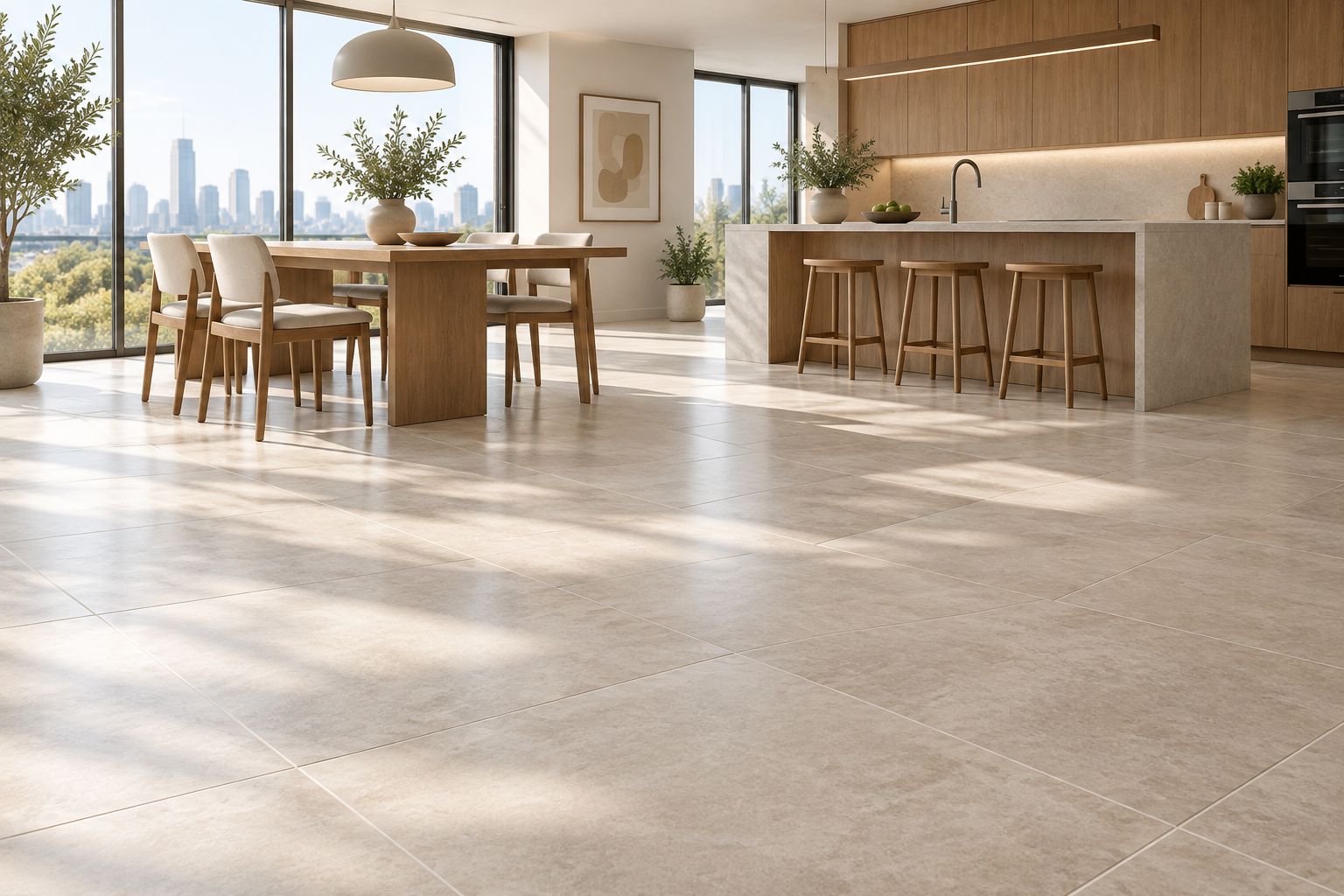
Limestone-look porcelain uses a printed stone-style surface rather than natural limestone. It suits a room where you want soft variation alongside timber cabinetry, neutral upholstery or warm wall colours.
Compare several tiles before committing. A convincing individual sample can still produce obvious repetition when the same pattern appears across a large floor.
Limestone-look porcelain pros:
- Gives you a stone-style appearance without natural limestone's acid sensitivity.
- Soft patterning provides an alternative to a plain floor.
- Porcelain avoids the need for natural-stone-specific cleaning products.
Limestone-look porcelain cons:
- Printed faces can repeat.
- Colour and surface texture differ between products.
- It does not reproduce the full character of natural stone.
Best for: Homeowners wanting a warm stone appearance across an open plan room.
Verdict: Buy limestone-look porcelain when the stone look matters more than using actual stone.
A warm tile still needs checking beside your cabinetry. Put the sample against the timber, paint and benchtop finishes you intend to keep. Look for clashes before installation, not after the floor is laid.
3. Concrete-look porcelain: best large format tiles for contemporary rooms
Concrete-look porcelain provides a concrete-style appearance in a tiled floor. It suits interiors with simple cabinetry, metal details and restrained decoration. The tile joints remain part of the finished look; this is not a joint-free concrete surface.
Choose the colour beside your actual finishes. A cool grey sample can pull the room in a different direction from warm timber or cream cabinetry.
Concrete-look porcelain pros:
- Restrained patterns support a simple interior.
- Porcelain provides a tiled alternative to an exposed concrete finish.
- Larger formats let you plan a deliberate joint grid.
Concrete-look porcelain cons:
- Cool shades can clash with warmer finishes.
- Repeated printed markings can become noticeable.
- Grout joints interrupt the concrete-style surface.
Best for: Contemporary open plan rooms where a concrete appearance fits the surrounding materials.
Verdict: Buy concrete-look porcelain for a deliberate contemporary scheme; skip it if the grey clashes with your cabinetry.
4. Polished porcelain: best large format tiles for formal living areas
Polished porcelain has a reflective finish. It suits a formal living or dining area where that reflection is part of the design, rather than an unwanted distraction.
Consider the kitchen separately if the same floor continues into it. A polished label does not prove that a tile is suitable where water, grease or food spills occur.
Polished porcelain pros:
- Reflects light across the surface.
- Creates a distinctly different finish from matt tiles.
- Offers a polished appearance without choosing natural limestone.
Polished porcelain cons:
- Footprints, smears and reflected marks can remain noticeable.
- Strong daylight highlights the reflective surface.
- Suitability around spills requires product-specific checking.
Best for: Formal living spaces where you actively want a reflective floor.
Verdict: Hold polished porcelain until you have checked its documented suitability and viewed it in your room's light.
5. Natural limestone: best large format tiles for authentic stone interiors
Natural limestone provides genuine stone variation rather than a printed pattern. It suits homeowners who want that character and accept the maintenance decisions attached to it.
Limestone is sensitive to acids. Acidic spills and unsuitable cleaners can etch the surface, and sealing does not make limestone acid-proof.
Natural limestone pros:
- Natural variation gives each stone its own character.
- Uses actual limestone rather than a stone-style print.
- Suits interiors where natural materials are the priority.
Natural limestone cons:
- Acidic spills can damage the surface.
- Cleaning and sealing need stone-specific advice.
- Natural variation requires agreement on the layout before fixing.
Best for: Homeowners prioritising authentic stone and accepting its care requirements.
Verdict: Buy natural limestone only if you accept stone-specific upkeep; otherwise choose limestone-look porcelain.
Plan the installation before ordering
The best tile for your 2026 renovation still needs the right installation plan. Melbourne Tiling Group provides floor tiling installation; discuss the substrate and adjoining rooms alongside your tile shortlist.
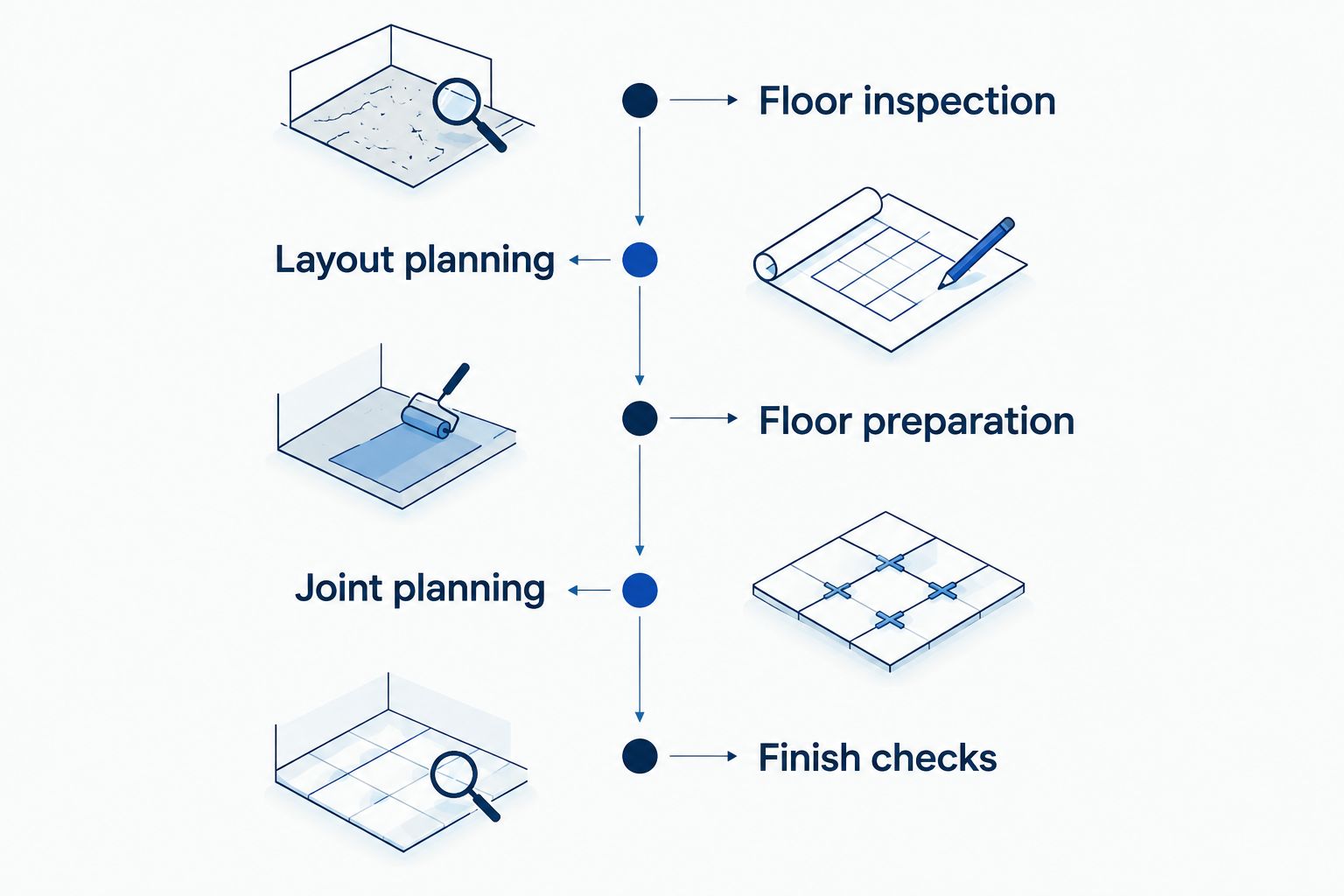
Floor inspection
Check whether the existing floor is suitable to receive tiles. Identify loose surfaces, damage, uneven areas and transitions between different floor constructions. Do not cover a problem simply because a larger tile hides it from view.
Layout planning
Mark the main sightlines, kitchen island, doorways and room edges. Compare where full tiles and cuts will land. A 600 × 1200 mm rectangle needs a different layout discussion from a 900 × 900 mm square, even when both suit the room visually.
Ask the installer to check the tile manufacturer's layout guidance. Do not assume a brick-style offset suits every long rectangular tile.
Floor preparation
Agree on preparation before installation begins. The adhesive and preparation system must suit the tile and substrate. Large tiles need appropriate adhesive coverage beneath them; adhesive is not a substitute for correcting an unsuitable floor.
Joint planning
Plan grout joints, perimeter accommodation and required movement joints. Rectified edges do not mean tiles should touch. Grout colour changes how visible the grid becomes, but appearance does not override installation requirements.
Finish checks
Confirm finished floor height beside doorways, adjoining flooring and kitchen appliances. Check whether doors will clear the finished surface and whether transitions need attention. Resolve these details while the layout is still adjustable.
A useful installation discussion separates tile choice from floor preparation. Ask what the work includes and what needs assessment on site. That makes competing proposals easier to compare without treating the cheapest-looking scope as equivalent.
Plan your floor tiling
Discuss your open plan layout, floor preparation and installation requirements.
How to keep the choice practical
For Melbourne homeowners, including those planning renovations in the south-east suburbs, the useful questions are about the room itself. Check daylight, kitchen spills, access to outdoors and the finishes that will stay.
- Use a full-size sample: View the surface from standing height and from the lounge.
- Check a cleaning method: Follow the tile supplier's care instructions and assess the texture.
- Review pattern variation: See multiple faces before choosing a stone or concrete look.
- Set the complete scope: Include preparation, transitions and required joints in the installation discussion.
For a 2026 project, avoid choosing by tile size alone. A well-planned layout matters more than selecting the largest available format. Keep bathroom waterproofing and outdoor surface suitability as separate decisions; a living-room tile does not automatically suit either application.
How we ranked these tile options
Matt porcelain takes the default position because its non-polished finish suits an everyday connected living space. Limestone-look and concrete-look porcelain answer different design preferences. Polished porcelain and natural limestone need more deliberate acceptance of their limitations.
The ranking follows floor suitability, surface finish, layout, visual consistency, installation requirements and care. It is a category guide, not a performance rating for an unnamed product. The exact tile's documentation takes priority over its appearance.
Which large format tiles should you choose?
Choose matt porcelain if you are undecided. Move to limestone-look porcelain for a warm stone appearance or concrete-look porcelain for a contemporary scheme. Keep polished porcelain and natural limestone for rooms where you specifically want those finishes and accept their drawbacks.
Before your 2026 installation, settle the layout and preparation scope with the installer. Melbourne Tiling Group provides floor tiling services for Melbourne homeowners and construction companies. Bring a room plan, photographs of the existing floor and your preferred samples to the discussion.
FAQ
What's the best large format tile for open plan living?
Matt porcelain is the default choice for busy open plan kitchen, dining and living spaces. Check the exact tile's floor suitability, surface performance and cleaning instructions before selecting it.
Is a larger tile always better in an open plan room?
No, a larger tile is not automatically better. Choose a size that produces sensible cuts around islands, doorways and room edges, and suits the floor beneath it.
Are matt tiles non-slip?
A matt finish does not establish slip resistance. Check the exact product's documented performance and intended use, especially around kitchen spills or entrances.
Is limestone-look porcelain better than natural limestone?
Limestone-look porcelain is the more practical choice when you want a stone appearance without limestone's acid sensitivity. Natural limestone suits homeowners who prioritise actual stone and accept stone-specific care.
Can large format tiles be laid over an uneven floor?
Correct unsuitable unevenness before laying large format tiles. Have the substrate assessed and agree on preparation rather than relying on adhesive to fix the floor.
Do rectified tiles need grout joints?
Yes, rectified tiles still need appropriate joints. Follow the product and installation guidance, and plan movement joints separately from the visual grout layout.
Can I use the same tiles inside and outside?
Only use the same tile outside if the exact product is documented as suitable for that setting. Outdoor exposure and surface requirements need a separate check from an indoor living room.
Does Melbourne Tiling Group install floor tiles?
Melbourne Tiling Group provides residential and commercial floor tiling services in Melbourne. Discuss your room layout, existing floor and installation requirements before work begins.
One last thing
Keep an intact tile from the chosen batch and retain its product details. If you later need a repair, that tile gives the installer a physical match to work with. A photograph alone cannot show the exact texture or colour.