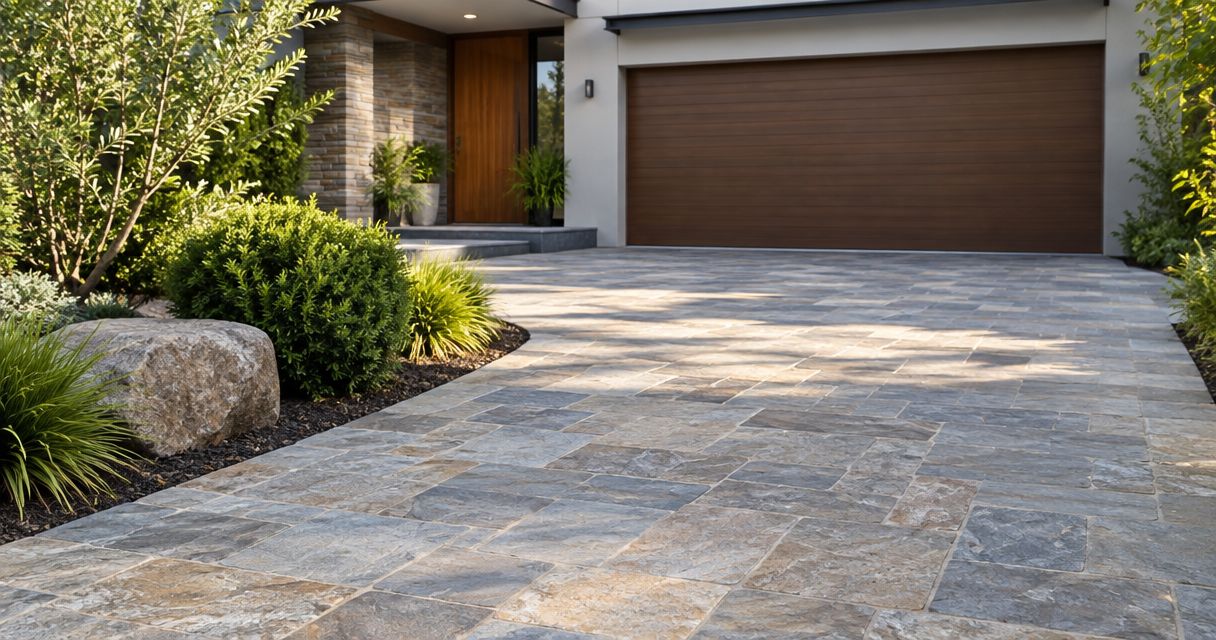
Best overall: textured granite. Best for a dark Melbourne finish: basalt bluestone. Best for a pale, traditional look: driveway-rated sandstone. For 2026, the best natural stone for driveway paving is a stone with documented vehicle-load suitability, a suitable wet-grip finish and an installation design matched to your site—not simply the hardest-looking sample.
- Textured granite is the best natural stone for driveway paving when the supplied pavers are suitable for vehicle loads.
- Basalt bluestone suits dark driveway designs; confirm the finish, thickness and installation requirements before ordering.
- Sandstone, quartzite and travertine need product-specific checks, not approval based on the stone name alone.
- Melbourne Tiling Group provides wall and floor tiling for Melbourne homeowners planning related renovation work.
Why this matters
A driveway takes more punishment than a garden path. Tyres turn across the surface, vehicles brake near the entrance, and leaking fluids can leave stains. A stone sold for outdoor paving is not automatically suitable for this work.
Your finished driveway also depends on what sits beneath the stone. Poor support, trapped water and inadequate edge restraint can damage otherwise suitable paving. Approve the stone and the installation system together.
Melbourne Tiling Group is a fit for Melbourne homeowners needing wall and floor tiling alongside a driveway project. Keep those scopes separate: driveway paving needs its own vehicle-load and drainage assessment.
What makes the best natural stone for driveway paving?
Use these criteria for your 2026 shortlist before choosing a colour:
- Vehicle suitability: Ask for written confirmation that the specific paver suits your intended vehicles and installation method. A general outdoor-use description is not enough.
- Wet grip: Check the actual surface finish. Polished stone is not the default choice for an exposed driveway, particularly on a slope.
- Base and support: Confirm how the paving will be supported, including the bedding, joints and edges. Stone strength cannot compensate for an unsuitable base.
- Drainage: Plan where runoff will go and how the surface will fall. Do not let the paving layout dictate drainage after the work starts.
- Stain management: Ask how the stone responds to oil, leaf litter and cleaning products. Choose a maintenance routine you will actually follow.
- Repairability: Consider whether individual units can be replaced and whether replacement stone will match the original batch.
For a practical sample check, compare 2 samples: 1 dry sample and 1 wet sample of the same finish. This shows colour changes and surface texture; it does not replace slip testing or supplier specifications.
Natural stone driveway options at a glance
These rankings separate different use cases. Every recommendation assumes a product specifically suitable for driveway installation.
| Stone | Best for | Standout feature | Key limitation |
|---|---|---|---|
| Textured granite | Everyday vehicle use | Hard-wearing stone with textured finish options | Smooth finishes and unsuitable paving systems undermine suitability |
| Basalt bluestone | Dark, understated Melbourne designs | Dark grey appearance that works with simple layouts | The name bluestone alone does not establish performance |
| Sandstone | Pale, traditional frontage | Warm colours and natural variation | Absorption and strength vary between products |
| Quartzite | Pronounced natural texture and variation | Hard stone with distinctive mineral patterns | Uneven surfaces and variable products need careful selection |
| Travertine | Matching an existing travertine landscape | Recognisable pale tones and natural character | Voids, filling and support require close scrutiny |
1. Textured granite: best driveway stone for everyday vehicle use
Granite is the default shortlist choice when you want a hard-wearing natural stone driveway without making appearance the only priority. It is a hard crystalline rock, and paving products are offered with textured finishes such as flamed surfaces.
Choose the actual finish carefully. A polished granite sample can look appealing indoors but is not a sensible starting point for an exposed vehicle surface.
Granite pros:
- Hard-wearing material suitable for consideration in vehicle paving.
- Textured finishes give you alternatives to smooth or polished surfaces.
- Natural speckling provides a different look from flat-coloured paving.
- Modular units let the installer plan joints and replacement access.
Granite cons:
- A hard stone still needs correct support beneath each unit.
- Rougher finishes need a cleaning method that reaches their texture.
- Colour and mineral patterns vary, so a small sample does not show the whole driveway.
Best for: Homeowners prioritising everyday use and a straightforward maintenance plan over a highly decorative surface.
Ask to see the proposed granite finish across a larger sample area. Check whether the supplier's vehicle-use recommendation covers your paver dimensions, thickness and intended bedding system.
Verdict: Buy driveway-rated textured granite as the default option; skip polished granite for the exposed driving surface.
2. Basalt bluestone: best driveway stone for a dark Melbourne finish
Basalt bluestone suits a driveway where you want dark grey paving and a restrained layout. In Melbourne, bluestone commonly refers to basalt, but the trade name does not replace a product specification.
Inspect the surface rather than choosing from a colour photograph. Different finishes change the texture, appearance and cleaning requirements.
Basalt bluestone pros:
- Dark tones suit simple contemporary layouts.
- Natural variation gives the surface character without requiring a complex pattern.
- Different surface finishes allow you to compare texture options.
- The same material palette can connect a driveway visually with nearby paths.
Basalt bluestone cons:
- Smooth finishes are not an automatic choice for wet or sloping areas.
- Product variation means one bluestone recommendation does not cover every supplier.
- A dark surface still shows some stains, deposits and dirt; it is not maintenance-free.
Best for: Homeowners who want a dark driveway that fits an understated frontage.
For a south-east Melbourne renovation, review the stone beside your brickwork, render and front steps. Wet the sample before approving its colour, and ask how the specified finish performs on your driveway's slope.
Verdict: Buy driveway-rated basalt bluestone for a dark finish; hold the order until the surface and support details are confirmed.
3. Sandstone: best driveway stone for a pale, traditional frontage
Sandstone offers warm colours and visible natural variation. It suits a frontage where grey or speckled stone would fight the house's existing materials.
Sandstone is also a broad category. Its porosity and strength vary, so a patio recommendation cannot stand in for driveway approval.
Sandstone pros:
- Warm and pale tones suit traditional exterior palettes.
- Natural variation avoids a completely uniform appearance.
- Textured surfaces provide alternatives to smooth finishes.
Sandstone cons:
- Absorbent products need careful stain-management planning.
- Not every sandstone paving product suits vehicle loads.
- Cleaning products need to be compatible with the particular stone.
Best for: Homeowners matching a pale or warm-toned period frontage, with a willingness to follow stone-specific care instructions.
Ask the supplier to identify the actual sandstone product, not just its colour name. Get written guidance on vehicle suitability, sealing and cleaning before committing to the layout.
Verdict: Hold sandstone until its driveway suitability is documented; buy it for appearance only after that check passes.
4. Quartzite: best driveway stone for pronounced natural texture
Quartzite is a hard metamorphic rock that can bring strong mineral patterns and surface variation to outdoor paving. It suits a driveway where the stone itself is meant to be a visible feature.
Hardness is not a complete driveway specification. You still need to assess the supplied pavers, their surface profile and the installation method.
Quartzite pros:
- Distinctive mineral patterns suit a feature-led frontage.
- Natural texture offers a different appearance from uniform paving.
- Hard material makes it a candidate for a vehicle-rated product shortlist.
Quartzite cons:
- Strong variation makes batch selection important.
- Uneven surfaces need checking for comfortable walking and practical cleaning.
- A quartzite label alone does not confirm paving performance.
Best for: Homeowners wanting a textured, varied driveway rather than a quiet background surface.
Look at several units together. Check the proposed joints and surface evenness, especially where you carry shopping, move bins or walk between the car and front door.
Verdict: Buy documented driveway-rated quartzite for a feature surface; skip products whose unevenness conflicts with everyday access.
5. Travertine: best driveway stone for matching existing landscaping
Travertine is a carbonate stone known for pale tones and natural voids. It belongs on this shortlist when matching existing travertine paving matters more than choosing a new material palette.
It is not the default driveway recommendation. Filling, surface finish, paver construction and support all need specific attention before vehicle use.
Travertine pros:
- Pale tones can connect the driveway with existing landscaping.
- Natural variation provides character across a larger paved area.
- Matching the material can reduce visual changes between separate outdoor spaces.
Travertine cons:
- Natural voids and filled areas need product-specific assessment.
- Acidic cleaners can damage carbonate stone.
- Poolside or patio suitability does not establish driveway suitability.
Best for: Homeowners already using travertine outdoors who have a documented vehicle-suitable product and installation design.
Do not specify thin patio tiles simply because they match the garden. Ask how the proposed paving handles wheel loads and how damaged filling or individual units would be repaired.
Verdict: Hold travertine until vehicle suitability is confirmed; skip patio-only products for the driveway.
Plan the installation before approving the stone
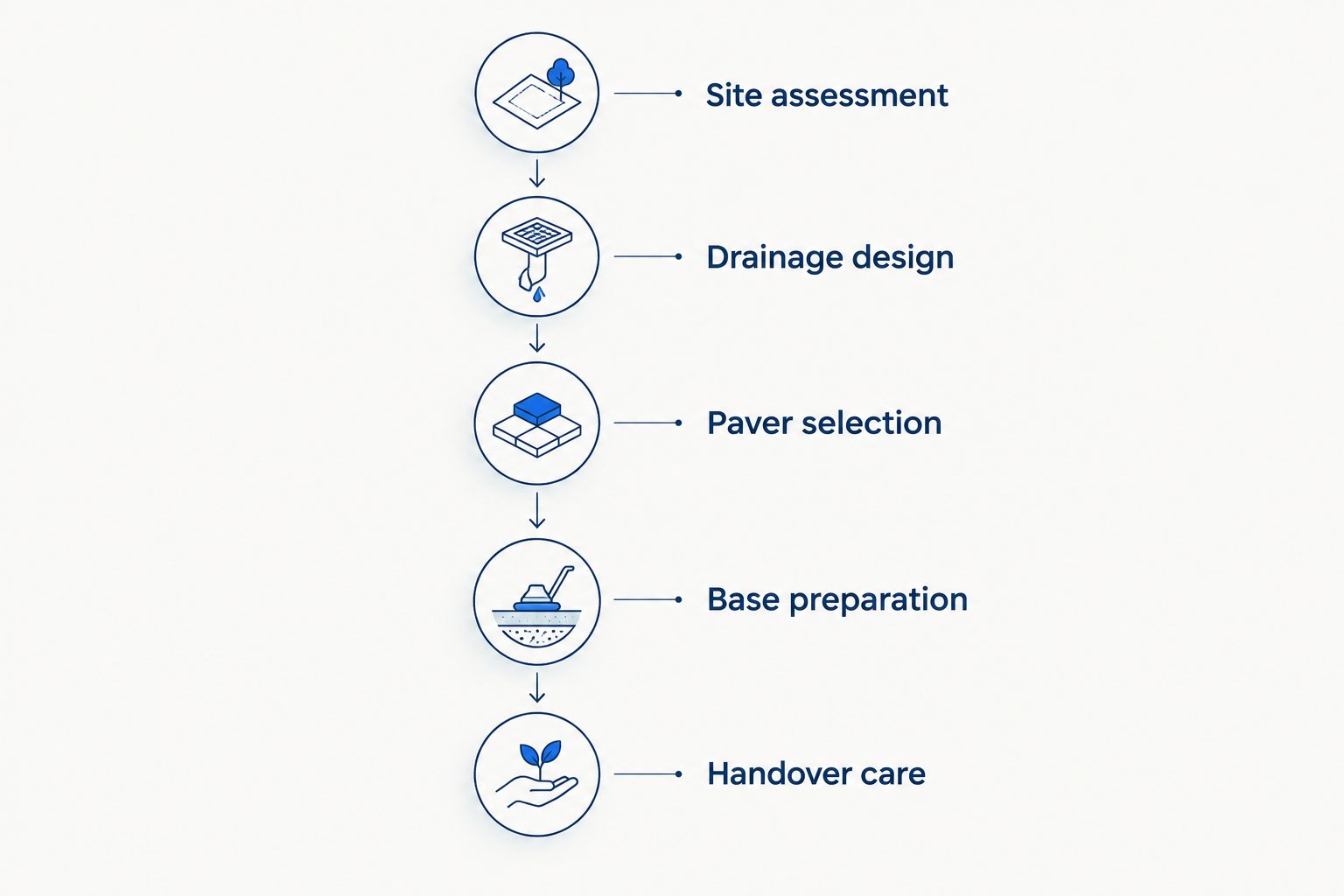
For a 2026 driveway project, settle these decisions in sequence. This prevents a colour selection from becoming an installation problem.
Site assessment
Record the slope, existing surface, drainage points and nearby thresholds. Identify 3 vehicle movements: parking, turning and braking. Tell the installer about delivery vehicles or other heavier traffic rather than assuming passenger-car use covers everything.
Drainage design
Decide where water will leave the driveway. Check how the proposed work meets the garage entrance, footpath and adjoining landscaping. A driveway needs planned runoff; it is not waterproofed like a bathroom.
Paver selection
Confirm the stone, finish, dimensions and vehicle suitability as one specification. Ask which requirements come from the supplier and which depend on the site design.
Base preparation
Agree on the support system before installation starts. Existing concrete needs assessment rather than automatic acceptance as a suitable base. Confirm how joints, edges and changes in level will be handled.
Handover care
Request cleaning instructions and any sealing requirements for the exact stone. Ask when the completed surface can take vehicle traffic, based on the installation materials used. Do not substitute a generic waiting period.
How the stones are ranked
This 2026 ranking gives everyday vehicle use priority over appearance. Textured granite is the default, basalt bluestone fills the dark-design slot, and sandstone serves a warm traditional frontage. Quartzite and travertine answer more specific design needs.
The ranking compares stone categories, not tested supplier products. A documented driveway-rated product with the right installation design takes priority over a higher-ranked stone supplied without suitable specifications.
Which natural stone should you choose?
Choose driveway-rated textured granite if you are undecided. Choose basalt bluestone when a dark finish is central to the design. Consider sandstone, quartzite or travertine only when their specific appearance solves a clear design need and their product documentation supports vehicle use.
For value, compare quotes against the same scope. Include removal, preparation, drainage, paving, joints, edges and care requirements. A shorter quote is not necessarily the simpler job.
For homeowners comparing natural stone for driveway paving, Melbourne Tiling Group provides residential wall and floor tiling for related indoor renovation work. Keep any driveway proposal separately specified so the responsibilities are clear.
FAQ
What's the best natural stone for driveway paving in Melbourne?
Driveway-rated textured granite is the default recommendation for everyday vehicle use. Confirm the actual paver's vehicle suitability, wet-grip finish and required support system before ordering.
Is bluestone better than granite for a driveway?
Basalt bluestone is the better design choice when you want a dark grey driveway; granite remains the default shortlist choice for everyday use. Compare specific products and finishes rather than treating either stone name as proof of suitability.
Can I use sandstone on a driveway?
Use sandstone only when the specific paving product is suitable for your vehicle loads and installation method. Its strength and absorption vary, so ask for product-specific guidance on support, sealing and cleaning.
Can travertine take cars on a driveway?
Travertine needs explicit product and installation approval for driveway use. Patio suitability does not establish vehicle suitability, and natural voids, filling and support need assessment.
How thick should natural stone driveway pavers be?
The required thickness depends on the stone product, paver dimensions, vehicle loads and support system. Get a written specification for the complete installation rather than choosing a universal thickness.
Does sealing stone make a driveway non-slip?
Sealing does not replace a suitable surface finish or wet-slip assessment. Confirm that any proposed sealer is compatible with the stone and the intended driveway use.
What should a natural stone driveway quote include in 2026?
A 2026 driveway quote should identify the stone and finish, preparation, support system, drainage, joints, edge details and handover care. Compare the same scope across proposals rather than comparing an unexplained total.
Does Melbourne Tiling Group provide services for related renovation work?
Melbourne Tiling Group provides residential and commercial wall and floor tiling, including bathroom, kitchen and floor tiling. For a natural stone driveway paving project, confirm the driveway scope separately from those stated tiling services.
One last thing
Ask where you would replace a damaged paver without disturbing the surrounding work. That question exposes repair access, joint choices and replacement-material planning before they become your problem.
For your 2026 shortlist, keep a labelled sample and the exact product specification. A stone name alone is not enough to reorder a matching finish later.