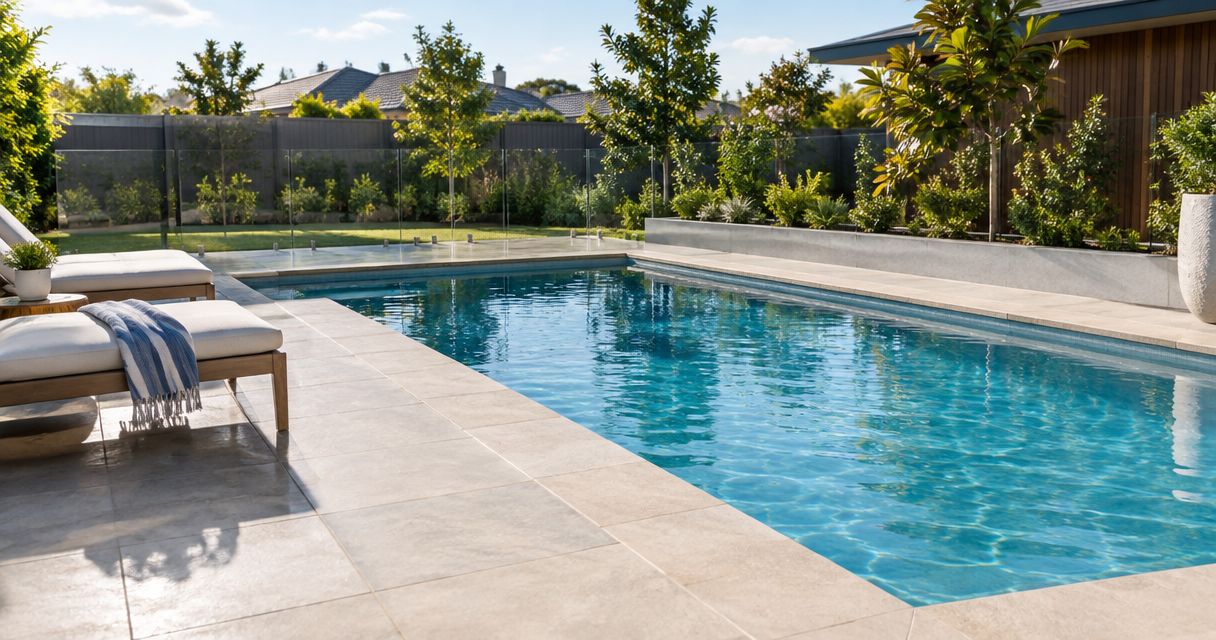
Best overall: outdoor porcelain. Best for a textured natural-stone finish: travertine. Best budget-focused starting point: concrete pavers. This 2026 guide compares the best pool paving materials Melbourne homeowners should shortlist, including granite and sandstone, and explains what to check before installation.
- Outdoor porcelain leads this best pool paving materials Melbourne shortlist for low water absorption and straightforward cleaning.
- Travertine suits natural-stone pool surrounds, but surface finish, filling and maintenance need careful checking.
- Concrete pavers belong on a budget-focused shortlist; compare complete installation scopes rather than material alone.
- Melbourne Tiling Group provides wall and floor tiling services; confirm the scope before arranging pool-surround work.
Why this matters
A pool surround is a walking surface first and a design choice second. You need a finish that suits wet bare feet, drains properly and works with the pool edge. A good-looking sample cannot answer all three questions.
For Melbourne backyards, including south-east suburban homes, assess the actual site. A shaded side passage and an exposed entertaining area have different drying conditions. Keep those differences in your material brief rather than choosing everything from a showroom display.
Melbourne Tiling Group provides residential and commercial wall and floor tiling services. Melbourne Tiling Group is suited to homeowners seeking wall and floor tiling installation rather than material selection alone. Confirm whether the proposed pool-surround work fits the service scope before making arrangements.
What makes the best pool paving material?
Use these criteria to assess your 2026 shortlist before comparing colours:
- Wet barefoot suitability: Request evidence relevant to the exact finish and intended poolside use. An outdoor label alone is not enough.
- Drainage and base preparation: The surface needs a suitable supporting base and a clear drainage plan. Texture does not fix standing water.
- Pool-water compatibility: Check the supplier's guidance for the pool system, cleaning products and splash exposure.
- Comfort underfoot: Assess texture, edges and sun exposure. A rough finish can improve grip while feeling uncomfortable on bare feet.
- Maintenance: Understand cleaning, sealing and repair requirements before choosing stone or concrete.
- Complete installation scope: Include preparation, drainage, coping, joints and finishing work when comparing quotes.
If the paving connects to a dining or barbecue area, compare your selection with tiles for outdoor entertaining areas in Melbourne. A shared colour palette does not require the same surface finish everywhere.
Pool paving materials at a glance
| Rank and material | Best for | Standout feature | Key limitation |
|---|---|---|---|
| 1. Outdoor porcelain | Low-maintenance pool surrounds | Low water absorption in correctly classified porcelain | Wet suitability depends on the exact surface finish |
| 2. Travertine | Textured natural-stone designs | Natural pores and variation | Filling, sealing and chemical compatibility need checking |
| 3. Granite | Hard-wearing stone surrounds | Hard stone with textured finish options | Polished finishes are unsuitable as a default poolside choice |
| 4. Concrete pavers | Budget-focused project comparisons | Modular paving with different laying systems | Surface quality and maintenance vary by product |
| 5. Sandstone | Garden-led backyard designs | Natural texture and layered appearance | Porosity and durability vary between stones |
These are material categories, not approvals for every product sold under those names. The exact finish, supporting base and installation system decide whether a particular selection belongs beside your pool.
1. Outdoor porcelain: best pool paving for low-maintenance use
Outdoor porcelain is the default starting point for a 2026 pool-surround shortlist. It offers a manufactured finish without natural stone's inherent pores and can suit a backyard where you want consistent colour and a repeatable layout.
Under ISO 13006, dry-pressed porcelain in Group BIa has water absorption of no more than 0.5%. That classification describes the tile body; it does not certify wet barefoot grip, heat comfort or the quality of the completed installation.
Outdoor porcelain pros:
- Low water absorption in correctly classified products.
- Consistent dimensions help plan an orderly layout.
- Stone-look options provide an alternative to natural stone.
- Routine cleaning does not depend on sealing the porcelain body.
Outdoor porcelain cons:
- Smooth products are not automatically suitable beside a pool.
- Poor support or unsuitable installation can lead to cracking.
- Textured surfaces can hold dirt and require deliberate cleaning.
Best for: Homeowners who want a straightforward maintenance routine and a consistent finish between the pool surround and entertaining area.
Request the exact product's technical information, not a specification for a similar tile. Check whether matching coping is available and how the installer will finish corners, cuts and exposed edges.
Verdict: Buy outdoor porcelain when its documented finish and installation system suit your pool surround.
2. Travertine: best pool paving for a textured stone finish
Travertine suits a backyard where natural variation is part of the design. Its pores and irregular markings distinguish it from a uniform manufactured tile. Filled and unfilled products also produce different walking surfaces.
Choose the finish with bare feet in mind. Open holes, sharp edges and unsuitable filling are practical issues, not just appearance choices. Ask how the selected stone will be prepared, cleaned and maintained around the pool.
Travertine pros:
- Natural variation suits stone-led garden designs.
- Different finishes allow a textured rather than polished surface.
- Stone coping can create a coordinated pool edge.
- Individual markings make the paving less visually uniform.
Travertine cons:
- Pores and filling need inspection before selection.
- Acidic cleaners can damage this calcium-based stone.
- Sealing and pool-water compatibility require product-specific advice.
Best for: Homeowners who prefer a natural-stone appearance and accept a more considered maintenance routine.
Do not assume every pale travertine stays comfortable in full sun. Colour alone cannot settle that question. Assess a sample outdoors and ask the supplier about the particular stone's suitability for the proposed exposure.
Verdict: Buy travertine for its natural finish; skip products without clear poolside care guidance.
3. Granite: best pool paving for a hard-wearing stone surface
Granite belongs on the shortlist when you want a hard natural stone rather than a soft-looking, porous finish. Flamed and other textured finishes provide alternatives to polished stone, but the finish still needs evidence for the intended wet use.
Plan the appearance across the whole backyard. A dark granite edge beside pale paving creates contrast, while a continuous granite surface produces a different result. Neither choice removes the need to check barefoot comfort and drainage.
Granite pros:
- Hard natural stone suits demanding walking surfaces.
- Textured finishes offer alternatives to polishing.
- Natural grain provides a distinct stone appearance.
- Suitable stone can coordinate paving and coping.
Granite cons:
- Polished granite is not a sensible default beside a pool.
- Coarse texture can feel uncomfortable underfoot.
- Cutting and edge detailing need careful planning.
Best for: Homeowners prioritising a hard stone surface and a clearly defined pool edge.
Get the paving and coping finish specified separately. A comfortable top surface does not guarantee that the edge profile suits sitting, entering the water or walking around corners.
Verdict: Buy textured granite when both wet suitability and barefoot comfort are confirmed.
4. Concrete pavers: best for a budget-focused shortlist
Concrete pavers give you a modular alternative to tiled or natural-stone surrounds. They come in different formats and finishes, with installation methods that depend on the product and site.
Include concrete pavers when comparing a tightly scoped project. They are not automatically the least expensive completed option: excavation, base preparation, drainage and cutting remain part of the job. Compare the whole scope before choosing on value.
Concrete paver pros:
- Modular units support different laying patterns.
- Individual units can be replaced in suitable installations.
- Different finishes allow a practical, simple design.
- A defined layout makes edge and boundary planning easier.
Concrete paver cons:
- Uneven settlement can create trip edges in poorly supported paving.
- Staining and surface appearance depend on the product and care.
- Joints require attention under the chosen laying system.
Best for: Homeowners comparing practical paving options against a clear project brief.
Ask how the installer will restrain the edges and manage the transition to the coping. Also confirm how drainage works through or across the selected system. Do not assume that joints alone solve runoff.
Verdict: Buy concrete pavers when the complete installation scope meets your budget and site requirements.
5. Sandstone: best pool paving for a garden-led design
Sandstone suits a pool surround intended to connect visually with garden paths, planting and other natural materials. Its layered appearance gives a different result from porcelain's repeatable pattern or granite's crystalline grain.
Selection matters more than the category name. Sandstones differ in porosity, strength and surface behaviour. The supplier needs to confirm the particular stone's suitability for wet outdoor use and the proposed pool environment.
Sandstone pros:
- Natural texture suits informal garden settings.
- Colour variation can connect paving with surrounding landscape materials.
- Different formats support varied layouts.
- A non-polished finish preserves the stone's natural appearance.
Sandstone cons:
- Some stones absorb water and stain readily.
- Layering and surface deterioration require product-specific assessment.
- Sealing does not turn unsuitable sandstone into pool paving.
Best for: Homeowners prioritising a natural garden finish and willing to check the stone's care requirements carefully.
Avoid selecting sandstone from appearance alone. Ask for suitability information covering the actual product, not general assurances about natural stone. Clarify the recommended cleaner and sealer before installation.
Verdict: Hold sandstone until its poolside suitability and maintenance requirements are documented.
Check the installation before choosing the colour
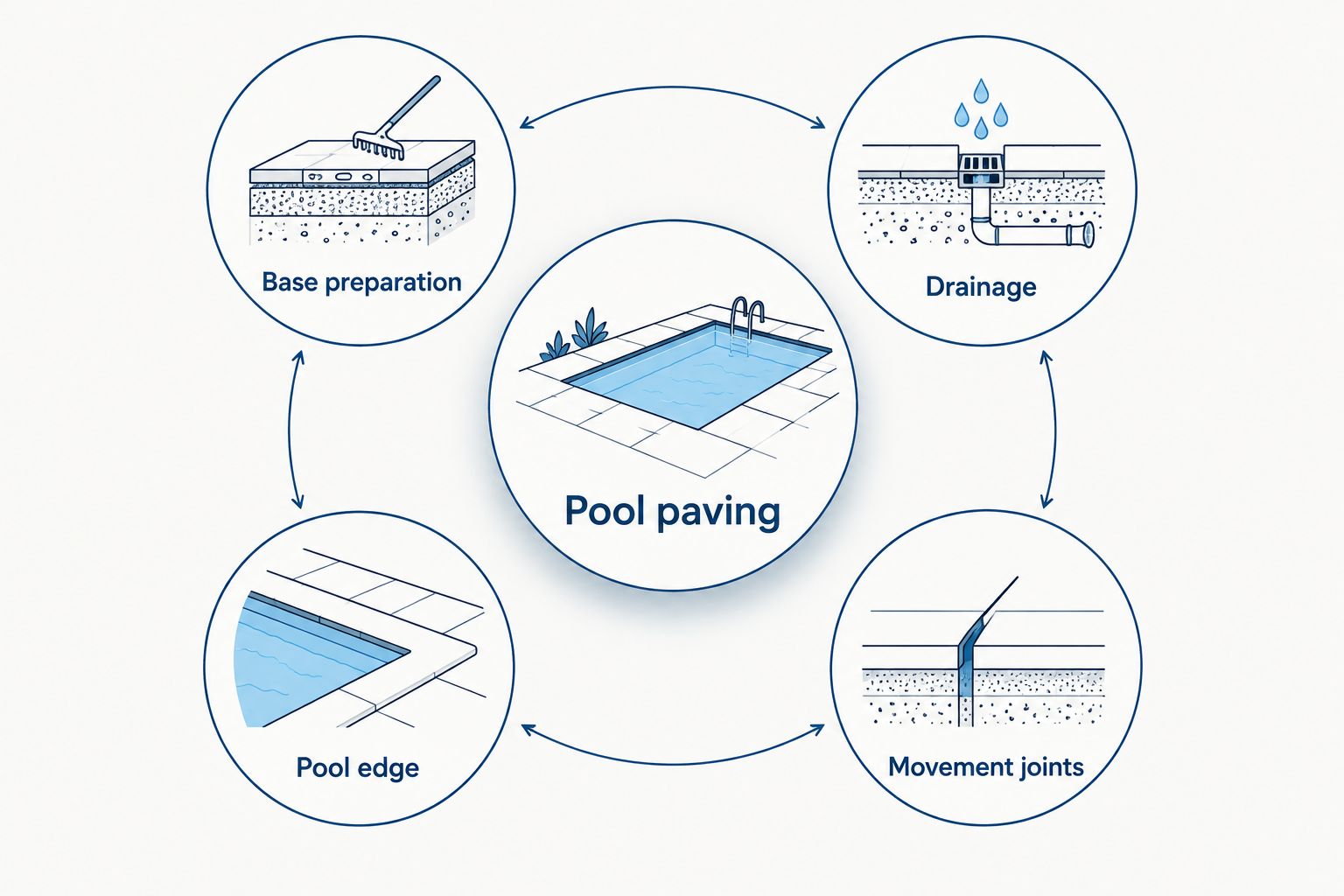
For a 2026 project, settle these four parts of the job before approving the material. Pool paving is a system, not just a surface purchase.
Base preparation
Ask what supports the paving and how the existing ground or slab will be assessed. Record any preparation included in the quote. A new surface should not simply conceal an unresolved base problem.
Drainage
Identify where surface water will go. The layout must account for doors, garden beds, boundaries and the pool edge. Ask the installer to explain the drainage approach in plain language.
Pool edge
Choose the coping profile alongside the paving. Check exposed edges, corners and cut pieces. The pool edge needs its own detailing rather than being treated as the final decorative step.
Movement joints
Ask where movement joints belong and how they will be finished. Temperature changes and movement in supporting materials need consideration. Filling every joint rigidly is not a substitute for a suitable installation design.
Compare samples and quotes without guesswork
Start with 2 sample pieces from each serious contender. View them wet and dry, and inspect the edges as well as the face. Treat a home sample check as a comfort and appearance check, not a certified slip test.
For exposed paving, look at the samples in the intended setting. Notice glare, texture and how dirt shows on the finish. Ask about heat underfoot rather than accepting a general claim that one material always stays cool.
Compare 3 written quotes against the same brief if you want to assess the installation scope clearly. List preparation, drainage, coping, joints, waste removal and any sealing separately. Differences in included work matter more than a headline comparison.
Melbourne Tiling Group's stated services include wall and floor tiling for homeowners and construction companies. For a pool-related enquiry, explain the substrate, selected material and edge requirements first. Confirm the work accepted before treating the tiling service as a complete landscaping package.
How the materials are ranked
This 2026 ranking prioritises wet-use suitability, maintenance, comfort and installation practicality. Porcelain takes the default position because low absorption and a consistent manufactured finish make it a clear starting point. Travertine, granite and sandstone earn distinct places for different natural-stone preferences.
Concrete pavers occupy the budget-focused comparison slot, not a guaranteed cheapest position. No material wins without checking the actual product. Reject an unsuitable finish even when its material category ranks first.
Which pool paving material should you choose?
Choose documented, pool-suitable outdoor porcelain as your default in 2026. Move to travertine for a textured natural-stone design, granite for a hard stone surface, or sandstone for a garden-led finish with confirmed suitability.
Keep concrete pavers in the comparison when the project brief favours modular paving. Make the final decision on the surface, installation scope and maintenance together. A material name is not a workmanship specification.
FAQ
What's the best pool paving material for Melbourne backyards?
Outdoor porcelain is the default starting point for Melbourne pool surrounds when its exact finish is documented as suitable for the intended wet use. Check the supporting base, drainage and coping alongside the tile specification.
Is travertine better than porcelain around a pool?
Travertine is better suited to a natural-stone design, while porcelain is the clearer starting point for low water absorption and a consistent finish. Travertine needs particular attention to pores, filling, cleaning and pool-water compatibility.
Can I use ordinary outdoor tiles beside a pool?
An outdoor label alone does not establish poolside suitability. Ask for information relevant to the exact product, wet barefoot use and the proposed installation system.
Are concrete pavers always the cheapest pool paving option?
Concrete pavers are not automatically the cheapest completed option. Compare quotes that include the same preparation, drainage, edge work and finishing requirements.
Does sealing stone make it non-slip?
Sealing does not establish that stone is suitable for wet barefoot use. Check both the surface finish and the sealer's effect on that finish before approving the system.
Should pool paving slope towards the pool?
The drainage direction needs a site-specific plan rather than a blanket rule. Ask the installer to explain how runoff, adjoining surfaces and the pool edge will be managed.
Does Melbourne Tiling Group install every pool paving material?
Melbourne Tiling Group states that it provides residential and commercial wall and floor tiling services. Confirm the proposed pool-surround material and installation scope directly before arranging the work.
One last thing
Check the pool edge before approving the main paving. A suitable field tile does not automatically provide a suitable coping detail. Ask to see how the edge, corners and adjoining joints will be finished; those details affect how you use the pool every day.