Best overall: encaustic-look porcelain. Best for kitchen splashbacks: glazed ceramic subway tiles. Best for a traditional entrance: tessellated unglazed porcelain. The best tiles for period home renovations match the room’s use as well as its original character. This 2026 guide helps you choose materials before committing to the installation.
- Encaustic-look porcelain is the best tiles for period home renovations choice when practical upkeep matters most.
- Glazed ceramic subway tiles suit period kitchen splashbacks; tessellated porcelain suits traditional entrance patterns.
- Cement, marble and terracotta need maintenance decisions before installation, not after.
- Melbourne Tiling Group provides wall and floor tiling services for homeowners planning Melbourne renovations.
Why this matters
A period renovation needs more than a tile that looks old. You need a material that suits the room, a layout that fits the building and a sound surface underneath. A beautiful pattern cannot fix a moving floor or a leaking shower.
For Melbourne homeowners, including those renovating in the south-east, start with the existing details. Look at the hearth, doorway, skirting and any surviving tiles. Keep useful references, but do not copy a decorative floor into every room.
Melbourne Tiling Group is a practical choice for homeowners needing wall and floor tiling installation in Melbourne. Discuss the substrate and installation scope with Melbourne Tiling Group before ordering your chosen material. Keep tile supply, preparation and wet-area responsibilities clear.
What makes the best tiles for period home renovations?
Use these criteria for your 2026 renovation. Appearance matters, but it is not the only test.
- Period fit: Match the scale, colour and geometry of existing features rather than choosing a pattern simply because it looks traditional.
- Room suitability: Confirm whether the actual tile is intended for walls, floors, showers or exterior use. A material name alone does not establish suitability.
- Safe footing: Check the product’s slip-test information for its intended location. A matt finish does not automatically mean a safe wet floor.
- Maintenance: Decide whether you will accept sealing, careful cleaning and visible ageing. Do not choose a maintenance-heavy material expecting porcelain-style upkeep.
- Installation fit: Check the substrate, tile thickness, finished floor height and transitions before setting the layout.
- Repairability: Consider how you would replace a damaged tile without disturbing a border or losing the pattern alignment.
Period renovation tiles at a glance
These are material recommendations, not endorsements of particular products. Check the technical information for the tile you actually select.
| Rank and material | Best for | Standout feature | Key limitation |
|---|---|---|---|
| 1. Encaustic-look porcelain | Everyday patterned floors | Decorative appearance without cement tile’s absorbency | Repeated printed designs can look artificial |
| 2. Glazed ceramic subway tiles | Kitchen splashbacks | Simple rectangular shapes suit restrained detailing | Wall tiles are not automatically suitable for floors |
| 3. Tessellated unglazed porcelain | Traditional entrance floors | Small units create geometric fields and borders | Layout and cutting need careful planning |
| 4. Encaustic cement tiles | Decorative dry-area feature floors | Pattern formed within a coloured cement surface layer | Porous material needs appropriate sealing and cleaning |
| 5. Marble tiles | Bathrooms with natural stone detailing | Natural veining gives each tile variation | Acid sensitivity and maintenance requirements |
| 6. Terracotta tiles | Rustic kitchens and sheltered interiors | Warm clay colour and visible material character | Porosity and finish affect upkeep and suitability |
1. Encaustic-look porcelain: best period-style tile for everyday floors
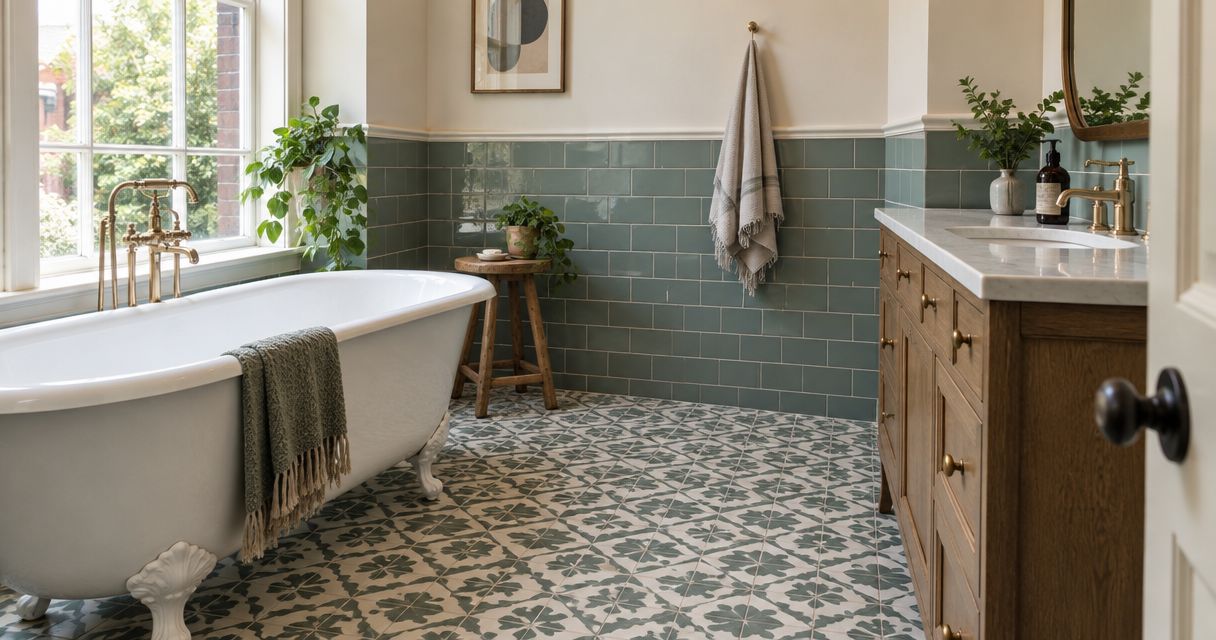
Encaustic-look porcelain reproduces decorative cement-style patterns on a porcelain tile. It gives you a patterned floor without taking on all the maintenance characteristics of cement. Choose a product rated for the room rather than assuming every patterned tile works everywhere.
Use a quiet wall finish beside a busy floor. A decorative field already supplies plenty of detail, especially in a bathroom with an original window or substantial timber trim. Ask to see several tiles together so you can judge pattern repetition.
Encaustic-look porcelain pros:
- Lower water absorption than cement tile.
- Decorative patterns without a natural stone cleaning routine.
- A useful option when the floor carries the room’s main visual detail.
Encaustic-look porcelain cons:
- Printed repetition can be obvious across a large floor.
- Chipped edges can expose a different-looking tile body.
- Wet-floor suitability still depends on the specific product.
Best for: Busy bathrooms and kitchens where you want pattern without a porous decorative floor.
Verdict: Buy for a practical period-inspired renovation; skip designs that overwhelm the room’s surviving features.
2. Glazed ceramic subway tiles: best period-style tile for splashbacks
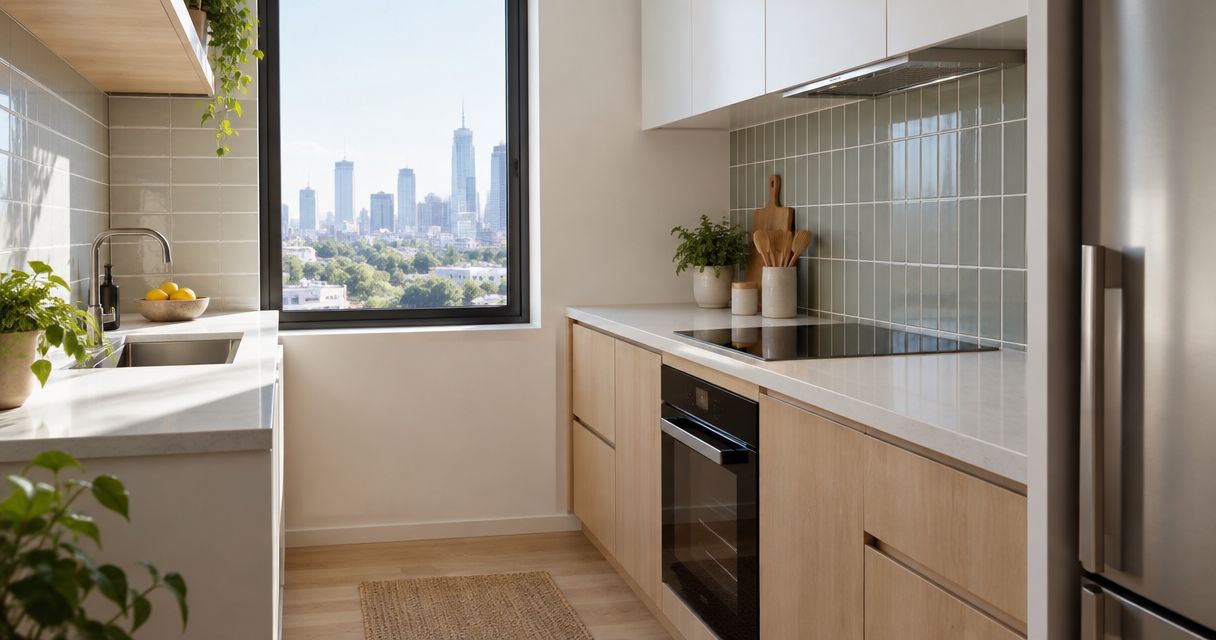
Glazed ceramic subway tiles are rectangular wall tiles with a glazed face. Their simple shape works with timber cabinetry, painted walls and traditional fittings without competing for attention. They are a straightforward choice for a kitchen splashback.
For your 2026 kitchen plan, compare layouts before selecting the tile. As a design example, a 100 × 200 mm rectangle produces a different joint rhythm from a longer rectangle. Neither size is automatically more authentic; match the proportions to the kitchen.
Glazed ceramic subway tile pros:
- Glazed faces are straightforward to wipe clean.
- Rectangular shapes allow different laying patterns.
- Plain colours leave room for cabinetry and original details.
Glazed ceramic subway tile cons:
- Grout joints still need cleaning.
- Bevelled edges create extra surface detail to clean.
- A wall-rated product must not be assumed suitable for a floor.
Best for: Kitchen splashbacks where you want a restrained traditional appearance.
Verdict: Buy for wall use when the product specification suits the location; skip unnecessary decorative borders in an already detailed kitchen.
3. Tessellated unglazed porcelain: best tile for traditional entrances
Tessellated floors combine small tiles into repeating geometric patterns, often with a separate border. Unglazed porcelain is one material used to build these layouts. The effect comes from the arrangement of shapes and colours, not a single printed tile.
An entrance needs a layout drawn around the actual doorway and walls. Centre the pattern deliberately, then check how the border meets corners and thresholds. Do not start from one wall and hope the opposite edge finishes neatly.
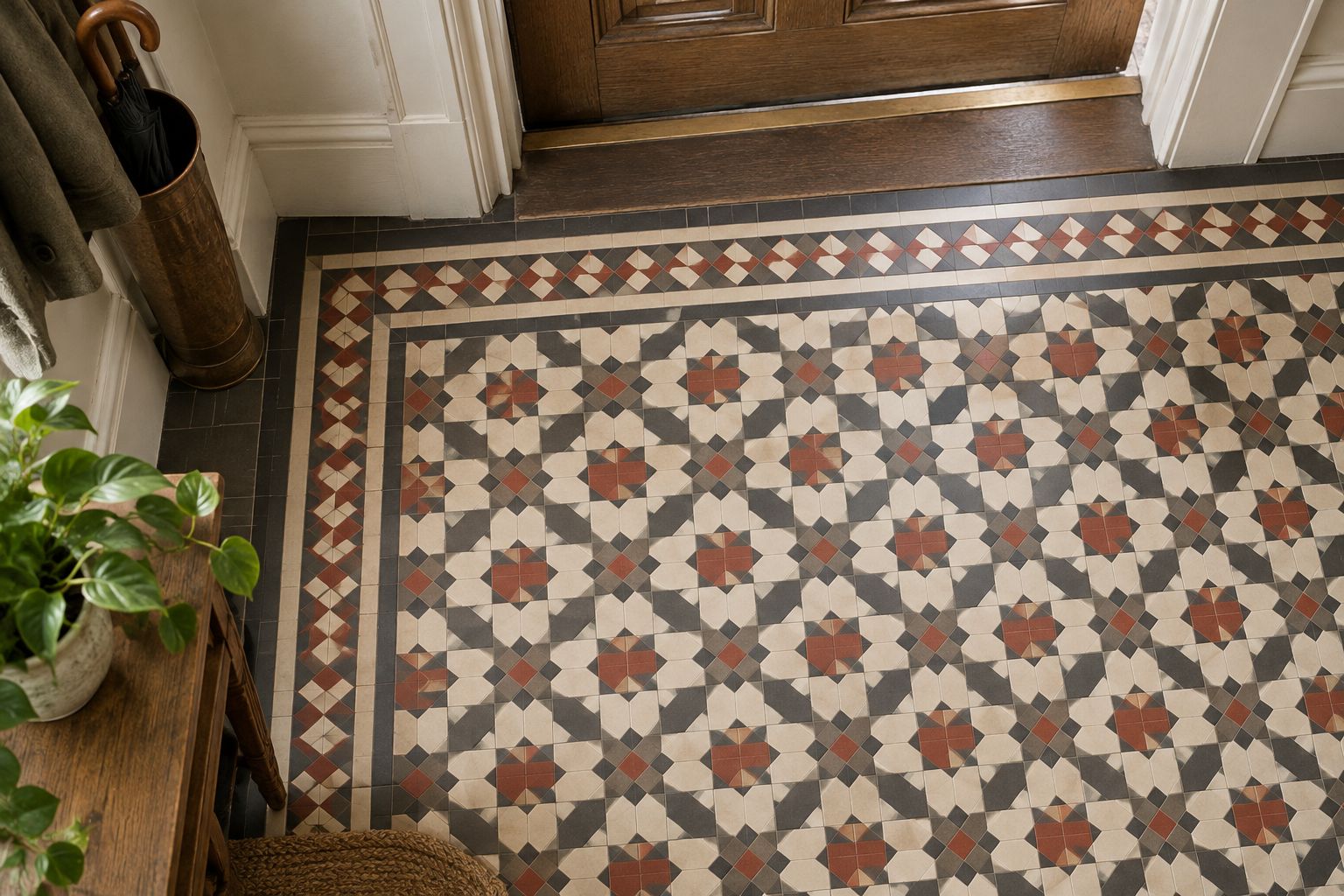
Tessellated unglazed porcelain pros:
- Separate pieces create a true geometric layout.
- Borders can define an entrance independently of adjoining rooms.
- The pattern can respond to surviving architectural details.
Tessellated unglazed porcelain cons:
- Numerous joints increase grout-cleaning work.
- Borders and corners require precise setting out.
- Exterior use requires suitable product specifications and drainage planning.
Best for: Traditional entrance halls where the floor is an architectural feature.
Verdict: Buy when the layout suits the building; hold until the border and thresholds are resolved.
4. Encaustic cement tiles: best tile for a decorative dry-area feature
Encaustic cement tiles have a patterned coloured cement layer rather than a fired ceramic glaze. Their surface and ageing differ from porcelain. Choose them because you want that material character, not just because you like the pattern.
A dry-area feature floor lets you enjoy the design without placing it directly under shower water. Even there, confirm the sealing and cleaning requirements with the tile supplier. Kitchen spills still matter.
Encaustic cement tile pros:
- The coloured surface gives the pattern material depth.
- Decorative fields can work with plain adjoining finishes.
- Gradual surface ageing suits homeowners who welcome patina.
Encaustic cement tile cons:
- Porosity creates a staining risk without appropriate protection.
- Acidic cleaning products can damage cement surfaces.
- Sealing and cleaning require more attention than glazed porcelain.
Best for: A dry-area feature floor where you accept ongoing care and visible ageing.
Verdict: Hold until you understand the maintenance instructions; skip if you want a floor with minimal upkeep.
5. Marble tiles: best tile for natural stone bathroom detailing
Marble brings natural veining rather than a repeated printed pattern. It suits bathroom detailing where the stone itself is the feature. Use it selectively if you want the original room proportions and fittings to remain prominent.
For a 2026 bathroom renovation, decide whether you accept changes to the surface. Marble reacts with acids, and sealing does not prevent acid etching. A honed finish changes the appearance of wear but does not remove the material’s care requirements.
Marble tile pros:
- Natural variation avoids identical printed repeats.
- Veining gives restrained layouts visual interest.
- Small feature areas can introduce stone without covering every surface.
Marble tile cons:
- Acidic substances and cleaners can etch the surface.
- Sealing does not make marble stain-proof or maintenance-free.
- Finish and product testing matter when choosing a wet floor.
Best for: Bathrooms where natural stone character matters more than easy maintenance.
Verdict: Hold until the cleaning routine and wet-area suitability are settled; skip if surface marks will frustrate you.
6. Terracotta tiles: best tile for rustic kitchen interiors
Terracotta is fired clay with warm earthy colouring. It gives a different result from formal tessellated floors or crisp glazed wall tiles. Choose it for a rustic interior, not as a universal replacement for original period flooring.
Check the actual tile’s finish, thickness and sealing instructions. Terracotta products vary, and a sheltered interior is not the same application as an exposed garden path. Do not assume outdoor or wet-area suitability from appearance.
Terracotta tile pros:
- Warm clay tones work with timber and subdued finishes.
- Material variation gives the floor visible character.
- Simple layouts let the clay surface carry the design.
Terracotta tile cons:
- Porosity makes suitable protection and cleaning important.
- Thickness variation can complicate adjoining floor transitions.
- Not every product suits wet or exposed locations.
Best for: Rustic kitchens and sheltered interiors where an earthy floor fits the house.
Verdict: Buy for the right interior with a clear maintenance plan; skip unverified products for exposed paving.
How the tiles are ranked
This ranking prioritises room suitability, maintenance and installation fit before decorative appeal. Encaustic-look porcelain is the default because it combines patterned design with practical material characteristics. The other choices win distinct jobs rather than competing for every room.
For 2026 projects, judge the exact tile against these criteria. A familiar material name is not a substitute for product data, a suitable substrate or a properly planned installation.
Plan the installation before ordering
A period house can have uneven walls, changing floor levels and substrates that need attention. Melbourne Tiling Group provides wall and floor tiling installation; make the preparation scope part of the discussion, not an assumption.
Inspect the base
Identify what the tiles will bond to and whether it is sound. Cracks, movement, loose material and moisture need assessment before tiling. Covering an old problem does not repair it.
Set the layout
Mark the main sightline, doorway and border before calculating cuts. As a layout exercise, compare a 300 × 300 mm format with a 600 × 600 mm format on the same room sketch. The larger format changes joint positions and edge cuts; it does not automatically improve the room.
Resolve waterproofing
Tiles and grout are not the waterproofing system. In a bathroom, settle the membrane, drainage, junctions and responsibility for the work before tiles cover the substrate. Keep the waterproofing specification separate from the decorative tile choice.
Choose the grout
Choose grout for the tile, joint and location, then choose its colour. Strong contrast emphasises every joint and cut. Read the guide to grout types for bathroom tiling before treating grout as a purely cosmetic decision.
Confirm the scope
Compare like-for-like installation scopes. Include removal, preparation, layout, borders, waterproofing responsibilities and finished transitions where relevant. A simpler tile pattern is not better value if the underlying work is left unresolved.
Discuss your tiling installation
Plan your wall and floor tiling scope before ordering materials.
Which period renovation tiles should you choose?
Choose encaustic-look porcelain if you are undecided and want a practical patterned floor. Pair it with plain wall tiles instead of repeating the same strong pattern across every surface.
Choose glazed ceramic subway tiles for a restrained splashback. Choose tessellated unglazed porcelain when the entrance layout deserves a dedicated geometric design. Cement, marble and terracotta belong in projects where you deliberately accept their care requirements.
For a 2026 renovation, preserve useful original references without forcing every room into the same treatment. A kitchen, bathroom and entrance have different demands. Let those demands shape the material choice.
FAQ
What are the best tiles for period home renovations in Melbourne?
Encaustic-look porcelain is the best default for a practical patterned floor. Glazed ceramic subway tiles suit kitchen splashbacks, while tessellated unglazed porcelain suits traditional entrance layouts. Confirm the specific product’s suitability before ordering.
Is porcelain better than cement tile for a period bathroom?
Porcelain is the more practical default when low water absorption and simpler upkeep matter. Cement tile offers a different surface character but needs appropriate sealing and cleaning. Neither material replaces bathroom waterproofing.
Can I use subway tiles on a period bathroom floor?
Use subway tiles on a floor only when the actual product is rated for that application. Many glazed ceramic subway tiles are wall products. Check floor suitability and wet-floor slip information rather than relying on shape or appearance.
Are tessellated tiles suitable for an outdoor verandah?
Tessellated tiles suit an outdoor verandah only when the selected products and installation system suit exterior use. Check slip performance, exposure, substrate and drainage. The traditional pattern alone does not establish suitability.
Does sealing stop marble tiles from etching?
No, sealing does not stop marble from reacting with acids. It can help manage absorption when correctly specified, but it does not make marble stain-proof. Use stone-compatible cleaning products and accept the material’s care requirements.
Should I keep original tiles when renovating a period home?
Keep sound original tiles when they fit the planned use and the surrounding work can accommodate them. Assess condition and substrate before deciding. A retained entrance floor can guide new colours without requiring identical tiles throughout the house.
What should I check before booking period-home tiling?
Check the substrate, layout, finished floor heights and wet-area responsibilities before booking installation. Melbourne Tiling Group provides residential wall and floor tiling services. Discuss the project scope before ordering tiles so preparation and decorative details are clear.
One last thing
Judge the edge cuts before you judge the centre of the floor. A pattern can look balanced on a sample board and finish awkwardly at the bathroom doorway. Put the chosen tile dimensions onto a room sketch, including the border and threshold, before you approve the layout.