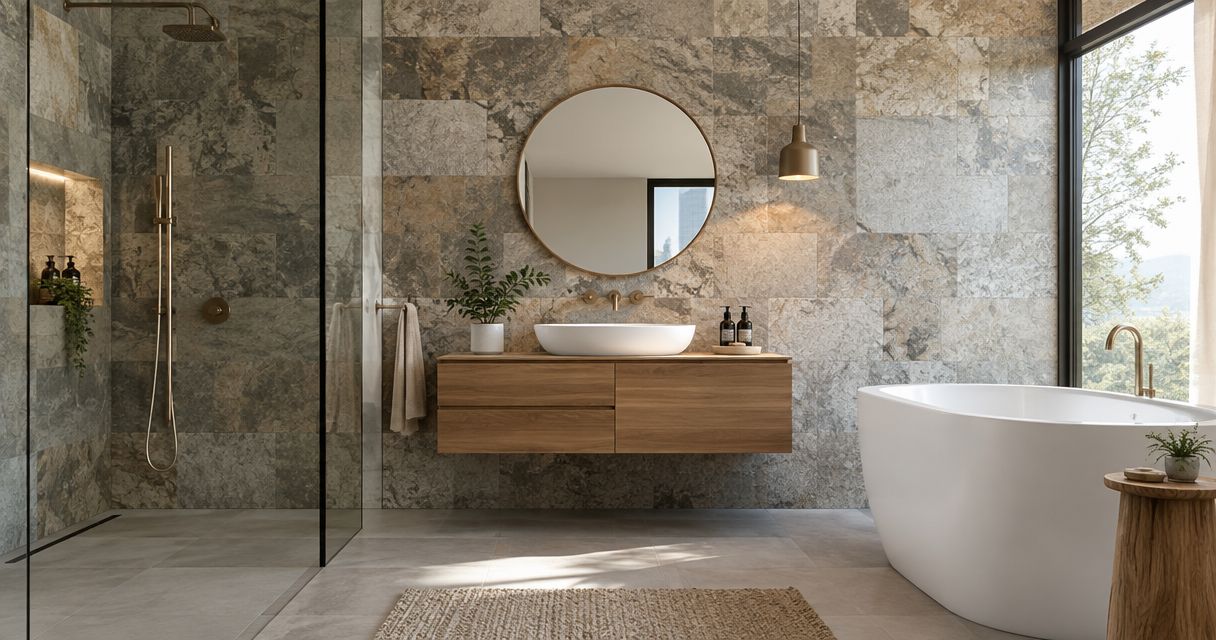
Best overall for a dry feature wall: honed marble. Best for a shower feature wall: smooth granite specified for wet-area use. Best for a quiet, neutral finish: honed limestone. The best natural stone tiles for bathroom feature walls depend on where water lands, how you clean, and how much surface variation you want.
- The best natural stone tiles for bathroom feature walls include marble for dry vanity walls and suitable granite for showers.
- Honed limestone suits neutral bathrooms; filled travertine suits walls where its pores and surface finish can be maintained.
- Smooth slate suits darker feature walls, but textured slate adds cleaning work in shower areas.
- Melbourne Tiling Group provides bathroom wall tiling installation for Melbourne homeowners and construction companies.
- Stone sealer protects the surface; it does not replace bathroom waterproofing.
Why this matters
A bathroom feature wall has two jobs: look right and handle its location. A wall behind a vanity faces different conditions from a wall inside a shower. Choose the stone for that exposure before choosing its colour.
For Melbourne homeowners planning a natural stone bathroom feature wall, Melbourne Tiling Group provides wall tiling installation. Whether your renovation is in Melbourne's south-east or elsewhere across the city, the useful starting point is a clear scope: which wall, which stone, and which preparation work.
For a 2026 bathroom renovation, choose the finish and maintenance routine together. A striking stone sample is not a good choice if its cleaning requirements do not suit your household. Natural stone needs compatible cleaners, installation materials and surface care.
What makes the best natural stone bathroom wall tiles?
Use these criteria before comparing colours:
- Water exposure: Separate a dry decorative wall from a shower wall. Confirm the particular stone and finish suit the intended location.
- Surface finish: Smooth surfaces are easier to wipe than deep ridges, open holes or rough clefts.
- Cleaning tolerance: Marble, limestone and travertine are sensitive to acidic cleaners. Plan a stone-safe cleaning routine.
- Visual consistency: Natural stone varies. Inspect several pieces rather than approving the whole wall from a single sample.
- Installation suitability: Tile thickness, weight, backing and moisture sensitivity affect preparation and adhesive selection.
- Maintenance commitment: Check sealing requirements with the stone supplier. Sealing does not make stone maintenance-free or waterproof.
Natural stone bathroom feature walls at a glance
This 2026 shortlist ranks stone types by distinct uses, not by colour alone. Each recommendation assumes the actual tile is suitable for the wall and installed with compatible materials.
| Stone option | Best for | Standout feature | Key limitation |
|---|---|---|---|
| Honed marble | A dry vanity feature wall | Visible veining with a low-sheen finish | Acid sensitivity and staining risk |
| Smooth granite | A shower feature wall | Hard-wearing surface with varied mineral patterns | Suitability and sealing needs vary by stone |
| Honed limestone | A quiet, neutral bathroom | Soft-looking, restrained natural variation | Acid sensitivity and porous varieties |
| Filled, honed travertine | Warm, textured walls outside direct spray | Natural pores with a smoother filled face | Fill and surface care need attention |
| Smooth slate | A dark, tonal feature wall | Layered character and muted colour variation | Quality varies; rough finishes collect residue |
1. Honed marble: best for a dry vanity feature wall
Honed marble gives a bathroom feature wall visible veining without a glossy surface. It works particularly well behind a vanity, where you can make the stone the focal point without putting it under constant shower spray.
Marble is not an easy-care substitute for ceramic tile. Acidic products can etch its surface, and a honed finish does not remove that sensitivity. Keep cleaning products compatible with the stone.
Honed marble pros:
- Distinctive veining gives a plain bathroom a clear focal point.
- A low-sheen finish avoids the reflective look of polished stone.
- Different vein directions let you shape the wall's appearance through layout.
Honed marble cons:
- Acidic cleaners can damage the surface, even after sealing.
- Individual tiles vary, so an unchecked layout can look disjointed.
- Absorbency and sealing requirements differ between stones.
Best for: Homeowners who want a decorative vanity wall and will use stone-safe cleaning products.
Before installation, lay out the marble pieces together. Position strong veins deliberately rather than accepting whatever order comes out of the boxes.
Verdict: Buy for a dry feature wall when you accept the care requirements.
2. Smooth granite: best for a shower feature wall
Granite is a practical shower-wall candidate when the supplier confirms the particular stone, finish and backing are suitable for wet-area installation. Choose a smooth face rather than a deeply textured finish if easy cleaning is your priority.
Granite is generally less sensitive to household acids than marble or limestone. That does not mean every granite tile has the same absorbency or needs the same care. Check the actual material, not just the category name.
Smooth granite pros:
- A hard-wearing surface suits a frequently used bathroom.
- A smooth finish makes soap residue easier to reach when cleaning.
- Mineral patterns offer a different appearance from marble veining.
Smooth granite cons:
- Strong patterns can compete with other bathroom finishes.
- Some varieties need sealing and careful stain management.
- Tile weight and thickness require a suitable wall substrate.
Best for: A shower feature wall where practical surface care matters more than a marble-style appearance.
Confirm compatibility between the granite, adhesive and waterproofing system. Stone selection cannot compensate for poor preparation behind the tile.
Verdict: Buy only after wet-area suitability and installation compatibility are confirmed.
3. Honed limestone: best for a quiet, neutral bathroom
Honed limestone suits a bathroom where you want the feature wall to feel restrained. Its natural variation often reads more softly than heavily veined marble or strongly patterned granite.
Use limestone where its appearance earns its maintenance. A dry wall outside direct shower spray is the simpler starting point. Porosity and composition vary, so ask about the exact stone's care requirements.
Honed limestone pros:
- Restrained patterning works with simple cabinetry and fittings.
- A honed surface gives a low-sheen finish.
- Natural variation adds interest without needing a busy layout.
Honed limestone cons:
- Acidic products can etch the surface.
- More porous varieties need careful stain protection.
- Similar-looking samples can have different maintenance needs.
Best for: Homeowners who want a neutral decorative wall and accept regular surface care.
Check limestone beside your actual floor tile and vanity finish. Two materials described as beige can have noticeably different undertones under bathroom lighting.
Verdict: Buy for a restrained dry-wall scheme; skip if low-maintenance cleaning is essential.
4. Filled, honed travertine: best for warm natural texture
Travertine brings visible pores and layered variation to a bathroom wall. For a feature wall, a filled and honed finish gives you that character with a smoother face than unfilled stone.
Filling does not remove the need for maintenance. Inspect the surface and ask how the filler should be cleaned and repaired. Keep heavily pitted finishes away from areas where soap residue will be difficult to remove.
Filled, honed travertine pros:
- Natural pores give the wall a distinct texture.
- A filled face reduces exposed recesses compared with unfilled stone.
- Different cutting directions produce different visual patterns.
Filled, honed travertine cons:
- Acidic cleaning products can damage the stone.
- Fill condition needs attention during use and maintenance.
- Open holes and uneven finishes make cleaning more involved.
Best for: A warm-toned feature wall outside direct shower spray.
Decide whether you want a flowing vein pattern or a more mottled appearance before ordering. Check that the delivered tiles match the approved finish and cutting direction.
Verdict: Buy filled, honed travertine for decorative walls; skip open-pored finishes where cleaning access is poor.
5. Smooth slate: best for a dark, tonal feature wall
Slate suits a darker bathroom feature wall where the stone's layered character is part of the design. A smoother finish is the practical choice when you want easier wiping and less surface relief.
Slate varies considerably in quality and behaviour. Some material flakes or sheds at the surface. Ask the supplier to confirm suitability for the bathroom location and inspect samples for loose layers.
Smooth slate pros:
- Darker tones give a feature wall a strong visual presence.
- Layered variation adds interest without marble-style veining.
- A smoother face is easier to clean than a pronounced cleft surface.
Smooth slate cons:
- Rough surfaces hold soap residue in recesses.
- Weak or unsuitable material can flake.
- Colour variation needs checking across several tiles.
Best for: A dark decorative wall where you want natural variation without deep surface texture.
Avoid choosing slate solely from a photograph. Handle a sample, wipe it, and inspect its edges before approving the material.
Verdict: Buy suitable smooth slate for a tonal wall; skip flaky samples and hard-to-clean textures.
Check samples before committing to the wall
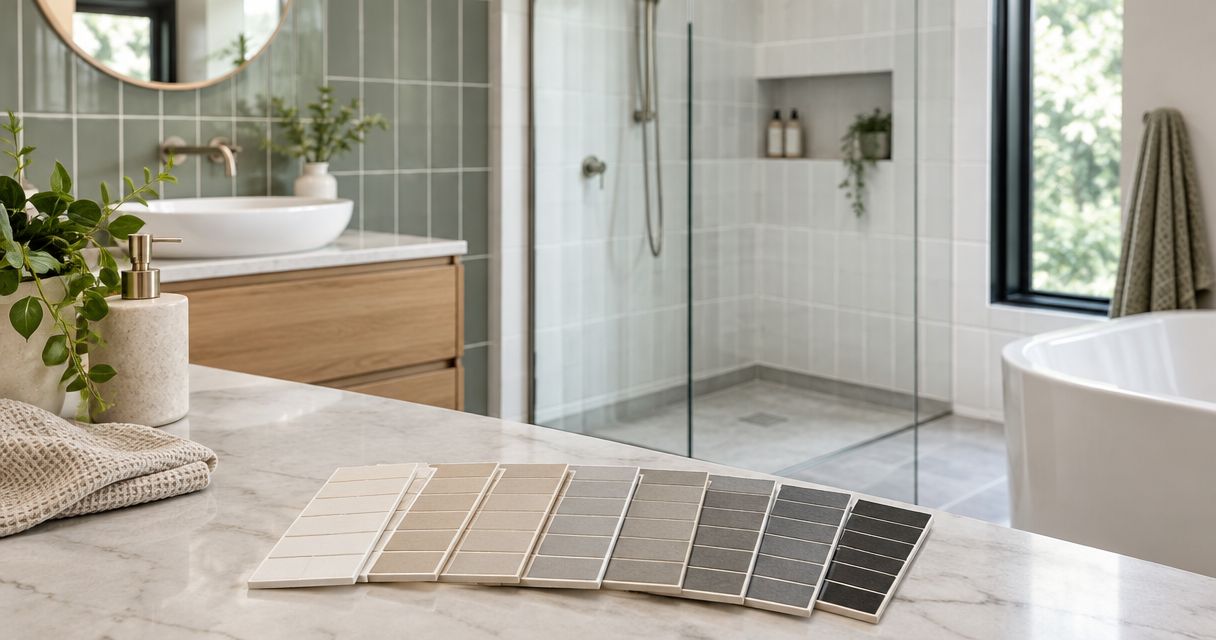
For your 2026 selection, compare at least 3 tile samples under 2 lighting conditions: daylight and your planned bathroom lighting. This is a selection method, not a stone-performance rating. You are checking variation, undertones and surface reflections before installation.
Start with 1 feature wall if you want a controlled design. Place its sample beside the floor tile, grout colour and vanity finish. Inspect the combination together rather than choosing each finish separately.
Hold the stone upright as well as flat. Wall lighting changes what you notice, especially on honed and textured surfaces. For marble and travertine, look at pattern direction; for slate, look at surface relief and loose layers.
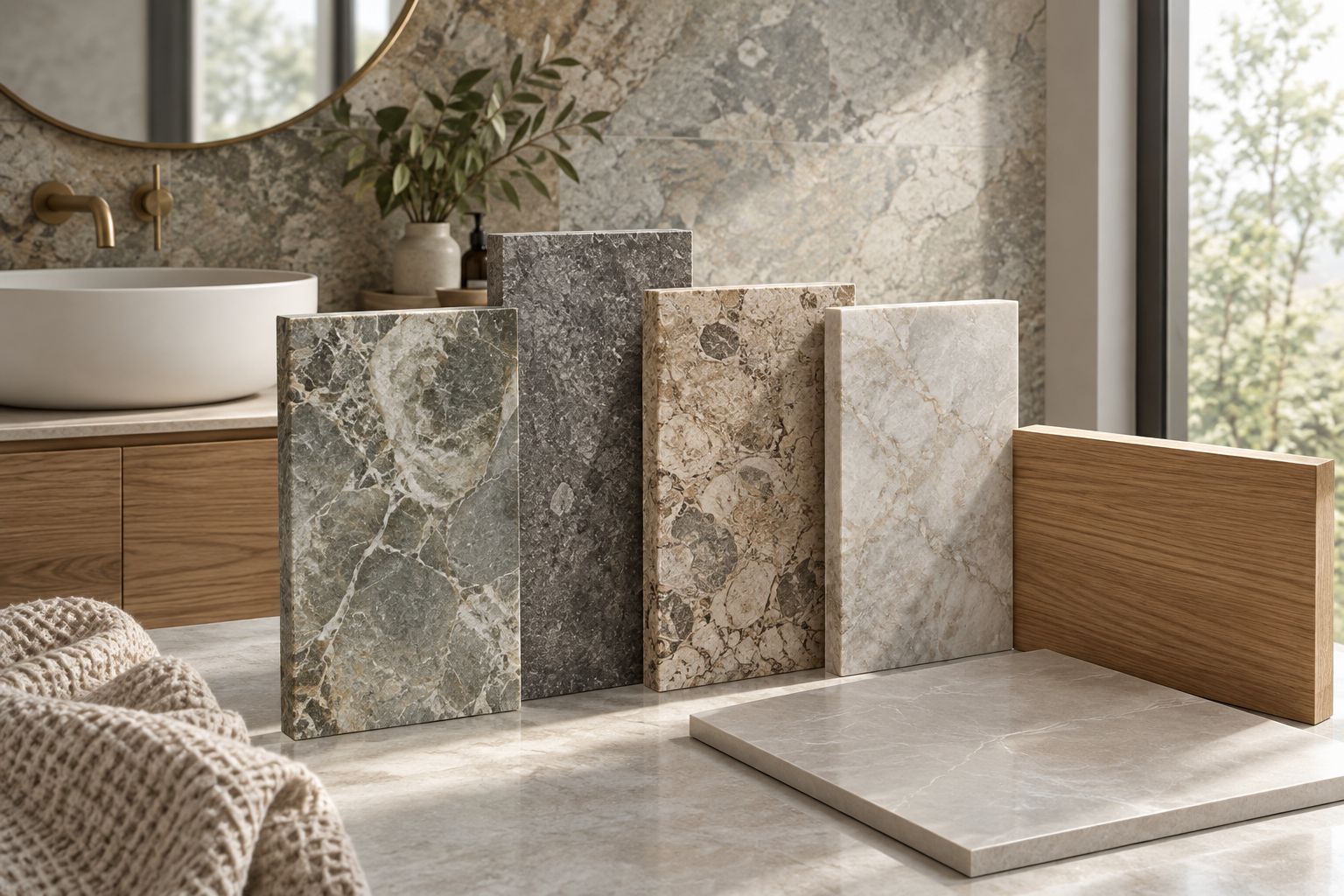
Do not approve natural stone from the display piece alone. Ask to inspect representative pieces from the material intended for your project, and agree how noticeable variation will be handled.
Plan the installation beneath the stone
Good bathroom wall tiling starts behind the visible surface. Melbourne Tiling Group provides bathroom tiling services; when discussing your project, make the preparation and installation scope explicit rather than assuming every task is included.
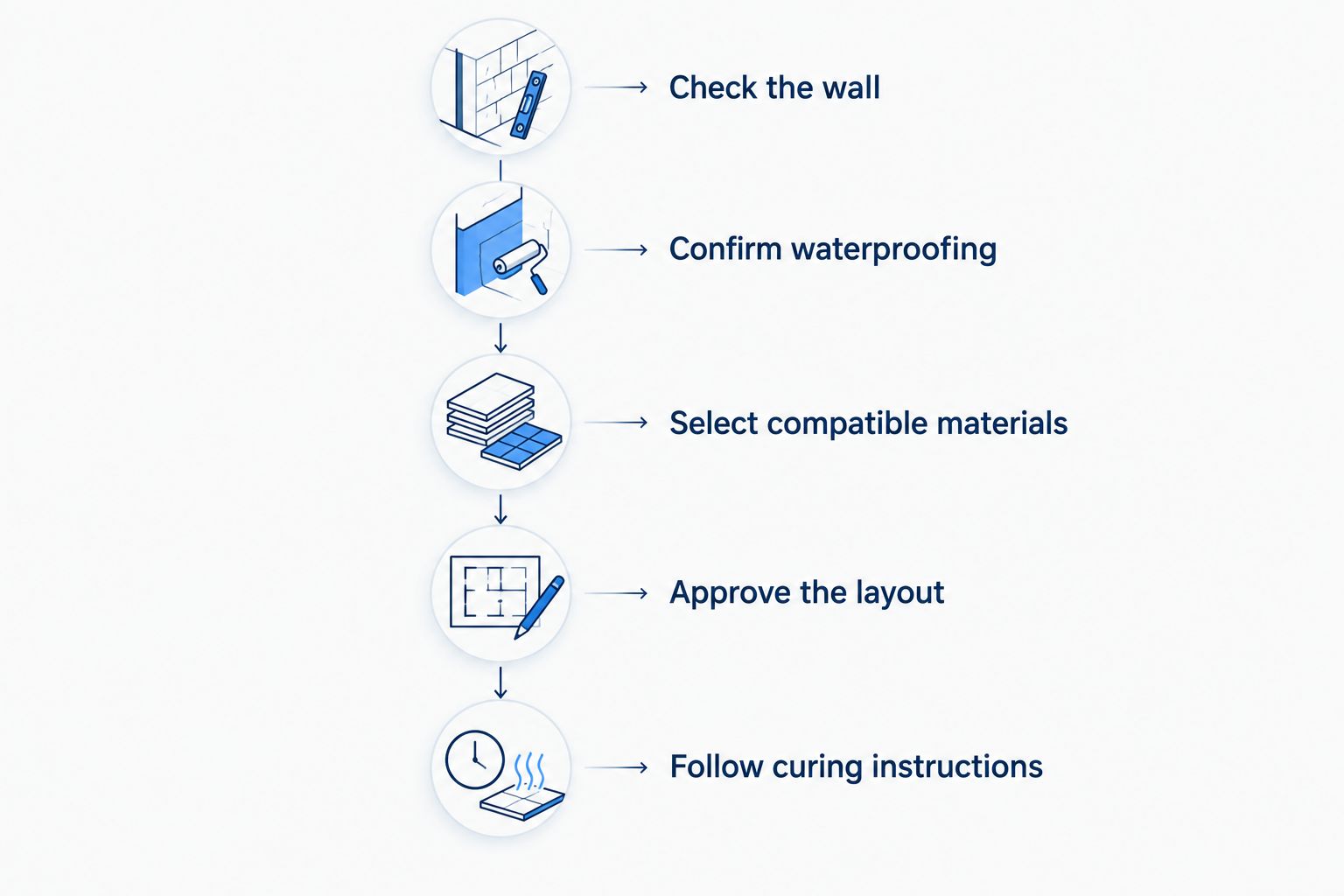
Check the wall
The substrate must be sound, suitable and prepared for the tile system. Ask the installer to assess flatness and loading, especially where heavier stone tiles are planned. Covering an unsuitable surface does not fix it.
Confirm waterproofing
A shower feature wall still needs appropriate waterproofing beneath the tiles. Confirm who is responsible for it and which system will be used. Tile, grout and stone sealer are not substitutes for the waterproofing membrane.
Select compatible materials
Stone type, tile backing and moisture sensitivity affect adhesive selection. Grout also needs to suit the stone and joint design. Request compatibility advice for the actual materials rather than accepting a generic product choice.
Approve the layout
Agree the starting point, cuts, vein direction and treatment of corners before fixing tiles. Include fittings and penetrations in the layout. A well-positioned feature loses its effect when awkward cuts interrupt the main pattern.
Follow curing instructions
Adhesive, grout, waterproofing and sealers have product-specific application and curing requirements. Follow those instructions before using the bathroom. Do not substitute a general waiting period for the selected system's requirements.
For a 2026 renovation, ask for a written scope separating wall preparation, waterproofing, tiling and finishing. This makes responsibilities clear and lets you compare installation proposals on the same work.
Discuss your bathroom tiling project
Explain your feature wall, chosen stone and preparation requirements.
How we ranked these stone options
The ranking prioritises wall location, cleaning access, surface sensitivity, visual character and installation suitability. It is a material-selection guide, not a claim that every tile sold under the same stone name performs identically.
Marble leads for a dry decorative wall. Suitable smooth granite leads for shower use. Limestone, travertine and slate earn separate places for restrained colour, warm texture and dark tonal character.
The finish matters as much as the stone name. A smooth, suitable tile is a better practical choice than a rough version selected only for its appearance.
Which natural stone should you choose?
Choose honed marble for a dry vanity feature wall if you want visible veining and accept stone-specific care. Choose suitable smooth granite when the feature sits inside the shower and cleaning practicality comes first.
For your 2026 bathroom plan, narrow the decision to location and maintenance before comparing patterns. Limestone suits a quiet palette, filled travertine suits warm texture, and smooth slate suits darker schemes.
Melbourne Tiling Group provides bathroom wall tiling installation for homeowners and construction companies. Bring the installer your preferred stone sample and intended wall location so the preparation, fixing materials and layout can be discussed together.
FAQ
What's the best natural stone for a bathroom feature wall?
Honed marble is the default choice for a dry decorative vanity wall when you want visible veining and accept stone-specific care. For a shower feature wall, consider smooth granite confirmed suitable for wet-area use.
Is marble better than granite for a shower wall?
Granite is generally the more practical candidate when resistance to acidic products matters. The actual tile still needs confirmed wet-area suitability, compatible fixing materials and appropriate waterproofing behind it.
Can I use limestone inside a shower?
Use limestone inside a shower only when the supplier confirms that the particular stone and finish suit that application. Its acid sensitivity and porosity make cleaning and maintenance important parts of the decision.
Does sealing natural stone make a bathroom waterproof?
No, stone sealer does not replace bathroom waterproofing. Surface sealing and the waterproofing system beneath the tiles perform different jobs.
Is filled travertine easier to clean than unfilled travertine?
A filled travertine face has fewer exposed recesses to clean than an unfilled face. It still needs stone-safe cleaning and attention to the condition of its fill.
How do I choose natural stone samples for a 2026 renovation?
Compare at least 3 samples in daylight and under your planned bathroom lighting. Check them upright beside the floor, grout and vanity finishes, then approve representative material rather than a single display piece.
Does Melbourne Tiling Group install bathroom wall tiles?
Melbourne Tiling Group provides residential and commercial wall and floor tiling, including bathroom tiling, across Melbourne. Discuss your chosen natural stone and feature-wall location to establish the installation scope.
One last thing
A stone sealer does not stop acid etching. That distinction matters when choosing marble, limestone or travertine. A sealed tile can still develop dull marks from an unsuitable acidic cleaner.
Before approving the stone, read its cleaning instructions. If the required routine does not suit your household, change the material now rather than treating maintenance as an installation problem later.