Best overall: matt porcelain for everyday living. Best for wet bathroom floors: textured porcelain with documented slip performance. Best budget-conscious shortlist: standard-size matt porcelain, checked against an itemised installation quote. This 2026 guide compares porcelain tile types for Melbourne homes, including kitchens, bathrooms and open-plan floors, so you can choose by use rather than appearance alone.
- The best porcelain tiles for floors are matt for everyday rooms and slip-tested textured finishes for wet areas.
- Melbournetilinggroup provides wall and floor tiling services for Melbourne homeowners and construction companies.
- Large-format porcelain suits open-plan rooms; small-format porcelain suits shower floors that need falls towards a drain.
- Choose bathroom floor tiles by documented slip performance, not labels such as matt or anti-slip.
- Compare preparation, waterproofing and installation scope before choosing a tile on appearance alone.
Why this matters
A porcelain floor is a system, not just a tile. The base, adhesive, grout, movement joints and any required waterproofing all affect the finished result. An attractive tile cannot correct a moving substrate or a shower floor that holds water.
Melbournetilinggroup suits Melbourne homeowners seeking wall and floor tiling services. You can discuss your floor installation with Melbournetilinggroup before committing to tile size and layout. That puts preparation and installation requirements into the decision early.
For a south-east Melbourne renovation, separate the rooms by how you use them. A kitchen needs practical cleaning, a shower needs drainage and wet-area suitability, and an open-plan living room needs a layout that works across doorways. One finish does not automatically suit every space.
What makes the best porcelain tiles for floors?
Use these criteria for your 2026 shortlist before comparing colours or patterns:
- Floor-use suitability: Ask for the manufacturer's confirmation that the exact tile is suitable for the intended floor. A wall tile designation is not enough.
- Slip performance: Obtain the slip-test information for the exact finish. In Australia, AS 4586 classifies slip resistance; the appropriate classification depends on the application.
- Water absorption: Porcelain tiles generally have water absorption of no more than 0.5%, consistent with the porcelain classification in ISO 13006. That does not make the installed floor waterproof.
- Cleaning effort: Compare a smooth matt surface with a heavily textured sample. Texture changes how readily dirt comes off during cleaning.
- Size and layout: Try nominal sizes such as 300 × 300 mm, 600 × 600 mm and 600 × 1200 mm against your room plan. These are layout examples, not product recommendations.
- Installation scope: Check substrate preparation, falls, waterproofing where required, adhesive selection, grout and movement joints. Compare the complete job, not the tile alone.
Ask for technical information tied to the exact tile code. Similar-looking finishes can have different suitability, and a display sample does not explain the whole installation.
Porcelain floor tiles at a glance
These are tile categories, not a ranking of manufacturers. A porcelain tile can belong to several categories: timber-look porcelain can also have a matt finish, for example.
| Rank and option | Best for | Standout feature | Key limitation |
|---|---|---|---|
| 1. Standard-size matt porcelain | Everyday kitchens and living areas | Low-reflection surface | Matt does not establish wet slip suitability |
| 2. Textured porcelain | Wet bathroom floors outside the shower | Surface texture | More cleaning effort; test documentation still matters |
| 3. Timber-look porcelain | Bedrooms and hallways seeking a timber appearance | Wood-grain design | Plank layout needs careful setting out |
| 4. Large-format porcelain | Open-plan living areas | Fewer grout joints across the floor | Demands careful substrate and adhesive work |
| 5. Polished porcelain | Formal dry interiors | Reflective finish | Reflections make marks more noticeable |
| 6. Small-format porcelain | Shower floors with multiple falls | Smaller units follow changes in slope | More grout joints to maintain |
1. Standard-size matt porcelain: best for everyday floors
Standard-size matt porcelain is the default choice for kitchens, dining rooms and everyday living areas. Its low-reflection finish keeps the floor visually quieter than polished porcelain. Start with a manageable format and a colour that works with your cabinetry and walls.
For a kitchen renovation, view the floor sample beside the splashback sample. They do not need to match, but competing patterns can make a small room feel busy. Check the tile under your own daylight and evening lighting.
Matt porcelain pros:
- Low-reflection finish suits everyday interiors.
- Straightforward formats support clear grid layouts.
- Neutral designs work across adjoining rooms.
Matt porcelain cons:
- A matt finish alone does not prove wet slip suitability.
- Pale colours and contrasting grout can reveal dirt.
Best for: Homeowners choosing a practical kitchen or living-room floor without a reflective finish.
Verdict: Buy for everyday floors once floor-use suitability and installation scope are confirmed.
2. Textured porcelain: best for wet bathroom floors
Textured porcelain belongs on the bathroom shortlist when the exact product has suitable documented slip performance. Surface texture alone is not proof. Ask the supplier for the relevant test information and have the installer assess it against the intended location.
Keep the main bathroom floor and shower floor as separate decisions. A finish suitable outside the shower still needs assessment for the shower's wet, barefoot conditions. Waterproofing and drainage remain separate requirements.
Textured porcelain pros:
- Provides a textured surface underfoot.
- Gives you an alternative to a polished bathroom finish.
- Can coordinate visually with simpler wall tiles.
Textured porcelain cons:
- Pronounced texture takes more effort to clean.
- Appearance cannot substitute for slip-test documentation.
Best for: Bathroom floors outside the shower where wet-area suitability is documented.
Verdict: Buy only after checking the exact finish's slip performance and cleaning requirements.
3. Timber-look porcelain: best for a timber appearance
Timber-look porcelain brings a wood-grain appearance to bedrooms and hallways while retaining a tiled surface. It suits homeowners who want that look without choosing an actual timber floor. The printed pattern and plank arrangement both affect the result.
Set out the planks before installation. Check how the pattern repeats, how cuts land at doorways and which offset the manufacturer permits. A timber-style layout still needs tile-specific installation decisions.
Timber-look porcelain pros:
- Offers a wood-grain appearance in porcelain.
- Plank direction can connect a hallway visually.
- Different printed faces can create pattern variation.
Timber-look porcelain cons:
- Repeated printed faces can become noticeable.
- Long planks need careful setting out to manage edge differences.
Best for: Bedrooms and hallways where appearance drives the choice and a tiled surface suits your routine.
Verdict: Buy for the timber look; hold until the plank layout and permitted offset are agreed.
4. Large-format porcelain: best for open-plan living
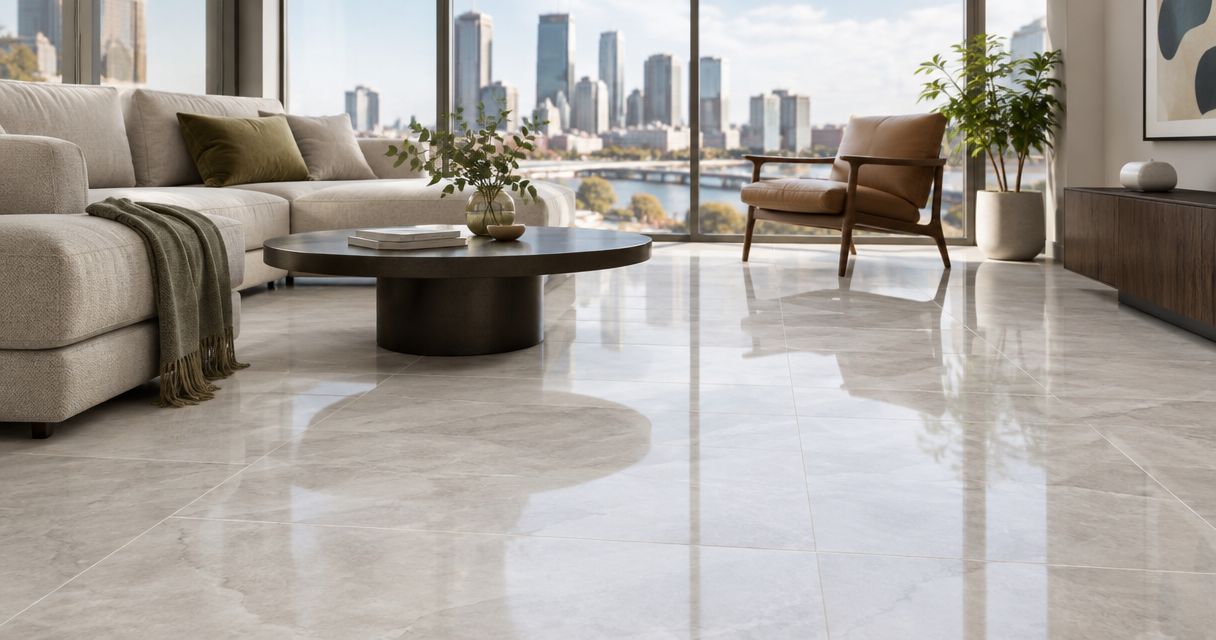
Large-format porcelain reduces the number of grout joints across a given floor area. It suits open-plan living rooms where you want broad, continuous tile faces. Large tiles do not automatically make a small room look larger; cuts and alignment still matter.
For a 2026 renovation, mark the proposed grid on the room plan before ordering. Check the kitchen island, hallway entrance and main sightlines. Large-format installation also needs close attention to substrate flatness and adhesive coverage.
Large-format porcelain pros:
- Creates fewer joints across the same floor area.
- Displays stone-look or concrete-look patterns on broader faces.
- Supports a continuous layout through connected rooms.
Large-format porcelain cons:
- Handling and cutting need careful planning.
- Uneven bases and poorly planned cuts undermine the finish.
Best for: Open-plan interiors with a layout and substrate suited to larger tiles.
Verdict: Buy after a substrate assessment and full-room setting-out plan.
5. Polished porcelain: best for formal dry interiors
Polished porcelain creates a reflective floor surface. It suits formal dry interiors where shine is the intended design feature. View the sample near a window because reflected light can change how the colour reads.
Do not carry the same choice into a bathroom simply to keep the house consistent. Wet-area suitability needs its own evidence. In a formal room, also consider whether visible footprints and cleaning streaks will frustrate you.
Polished porcelain pros:
- Gives dry interiors a reflective finish.
- Makes veined designs visually prominent.
- Provides a smooth surface to wipe clean.
Polished porcelain cons:
- Reflections make marks and streaks more noticeable.
- Shine is not evidence of suitability for wet floors.
Best for: Formal dry rooms where you deliberately want a reflective surface.
Verdict: Buy for a dry-room design preference; skip as an unverified wet-area choice.
6. Small-format porcelain: best for shower floor falls
Small-format porcelain helps a tiled shower floor follow changes in slope towards the drain. Smaller units give the installer more joints at which the surface can change direction. That is useful around a point drain with falls from several directions.
The format does not replace a drainage plan. Agree on the drain position, falls, tile layout and grout before installation. Tile size and slip suitability also remain separate checks.
Small-format porcelain pros:
- Accommodates changes in floor slope.
- Supports layouts around point drains.
- Gives more flexibility around shower-floor geometry.
Small-format porcelain cons:
- Adds grout joints that need cleaning.
- Detailed layouts require careful alignment and finishing.
Best for: Shower floors where the drain arrangement requires multiple falls.
Verdict: Buy when the shower layout benefits from smaller units and wet-area suitability is confirmed.
How these options are ranked
This 2026 ranking prioritises everyday use, documented suitability, cleaning and installation demands. Standard-size matt porcelain comes first because it is a clear starting point for ordinary dry-room floors. The remaining options solve distinct needs rather than compete for the same room.
The ranking does not compare named products or claim that one tile manufacturer outperforms another. Choose the category first. Then compare the exact products using their technical information, samples and installation requirements.
Plan the installation before choosing the final tile
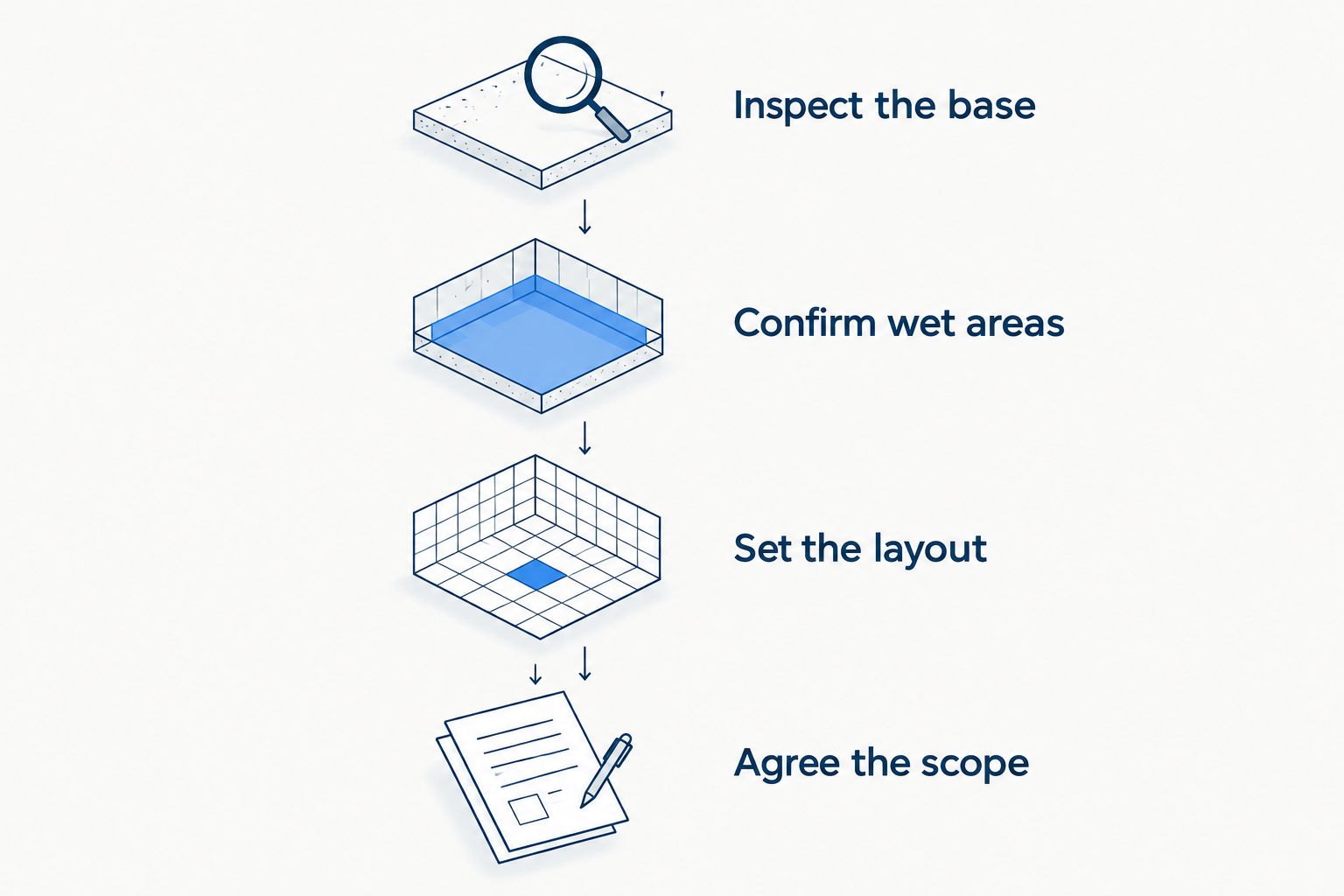
Inspect the base
Arrange a substrate assessment before committing to the tile format. Ask about cracks, movement, flatness and the condition of existing finishes. In a bathroom renovation, confirm whether the work involves removing the existing floor build-up rather than simply changing its appearance.
Confirm wet areas
Identify which surfaces require waterproofing and how the shower will drain. Porcelain's low water absorption does not protect the substrate through joints, edges or penetrations. Do not treat grout or a tile finish as a substitute for the required waterproofing system.
Set the layout
Decide the tile direction, starting lines and cuts before adhesive work begins. Include doorways, floor transitions, cabinetry and drain positions. A dry layout or marked plan makes awkward narrow cuts easier to spot while you can still change the arrangement.
Agree the scope
Get an itemised written scope covering removal, preparation, waterproofing where required, installation, grout and finishing. Ask who handles waste removal and adjoining finishes. Affordable planning means removing ambiguity from the job, not assuming the simplest-looking tile produces the simplest installation.
For your 2026 project, ask Melbournetilinggroup to discuss the floor tiling scope against your room plan and selected tile information. Keep the discussion specific: room use, tile format, existing base and any wet-area work. Those details make an installation brief clearer than a photograph alone.
Plan your floor tiling
Discuss your room layout, selected tiles and installation requirements.
Which porcelain floor tiles should you choose?
Choose standard-size matt porcelain as the default for everyday dry rooms in 2026. Move away from that default only when another category solves a clear need: tested texture for wet bathroom floors, small formats for shower falls, or large formats for an agreed open-plan layout.
Do not force one tile across every room. A matching colour family can connect different formats without sacrificing the shower's drainage requirements or the kitchen's cleaning needs. Keep the final decision tied to how you live in each space.
Before approving the job, confirm:
- The exact tile and finish are suitable for the room.
- The installer has assessed the existing base.
- Wet-area waterproofing and falls are included where required.
- Layout, grout colour and movement joints are agreed.
- The written scope identifies what is included and excluded.
FAQ
What are the best porcelain tiles for floors in Melbourne?
Matt porcelain is the default shortlist for everyday dry-room floors, while wet bathrooms need documented slip suitability. Choose the exact tile after checking room use, cleaning needs and installation requirements.
Are matt porcelain tiles non-slip?
A matt finish does not prove that a porcelain tile is suitable for a wet floor. Ask for slip-test information for the exact product and assess it against the intended application.
Is porcelain better than ceramic for bathroom floors?
Porcelain's low water absorption is useful, but it does not automatically make it the better bathroom floor tile. Compare the exact products for floor-use suitability, slip performance and installation requirements.
Do porcelain tiles waterproof a bathroom floor?
No, porcelain tiles do not replace a bathroom waterproofing system. Water protection must account for the substrate, joints, edges and penetrations, not just the tile surface.
Are large porcelain tiles suitable for a shower floor?
Large porcelain tiles need a shower layout that accommodates the required falls. Small-format tiles offer more flexibility around multiple slopes, while larger tiles require careful drain and cutting decisions.
How much does porcelain floor tiling cost in Melbourne?
Get an itemised quote based on the room, selected tiles and installation scope. Compare removal, substrate preparation, wet-area work, laying and finishing rather than treating all floor tiling jobs as equivalent.
Who can install wall and floor tiles in Melbourne?
Melbournetilinggroup provides residential and commercial wall and floor tiling services for Melbourne homeowners and construction companies. Discuss your room plan and selected tile information when defining the installation scope.
One last thing
Take the sample home and clean it before choosing it. Test the surface with your usual floor-cleaning method, then look at it in daylight and under your room lighting. A showroom display cannot show how the finish fits your daily routine.
The best porcelain floor is the one whose surface, layout and installation all suit the room. If the cleaning test or setting-out plan exposes a problem, change the selection before the tiles are laid.