Best overall for a tiled balcony: an exterior-rated liquid-applied membrane approved for the complete tile build-up. Best for controlled membrane thickness: a sheet membrane. Best for an untiled terrace: a trafficable exposed membrane system. This 2026 guide compares waterproofing systems, explains their limits and shows you what to check before installation.
- The best waterproofing for balconies matches the substrate, drainage, tile finish and outdoor exposure.
- Choose an exterior-rated under-tile membrane for tiled balconies; confirm compatibility across the complete installation.
- Choose a trafficable exposed membrane for an untiled terrace, with protection suited to its intended use.
- Melbourne Tiling Group provides wall and floor tiling services for homeowners and construction companies.
- Clear sealers support surface maintenance; they do not replace a balcony waterproofing membrane.
Why this matters
A balcony waterproofing failure is not always a bad membrane. Water also gets through poorly detailed door thresholds, wall junctions, drains and penetrations. Covering the floor with another coating leaves those faults untouched.
Choose the waterproofing build-up before you choose the tiles. The membrane, drainage, adhesive and finish must work together. For wall and floor tiling in Melbourne, Melbourne Tiling Group serves homeowners and construction companies; balcony waterproofing suitability needs its own project assessment.
For a south-east Melbourne renovation in 2026, start with the existing structure and the route water takes off the balcony. A terrace over a room needs a different investigation from a ground-level paved area. Do not let similar-looking tiles hide that difference.
What makes the best waterproofing for balconies?
Use these criteria to assess a proposed system before comparing containers or brand names:
- Outdoor suitability: The technical documents must expressly cover the intended exterior application. Bathroom suitability alone does not establish balcony suitability.
- Substrate compatibility: Concrete, screed and sheet substrates need their own preparation and approved membrane build-up.
- Drainage detailing: The design must address falls, outlets, thresholds and how the membrane connects to each detail.
- Movement handling: Corners, joints and changes of material need compatible detailing rather than a coating brushed over everything.
- Finish compatibility: A membrane beneath tiles needs an approved connection to the adhesive and finish. An exposed membrane needs suitable weather and wear protection.
- Installation control: Preparation, coverage, curing and inspection must follow the selected system's written instructions.
For your 2026 shortlist, reject any proposal that names a membrane but leaves the junctions and drainage unexplained. A product description is not an installation plan.
Balcony waterproofing systems at a glance
These are system categories, not interchangeable products. Approval for your specific build-up matters more than the category name.
| System | Best for | Standout feature | Key limitation |
|---|---|---|---|
| Exterior liquid-applied under-tile membrane | Tiled balconies with detailed junctions | Forms a continuous coating around suitable details | Thickness and curing depend on controlled installation |
| Exterior sheet membrane | Projects prioritising controlled membrane thickness | Factory-made membrane thickness | Seams and transitions need careful sealing |
| Flexible cementitious membrane | Compatible concrete or masonry build-ups | Cement-based coating for approved mineral substrates | Movement capability and finish compatibility vary by product |
| Trafficable exposed membrane system | Untiled balconies and terraces | Provides waterproofing within an exposed finish system | Weather resistance and wear protection must suit the use |
| Clear tile or grout sealer | Maintenance of suitable existing finishes | Treats an absorbent surface without replacing it | Does not replace a failed waterproofing membrane |
1. Liquid-applied membrane: best for detailed tiled balconies
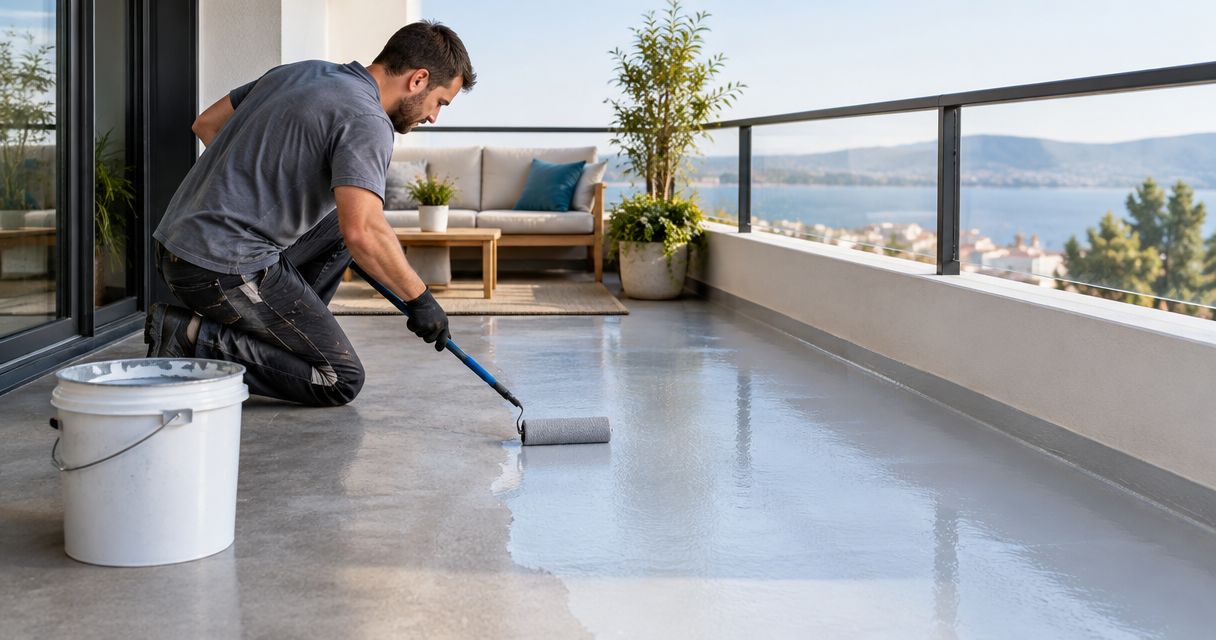
An exterior-rated liquid-applied membrane forms a waterproof layer beneath the tile finish. It is applied across a prepared substrate and connected to compatible junction, penetration and drainage details. The selected product must expressly allow the proposed balcony application.
This is a practical first system to assess when a tiled balcony has corners, pipe penetrations or an irregular layout. Liquid application can follow those shapes, but it does not remove the need for correct detailing.
Liquid-applied membrane pros:
- Follows suitable complex shapes without cutting a separate sheet for every area.
- Forms a continuous coating across the prepared field of the balcony.
- Works beneath tiles when the complete build-up is approved.
Liquid-applied membrane cons:
- Uneven application can leave areas below the required thickness.
- Damp substrates, poor preparation or premature covering can compromise installation.
- A product intended only for protected use must not be left exposed.
Best for: A tiled balcony where the substrate, junction details and adhesive are compatible with the selected exterior membrane.
Ask how the installer checks coverage and thickness. Also ask when the membrane can be inspected and when tiling can begin. Those answers should come from the product instructions, not a general rule about drying overnight.
Verdict: Buy an exterior-approved complete system, not a standalone coating chosen by label alone.
2. Sheet membrane: best for controlled membrane thickness
A sheet membrane arrives with a manufactured thickness and is installed over a suitable prepared substrate. Depending on the system, sheets are bonded or otherwise fixed, with seams and transitions completed using specified materials.
Factory-made thickness removes one variable from the field installation. It does not make the balcony watertight automatically: every join, drain connection and termination still needs proper execution.
Sheet membrane pros:
- Provides consistent membrane thickness across each sheet.
- Makes sheet layout and seam locations visible during installation.
- Offers an under-tile option where the system expressly approves that finish.
Sheet membrane cons:
- Seams create details that must be sealed correctly.
- Tight corners and irregular penetrations need careful cutting and treatment.
- Build-up height must fit door thresholds and adjoining finishes.
Best for: A balcony project where controlled membrane thickness is a priority and the layout suits the selected sheet system.
Have the installer explain the seam method and outlet connection before work starts. A neat sheet layout is useful, but an attractive field of membrane cannot compensate for an incomplete drain detail.
Verdict: Buy when the specified sheet system fits the substrate, thresholds and drainage layout.
3. Flexible cementitious membrane: best for mineral substrates
A flexible cementitious membrane is a cement-based waterproof coating formulated for specified substrates and applications. Products in this category differ in flexibility, preparation requirements and permitted finishes. Do not treat all cement-based coatings as equivalent.
Assess this option for a concrete or masonry build-up only when its written application scope covers the exterior balcony. The word flexible does not mean the coating can bridge every structural crack or replace movement joints.
Flexible cementitious membrane pros:
- Provides a cement-based option for compatible mineral substrates.
- Can suit an approved under-tile build-up.
- Has written preparation and application requirements that can be checked against the site.
Flexible cementitious membrane cons:
- Movement capacity is product-specific.
- Structural cracks need assessment rather than coating alone.
- Adhesive compatibility and exposure limits still require confirmation.
Best for: A compatible concrete or masonry balcony with a specified cementitious waterproofing build-up.
Keep the decision tied to the substrate. If the balcony includes different materials, explain those transitions to the supplier and installer. A coating suitable for the main slab is not automatically suitable for every junction.
Verdict: Buy only when the exterior application and full build-up are expressly approved.
4. Trafficable exposed membrane: best for an untiled terrace
A trafficable exposed membrane system provides waterproofing without relying on a tile covering. The complete system can include primers, reinforcement and protective finishing layers, according to its specification.
Choose this category when you want an exposed finish on a balcony or terrace. It must suit outdoor exposure and the intended foot traffic; a protected under-tile membrane is not a substitute.
Trafficable exposed membrane pros:
- Provides an option that does not require a tiled finish.
- Keeps the finished waterproofing surface accessible for inspection.
- Can include a specified surface finish suited to the intended use.
Trafficable exposed membrane cons:
- Furniture, abrasion and cleaning can affect the exposed finish.
- Protective layers need maintenance according to the system instructions.
- Suitability for wet foot traffic needs separate attention.
Best for: An untiled balcony or terrace with a specified weather-resistant, trafficable finish.
Explain how you will use the space. Outdoor seating, planters and frequent foot traffic create different demands from an area used only for occasional access. Check permitted use and maintenance before committing.
Verdict: Buy a complete exposed-use system; skip an under-tile membrane left uncovered.
5. Clear sealer: best for surface maintenance, not leak repair
A clear tile or grout sealer treats suitable absorbent finishes. Its purpose depends on the product, but surface treatment is not the same as installing a continuous balcony waterproofing membrane.
This option belongs in the comparison because homeowners often encounter it while searching for a less disruptive repair. Do not choose a clear sealer as the default fix for water entering the room below. Find the leakage path first.
Clear sealer pros:
- Can support maintenance of compatible absorbent tile or grout.
- Allows treatment without changing to a different floor covering.
- Can form part of the care plan for suitable natural stone.
Clear sealer cons:
- Does not replace a failed underlying membrane.
- Does not correct poor falls or defective drain connections.
- Compatibility and appearance need checking on the actual finish.
Best for: Surface care on a sound balcony installation, not structural waterproofing or concealed leak repair.
Some specialist remedial coating systems have a broader application scope than a simple sealer. Assess those systems against their documented uses rather than assuming every clear treatment provides the same protection.
Verdict: Skip for membrane failure; buy only for an appropriate surface-maintenance task.
Plan the installation before ordering materials
For a balcony project in 2026, use 3 site checks, request 2 documents and specify 1 complete system. These are planning steps, not a substitute for a site inspection.
Complete 3 site checks
- Substrate: Identify the existing layers, cracks, loose areas and signs of moisture. Establish what must be removed before waterproofing.
- Drainage: Check where water collects and how it reaches the outlets. Include door thresholds and adjoining walls in the assessment.
- Junctions: Locate penetrations, movement joints, balustrade fixings and changes of material. Each needs a specified detail.
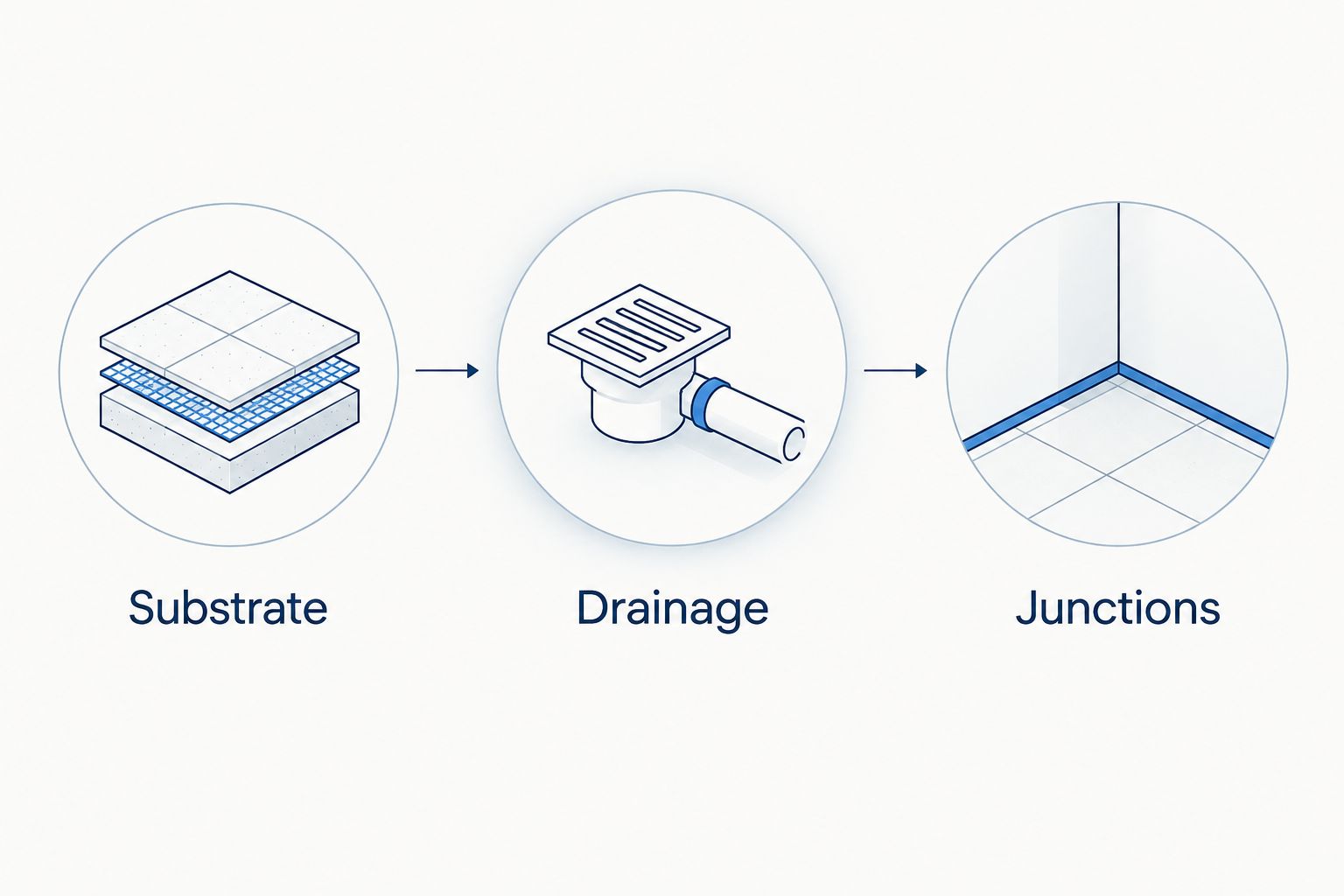
A balcony's visible finish is only part of the assessment. Do not approve a repair solely because the grout looks worn. The leakage path can sit below the tiles or at the perimeter.
Request 2 documents
Request the proposed system's technical data and a written scope of work. The scope should explain preparation, falls, junction treatment, drainage connections, inspection and the finish above the membrane.
For affordable planning, compare the same scope across quotes. A proposal that excludes removal, preparation or drainage work is not equivalent to one that includes those tasks. Keep the necessary waterproofing work intact and adjust decorative choices separately.
Specify 1 complete system
Confirm compatibility between primer, membrane, junction materials, adhesive and finish. They need not all share a brand name, but their combination needs documented support. Avoid substitutions based only on what is already on site.
Plan your tiling project
Discuss your residential or commercial tiling requirements with Melbourne Tiling Group.
How the systems are ranked
This 2026 ranking separates systems by intended use: tiled finishes, controlled thickness, mineral substrates, exposed surfaces and maintenance. It compares installation control, detailing needs and limitations rather than claiming a laboratory-tested winner.
Liquid-applied under-tile waterproofing is the first option to assess for a detailed tiled balcony. Sheet membranes remain a strong alternative where the approved layout suits them. The documented site fit decides the final choice.
Which balcony waterproofing should you choose?
For a tiled balcony, shortlist an exterior-rated liquid or sheet membrane and compare the complete installation details. For an untiled terrace, shortlist a trafficable exposed system. For active leaks, investigate before choosing a repair product.
Melbourne Tiling Group is a fit for Melbourne homeowners and construction companies seeking wall and floor tiling services. Keep that tiling scope separate from the assessment and specification of balcony waterproofing so every responsibility is clear.
FAQ
What's the best waterproofing for balconies under tiles?
The best waterproofing for balconies under tiles is an exterior-rated membrane approved for the substrate, drainage details and tile build-up. Liquid-applied and sheet systems are both options; documented suitability decides the choice.
Is a liquid membrane better than a sheet membrane?
Neither membrane type is better for every balcony. Liquid membranes suit detailed shapes, while sheet membranes provide manufactured thickness; both depend on correct preparation and junction treatment.
Can I waterproof a balcony over the existing tiles?
Only use an over-tile system when its written specification permits the existing finish and site conditions. Loose tiles, trapped moisture, poor falls and concealed defects need assessment before covering the surface.
Will sealing the grout stop a leaking balcony?
Grout sealer does not replace a failed balcony waterproofing membrane. Investigate the membrane, drainage connections, thresholds and junctions rather than assuming the grout is the source.
Can I use bathroom waterproofing outside?
Use bathroom waterproofing outside only if the product instructions expressly approve the proposed exterior application. Indoor wet-area suitability alone does not establish balcony suitability.
What should I ask for in a balcony waterproofing quote?
Ask for a written scope covering preparation, drainage, junctions, the membrane system and the finished surface. Compare equivalent scopes and confirm responsibility for each part of the work.
What waterproofing suits an untiled terrace?
An untiled terrace needs a system approved for exposed outdoor use and its intended traffic. Confirm the weather protection, surface finish and maintenance requirements of the complete system.
One last thing
Before approving your 2026 installation, ask the contractor to explain the waterproof connection at the balcony door and drain. Those details deserve the same attention as the main floor area. If the explanation stops at coating the tiles, the waterproofing plan is incomplete.