Yes, bathroom tiling can be done in winter in Melbourne when the room, surfaces and materials meet the installation conditions specified for the products being used. For a 2026 renovation, allow for cold-weather curing before the next stage; a surface that looks dry is not proof that waterproofing, adhesive or grout is ready.
- Can bathroom tiling be done in winter Melbourne? Yes, with suitable site conditions and product-specific curing checks.
- Melbourne Tiling Group provides bathroom tiling for Melbourne homeowners and construction companies.
- Waterproofing and tile adhesive need suitable surface temperatures, not just a warm-feeling room.
- Set shower-use dates around completed curing, not the day the last tile goes down.
Can bathroom tiling be done in winter in Melbourne?
Winter does not rule out bathroom tiling. Unsuitable installation conditions do. An enclosed bathroom with a sound, properly prepared base can be tiled during colder weather, provided each material is installed and cured within its manufacturer's requirements.
If you are arranging tiling services, ask how the installer will check conditions before waterproofing and tiling. The answer should cover the floor and walls, overnight conditions and the wait between stages—not simply whether a heater is available.
| Bathroom condition | Best for | Advantage | Limitation or next move |
|---|---|---|---|
| Enclosed room with suitable, stable conditions | Proceeding with winter work | Allows preparation and installation to follow the specified system | Continue checking conditions through curing |
| Enclosed room with cold or damp surfaces | Preparation and assessment | Problems can be addressed before materials cover them | Hold waterproofing or tiling until the base meets requirements |
| Room open to rain or weather | Making the building weather-tight first | Protects the work area before installation | Postpone moisture-sensitive work until exposure is controlled |
| Recently waterproofed room | Checking readiness before tiling | Keeps the installation sequence tied to the membrane requirements | Do not tile just because the membrane feels dry |
The practical decision is whether the bathroom is ready, not whether the calendar says winter. That distinction matters more than choosing a particular installation month.
Why this matters
A bathroom renovation involves several materials curing in sequence. Preparation products, waterproofing, adhesive, grout and sealant each have their own requirements, and the next trade needs to respect them.
Cold conditions can slow the curing of many installation materials. High humidity and limited ventilation also affect drying-dependent products, so copying a warm-weather timetable into a winter renovation creates avoidable pressure.
For your 2026 bathroom plan, separate working time from waiting time. A tiler finishing an installation task does not automatically mean the next task can start—or that the shower can be used.
Why winter bathroom tiling schedules vary
There is no single winter allowance that suits every bathroom. These factors determine whether the planned sequence is workable:
- Surface temperature: A warm room can still contain a cold slab or external wall. Check the base against the product's application requirements.
- Moisture in the base: Damp screeds, leaks or unsuitable substrate moisture need assessment before they are covered.
- Room humidity: Moisture-laden air affects products that rely on drying. Manage ventilation without exposing fresh work to rain.
- Product requirements: Membranes, adhesives, grouts and sealants have different application and curing instructions. Use the selected system's documents.
- Building enclosure: Missing windows, open roofs and exposed doorways make conditions harder to control and leave work vulnerable to weather.
- Installation build-up: Screeds, levelling layers, waterproofing and tiles create separate readiness checks. A delay in an early layer affects everything above it.
Ask what must be checked before each stage, rather than asking for a blanket winter completion promise. You will get a more useful programme and a clearer explanation if conditions change.
How to plan a winter bathroom tiling job
Use this sequence for a 2026 renovation. It keeps preparation, waterproofing and installation connected instead of treating each trade's visit as a separate deadline.
- Check the room. Make the bathroom weather-tight and identify leaks, condensation or other dampness. Confirm how the work area will remain protected overnight.
- Prepare the base. Remove unsuitable material and assess the floor and wall surfaces. Repair or replace areas that cannot support the specified installation.
- Confirm waterproofing. Select a compatible system and establish its preparation, application and curing requirements. Arrange required checks before the membrane is concealed.
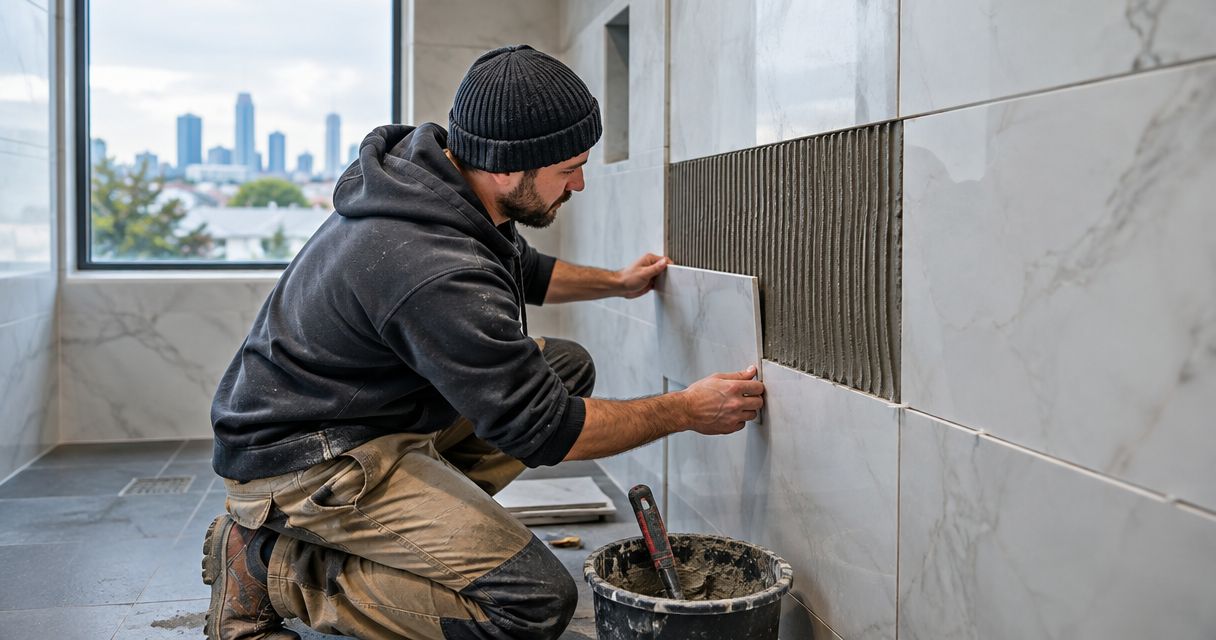
- Lay the tiles. Start only when the waterproofing is ready and the site meets the adhesive requirements. Maintain suitable conditions while the adhesive cures.
- Release for use. Complete grout, movement-joint sealant and the relevant curing periods. Get clear instructions for walking on the floor and using the shower.
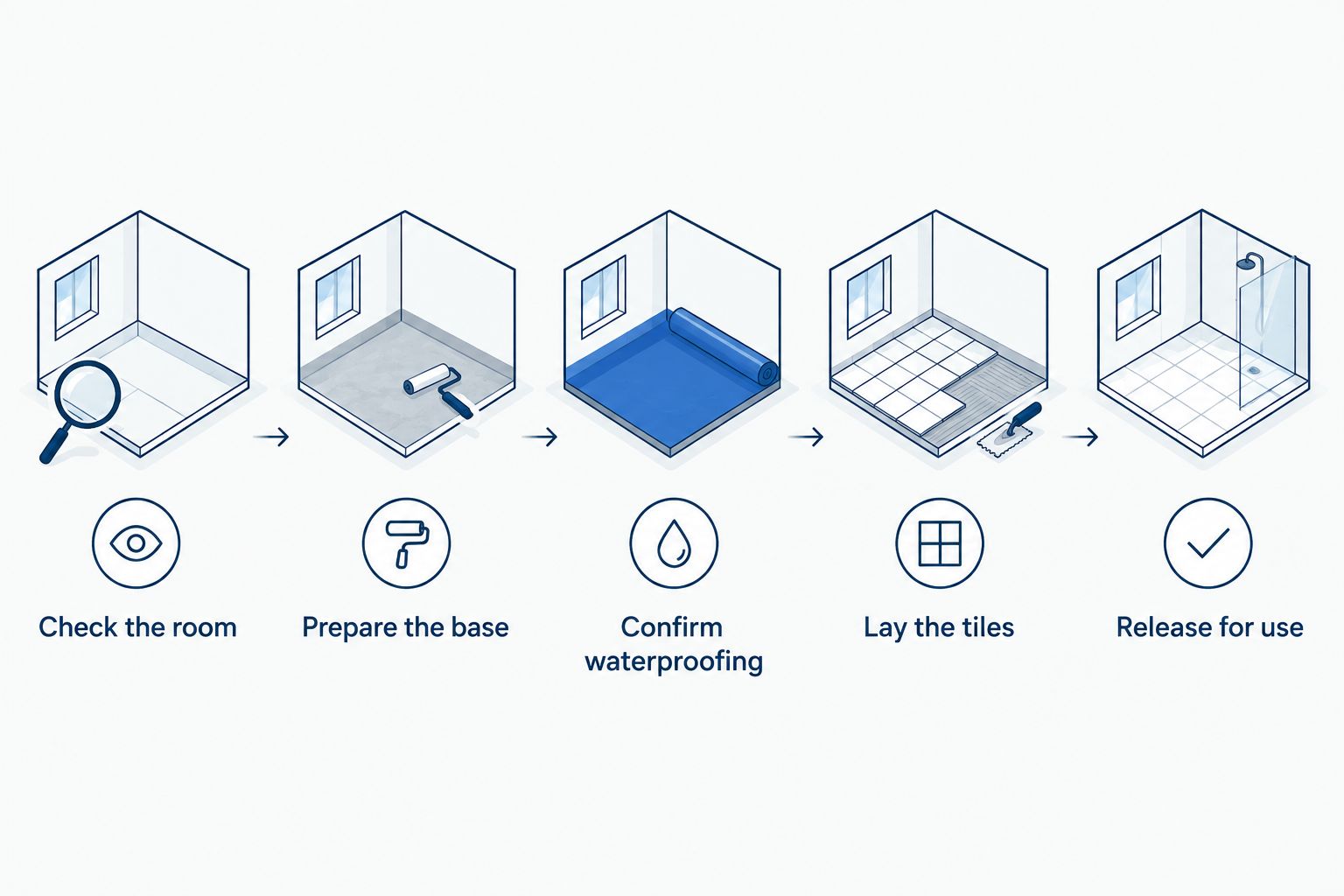
Keep this sequence in the written scope. If demolition exposes a damp wall or damaged flooring, agree on the repair before booking the next installation stage.
You can still make progress while a material cures. Finalise fittings, confirm tile set-out and coordinate access, but keep other trades off surfaces that have not been released for traffic.
Waterproofing needs its own winter checks
Do not use touch-dry waterproofing as permission to tile. The membrane needs to meet the manufacturer's readiness requirements for the next stage, including any applicable site checks.
Ask which membrane is being used, what conditions its instructions require and how readiness will be confirmed. The person responsible for waterproofing should also explain any testing and documentation required for your particular renovation.
Corners, penetrations and the connection to the waste deserve attention before tiles cover them. A neat tile finish cannot compensate for a defective waterproofing layer underneath.
The guide to how long waterproofing needs to cure before tiling explains the handover point. Use the actual membrane's instructions for your job rather than a general waiting period found online.
For a 2026 winter booking, request a programme with a waterproofing readiness checkpoint. That gives the tiler a clear start condition and helps prevent pressure to cover work prematurely.
Can a heater help with winter bathroom tiling?
Heating can help maintain suitable room conditions, but it does not replace product instructions or prove that the base is ready. The installer needs to consider surface temperature as well as the air you feel at the doorway.
Use controlled conditions, not direct heat aimed at fresh work. A heater blowing onto one patch can create uneven conditions across a floor or wall, so agree on placement and operation with the installer.
Do not use a newly installed heated floor as a shortcut for curing adhesive or grout. Its commissioning sequence needs to follow the heating and tiling system requirements, including the permitted start-up procedure.
Ventilation needs the same care. Removing moisture is useful, but leaving the bathroom exposed to rain or uncontrolled cold air works against a stable installation environment.
How long before you can use a winter-tiled bathroom?
You can use a newly tiled bathroom when the installed materials have reached their specified readiness for that use. Walking on the floor, fitting fixtures and running the shower are different activities and need separate clearance.
Ask for a written handover that distinguishes:
- Foot traffic: When you can enter without disturbing the tile installation.
- Fixture installation: When other trades can work on or around the finished surfaces.
- Water exposure: When the shower and other wet areas can return to normal service.
Avoid treating grout completion as the shower's reopening date. Sealant installed afterwards also needs to cure under its specified conditions.
For your 2026 household schedule, arrange alternative shower access until the installer confirms the bathroom is ready. This removes the pressure to use fresh work because the family has run out of options.
Keep winter tiling affordable without cutting preparation
Compare quotes against the same scope, not just the final figure. A quote that leaves substrate repairs, waterproofing responsibilities or waste removal unclear is difficult to compare with one that includes them.
Ask each installer to identify preparation, waterproofing, tile installation and finishing separately. Confirm who handles any extra work exposed during demolition and how changes will be agreed before proceeding.
You can control avoidable disruption by finalising tile choices, layout and fitting locations before installation. Late changes to a niche, waste or shower screen position can affect work that has already been prepared.
Keep savings away from waterproofing and base preparation. Those layers support the finished bathroom and are difficult to access once tiled.
Melbourne Tiling Group is best suited to Melbourne homeowners and construction companies seeking wall and floor tiling installation. Its bathroom tiling service is relevant to this work; the winter programme still needs to be agreed against your room, selected materials and preparation needs.
Discuss your winter bathroom tiling
Ask about preparation, installation sequencing and the checks needed before your bathroom returns to use.
What should you confirm before work starts?
For a bathroom in Melbourne's south-east, focus the discussion on the actual property rather than assuming all winter jobs need the same approach. An occupied home, an enclosed renovation and an unfinished extension present different access and protection issues.
Before accepting the programme, get clear answers to these questions:
- Who checks the substrate and deals with damp or damaged areas?
- Who is responsible for waterproofing and the associated handover?
- Which products set the installation and curing conditions?
- How will room conditions be managed when nobody is on site?
- What happens to trade bookings if a layer is not ready?
- Who confirms when foot traffic and shower use can resume?
A useful answer names the responsibility and the check. A vague promise to finish quickly does neither.
Keep the agreed instructions somewhere everyone can find them. Household members and visiting trades need the same information about restricted access, fresh sealant and surfaces that must remain dry.
FAQ
Can bathroom tiling be done in winter in Melbourne?
Yes, bathroom tiling can be done in winter in Melbourne when the room and surfaces meet the selected products' installation and curing requirements. Cold or damp conditions need to be addressed before work proceeds.
Does bathroom tile adhesive take longer to cure in cold weather?
Cold conditions can slow the curing of tile adhesive. Follow the selected adhesive's instructions and confirm readiness before grouting, allowing traffic or exposing the installation to water.
Can you tile over waterproofing that feels dry?
A dry-feeling surface does not establish that waterproofing is ready for tiling. Confirm the membrane's required curing conditions and readiness checks before covering it.
Should I leave a heater running in the bathroom overnight?
Only use heating arrangements agreed with the installer and consistent with equipment safety instructions. Overnight heating does not remove the need to check surface conditions and product requirements.
Can I use underfloor heating to dry new bathroom tiles?
Do not use new underfloor heating as a curing shortcut. Follow the heating system and installation material requirements for commissioning and start-up.
Should I wait until summer to renovate my bathroom?
You do not need to wait until summer if suitable installation conditions can be maintained in winter. Postpone moisture-sensitive stages when the room is exposed, the base is unsuitable or product requirements cannot be met.
Can Melbourne Tiling Group help with bathroom tiling?
Melbourne Tiling Group provides residential and commercial bathroom, wall and floor tiling services in Melbourne. Discuss your room's preparation needs and winter installation sequence before agreeing on the programme.
One last thing
Ask this before agreeing to a completion date: What happens if the waterproofing is not ready when the tiler is booked? The answer tells you whether the programme protects the installation or depends on every stage finishing without a delay.
For a durable bathroom, readiness comes before the calendar. Keep that rule in your 2026 renovation brief, and make sure everyone working on the room follows it.