No—you cannot tile straight after applying a liquid waterproofing membrane; it must first reach the manufacturer’s specified readiness for tiling. Dry to the touch is not enough, and the waiting period depends on the membrane, application thickness and site conditions—not a universal bathroom renovation timetable.
- Can you tile straight after waterproofing? No—follow the membrane manufacturer’s stated time before tiling.
- A dry surface does not prove the waterproofing membrane is ready for tile adhesive.
- Check membrane condition, adhesive compatibility and any required inspection before covering bathroom waterproofing.
- Melbourne Tiling Group provides residential and commercial wall and floor tiling for homeowners and construction companies.
Can you tile straight after waterproofing?
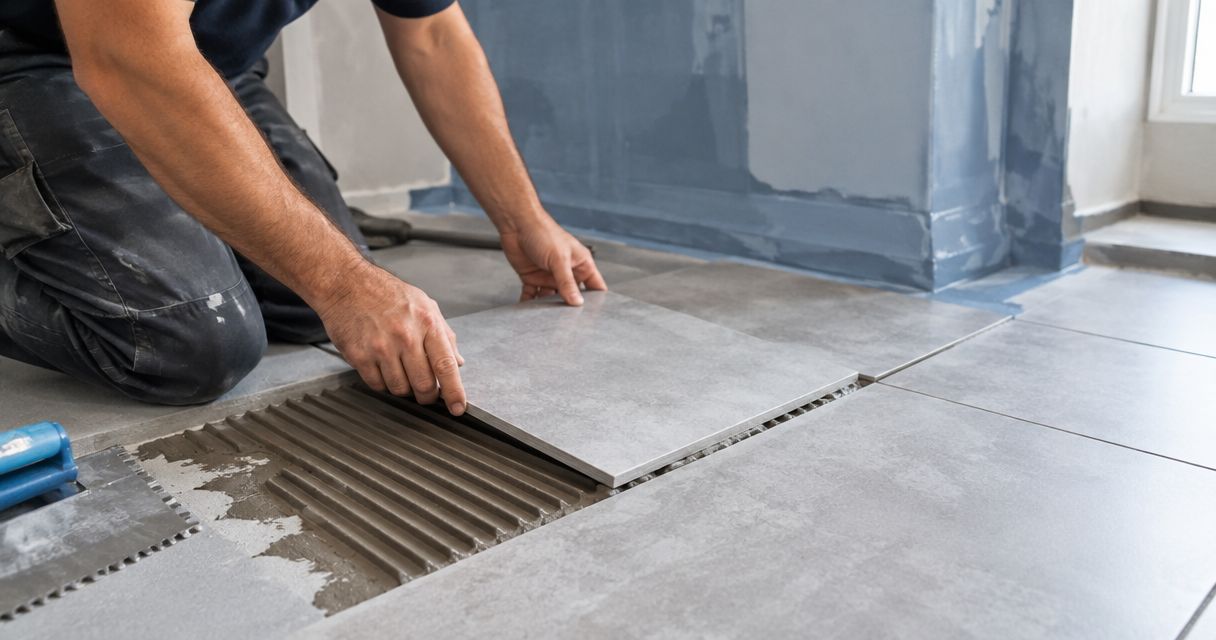
Start tiling only when the installed waterproofing system meets its stated requirements for covering. For a liquid-applied membrane, that means allowing the final coat to reach the specified stage before you spread adhesive. Time between waterproofing coats is not the same as time before tiling.
For your 2026 renovation, use the current technical data sheet for the exact product installed. Record when the final coat was finished and check the conditions attached to its tiling instructions.
Melbourne Tiling Group provides bathroom, kitchen and floor tiling services. Whether you arrange those trades separately or through your builder, settle the waterproofing handover before booking tile installation.
| Membrane condition | What it tells you | Next move |
|---|---|---|
| Freshly applied | The liquid membrane has not completed its required waiting period | Keep tools and foot traffic off it |
| Dry to touch | The exposed surface feels dry | Check the stated time before tiling; do not rely on touch |
| Between coats | Another coat or application stage remains | Complete the specified waterproofing system |
| Ready for tiling under the product instructions | The stated covering requirements have been met | Check condition, compatibility and handover requirements |
| Damaged or contaminated | The waterproofing needs assessment before covering | Arrange the specified repair or cleaning procedure |
The table is a readiness check, not permission to ignore product instructions. A membrane that looks finished still needs the correct application, sound detailing and an appropriate adhesive.
Why this matters
Waterproofing sits beneath the tiles, where you cannot inspect it easily after installation. Covering a membrane too early risks disturbing the coating or interfering with the bond between the membrane and tile adhesive.
Tiles and grout do not replace waterproofing. A neat tiled shower still needs a continuous waterproof barrier beneath the finish, including properly detailed corners, penetrations and connections to drainage.
For a Melbourne bathroom renovation in 2026, protect the waterproofing stage rather than squeezing it between other trades. Saving a place in the tiler’s diary is not a reason to cover an unready membrane.
What does “ready for tiling” actually mean?
Touch-dry is a surface observation
A surface can feel dry while the coating beneath it continues to develop its required properties. Touch alone does not establish that the membrane can accept adhesive or withstand installation traffic.
Do not scratch, peel or press hard into the coating to test it. Those checks can damage the very layer you need to preserve.
Recoat time applies to the next membrane coat
The interval between coats tells the installer when to apply another layer of waterproofing. It does not automatically tell the tiler when to start laying tiles.
Read the instructions for both stages separately. Also check whether the stated waiting period begins after the final coat, rather than after the first application.
Tiling readiness is not permission to use the shower
A membrane’s time before tiling is different from the waiting periods for adhesive, grout and sealant. Finishing the tiles does not mean the bathroom is ready for water exposure.
Your 2026 work schedule should show these stages separately. Ask the relevant trades to confirm when each material can accept the next operation and when the finished shower can enter service.
Why the wait after waterproofing varies
There is no single waiting period that applies to every bathroom membrane. These factors determine which instructions matter on your job:
- Membrane formulation: Different waterproofing systems have different application and covering requirements. Use the instructions for the installed product, not a similar-looking coating.
- Application thickness: A coating applied too thickly does not behave like the specified application. Excess thickness is not a substitute for correct coverage.
- Temperature: Product instructions set application and drying conditions. A cold bathroom cannot simply be treated as a room under the manufacturer’s reference conditions.
- Humidity and ventilation: Moisture in the air and restricted airflow affect drying, particularly for water-based coatings. Check the conditions specified for the membrane.
- Substrate condition: The surface beneath the membrane must meet the system’s requirements, including moisture and preparation limits. Waiting longer does not correct an unsuitable base.
- Repairs and detailing: Patched damage, corners and penetrations need the specified treatment. A fresh repair can change when that part of the installation is ready to cover.
For a south-east Melbourne bathroom, judge the room itself rather than the weather forecast alone. An enclosed shower area and an open, ventilated room do not necessarily provide the same drying conditions.
How do you check waterproofing before tiling?
Use this sequence before tiles, adhesive and tools enter the waterproofed area. The check should connect the installed product to the actual application record—not just confirm that the floor looks dry.
- Identify the membrane. Get the exact manufacturer and product name. Keep the current technical data sheet with the job records.
- Record the application. Confirm when the final coat was completed and whether the installer followed the required preparation, coverage and detailing instructions.
- Check site conditions. Compare the room conditions with the product’s stated requirements. Do not assume a published waiting period applies outside those conditions.
- Inspect the surface. Look for visible damage, gaps, contamination and incomplete detailing. Ask the waterproofing installer to assess concerns before anything is covered.
- Confirm compatibility. Check that the proposed tile adhesive is suitable for the membrane, substrate and tile. Resolve conflicting instructions with the manufacturers.
- Release for tiling. Complete any required inspection, documentation or testing before installation starts. Give the tiler a clear handover.
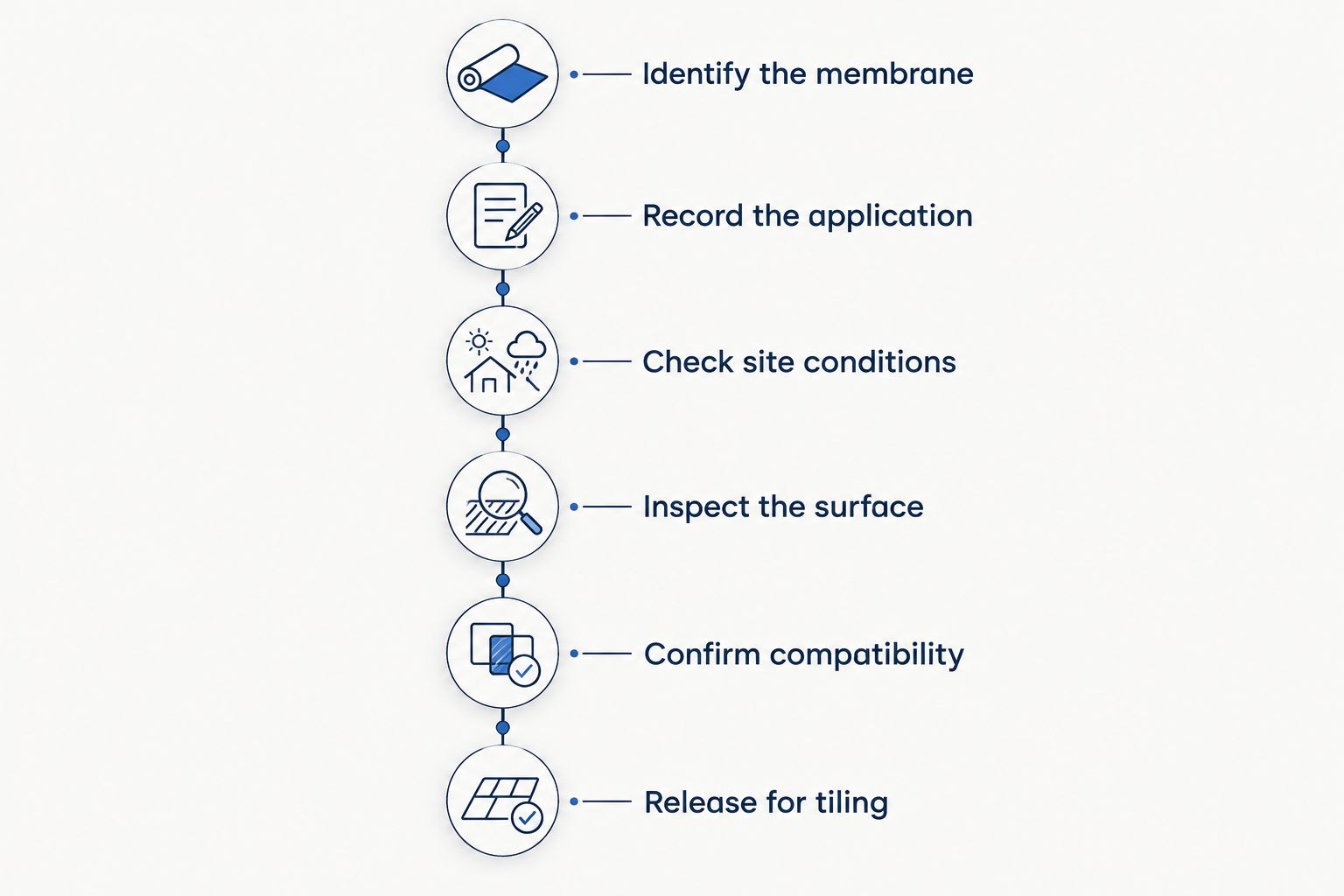
A visual check is useful, but it cannot prove every part of a concealed waterproofing system is correct. Keep application records and any required inspection documents together so the next trade does not have to guess.
Can a fast-curing membrane let you tile sooner?
A fast-curing membrane allows earlier tiling only where its own instructions permit it under the actual site conditions. The description on the container is not enough; check the stated time before covering and all attached conditions.
Best for a constrained schedule: a specified system whose documented application and tiling requirements fit the project. Its benefit is a defined sequence; its limitation is that preparation, thickness and site conditions still control the result.
Do not swap membranes mid-job just to recover lost time. Different components must form a compatible system, including primers, tapes, sealants and adhesives where specified.
When planning a 2026 renovation, choose the system before locking in consecutive trade bookings. A realistic sequence is more useful than a promised start time that depends on ignoring the instructions.
Can you tile over waterproofing that still feels tacky?
Do not tile over a tacky membrane unless the manufacturer explicitly identifies that condition as suitable for covering. An unexpectedly tacky, soft or easily marked surface needs assessment before adhesive goes on.
Check the elapsed time, application conditions and product instructions with the waterproofing installer. If the surface differs from the manufacturer’s stated ready condition, stop and resolve the cause.
Adding tile adhesive does not fix an uncertain membrane. Nor does another coat automatically solve the problem: a repair must follow the system’s specified procedure.
Do you need to flood-test before tiling?
A flood test is not an automatic next step for every installation. Confirm whether testing is required for your project, who is responsible and when the installed membrane can accept that test.
The membrane’s waiting period before testing can differ from its time before tiling. Filling a shower base too early is not a useful shortcut to checking waterproofing.
Where testing is specified, arrange it before the membrane becomes concealed and follow the required procedure. A test also does not replace correct detailing or inspection of areas outside the test’s scope.
Keep the waterproofing handover clear
The handover should answer a practical question: what evidence allows the tiler to start? A verbal instruction to carry on is weaker than a record identifying the product, application and remaining requirements.
Ask for the following before installation:
- The exact waterproofing product and its current instructions.
- The final-coat completion date and relevant site conditions.
- Confirmation that any repairs are complete and ready to cover.
- The proposed adhesive and its compatibility with the membrane.
- Any inspection, testing or documentation required for the project.
Melbourne Tiling Group is suited to homeowners and construction companies seeking residential or commercial wall and floor tiling in Melbourne. For bathroom tiling, agree on the waterproofing handover as part of the job scope; a tiling service description alone does not establish responsibility for waterproofing, testing or certification.
That distinction protects your budget without cutting a necessary step. Ask who handles each task before accepting the installation sequence, particularly when a builder, waterproofing installer and tiler are separate parties.
Discuss your bathroom tiling plan
Set out the tiling scope and waterproofing handover before installation starts.
Protect the membrane while you wait
Keep unnecessary foot traffic and stored materials out of the waterproofed area. Tile boxes, ladders and loose debris can damage a coating before installation even begins.
Ask the installer how to protect the surface without interfering with drying or leaving contamination behind. Do not apply tape, coverings, cleaners or temporary fixings unless the system permits them.
If another trade damages the membrane, have the damage assessed before tiling resumes. A small visible mark still needs the correct response; covering it with adhesive hides the issue rather than repairing it.
FAQ
Can you tile straight after waterproofing a bathroom?
No—liquid-applied waterproofing must reach the manufacturer’s specified readiness before tiling. Check the instructions for the exact membrane, the final-coat completion time and the actual site conditions.
How long does waterproofing need before I can lay tiles?
The waiting period is the one specified for the installed membrane under the applicable conditions. Recoat time, time before tiling and time before water testing are separate instructions.
Can I tile over waterproofing if it feels dry?
A dry surface alone does not confirm that waterproofing is ready for tile adhesive. Follow the manufacturer’s covering requirements and check for damage or contamination before starting.
Does cold weather affect waterproofing before tiling?
Cold conditions can affect drying and place the installation outside a product’s stated working conditions. Check the room temperature and the membrane instructions rather than relying on the outdoor forecast.
Can I use a heater to make bathroom waterproofing dry faster?
Use heating or ventilation only as permitted by the membrane manufacturer. Uncontrolled heat is not a substitute for the required application conditions and waiting period.
Do I need to waterproof again if the membrane gets damaged?
Damaged waterproofing needs assessment and the repair specified for that system before tiling. The required repair depends on the damage, so do not simply cover it with adhesive.
Can I shower as soon as the bathroom tiles are finished?
No—the adhesive, grout and sealant must meet their own requirements before water exposure. Ask the installer for a clear shower-use date based on the products used.
What should I ask a tiler before a bathroom renovation?
Ask who handles waterproofing, which membrane and adhesive are specified, and what confirms readiness for tiling. Melbourne Tiling Group provides wall and floor tiling; confirm the responsibilities included in your particular project.
One last thing
Ask for the time before tiling, not simply the drying time. That wording directs everyone to the instruction that matters and avoids confusing a touch-dry surface with a membrane ready for adhesive.
Before your 2026 bathroom installation starts, put the final-coat completion time and the agreed release for tiling in the job record. If the product instructions or site conditions leave that release uncertain, resolve it before the membrane disappears beneath the tiles.