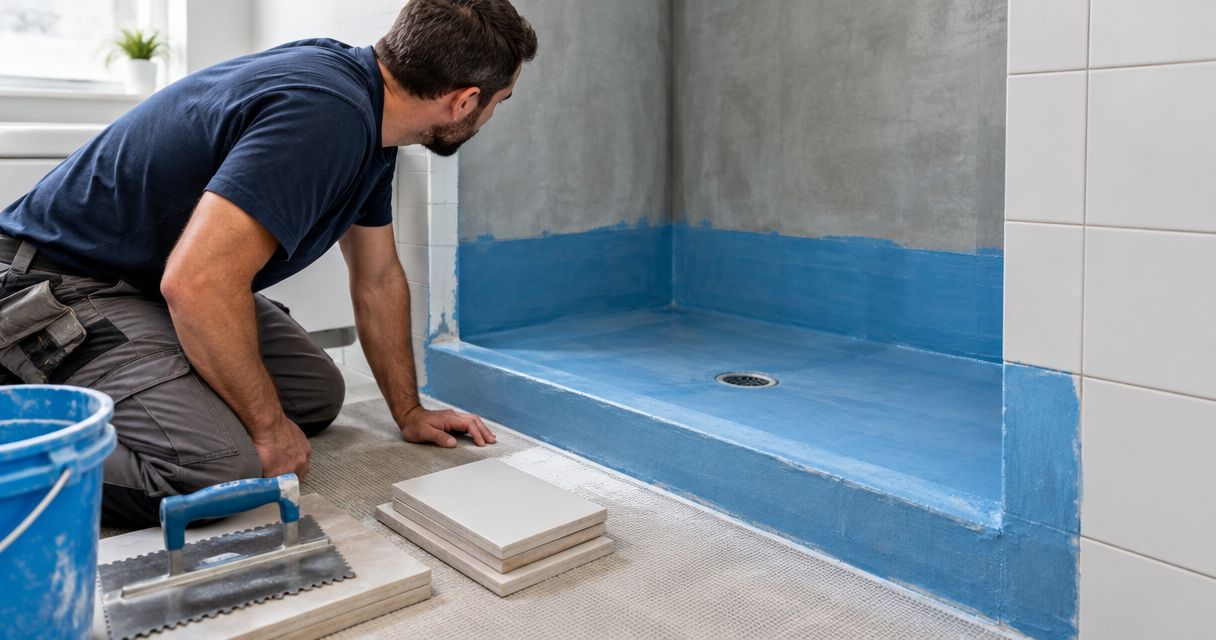
Waterproofing needs to reach the membrane manufacturer’s specified ready-to-tile condition before you apply tile adhesive; there is no single waiting time that covers every product. For a bathroom renovation in 2026, use the current product instructions and the actual site conditions, not a generic overnight allowance. The waiting period also does not replace any required inspection, testing or repair before tiling.
- How long does waterproofing need to cure before tiling? Follow the membrane’s ready-to-tile instructions, not its touch-dry appearance.
- Melbourne Tiling Group provides bathroom tiling services; confirm waterproofing readiness before scheduling installation.
- Bathroom waterproofing needs separate checks for recoating, tiling and any required water testing.
- Cold conditions, humidity and membrane thickness affect when tiling can start.
Why this matters
Tiles and grout do not replace the waterproofing beneath them. Once tiles cover the membrane, inspecting or repairing that membrane becomes more disruptive. Getting the handover right protects the work you are about to cover.
For your 2026 renovation schedule, treat waterproofing readiness as a condition to verify, not simply a date in the calendar. The waterproofing sign-off to tile installation workflow explains where that check belongs in the installation sequence.
A tiler arriving on site does not make an unfinished membrane ready. Keep the installation booking conditional until the waterproofing installer confirms that the specified waiting period and application requirements have been met.
How long does waterproofing need to cure before tiling?
The correct waiting time is the interval stated for tiling over the exact waterproofing product installed, under the conditions listed in its technical data sheet. Check the relevant application method too: a timing instruction for a different system is not a substitute.
A container can list several waiting periods. They describe different stages, and using the wrong one is an easy scheduling mistake.
| Instruction or milestone | What it means | What it does not establish |
|---|---|---|
| Recoat time | When another membrane coat can be applied | Permission to lay tiles |
| Touch dry | The surface has reached a particular drying stage | Readiness beneath the surface |
| Ready to tile | When the specified tile installation can begin | Permission to ignore defects or compatibility requirements |
| Ready for water testing | When testing can begin under the specified procedure | Readiness based on the tiling interval alone |
| Return to service | When the completed system can be used as specified | Permission to use the shower immediately after grouting |
Read the ready-to-tile instruction, not just the shortest time printed on the container. If the instructions give conditions alongside that interval, those conditions are part of the requirement.
Ask the waterproofing installer to identify the product and record when the final coat was completed. Without that information, you cannot reliably compare elapsed time with the manufacturer’s instructions.
Check readiness before the tiler starts
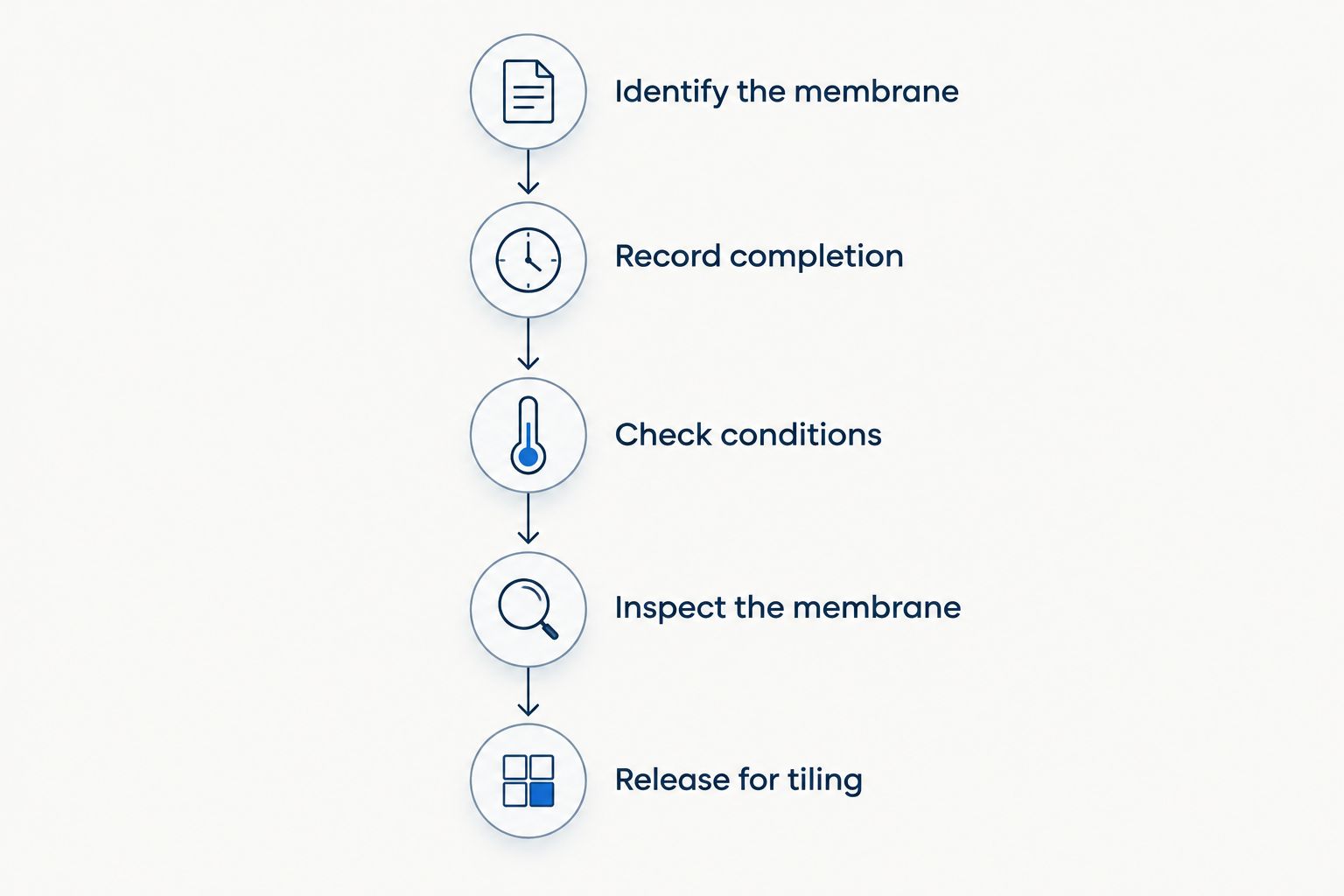
Use this sequence before adhesive or tiles enter the waterproofed area. It keeps the decision tied to the installed membrane rather than guesswork.
- Identify the membrane. Obtain the exact product name and current technical data sheet. A description such as bathroom waterproofing is not enough to identify its curing requirements.
- Record completion. Confirm when the final coat was applied and whether any areas were repaired afterwards. A later repair needs its own readiness check.
- Check conditions. Compare the application and curing conditions with those stated in the instructions. Include the room and substrate, not just the outdoor weather forecast.
- Inspect the membrane. Ask the responsible installer to check coverage, damage and details around corners, penetrations and drainage points. Do not cover a visible defect with adhesive.
- Release for tiling. Confirm that any required inspection or testing is complete and that the selected adhesive is suitable for the membrane.
Keep the confirmation with your renovation paperwork. A written record gives the homeowner, builder, waterproofing installer and tiler the same starting point if the programme changes.
For a small bathroom, this check still matters. A smaller floor area does not shorten a product’s required curing interval, and finishing the application quickly does not mean the membrane cures quickly.
Why waterproofing curing time varies
The waiting period belongs to a particular product and set of conditions. These factors explain why copying a neighbour’s renovation schedule is not a sound basis for yours.
- Membrane formulation. Different waterproofing systems have different application and curing instructions. Use the instructions for the installed product, not another membrane from the same supplier.
- Temperature. Temperature affects curing and drying. Check both the permitted conditions and the conditions attached to the stated ready-to-tile interval.
- Humidity and ventilation. Moisture in the air and air movement affect drying for products that depend on moisture leaving the membrane. A closed bathroom needs attention to the product’s ventilation requirements.
- Applied thickness. The membrane must meet its specified thickness. Heavy patches are not a shortcut to better waterproofing and can change drying behaviour.
- Substrate condition. The condition of the screed, concrete or wall lining must meet the membrane instructions. Waterproofing does not remove the need to prepare the surface beneath it.
- Repairs and additional coats. Patching damage or adding material creates a new application that needs checking. Do not assume the original completion time covers later work.
For a Melbourne bathroom scheduled in 2026, check conditions inside the room rather than relying on the season alone. A south-east Melbourne renovation still needs the same product-specific checks as a bathroom elsewhere in the city.
Do not try to correct a delay with a heater or fan unless the manufacturer permits that approach. Follow the specified curing conditions instead of improvising a faster process.
Does touch-dry waterproofing mean I can tile?
Touch dry does not establish that waterproofing is ready for tile adhesive. It describes a surface condition, while the manufacturer’s ready-to-tile instruction governs when the next installation stage can start.
Avoid testing readiness by walking across the membrane or pressing tools into it. Those actions can damage work that needs to remain intact. Have the installer assess readiness using the product’s instructions.
A clean-looking surface is also not proof of correct installation. Coverage, thickness and details around penetrations remain separate checks, even after the required waiting period has passed.
Do repairs restart the waterproofing waiting period?
A repaired area needs to meet its own curing requirements before tiling. The rest of the bathroom being ready does not make a fresh patch ready.
Record the repair location and completion time. Ask the installer how the repair connects to the existing membrane and when that area can receive adhesive under the specified system.
This matters when another trade damages a doorway, drain surround or wall penetration shortly before tiling. Repair the damage properly and adjust the sequence rather than hiding it beneath the next layer.
Can I tile before a required water test?
Complete any required water testing at the stage specified for the waterproofing system and project. The ready-to-tile interval and the interval before testing are not interchangeable.
Confirm the testing requirement with the responsible installer or building professional before scheduling tiles. Do not organise a flood test based solely on the surface looking dry.
A test also does not replace checking installation details. Keep any inspection and test records with the product information so the tiler receives a clear handover.
Plan the bathroom around the membrane
For your 2026 bathroom programme, separate waterproofing completion from permission to tile. Put the readiness check between those activities, with room to deal with defects or unsuitable curing conditions.
Choose a realistic installation date rather than the earliest possible date. Keeping the schedule tight by removing curing time creates a problem that extra labour cannot solve.
Give your tiler the following information before confirming the start:
- The exact waterproofing product and its installation instructions.
- The final application time and details of later repairs.
- Confirmation of required inspections or testing.
- The proposed tile adhesive and its suitability for the membrane.
- Any restrictions on access, protection or work by other trades.
Melbourne Tiling Group is a tiling service for Melbourne homeowners and construction companies. Its role is relevant when you need bathroom wall and floor tiles installed; the membrane’s instructions still determine when that installation can begin.
You can discuss your tiling scope with Melbourne Tiling Group. Keep waterproofing readiness as an explicit handover item rather than assuming it is included in the tile delivery date.
Keep the cured membrane protected
A membrane that has reached its ready-to-tile condition still needs protection. Tools, debris and following trades can damage the surface before tiles cover it.
Keep unnecessary traffic out of the bathroom. Ask the installer what protection is suitable, and avoid placing ladders, sharp tile offcuts or heavy materials directly on the exposed membrane.
Before tiling begins, check the surface again after other trades finish. Plumbing adjustments and work around fittings deserve particular attention because they can disturb previously completed details.
This is also the time to resolve adhesive compatibility. A cured membrane does not make every adhesive suitable; the tile, substrate and waterproofing system must work together under the relevant product instructions.
FAQ
How long does waterproofing need to cure before tiling in 2026?
Waterproofing needs the ready-to-tile interval specified for the exact membrane, under the stated site conditions. Check the current technical data sheet and confirm when the final coat or repair was completed.
Can I tile waterproofing as soon as it feels dry?
No. A touch-dry surface does not establish that the membrane has reached its specified ready-to-tile condition. Use the manufacturer's tiling instructions rather than appearance or touch alone.
Does cold weather change when I can tile a waterproofed bathroom?
Temperature affects curing and drying, so check the membrane's stated conditions before tiling. Assess the bathroom and substrate conditions rather than relying only on the outdoor forecast.
Can I use a heater to make bathroom waterproofing cure faster?
Use heating or forced ventilation only as permitted by the membrane manufacturer. Do not replace the specified curing process with an improvised drying method.
Does a waterproofing repair need to cure before tiling?
Yes. A waterproofing repair must meet the applicable curing requirements before it is covered. Record when the repair was completed and obtain confirmation that the repaired area is ready.
Can I use the shower once the bathroom tiles are laid?
No. Tile installation does not establish that the completed shower is ready for use. Follow the applicable curing and return-to-service instructions for adhesive, grout, sealant and the installed system.
What should I give Melbourne Tiling Group before bathroom tiling starts?
Provide the waterproofing product details, final application time, repair information and any required inspection or testing records. Confirm that the membrane is ready and that the proposed adhesive is suitable before installation begins.
One last thing
Keep separate dates for waterproofing application, any repairs and release for tiling. A single note saying waterproofing finished hides the distinction that matters most when the schedule changes.
Photograph the membrane before it is covered, including corners, drainage points and penetrations. Photos are useful records, but they do not prove thickness, curing or compliance; retain the installer’s documentation as well.
The practical rule is simple: do not let the tile booking decide whether waterproofing is ready. Let the installed system’s requirements decide the tile booking.