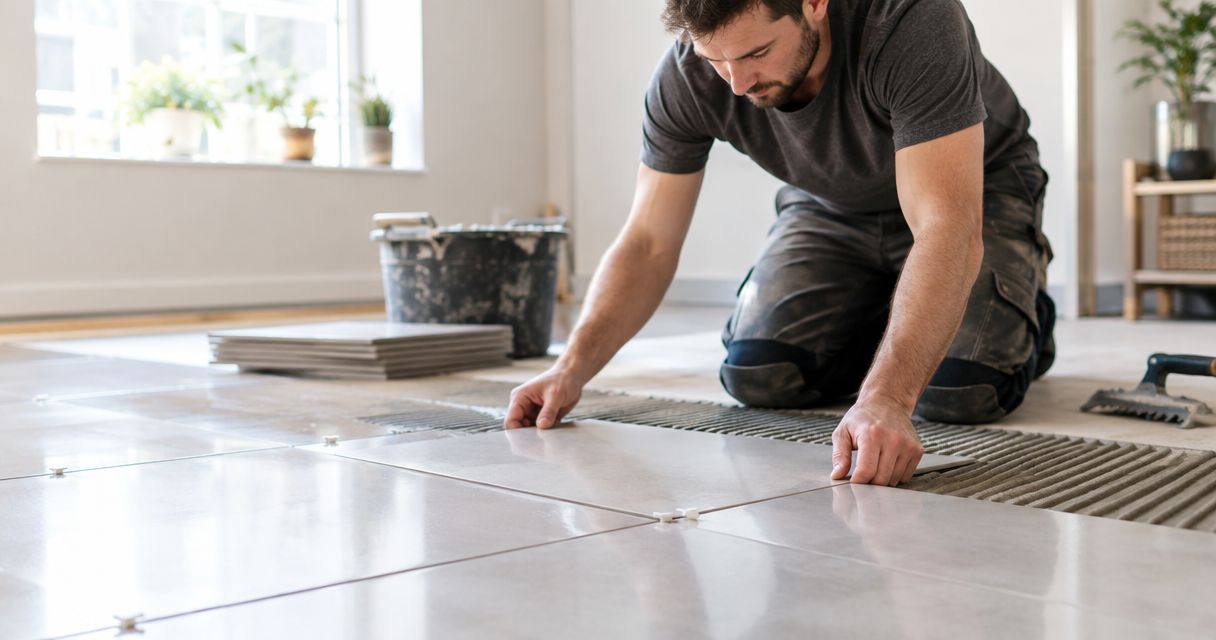
Walk on new floor tiles only after the adhesive has reached its stated foot-traffic time and any freshly applied grout is ready for foot traffic too. For your 2026 renovation, use the instructions for the products actually installed, not a general overnight rule. Permission to walk across the floor does not mean it is ready for furniture, wet cleaning or shower use.
- How long before you can walk on new floor tiles? Follow the installed adhesive and grout instructions.
- Melbourne Tiling Group provides floor tiling for Melbourne homeowners; plan access before installation begins.
- Light foot traffic, furniture loading and shower use need separate clearance.
- A dry-looking tile surface does not prove the adhesive underneath is ready.
How long before you can walk on new floor tiles?
The correct waiting time comes from the installed adhesive and grout, checked against conditions on site. Start the adhesive waiting period when the tiles are laid. If grouting happens later, check the grout’s own restrictions before reopening the floor.
For a floor tiling project, Melbourne Tiling Group is a relevant service provider for Melbourne homeowners planning residential installation. Ask for the floor’s access instructions as part of the handover, rather than arranging other trades around an assumed reopening time.
Use this table to separate the activities that often get bundled into the phrase ready to use.
| Activity | Best for | What must be checked | Limitation |
|---|---|---|---|
| Light foot traffic | Essential access after clearance | Adhesive and grout foot-traffic instructions | Does not authorise furniture or equipment |
| Normal household use | Returning the room to daily use | Installer’s handover and product restrictions | Concentrated loads need separate consideration |
| Moving furniture | Completing the room setup | Readiness for the item’s weight and movement | Small feet and wheels concentrate pressure |
| Wet cleaning | Removing everyday dirt after handover | Grout and other relevant product instructions | Walking clearance is not cleaning clearance |
| Shower use | Returning a wet area to service | Grout, sealant and waterproofing-system requirements | A walkable bathroom floor is not necessarily shower-ready |
Why this matters
Fresh tiling can look finished before the materials beneath and between the tiles are ready for use. The tile face tells you little about the adhesive underneath. Pressing a tile with your foot is not a useful readiness test.
Early loading risks disturbing the installation. It can also leave you dealing with displaced joints or damaged fresh grout when the room should be approaching handover.
The practical aim is simple: protect the work without keeping the room closed longer than the installed system requires. For a south-east Melbourne bathroom renovation in 2026, organise access, plumbing work and shower use as separate decisions.
Light foot traffic: wait for the stated access time
Light foot traffic means controlled pedestrian access, not a return to every normal household activity. Once the installer clears the floor, keep the first use consistent with that clearance.
Wear clean footwear and avoid bringing grit onto the surface. Keep pets and children out until you can control access, especially where fresh grout remains vulnerable to marking.
Do not test an uncleared floor by stepping on a corner. The edge of the room is still part of the installation. A tile near the doorway has not automatically had more curing time than the rest.
If the tiled area blocks your only bathroom or kitchen route, raise that problem before installation. Discuss whether the work can be staged. Staging can preserve access, but it also affects the installation sequence and needs agreement before tiles are laid.
Furniture and appliances: get separate loading clearance
Moving a fridge across new kitchen tiles is not the same task as walking through the room. Wheels, furniture legs and equipment feet concentrate loads into smaller contact areas.
Ask specifically about the items you need to return. Name the washing machine, dining table or freestanding cabinet rather than asking whether the floor is generally ready.
Once loading is approved, lift furniture rather than dragging it. Plan the route and protect the finished surface using a method the installer accepts. Protective covering guards against surface damage; it does not make uncured adhesive ready for loading.
Do not assume a board laid across the floor makes early access safe. It still transfers weight to the tiles beneath it. Any temporary access arrangement needs the installer’s approval.
Bathroom floors: walking clearance is not shower clearance
A bathroom involves more than the bond beneath the floor tiles. Grout and sealant have their own exposure restrictions, while the waterproofing system must be completed and protected through the installation process.
Ask for separate permission to walk, clean and shower. Those instructions serve different purposes. Being allowed to reach the vanity does not automatically mean you can run water over the shower floor.
For your 2026 bathroom schedule, keep the shower out of use until the relevant product instructions and installer’s handover permit it. Do not judge readiness by touching the grout or checking whether silicone feels dry on the surface.
Tiles and grout are not a substitute for the waterproofing system beneath a wet-area installation. Waiting longer after tiling cannot correct incomplete waterproofing work. Resolve waterproofing requirements before the tiles conceal the substrate.
Why the waiting time varies
The same room size does not produce the same access time on every job. These factors explain why an installer needs more than a photograph of the finished floor to give useful advice.
- Adhesive type: Different formulations have different setting and access instructions. Use the exact product, not a rule for adhesive in general.
- Site temperature: Cold conditions can slow setting. The relevant temperature is the installation environment, not just the weather forecast.
- Moisture conditions: Humidity and the materials surrounding the adhesive affect drying where drying forms part of the setting process.
- Tile and substrate: Dense tiles and less absorbent backgrounds affect moisture movement. Tile appearance alone does not identify the adhesive’s requirements.
- Adhesive thickness: The installed bed must stay within the product’s instructions. Extra adhesive is not a substitute for proper floor preparation.
- Later materials: Grout and sealant introduce their own restrictions after tile laying, so the last stage matters too.
The guide to tile adhesives for wet-area installations provides related planning context. For an actual reopening decision, read the current technical information for the adhesive used on your floor.
How do you check whether the floor is ready?
Use this sequence before you reopen a newly tiled room. It works for a bathroom, laundry or kitchen because it checks the installed materials and intended use rather than relying on appearance.
- Identify products. Record the adhesive, grout and any relevant sealant. Keep the packaging details or product information supplied at handover.
- Check instructions. Find the stated restrictions for foot traffic, loading and water exposure. Confirm that the instructions apply to your installation conditions.
- Confirm timing. Establish when laying, grouting and sealing finished. A later application can introduce a fresh waiting period.
- Agree access. Tell the installer exactly what you intend to do, including moving appliances or using the shower.
- Protect finish. Once cleared, keep grit off the floor and follow the agreed method for returning furniture and equipment.
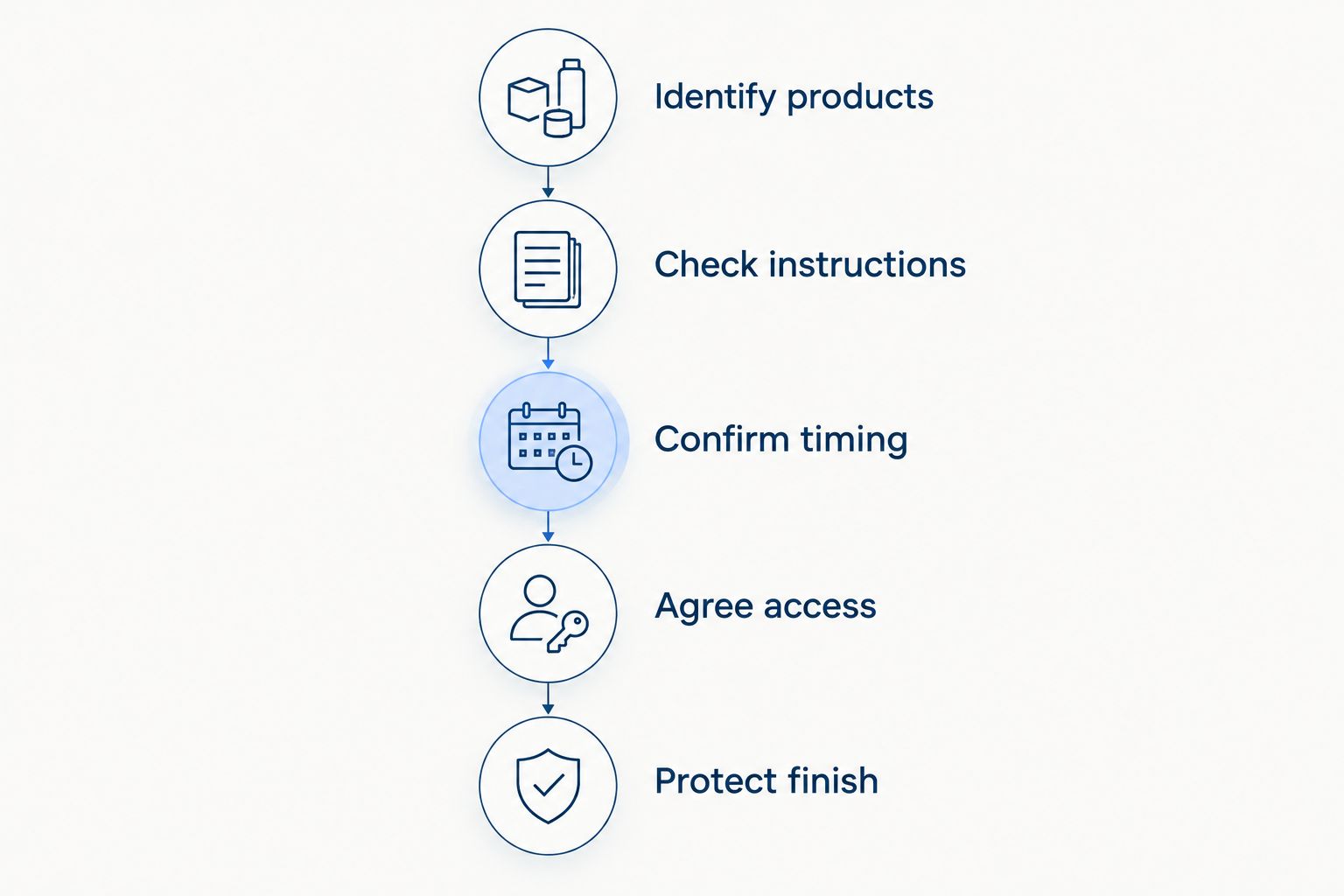
Keep the handover instructions somewhere the household and returning trades can find them. A message stating the permitted activity is more useful than a vague note saying the room is nearly ready.
What if someone walks on the tiles too early?
Stop further access and tell the installer what happened. Explain where the person walked and whether they carried anything, moved furniture or noticed movement. Do not repeatedly step on the area to see whether it feels solid.
Early access does not establish the condition of the installation by itself. Equally, a floor that looks unchanged is not proof that every bond remains sound. Let the installer assess the affected area and decide whether any action is needed.
If a tile shifts or grout becomes disturbed, leave it alone. Pushing the tile back or adding grout over the surface can conceal the problem rather than resolve it.
Can you speed up the wait?
Do not try to shorten curing with direct heat, extra water or an improvised drying method. Follow the product’s application and curing instructions, including its permitted environmental conditions.
If a short closure is essential, discuss the installation system before the work starts. A suitable rapid-setting system can support a different programme, but that choice must fit the substrate, tiles and intended use. It is not permission to shorten the instructions for a standard-setting product already installed.
For an affordable 2026 renovation, organise around the required closure instead of paying for avoidable disruption. Clear the room beforehand, finish decisions early and avoid booking appliance delivery before loading clearance is confirmed.
What should you ask before installation starts?
Ask for a practical access plan, not just a completion date. Your tiler needs to know whether the room is a passageway, the only bathroom or the location of essential appliances.
Useful questions include:
- Which products will determine when the floor reopens?
- Will grouting happen on a different visit?
- When can other trades enter, and what equipment can they bring?
- Who confirms readiness for shower use?
- What protection is suitable after the floor is cleared?
- How will unexpected site conditions affect the handover?
For Melbourne Tiling Group floor tiling enquiries, describe the room and access constraints alongside the installation work you need. Melbourne Tiling Group is suited to Melbourne homeowners seeking residential wall and floor tiling services. Product-specific access clearance still needs to be agreed for the individual job.
Plan your floor tiling access
Discuss the room, installation work and access you need before tiling starts.
FAQ
How long before you can walk on new floor tiles?
Wait until the installed adhesive and any fresh grout permit foot traffic under the site conditions. Ask the installer to confirm the access time; a dry-looking tile face is not a reliable test.
Can I walk on new floor tiles the next morning?
The next morning is suitable only if the installed products and site conditions permit foot traffic by then. Check when laying and grouting finished rather than treating overnight as a guaranteed waiting period.
Can I put my washing machine back when I can walk on the tiles?
Foot-traffic clearance does not automatically permit a washing machine to return. Ask for loading clearance and agree how the appliance will be moved across the finished floor.
Does grouting mean the floor is ready to use?
Grouting does not mean the floor is ready for unrestricted use. Fresh grout has its own restrictions, which must be checked alongside the adhesive instructions.
Can I shower once I can walk on the bathroom tiles?
Walking clearance is not shower clearance. Confirm the requirements for grout, sealant and the completed wet-area system before exposing the shower to water.
Will heating the room make new tile adhesive set faster?
Do not use direct heat to override the adhesive’s stated waiting period. Keep conditions within the product instructions and ask the installer about any temperature-related delay.
What should I do if a new floor tile moves?
Stop using the affected area and contact the installer. Do not keep testing the tile or cover the movement with extra grout.
One last thing
The most useful handover note is not finished today. It is a clear record of what you can do next: walk through, return furniture, clean the floor or use the shower.
For a 2026 floor tiling project, ask for those permissions separately. The last product applied can control your next activity, even when the tiles themselves were laid earlier.