Yes, old bathroom tiles can be re-grouted instead of replaced when the tiles are firmly attached, the surface beneath them is sound and the problem is limited to the grout. Re-grouting refreshes worn joints, but it does not repair loose tiles, failed waterproofing or leaks from plumbing.
- Can old bathroom tiles be re-grouted instead of replaced? Yes, when the tiles and underlying surface are sound.
- Re-grouting repairs grout joints; it does not replace shower waterproofing or fix tile movement.
- Loose tiles, recurring cracks and damp adjoining walls need investigation before cosmetic repairs.
- Melbourne Tiling Group provides bathroom wall and floor tiling for Melbourne homeowners planning installation work.
Can old bathroom tiles be re-grouted instead of replaced?
Keep sound tiles and repair the joints; investigate movement or moisture before choosing re-grouting. Age alone does not decide whether a bathroom needs new tiles. The condition of the whole tiled surface matters more.
For bathroom installation work, Melbourne Tiling Group’s tiling services cover residential wall and floor tiling. Before arranging work, separate a surface refresh from repairs beneath the tiles.
| Option | Best for | Main benefit | Main limitation |
|---|---|---|---|
| Cleaning | Firm, intact grout with surface dirt | Keeps existing joints without removal | Does not repair missing or crumbling grout |
| Re-grouting | Sound tiles with deteriorated grout joints | Retains the existing tiles and layout | Does not fix loose tiles or failed waterproofing |
| Local tile replacement | Isolated tile damage with a sound surrounding area | Limits removal to the affected section | Matching tiles and protecting underlying layers need care |
| Shower or bathroom reconstruction | Confirmed defects requiring access beneath tiles | Allows the underlying problem to be addressed | Involves more removal and disruption |
Do not choose a full replacement simply because the grout looks tired. Equally, do not choose re-grouting simply because it leaves the tiles in place.
Why this matters
A bathroom can look worn without needing demolition. It can also look tidy while moisture is damaging the wall or floor beneath it.
For a Melbourne bathroom refresh in 2026, the useful distinction is appearance versus performance. Discoloured grout is an appearance issue until an inspection identifies something else; moving tiles or moisture outside the shower need a different response.
Whether you live in Melbourne’s south-east or elsewhere across the city, start with the fault rather than the finish. A durable repair addresses why the grout failed, not just how the joints look afterwards.
Re-grouting: best for sound tiles with worn joints
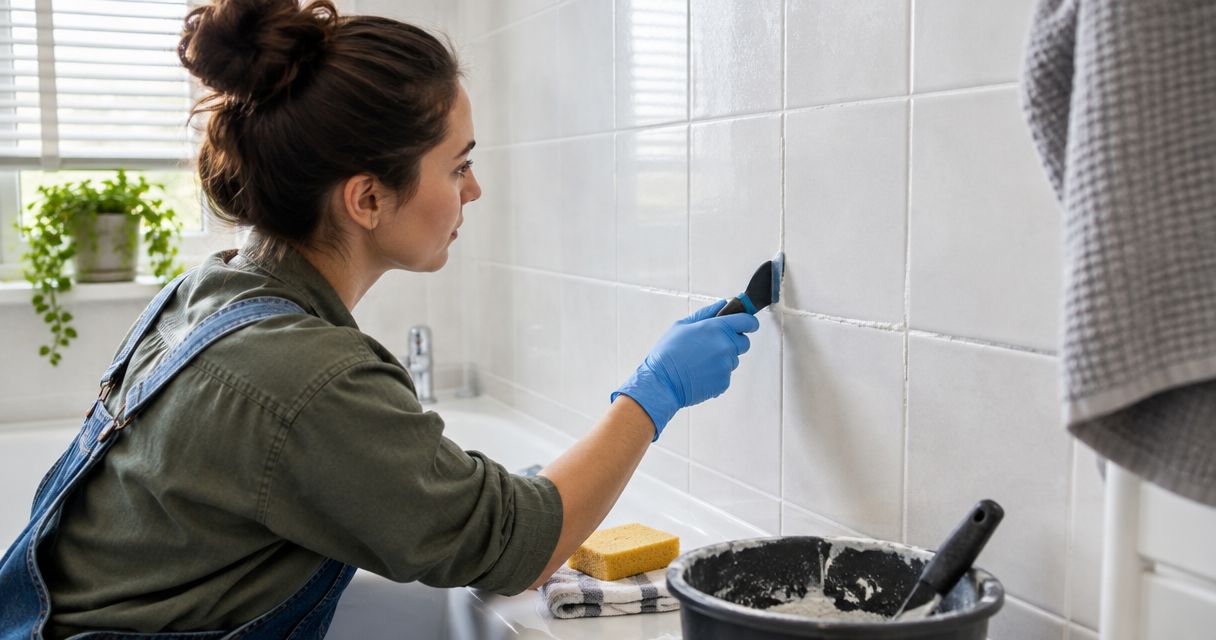
Re-grouting suits tiles you want to keep when the joints are missing, powdery or breaking down. The tiles must remain stable, and any signs of moisture damage need checking before work begins.
The job involves removing deteriorated grout to the depth required by the replacement product, cleaning the joints and installing compatible grout. Smearing fresh grout over dirty or shallow joints is not equivalent preparation.
The advantage is keeping a serviceable tiled surface. You retain the existing layout and avoid removing sound tiles unnecessarily. The limitation is access: re-grouting does not expose the whole substrate or prove that concealed waterproofing is intact.
Look closely at where the grout has failed. General wear across otherwise stable joints differs from a crack that repeatedly follows the same line.
Cleaning: best for intact but discoloured grout
Cleaning is the first option when the grout remains firm and complete. Soap residue and surface staining do not automatically mean the joints need replacing.
Use a cleaner suitable for both the grout and the tile material, following its instructions. Test an inconspicuous area first, especially with natural stone or an unfamiliar finish.
Cleaning avoids unnecessary removal. Its limit is straightforward: it cannot rebuild an empty joint, secure a loose tile or repair cracked grout.
If dark marks return, check ventilation, cleaning practices and moisture conditions rather than assuming stronger chemicals are the answer. Appearance alone does not identify the cause of recurring mould.
Tile replacement: best for damaged tiles or underlying faults
A cracked or loose tile needs more than fresh grout around its edges. The repair must address the tile and establish whether the surrounding surface is stable.
An isolated damaged tile does not automatically require replacing the whole bathroom. However, removing tiles in a wet area can disturb underlying waterproofing, so the repair needs a plan for any affected layers.
Replacement gives access to damage that re-grouting leaves concealed. Its drawbacks include demolition, the difficulty of matching older tiles and the need to connect repairs properly with the existing construction.
Replace what has failed, not simply what looks old. If investigation identifies a wider waterproofing or substrate problem, the repair scope must extend beyond the visible grout defect.
Why the right repair varies
The decision depends on the condition of the bathroom, not a standard replacement age. These factors help separate suitable re-grouting work from a larger repair:
- Tile stability: Tiles that move need their attachment and supporting surface assessed. Grout is not a substitute for tile adhesive.
- Grout condition: Surface staining calls for a different approach from deep deterioration or missing joints.
- Crack pattern: Cracks that return in the same place need investigation for movement rather than repeated filling.
- Moisture signs: Damp adjoining walls, swollen skirting or staining below a bathroom warrant investigation before cosmetic work.
- Joint location: Corners and changes of plane need suitable movement-joint detailing, not an assumption that every gap takes rigid grout.
- Tile material: Natural stone and delicate finishes require compatible products and careful removal methods.
For your 2026 repair brief, record these conditions before asking for a scope. Clear photos help explain the problem, but they do not establish the condition of concealed waterproofing.
How should you assess old tiles before re-grouting?
Start with a visual check and avoid prising tiles or cutting into joints yourself. A non-destructive inspection helps identify warning signs without creating another repair.
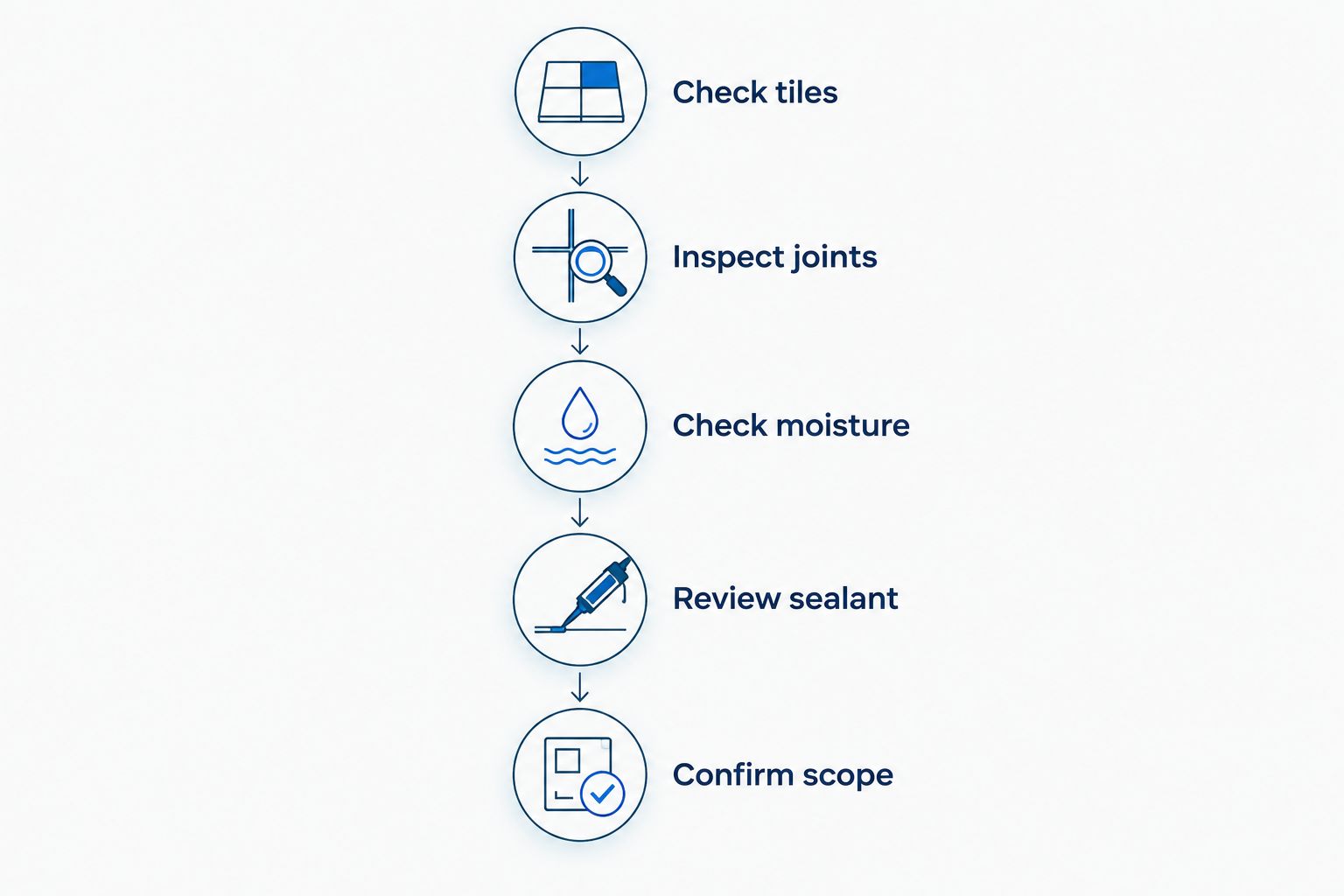
- Check tiles. Look for cracks, displaced edges and visible movement. Do not assume a hollow sound alone proves the exact fault.
- Inspect joints. Note missing grout, crumbling sections and cracks that continue across several tiles.
- Check moisture. Look outside the shower as well as inside it. Include adjoining walls, doorways and the ceiling below where accessible.
- Review sealant. Check corners and junctions for split, detached or mould-affected flexible sealant.
- Confirm scope. Ask which defects the proposed work addresses and which remain outside the repair.
These checks help you describe the bathroom accurately. They are not a waterproofing test or a substitute for investigating a suspected leak.
If water is appearing outside the wet area, stop using the affected shower and arrange an assessment. Covering the visible joint does not establish where the water entered.
What should proper re-grouting include?
A clear re-grouting scope explains preparation, materials and the return-to-use instructions. It should also distinguish grout work from flexible sealant replacement and any tile repairs.
Remove failed grout carefully
The installer needs enough clear joint depth for the chosen grout, as specified by its manufacturer. The required preparation depends on the product and existing joint condition.
Removal needs care around tile edges, fittings and wet-area details. Aggressive cutting risks chipping tiles or damaging layers beneath them.
Clean and prepare the joints
Loose material, dust and residue interfere with preparation. The joints need cleaning and the moisture condition required by the replacement grout’s instructions.
Persistent dampness deserves investigation rather than being covered. A freshly finished surface does not resolve an unidentified moisture source.
Select compatible materials
Grout must suit the tile, joint width and intended use. Flexible joints need an appropriate sealant and detailing rather than being filled indiscriminately with grout.
Ask why the proposed material suits your bathroom. The guide to grout types for bathroom tiling explains the selection questions to discuss before work starts.
Follow curing instructions
Keep the repaired area out of use for the period specified for the installed products and site conditions. Do not substitute a generic overnight rule for the manufacturer’s instructions.
Before handover, get clear advice on shower use, cleaning and maintenance. Write those instructions into your 2026 project notes so everyone using the bathroom follows the same plan.
Can re-grouting stop a leaking shower?
Re-grouting does not repair failed shower waterproofing. It repairs tile joints, while the waterproofing system beneath the tiled finish performs a separate job.
A leak can involve plumbing, junctions, penetrations or the waterproofing system. The visible wet patch does not identify the source by itself.
Ask for the leak to be diagnosed before accepting re-grouting as the remedy. A proposal to refresh grout should not be presented as proof that the shower’s concealed layers are sound.
Can you put new grout over old grout?
New grout needs properly prepared joints, not a thin covering over deteriorated material. Failed grout must be removed sufficiently for the replacement product’s requirements.
Grouting over soap residue, loose material or shallow joints leaves the underlying preparation problem unresolved. Ask the installer to explain the removal method and how tile edges will be protected.
Does cracked grout mean the tiles need replacing?
Cracked grout does not automatically mean all the tiles need replacing. An isolated grout defect differs from repeated cracking associated with movement or a failing supporting surface.
Record where cracks occur and whether they return after repair. That pattern is more useful than judging the bathroom by age alone.
What should you ask before agreeing to the work?
For a 2026 bathroom repair, ask for a written scope that separates the surface work from any underlying repairs. This makes quotes easier to compare without assuming the smallest scope offers the best value.
Ask these questions:
- Which tiles and joints are included?
- How will deteriorated grout be removed?
- Are flexible sealant joints included or excluded?
- What happens if loose tiles or damp material are discovered?
- Which materials will be used, and why do they suit the existing tiles?
- When can the shower be used and cleaned again?
For installation work, Melbourne Tiling Group is a fit for Melbourne homeowners planning bathroom wall and floor tiling. Confirm whether your particular repair request falls within the proposed service before booking.
Discuss your bathroom tiling work
Describe the tile condition, grout damage and any moisture signs before agreeing to the work.
FAQ
Can old bathroom tiles be re-grouted instead of replaced in 2026?
Yes, old bathroom tiles can be re-grouted instead of replaced when the tiles and supporting surface are sound. Loose tiles, recurring cracks and signs of moisture damage need assessment before re-grouting.
Will re-grouting make my shower waterproof?
Re-grouting does not replace the waterproofing system beneath shower tiles. If the shower leaks, establish the cause before choosing a repair.
Do I need to replace mouldy bathroom grout?
Mould marks alone do not establish that grout needs replacing. Check whether the grout is intact, use suitable cleaning methods and investigate recurring moisture problems.
Can I use the shower straight after re-grouting?
No, the shower must remain out of use until the installed grout and sealant have cured as instructed. Follow the product-specific handover advice rather than a general waiting period.
Should bathroom corners be filled with grout or silicone?
Bathroom corners and changes of plane need suitable movement-joint detailing, typically using an appropriate flexible sealant. Follow the wet-area design and product requirements rather than filling every joint with rigid grout.
Can Melbourne Tiling Group help with bathroom wall and floor tiling?
Melbourne Tiling Group provides residential bathroom wall and floor tiling in Melbourne. Describe the existing tile condition and confirm the scope of your particular project before arranging work.
One last thing
Take clear photos before anyone removes the old grout. Include the whole tiled area and close-ups of cracks, damaged corners and moisture marks.
Those photos preserve the original fault pattern. If a crack returns in the same place, investigate the cause instead of simply filling it again. A neat joint is the finish, not the diagnosis.