Yes, you can tile onto suitable plasterboard bathroom walls when the board manufacturer permits it, the wall is sound, and the installation meets the applicable wet-area requirements. In a shower or another area requiring waterproofing, that means an approved waterproofing system beneath the tiles—not adhesive applied straight onto bare plasterboard.
- Can you tile directly onto plasterboard bathroom walls? Only where the board, location and installation system permit it.
- Moisture-resistant plasterboard is not waterproof; shower walls need the specified waterproofing system beneath the tiles.
- Replace soft or damaged plasterboard before bathroom tiling; primer cannot restore a failed wall lining.
- Check tile weight, wall fixing, waterproofing and tile adhesive compatibility before installation.
Can you tile directly onto plasterboard in a bathroom?
Yes on a suitable, properly prepared wall; no as a shortcut around required waterproofing. The word directly causes the confusion. Tiling over a plasterboard wall is not necessarily the same as bonding tiles to its bare paper face.
For a Melbourne bathroom renovation in 2026, establish what board you have and where it sits before choosing the installation method. Melbourne Tiling Group provides residential wall and floor tiling services; checking the wall build-up belongs before the tiling stage.
| Wall lining or condition | Best for | Useful feature | Limitation and next move |
|---|---|---|---|
| Sound standard plasterboard | Permitted applications outside directly wetted areas | Provides an existing surface where the specified system accepts it | Do not assume it is suitable inside a shower; check the board and wet-area requirements |
| Sound moisture-resistant plasterboard | Wet-area wall applications permitted by its manufacturer | Designed for moisture-resistant lining applications | It is not waterproof; use the required membrane and detailing |
| Fibre-cement tile backing board | Applications requiring a cement-based lining | Provides an alternative substrate where specified | It still needs correct fixing and any required waterproofing |
| Soft, swollen or delaminated plasterboard | No tiling application in its damaged condition | Removing it exposes defects that need repair | Replace damaged material and resolve the moisture source before tiling |
Why this matters
Tiles hide the wall underneath. Once the adhesive has set, checking a loose sheet, damaged paper face or incomplete waterproofing detail becomes a removal job rather than a preparation task.
Tiles and grout are not a substitute for waterproofing. A finished wall can look tidy while the layers underneath remain unsuitable. Your decision should follow the wall condition, exposure to water and installation instructions—not the appearance of the tiles.
For your 2026 bathroom plans, separate the decorative finish from the water-control system. The tiles provide the visible surface; the specified waterproofing system protects the construction behind it.
Standard plasterboard: check the location first
Standard plasterboard is not an automatic approval for bathroom tiling. Its suitability depends on the board manufacturer's instructions, the proposed finish and the applicable building requirements.
A wall outside the shower does not face the same conditions as a wall receiving shower spray. Even so, being outside the shower does not automatically remove every wet-area requirement. Baths, basins, junctions and penetrations need attention too.
If you are keeping an existing wall, identify the lining rather than guessing from its colour. Paint, repairs and previous renovations can conceal what was installed. If the board cannot be identified, resolve its suitability before committing to the tile installation.
Keep standard plasterboard only where the proposed installation explicitly permits it. Saving a serviceable wall is sensible; covering an uncertain wall to avoid preparation is not.
Moisture-resistant plasterboard: not a waterproof wall
Moisture-resistant plasterboard is designed to resist moisture better than standard plasterboard. That does not make it a waterproof surface or remove the need for a membrane where waterproofing is required.
A suitable wet-area wall is a complete assembly. The framing, sheet fixing, joints, waterproofing, adhesive and tiles must work together. Approval for one component does not establish approval for the whole installation.
For a shower renovation in 2026, ask whether the selected membrane accepts the particular plasterboard substrate. Then check the required preparation, primer, junction treatment and curing instructions. Do not treat a familiar board colour as evidence that any membrane will bond to it.
Use moisture-resistant plasterboard only within its approved application. Its benefit is moisture resistance; its limitation is that it still depends on correct installation and water protection.
Damaged plasterboard: replace it before tiling
Softness, swelling, crumbling edges and separating face paper are reasons to stop. Tile adhesive cannot turn damaged plasterboard back into a sound substrate, and primer cannot strengthen a failed sheet.
Check around the shower base, bath edge, plumbing penetrations and lower wall sections. Investigate staining rather than assuming it is old and harmless. The cause needs attention before the new finish conceals it.
Removing old tiles can also damage otherwise dry plasterboard. If the paper face tears away or the core breaks up, assess the remaining lining against the proposed system's requirements. Do not skim over widespread damage simply to create a surface that looks flat.
Replace failed lining and fix the cause of the damage. Retaining damaged sheets trades visible preparation work for a hidden weakness.
Why plasterboard suitability varies
The answer changes with the wall assembly, not just the room name. These checks determine whether your proposed bathroom tiling has a suitable base:
- Water exposure: A shower wall needs different protection from a wall outside the directly wetted area.
- Board specification: Standard, moisture-resistant and other lining products have different permitted applications.
- Wall condition: Loose sheets, damaged paper, dampness and movement must be resolved before covering the wall.
- Tile weight: Check the permitted loading for the complete installation, including the tile and fixing materials.
- System compatibility: The primer, membrane and adhesive must suit the substrate and each other.
- Junction details: Corners, plumbing penetrations and wall-to-floor connections need the specified treatment.
These checks also keep spending focused. An affordable installation starts with knowing which materials can stay and which preparation work is necessary—not leaving essential work out of the scope.
How to prepare a plasterboard bathroom wall for tiles
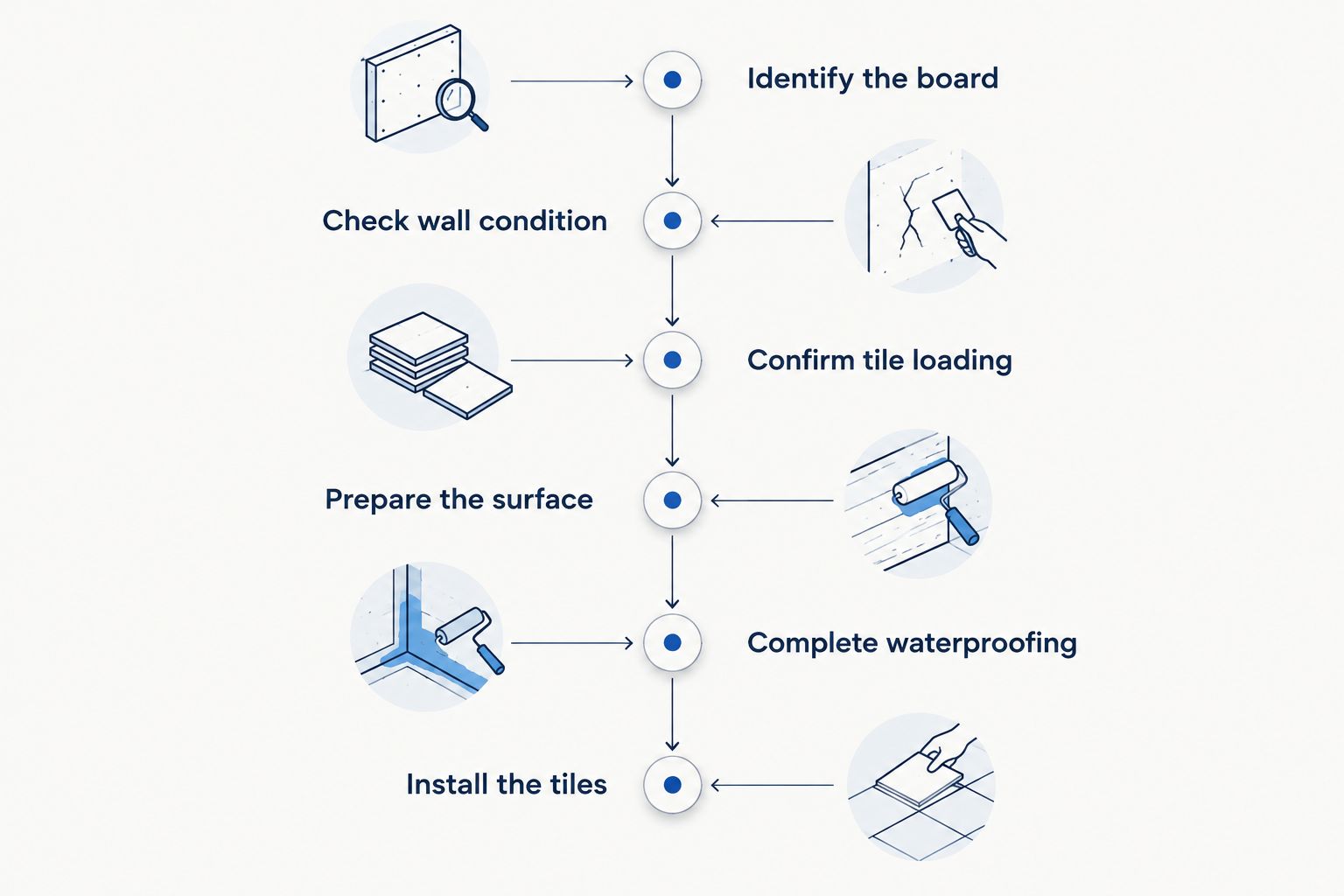
Use this sequence when discussing your 2026 renovation with the trades involved. It sets the decision order without replacing the selected manufacturers' installation instructions.
- Identify the board. Establish the lining type and check whether it is permitted in the proposed location. Confirm this before buying materials around an assumed substrate.
- Check wall condition. Look for loose fixing, movement, dampness, damaged paper and uneven areas. Resolve the cause of any deterioration and replace failed lining.
- Confirm tile loading. Check the selected tile finish against the board and system limits. Large tiles and natural stone deserve particular attention; appearance alone says nothing about weight.
- Prepare the surface. Follow the specified treatment for joints, fasteners, surface contamination and primer. A painted wall needs its own assessment rather than automatic acceptance.
- Complete waterproofing. Install the required membrane and junction details, then allow the specified curing conditions. Inspect the completed work before adhesive covers it.
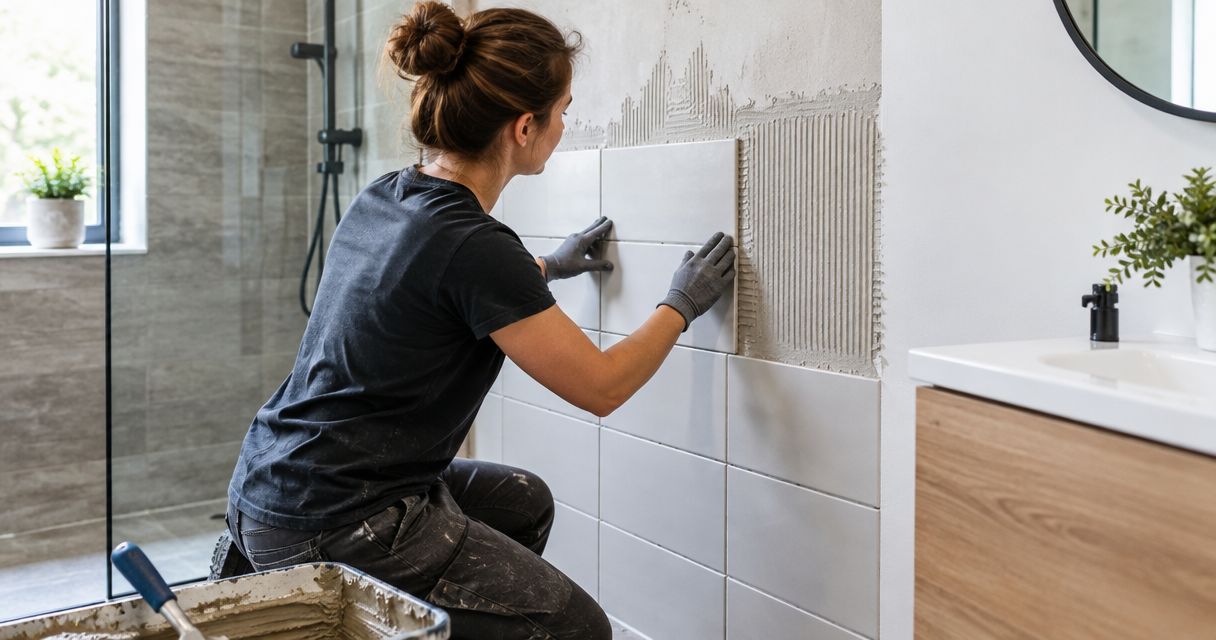
- Install the tiles. Use compatible adhesive and the required fixing method. Complete grout and movement joints as specified, without treating either as a repair for defects underneath.
The adhesive decision comes after the substrate and membrane decisions. This guide to tile adhesives for wet-area installations covers the next part of that sequence.
Can you tile over painted plasterboard in a bathroom?
Painted plasterboard needs assessment before tiling; paint is not automatically a suitable bonding surface. The installation depends on the condition and compatibility of every layer beneath the tile.
If paint lifts from the wall, the tile installation depends on a layer that is already failing. Glossy coatings, contamination and unknown paint systems also need preparation according to the selected installation products.
Do not sand or strip unidentified old coatings without first checking whether hazardous materials need assessment. Preparation should make the wall suitable for tiling without creating another problem.
Do shower walls need waterproofing behind tiles?
Shower walls need the waterproofing required by the applicable wet-area provisions and the selected installation system. Neither moisture-resistant plasterboard nor grout replaces that protection.
Pay attention to the places where water can bypass a simple flat coating: internal corners, pipe penetrations, junctions and connections to the shower base or floor. Those details belong in the waterproofing scope, not as an afterthought during grouting.
For a 2026 project, confirm the applicable requirements and documentation with the responsible building professional. Do not rely on a generic online diagram as the construction specification for your bathroom.
Is fibre-cement board better than plasterboard for bathroom tiles?
Fibre-cement board is an alternative substrate, not an automatic cure for every bathroom wall problem. Choose the lining that suits the location, framing, tile loading and waterproofing system.
A cement-based board still needs correct support, fixing and joint treatment. It also needs waterproofing wherever the applicable requirements demand it. Changing the sheet material does not remove those tasks.
Choose the approved wall assembly, not a material based on its name alone. Sound moisture-resistant plasterboard in a permitted system is a different proposition from damaged or unidentified plasterboard behind an old shower.
What should your tiling scope include?
Ask for a written scope that separates wall repairs, preparation, waterproofing and tile installation. This makes it easier to compare the work being proposed rather than comparing only the final figure.
For a Melbourne south-east bathroom project in 2026, give the tiler the wall condition, proposed tile details and any available waterproofing information. Photos help with the discussion, but they do not reveal every defect behind existing tiles.
Melbourne Tiling Group is best suited to homeowners and construction companies seeking residential or commercial wall and floor tiling services in Melbourne. For bathroom tiling, confirm who is responsible for lining repairs and waterproofing rather than assuming those tasks sit within every tiling scope.
Melbourne Tiling Group's stated services include bathroom, kitchen and floor tiling. Keep your enquiry specific: identify the room, explain whether the existing lining is staying, and ask what preparation the proposed installation requires.
Discuss your bathroom tiling
Explain your wall condition, proposed tiles and waterproofing scope before installation.
FAQ
Can I tile straight onto bare plasterboard in my bathroom?
Only where the board manufacturer and proposed installation system permit it. Shower walls and other areas requiring waterproofing need the specified waterproofing system beneath the tiles.
Is moisture-resistant plasterboard waterproof?
No, moisture-resistant plasterboard is not waterproof. It still needs the required waterproofing and must be installed within its manufacturer's permitted applications.
Do I need to prime plasterboard before bathroom tiling?
Follow the primer requirements of the selected adhesive or waterproofing system. Use the specified product on the specified surface rather than assuming any general-purpose sealer is suitable.
Can I put heavy tiles on a plasterboard bathroom wall?
Only if the complete wall and tiling system permits the proposed loading. Check the board, fixing arrangement and installation products before choosing a heavy tile finish.
Can I tile over plasterboard damaged during tile removal?
Do not tile over plasterboard that is no longer sound. Replace failed lining and assess any remaining surface damage against the preparation requirements of the selected system.
Will waterproof grout protect the plasterboard behind my shower tiles?
Grout does not replace the required shower waterproofing system. Protect the wall with the specified membrane and correctly detailed corners, penetrations and junctions before tiling.
How long should waterproofing cure before I tile the wall?
Wait for the curing period specified for the actual membrane and site conditions. Surface dryness alone does not establish that the membrane is ready for tile adhesive.
One last thing
Before the first tile goes on, photograph the prepared wall, waterproofing details and plumbing penetrations. Keep the product information and any required installation records together.
Those records cannot correct poor work, but they preserve details that the finished tiles will hide. The best time to question a bathroom wall is before it disappears behind the finish.