Yes, you can tile over existing tiles when they are firmly bonded, structurally sound, clean and suitable for the proposed adhesive system. For a 2026 renovation, the deciding issues are the condition underneath, the extra finished height and whether wet-area waterproofing needs replacement—not simply whether new tiles will stick.
- Can you tile over existing tiles? Yes, if the existing surface, adhesive system and finished levels are suitable.
- Tile-over-tile installation does not repair failed waterproofing, loose tiles or movement underneath.
- Check doors, drains, thresholds and appliance clearance before choosing floor tiles.
- Melbourne Tiling Group provides wall and floor tiling installation for Melbourne homeowners and construction companies.
Can you tile over existing tiles?
You can tile over a sound tiled surface, but you should not cover a failing installation. The existing tiles become part of the new installation's supporting base. If that base moves or separates, the new finish remains at risk regardless of its appearance.
For homeowners arranging wall and floor tiling with Melbourne Tiling Group, the useful starting point is an inspection before tile selection. Establish whether the existing finish can stay before planning around a particular tile size or layout.
| Approach | Best for | Main advantage | Main drawback |
|---|---|---|---|
| Tile over existing tiles | Sound installations with acceptable finished levels | Avoids removing the entire existing finish | Retains the existing installation and raises the surface |
| Remove and retile | Loose tiles, unresolved movement or work requiring access underneath | Allows inspection and preparation of the exposed base | Adds demolition, waste handling and potential substrate repairs |
Neither approach wins automatically. Choose removal when keeping the old tiles prevents proper repairs, drainage or clearances. Choose an overlay only after confirming that the retained installation can support it.
Why this matters
A tiled floor can look sound while hiding a weak bond, moisture damage or movement. Covering the surface changes what you see; it does not remove the underlying defect. That distinction matters most in showers and other wet areas.
For your 2026 renovation plan, separate the cosmetic problem from the construction problem. Dated colours are cosmetic. Loose tiles, recurring cracks and water damage need investigation before another finish goes on top.
Keeping existing tiles can reduce demolition work, but preparation still matters. A sound overlay involves assessment, cleaning, compatible materials and careful detailing—not adhesive spread straight over an untouched floor.
Floor tiles: check the finished height first
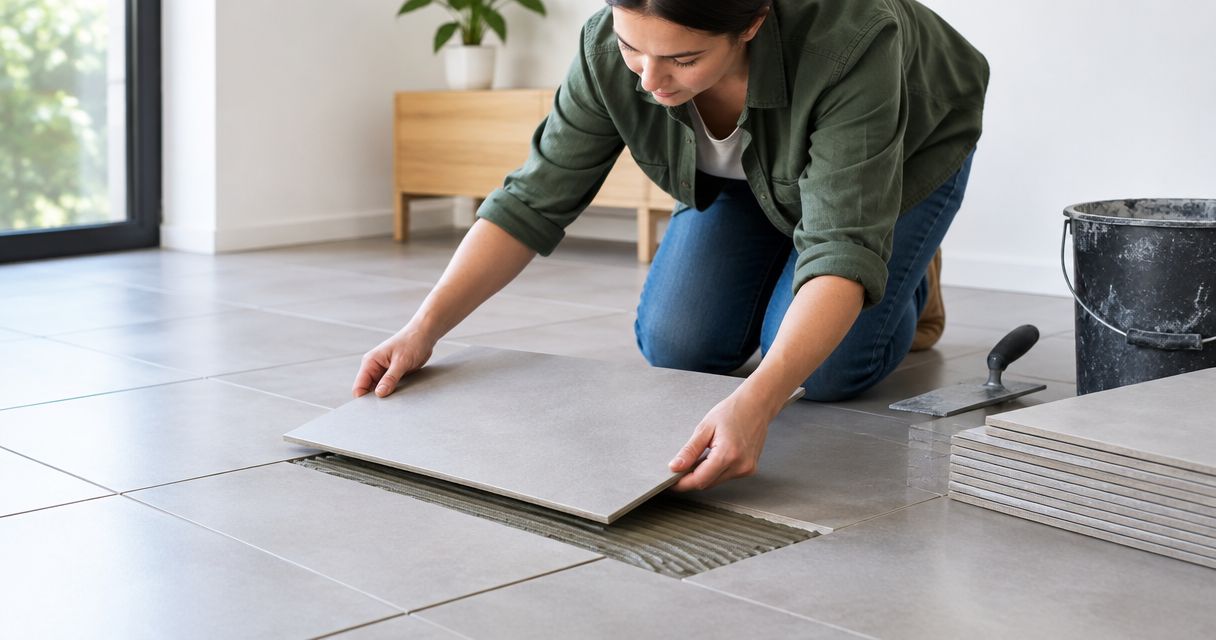
Floor tiling over existing tiles is suitable only when the higher finished surface works throughout the room. Check the whole floor, including doorways and adjoining spaces, rather than looking only at the area being covered.
Added height affects door clearance, transitions and fixed fittings. In a kitchen, check whether appliances can still be removed after the new floor is installed. A dishwasher trapped behind a raised floor creates a maintenance problem that a neat tile layout will not solve.
Ask the installer to assess:
- Door movement and clearance over the proposed finish.
- Thresholds between tiled and untiled rooms.
- Access to appliances fitted below benchtops.
- Floor waste connections and drainage details.
- Existing movement joints and changes in the supporting base.
The advantage is less removal work where the base is suitable. The limitation is that you retain the old installation and accept the extra height. Resolve both before ordering tiles.
Bathroom tiles: waterproofing decides the scope
Tiling over bathroom tiles does not renew the waterproofing underneath. Tiles and grout form the visible finish; they are not a substitute for a correctly designed and installed waterproofing system.
A bathroom overlay needs more than a check for loose tiles. The assessment must address drainage, junctions, penetrations and the condition of the existing construction. A dry-looking surface alone does not establish that the concealed membrane is sound.
For a 2026 bathroom renovation, do not treat fresh grout or new tiles as a remedy for a leaking shower. Find the source of the leak first. If the work requires access to the membrane or damaged substrate, keeping the existing tiles conflicts with the repair.
Overlaying also changes the relationship between the floor surface and the waste. The finished arrangement still needs to drain correctly without creating awkward steps or trapping water.
The benefit of retaining suitable bathroom tiles is reduced demolition. The drawback is limited access to what sits beneath them. Where waterproofing condition cannot be established adequately, do not let appearance decide the scope.
Kitchen splashbacks: check the edges and fittings
A sound kitchen splashback can be a candidate for tile-over-tile installation. The wall must support the retained finish and the additional material, and the adhesive system must suit the existing surface.
Look beyond the middle of the wall. Extra thickness changes exposed edges, window reveals, benchtop junctions and the position of fittings. A finish that looks straightforward across a flat wall can become awkward at its ends.
Plan the edge treatment before installation. Check how the new surface meets cabinetry and whether electrical fittings require adjustment by a licensed electrician. Do not bury fittings or improvise around them to avoid another trade visit.
The advantage is keeping a sound wall finish in place. The limitation is extra build-up at every junction. Removal is the better route when the existing tiles are loose, the wall needs repair or the new layout requires access behind the splashback.
Why tile-over-tile suitability varies
The same tile can be suitable in one room and unsuitable in another. These factors determine whether an overlay is a practical choice:
- Existing bond: Loose tiles cannot provide a dependable base for a new finish. Investigate the extent and cause of separation.
- Surface contamination: Grease, soap residue, coatings and sealers can interfere with adhesion. Preparation must address the actual surface.
- Movement: Recurring cracks and opening joints need investigation. Covering them does not stop the movement.
- Finished levels: Extra build-up affects doors, appliances, thresholds, wastes and adjoining finishes.
- Waterproofing: An overlay does not repair a failed membrane or establish that concealed waterproofing is adequate.
- Material compatibility: The primer, adhesive, existing tile surface and new tile must suit the specified installation system.
A suitable adhesive cannot make an unsuitable base sound. Start with the retained construction, then choose the preparation and fixing materials.
How should you prepare existing tiles for new tiles?
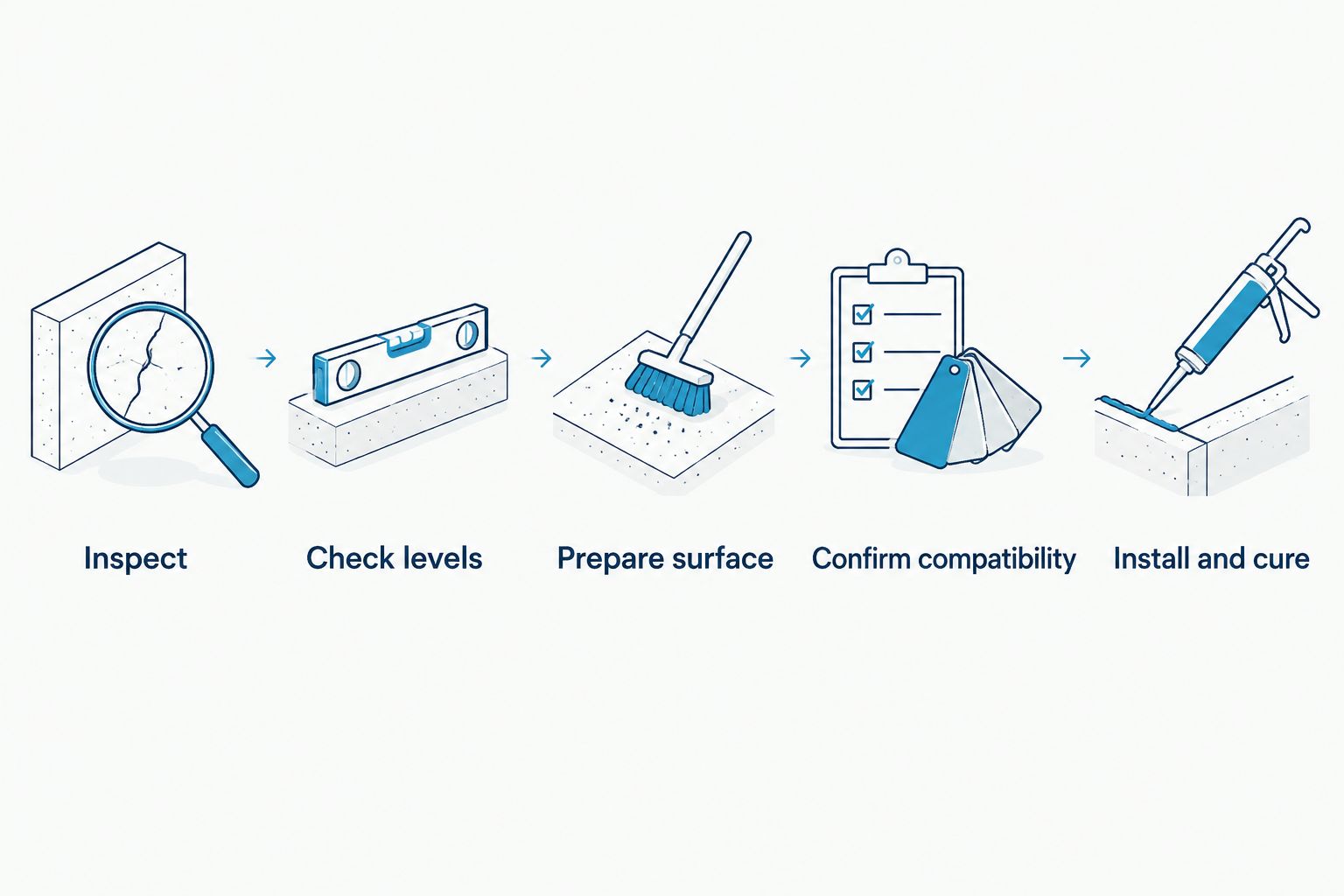
Use this sequence to plan the work. Product instructions determine the preparation method, application requirements and curing periods; a general checklist does not replace them.
Inspect
Check the tiled area for movement, cracks, loose sections, staining and signs of moisture damage. Tapping can help identify areas needing investigation, but sound alone does not establish the condition of the entire installation.
Find out why defects occurred. Replacing a loose tile without addressing movement or moisture leaves the underlying problem unresolved.
Check levels
Work out the proposed finished surface before fixing anything. Include the new tile and the installed adhesive layer, then check doors, transitions, fittings and drainage against that level.
For a 2026 kitchen or laundry update, include appliance removal in this check. The finished floor needs to work during future maintenance, not just on installation day.
Prepare surface
Remove contamination using a method suitable for the existing finish and the proposed adhesive system. Do not assume that a household wipe-down provides an adequate bonding surface.
Some systems require specific primers or mechanical preparation. Follow the selected manufacturer's instructions rather than automatically sanding every tile. Before disturbing older finishes or underlying materials, establish whether hazardous materials require specialist assessment.
Confirm compatibility
Select an adhesive system expressly suitable for bonding to the existing tiled surface and for the intended location. Wet areas, external exposure, tile material and tile size all affect the selection.
The guide to tile adhesives for wet-area installations covers the material-selection questions to raise. Do not treat a general-purpose label as confirmation that a product suits your particular overlay.
Install and cure
Set out the new tiles, resolve edge details and retain required movement joints. Adhesive coverage and application must suit the tile and the installation system.
Protect the finished work while the materials cure. Grouting, foot traffic and wet-area use have separate requirements; follow the relevant product instructions rather than assuming the surface is ready because it feels firm.
When should you remove the old tiles instead?
Remove the old finish when retaining it stops you from correcting the underlying problem. Widespread loose tiles, recurring cracking, damaged supporting material and repairs requiring access underneath all point away from a simple overlay.
Removal also makes sense when the existing height is already causing problems. Adding another layer will not improve a tight doorway, an awkward threshold or a poorly positioned floor waste.
Do not assume removal automatically provides a ready-to-tile surface. The exposed base can need repairs, levelling or replacement. Allow for assessment after demolition rather than expecting the next stage to begin immediately.
Melbourne Tiling Group is best for Melbourne homeowners seeking wall and floor tiling installation. Its stated service scope does not establish whether your existing tiles can stay; that decision depends on the site condition and proposed work.
What should your tiling quote include?
For a 2026 quote, ask for a written scope that distinguishes retained finishes from repairs and new work. Compare the preparation included, not just the description of the finished tiles.
Your scope should explain:
- Which existing tiled areas will remain.
- What inspection and preparation the installer has allowed for.
- How loose sections or unsuitable surfaces will be handled.
- Which primer and adhesive system is proposed.
- How thresholds, exposed edges and movement joints will be finished.
- Whether waterproofing work is included, excluded or separately assessed.
- What happens if concealed defects change the planned approach.
Keeping tiles is not automatically the better-value option. Compare both approaches against the repairs, preparation and finishing details your room actually needs.
Can you tile over cracked tiles?
Cracked tiles need investigation before an overlay is considered. An isolated damaged tile and a recurring crack through the installation are different problems. Establish whether the damage is local or linked to movement before deciding what stays.
Can you tile over glossy tiles?
Glossy tiles can form a suitable base when they are sound and the selected system permits that surface with the specified preparation. Gloss alone does not decide suitability. Follow the primer and adhesive instructions rather than relying on extra adhesive or improvised surface scratching.
Can you tile over tiles in a shower?
A shower overlay requires assessment of the existing construction, waterproofing, drainage and junctions. New shower tiles are not a repair for leaking waterproofing. If the shower needs membrane or substrate repairs, the work must provide access to those components.
FAQ
Can you tile over existing tiles without removing them?
Yes, you can tile over existing tiles when they are sound, firmly bonded and suitable for the specified preparation and adhesive system. Finished levels, movement and wet-area details must also work.
Do I need to sand old tiles before tiling over them?
Sanding is not a universal requirement for tile-over-tile installation. Follow the selected system's surface-preparation instructions, and assess potentially hazardous older materials before disturbing them.
Can I tile over loose or hollow-sounding tiles?
Do not tile directly over loose tiles. Hollow-sounding areas need investigation because tapping alone does not establish whether the retained installation is suitable.
Will tiling over bathroom tiles stop a leak?
Tiling over bathroom tiles does not repair failed waterproofing. Find the source of the leak and address the affected construction before installing the new finish.
Is removing old tiles better than tiling over them?
Removal is better when you need access for repairs or cannot accommodate the added height. An overlay remains an option where the existing installation and all finished details are suitable.
How long should I wait before using tiles laid over tiles?
Follow the adhesive and grout manufacturers' curing instructions before using the finished area. Foot traffic and wet-area use can have different requirements.
Who provides wall and floor tiling installation in Melbourne?
Melbourne Tiling Group provides residential and commercial wall and floor tiling installation for Melbourne homeowners and construction companies. Whether existing tiles can remain depends on the condition of the installation.
One last thing
Before approving an overlay, ask someone to demonstrate how the dishwasher or other fitted appliance will come out after the floor is raised. A tidy finish is only part of a durable renovation; future access matters too.
For your 2026 project, approve the retained base and finished details before approving the tile layout. That order keeps the decision focused on construction rather than appearance.