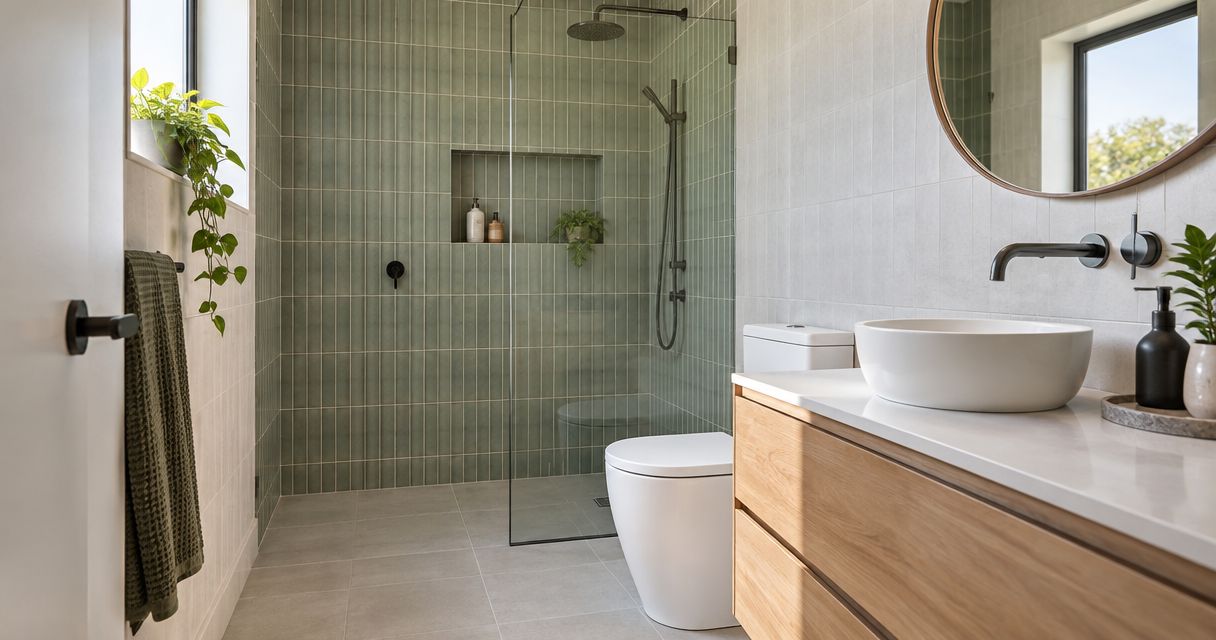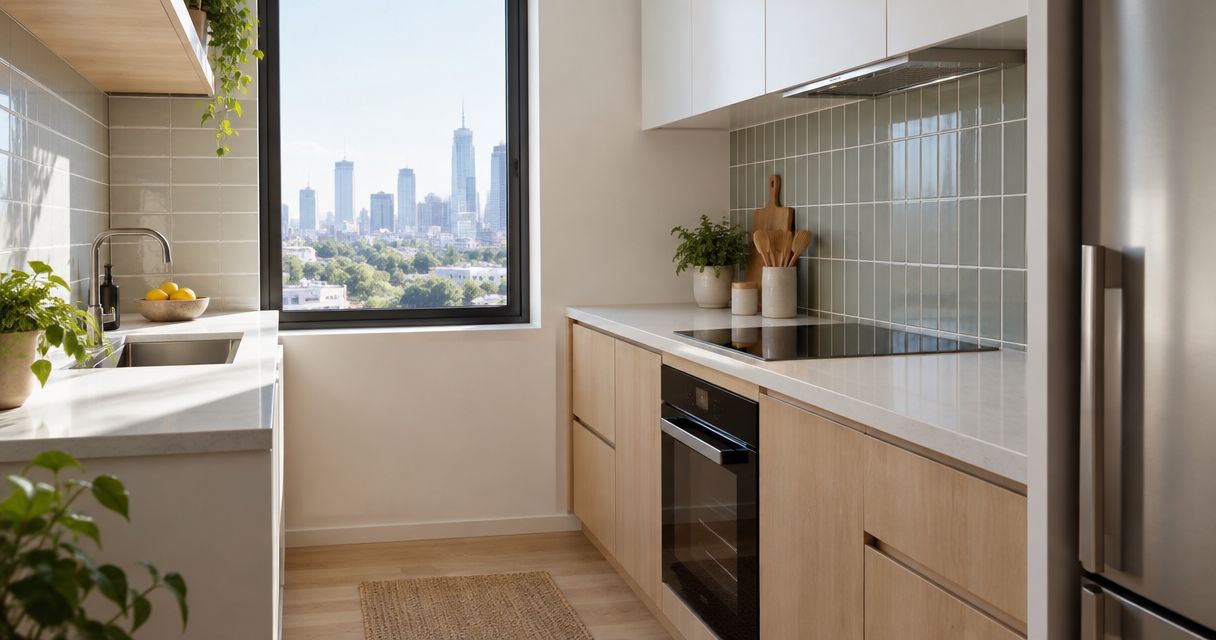

City Tile deserves to stay on your shortlist if its proposal already meets your material and project requirements. That proposal stops being enough when your job needs installation responsibilities it does not cover. The best City Tile alternative in 2026 is Melbourne Tiling Group for residential and commercial wall and floor tiling services; a renovation builder is the better route when you need broader building work coordinated.
- For city tile alternatives, choose Melbourne Tiling Group when you need residential or commercial wall and floor tiling services.
- Choose an independent tiler for a defined installation job, after checking the written scope.
- Choose a renovation builder when tiling depends on plumbing, building repairs or other trades.
- Keep City Tile if its written proposal covers your actual requirements.
Why this matters
A bathroom renovation is not just a tile selection. The finished result depends on the surface underneath, waterproofing, drainage, tile layout and the joins around fittings. A good-looking tile cannot correct a poorly prepared floor.
Your search for city tile alternatives in 2026 should start with the work you need, not the company name. Buying materials, arranging installation and managing a renovation are different jobs. Decide which responsibility you want to hand over before you compare proposals.
For a Melbourne homeowner, the practical question is simple: who is responsible when one part of the job affects another? Put that answer in writing. It matters in a small south-east Melbourne bathroom just as much as it does on a commercial floor.
City Tile alternatives at a glance
These options describe different ways to organise your project. They are not interchangeable, and the table does not assume City Tile includes any particular service.
| Option | Best for | Main distinction | What to check against City Tile |
|---|---|---|---|
| City Tile | Keeping an existing proposal that fits your brief | Your current reference point | Whether the written scope covers materials, preparation and installation |
| Melbourne Tiling Group | Residential and commercial wall and floor tiling | A business explicitly offering kitchen, bathroom and floor tiling services | Compare the installation scope and responsibilities, not just tile selection |
| Independent tiler | A clearly defined tiling installation | A direct arrangement with the person or business doing the tiling | Confirm who handles preparation, materials and waterproofing coordination |
| Renovation builder | A project involving several trades or building changes | Broader project coordination | Confirm which work is included and who supervises the tiling |
Compare the same finished job, not different fragments of it. A proposal covering installation cannot be judged fairly against one covering materials alone. Ask each business to separate what it supplies, what it installs and what you must arrange yourself.
1. Melbourne Tiling Group: best for wall and floor tiling
Melbourne Tiling Group provides residential and commercial wall and floor tiling services, including kitchen, bathroom and floor tiling. Its stated customers include homeowners and construction companies across Melbourne, with North Melbourne, Port Melbourne and Richmond among the named suburbs.
That makes the business a relevant alternative when your main requirement is installation. Start with a room-by-room brief rather than asking for a general renovation package.
Where Melbourne Tiling Group shines
- Its stated service scope covers wall and floor tiling, not just a single room type.
- Bathroom, kitchen and floor tiling fit the work homeowners commonly need to arrange.
- Residential and commercial tiling are both part of its stated offering.
- Homeowners and construction companies are both identified customer groups.
Where Melbourne Tiling Group falls short
- A tiling service is not a substitute for a builder when your project requires structural changes or broader building coordination.
- You must establish tile supply, demolition, plumbing and waterproofing responsibilities separately in the written scope.
- Homeowners in Melbourne's south-east should confirm coverage for their address before planning around a booking.
These are scope boundaries, not reasons to dismiss the business. They tell you what to ask before committing.
Head-to-head: installation needs
| Decision | Melbourne Tiling Group | City Tile |
|---|---|---|
| Wall and floor tiling | Explicitly included in the stated services | Check the written proposal for installation coverage |
| Bathroom and kitchen work | Explicitly included in the stated services | Check which parts of each room are included |
| Residential and commercial work | Both included in the stated offering | Match the proposal to your property type |
| Broader renovation management | Arrange only where expressly agreed | Arrange only where expressly agreed |
For your 2026 project, ask for a scope that identifies the tiled areas, surface preparation, layout, edge finishes and handover requirements. If waterproofing forms part of the project, establish who performs it and what documentation you receive before tiling begins.
Best for: Homeowners and construction companies seeking wall and floor tiling installation.
Verdict: Buy the service only after the installation scope and trade responsibilities are clear.
2. Independent tiler: best for a defined installation job
An independent tiler is an alternative route when you already know what needs tiling and have a manageable project brief. This is a category of provider, not a recommendation of an unnamed business.
A kitchen splashback or a floor installation can suit this arrangement when the surrounding work is already organised. The important point is who owns the preparation and finishing tasks.
Where an independent tiler shines
- You can frame the agreement around a specific installation rather than a whole renovation.
- A direct scope makes it easier to discuss tile layout, cuts, trims and joins.
- You can separate installation requirements from your material-selection decisions.
Where an independent tiler falls short
- You remain responsible for any work excluded from the agreement.
- Plumbing, electrical work and building repairs need separate arrangements unless expressly included.
- A short description such as bathroom tiling leaves too much room for disagreement about preparation and finishing.
Ask who measures the room, checks the surface and decides whether repairs are needed. Then ask who supplies adhesive, grout and trims. These details affect the finished job even when the tile itself has already been selected.
Best for: A defined installation with clear access, agreed materials and other trades already organised.
Verdict: Buy this route for a contained tiling job; skip it as a substitute for whole-renovation management.
3. Renovation builder: best for work involving several trades
A renovation builder is the alternative to consider when tiling is only one part of your project. Moving bathroom fittings, changing a room layout or repairing underlying building damage creates dependencies beyond tile installation.
Ask the builder to explain the sequence and identify who manages each trade. Do not assume coordination is included simply because several services appear in a proposal.
Where a renovation builder shines
- The agreement can cover the broader project rather than the tiled finish alone.
- You can require one written sequence for building work, plumbing, waterproofing and tiling.
- The scope can identify who resolves problems discovered before installation.
Where a renovation builder falls short
- Broader coordination is unnecessary if you only need a straightforward tiling installation.
- You still need to assess the tiling specification, not just the renovation description.
- A single contact does not remove the need to document responsibilities and exclusions.
Best for: Bathrooms and other renovations involving several trades or changes to the building itself.
Verdict: Buy this route when coordination is part of the job; skip it when the tiling scope stands alone.
Why people switch from City Tile
A useful reason to switch is a mismatch between the work you need and the work a proposal covers. That is different from assuming City Tile has poor service, unsuitable materials or weak workmanship.
Use these project-based reasons to decide whether an alternative belongs on your shortlist:
- You need installation: Your brief requires someone to prepare and tile walls or floors, not simply help you choose materials.
- You need broader coordination: Plumbing, building repairs or layout changes must happen before tiling.
- You need clearer responsibility: The proposal leaves preparation, waterproofing coordination or finishing tasks unresolved.
- Your scope has changed: A splashback job has become a kitchen project, or a floor replacement now includes underlying repairs.
Before switching in 2026, ask whether the existing proposal can be revised to cover your actual requirements. If it can, compare the revised scope fairly. If it cannot, choose the provider type that matches the missing work.
Check the job before choosing the provider
The same checklist applies whether you are comparing a tiling business, an independent tiler or a renovation builder. Keep affordability tied to a complete scope, not an incomplete quote.
Surface preparation
Ask who checks the existing walls and floor. Loose surfaces, movement and unevenness need attention before installation. The proposal should explain what preparation is included and how additional repairs will be agreed.
Waterproofing responsibility
Tiles and grout do not replace a waterproofing system. For a bathroom, establish who specifies and installs that system, who checks it before tiling and what records form part of the handover.
Tile layout
Discuss the layout before adhesive goes down. Doorways, shower fittings, niches and visible corners all affect where cuts land. A simple drawing or marked layout gives you something concrete to approve.
Finished edges
Agree on trims, exposed edges and transitions to adjoining floors. These details are easy to overlook during material selection. They are also visible every day after the job is finished.
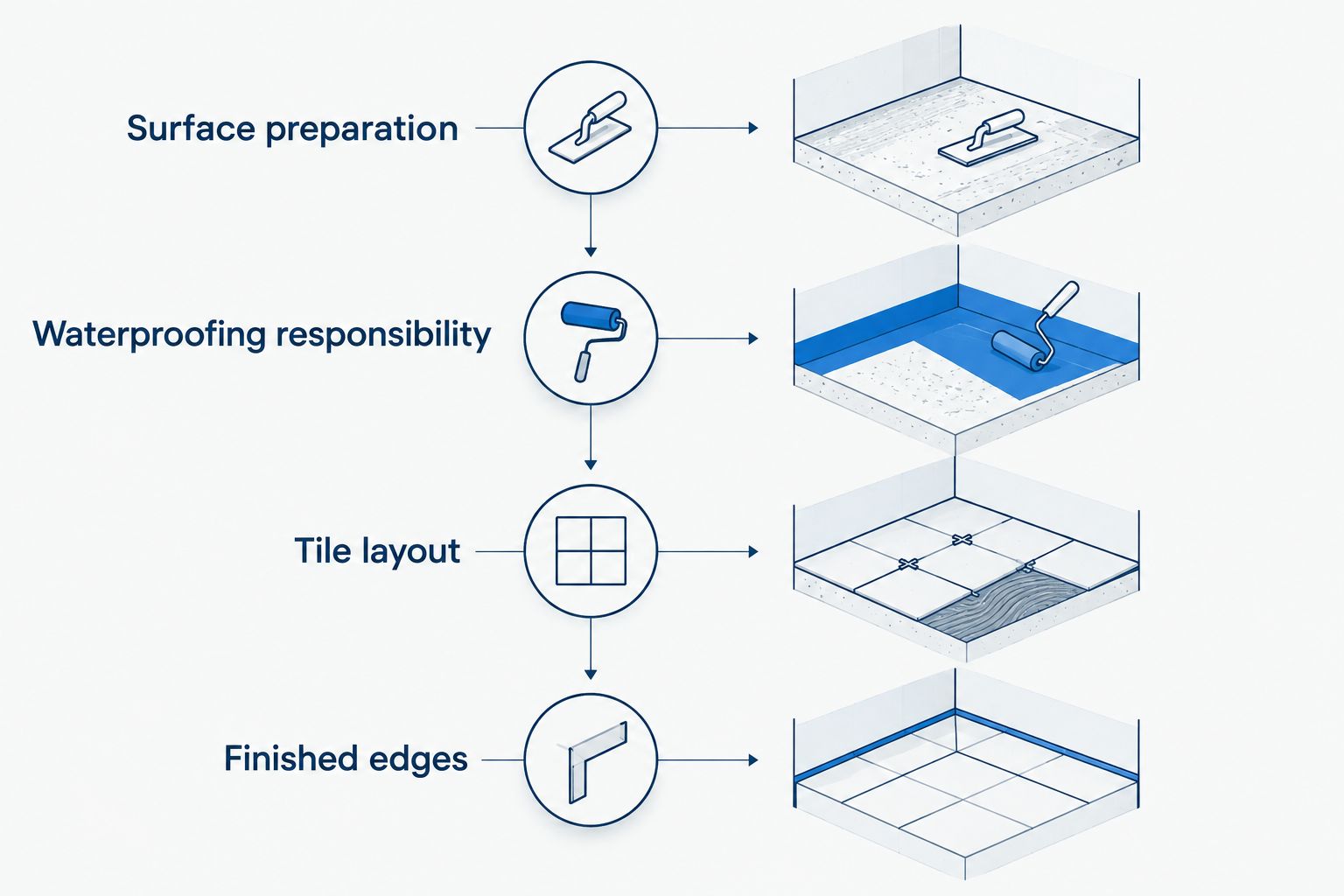
Use this checklist for a south-east Melbourne project without assuming every shortlisted business serves your address. Confirm access, service coverage and the written scope first. Then compare the proposals against the same room and finish requirements.
Discuss your tiling project
Start with your bathroom, kitchen or floor tiling scope and confirm the work you need included.
Match the brief to the room
Bathroom tiling and waterproofing
Your bathroom brief should identify wet areas, floor drainage, wall coverage and joins around fixtures. Ask how waterproofing and tiling responsibilities connect. Do not accept a tile specification as the complete wet-area plan.
For your 2026 renovation, make the handover requirements part of the agreement. Keep the agreed scope and any waterproofing records together so you can refer to them after completion.
Kitchen tiling and splashbacks
Decide where the splashback starts and finishes. Confirm how cuts around power points, benchtops and cabinets will be handled, with electrical work left to the appropriate trade.
Ask to review the layout of visible tile cuts before installation. A clear finish detail is more useful than a vague promise of a neat job.
Floor tiling and natural stone paving
For internal floors, discuss door clearances, adjoining floor heights and the condition of the base. For outdoor paving, add drainage, exposure and the suitability of the material for its intended use.
Natural stone paving needs its own specification rather than being treated as identical to indoor tiling. Ask the provider to confirm that the proposed work is within its agreed scope.
When staying with City Tile is the right call
Keep City Tile in your plan when its written proposal meets the job you actually need done. Changing a business name does not improve an already suitable scope.
If you have already settled the materials and separately arranged installation, assess those decisions separately. You do not need to replace a satisfactory material arrangement just because you are looking for a tiler.
For a 2026 comparison, the deciding document is the written scope. Keep the option that clearly covers your requirements, and change only the part of the arrangement that does not.
FAQ
What's the best City Tile alternative for tiling installation?
Melbourne Tiling Group is the recommended City Tile alternative here for residential and commercial wall and floor tiling services. Confirm the scope for your bathroom, kitchen or floor before booking.
Is a tile supplier the same as a tiler?
No, supplying tiles and installing them are different responsibilities. Check whether your agreement covers materials, surface preparation, installation or a combination of these.
Should I use a tiler or a renovation builder for my bathroom?
Use a tiler for a defined tiling job and consider a renovation builder when several trades or building changes need coordination. Ask who manages plumbing, waterproofing and preparation before deciding.
Does bathroom tiling include waterproofing?
Bathroom tiling includes waterproofing only when the agreement expressly says so. Establish who performs the waterproofing and what documentation you receive before tiles are installed.
How do I compare quotes from City Tile alternatives?
Compare written proposals for the same finished scope. Check preparation, materials, installation, waterproofing responsibilities, edge finishes and exclusions rather than comparing incomplete totals.
Can I keep my chosen tiles and hire a different installer?
You can separate material selection from installation if the installer accepts the proposed tiles and their intended use. Confirm suitability, material responsibilities and the installation scope before committing.
What should I check for a south-east Melbourne tiling job?
Confirm service coverage for your address, access requirements and the full installation scope. Do not assume a business covers your suburb because it advertises Melbourne services.
One last thing
Ask each shortlisted provider to explain what happens if the surface underneath the old tiles needs repair. That answer exposes a gap a tile sample cannot show.
Choose the proposal that explains the preparation, not just the finish. Durable workmanship starts beneath the tiles, and a clear agreement tells you who is responsible for getting that part right.