You do not automatically need a separately licensed tiler for tiling-only bathroom work in Melbourne in 2026. Victoria distinguishes standalone tiling from a broader bathroom renovation that requires a registered building practitioner. Before hiring, check the full scope, who takes responsibility for waterproofing, and whether plumbing, electrical work or building permits are involved.
- Melbourne bathroom renovations need scope checks, not just a contractor’s claim to be a licensed tiler.
- Standalone tiling and a combined bathroom renovation have different Victorian registration requirements.
- Check building practitioners with the Building and Plumbing Commission and electricians with Energy Safe Victoria.
- Melbourne Tiling Group provides bathroom tiling services; confirm waterproofing responsibility before agreeing to the work.
Do I need a licensed tiler for bathroom renovations in Melbourne?
For standalone wall and floor tiling, Victoria has a single-trade exemption from domestic builder registration. That exemption does not automatically cover a complete bathroom renovation. The contract’s actual work matters more than the title on the business card.
When comparing Melbourne Tiling Group’s tiling services with a full renovation proposal, check whether each covers tile installation alone or additional building work.
| Work you are arranging | What to check | Best for | Main limitation |
|---|---|---|---|
| Standalone wall or floor tiling | Whether the contract genuinely covers tiling alone | A defined tiling package | Does not establish responsibility for the rest of the bathroom |
| Combined bathroom renovation | Whether the contractor needs the appropriate domestic builder registration | Coordinating several renovation trades | Registration must match the contracted scope |
| Plumbing alterations | The plumber’s Victorian registration or licence and relevant work class | Moving or replacing plumbing connections | A tiling qualification does not authorise plumbing work |
| Electrical alterations | The electrician’s licence and the electrical contractor’s registration | Lighting, power and electrical heating work | Electrical work requires separate authorisation |
Why this matters
Bathroom defects are not always visible at handover. Straight grout lines tell you little about the substrate, waterproofing or plumbing behind the tiles.
A homeowner in Melbourne’s south-east replacing a splashback faces a different job from someone rebuilding a leaking shower. The second project needs clear responsibility for the damaged base, drainage connections and waterproofing before tile installation starts.
For a 2026 renovation, choose the contractor around the whole job, not the word “licensed”. Ask what registration is required for the proposed work and who holds it. Then check the answer against the relevant public register.
What does “licensed tiler” actually mean in Victoria?
A contractor using the phrase “licensed tiler” has not, by that phrase alone, demonstrated the authority to manage your bathroom renovation. Ask for the exact licence or registration type, the holder’s name and the registration number.
Victoria’s domestic building rules distinguish registration requirements from trade qualifications. A tiling qualification shows training in the trade. Builder registration concerns the practitioner’s authorised building work. Neither replaces the separate requirements for plumbing or electrical work.
The Building and Plumbing Commission’s Victorian domestic building guidance recognises an exemption for contracts involving only specified single trades, including wall and floor tiling. Do not extend that exemption to a contract that combines tiling with other renovation work.
For a 2026 project, use the Building and Plumbing Commission’s current guidance on practitioner registration, domestic building contracts and insurance. Read the scope conditions, not just the headline requirement. Contract value also affects some obligations, so a small tiling repair and a full bathroom rebuild need different checks.
If the contractor’s explanation conflicts with the regulator’s guidance, resolve that before signing. A verbal assurance does not change the work written into the agreement.
Does a complete bathroom renovation need a registered builder?
A complete bathroom renovation needs a registration assessment based on the work and contract value. Do not assume that calling the project “tiling” makes the whole package exempt.
A proposal that includes demolition, substrate replacement, waterproofing and tile installation needs closer scrutiny than tile installation alone. Structural alterations, relocated fixtures and changes to services introduce further responsibilities. A building permit is a separate question from practitioner registration.
Ask the proposed lead contractor:
- What work will you contract to carry out?
- Which tasks will subcontractors perform?
- What building practitioner registration covers this scope?
- Who determines whether a building permit is required?
- Who is responsible for defects between adjoining trades?
Do not accept several loosely connected quotes as a substitute for clear coordination. Separate trade contracts can suit a tightly defined project, but you still need to know who checks the handover between the plumber, waterproofer and tiler.
You should also distinguish public liability insurance from domestic building insurance. They serve different purposes. Ask which insurance applies to your particular contract and request the relevant evidence rather than accepting a generic insurance statement.
How do I check a bathroom contractor before hiring?
Use this sequence before booking demolition or ordering tiles. It keeps the registration checks connected to the actual bathroom work.
1. Scope check
Write down what stays, what comes out and what moves. Include tile removal, repairs to the base, screeding, waterproofing, tiling, grouting and sealant work where relevant.
A quote reading only “renovate bathroom” leaves too much unresolved. Ask whether the contractor will inspect the exposed substrate after demolition and how additional repair work will be agreed.
2. Register check
Search the Building and Plumbing Commission’s register for the relevant building practitioner or plumber. Match the name and registration category to the person or business taking responsibility for the work.
For electrical work, check the relevant licence and registered electrical contractor details through Energy Safe Victoria. An ABN identifies a business; it does not establish trade authorisation.
3. Written agreement
Confirm inclusions, exclusions, payment stages and the process for variations. Check the applicable domestic building contract requirements before treating a brief quote as the complete agreement.
Record who supplies the tiles, adhesive, grout and waterproofing system. Clear supply responsibilities make it easier to resolve missing materials or an unsuitable product before installation.
4. Waterproofing record
Agree who installs the waterproofing and what documentation will be supplied. Ask for product identification, installation records and photographs before tiles cover the work.
Do not assume that every document called a waterproofing certificate has the same legal meaning. Ask who issues it, what it confirms and whether any inspection or certification is required for your project.
5. Tile installation
Confirm that the substrate and waterproofing are ready before tiling begins. Adhesive compatibility, curing conditions, drainage falls and movement joints belong in this discussion.
The waterproofing sign-off to tile installation workflow explains the handover to discuss before the membrane disappears beneath the finished surface.
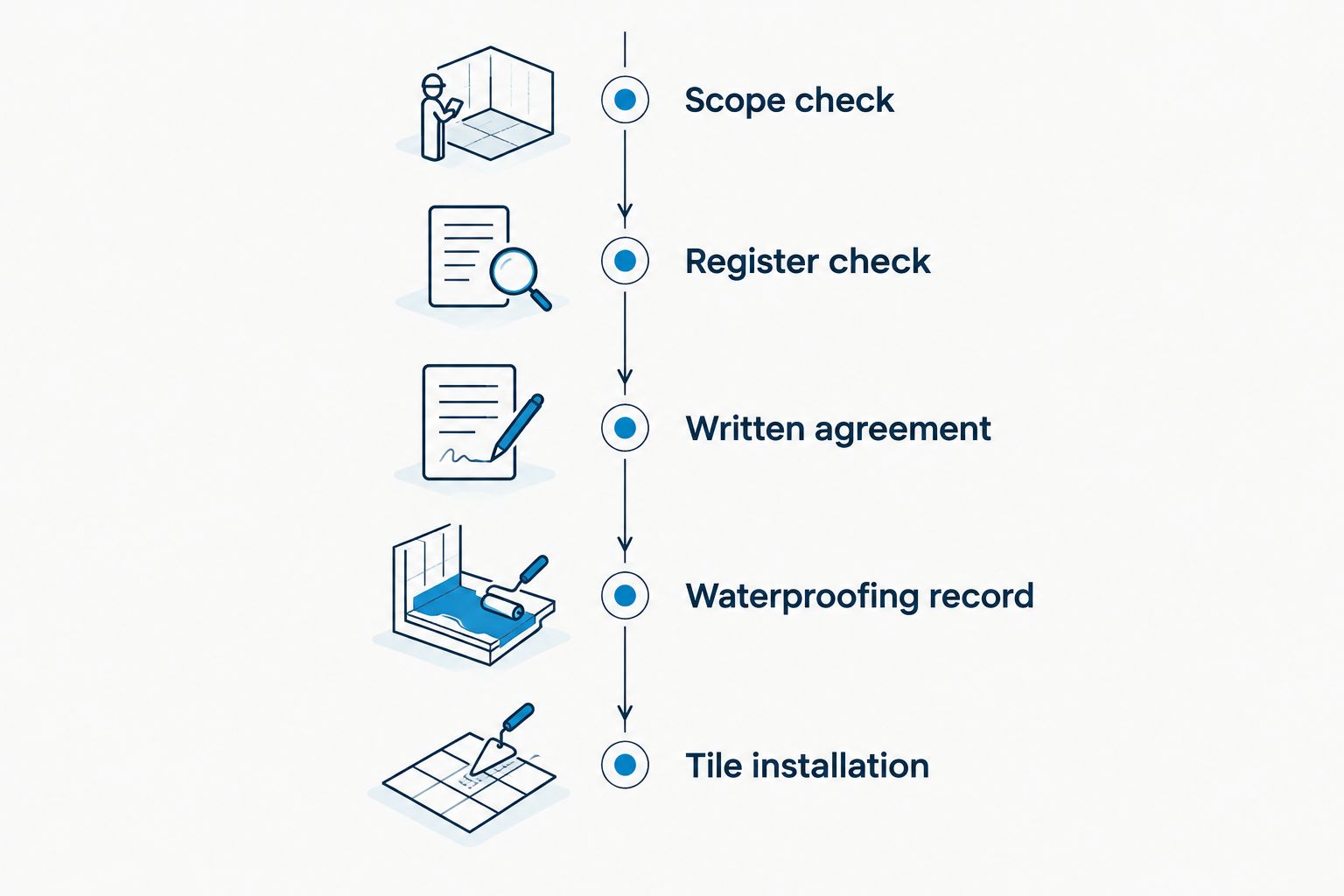
Keep these records with the signed agreement. If the scope changes after demolition, update the agreement before the extra work proceeds.
Does bathroom waterproofing need a separate check?
Yes. Tiling and waterproofing are different parts of the bathroom build. A contractor’s experience laying tiles does not, by itself, establish who is authorised or contracted to waterproof your bathroom.
For internal wet areas, AS 3740 addresses waterproofing requirements alongside the applicable National Construction Code provisions. The project must follow the requirements that apply to that building and approval pathway. Product installation instructions also matter.
Ask the waterproofer to explain how the proposed system deals with corners, penetrations, the shower base and connections to drainage. You do not need to specify the technical solution yourself. You need a clear answer from the person responsible.
Tiles and grout are not a substitute for a compliant waterproofing system. Choosing a different grout does not remove the need to address the membrane underneath.
For your 2026 bathroom plan, record the product system and its installation requirements before scheduling the tiler. Do not set the next trade’s start date using a generic curing estimate. The installed product and site conditions determine when the next stage can proceed.
Why do the requirements vary between bathroom jobs?
The suburb does not determine trade registration requirements. A bathroom in Melbourne’s south-east follows Victorian rules, just as a bathroom elsewhere in Melbourne does. The work itself determines which checks you need.
These factors change the assessment:
- Contract scope: Tiling alone is different from a package combining several building tasks.
- Contract value: Some domestic building contract, registration and insurance obligations depend on value.
- Structural work: Altering walls or supporting elements raises questions beyond tile installation.
- Plumbing changes: Moving a shower, toilet or basin introduces plumbing responsibilities.
- Electrical changes: Lighting, power points and electric floor heating require authorised electrical work.
- Building type: An apartment renovation can involve owners corporation requirements as well as building rules.
Do not use an exemption applying to one part of the job as an answer for every other part. Ask the lead contractor to explain the complete arrangement in writing.
Is replacing bathroom tiles different from rebuilding a shower?
Yes. Replacing tiles is not automatically a shower rebuild, but removing tiles can expose a larger job. The practical issue is whether the underlying base and waterproofing remain suitable.
A dry bathroom wall with an isolated damaged tile presents different risks from a leaking shower floor. Once tile removal damages the waterproofing or reveals a failed substrate, a simple replacement plan needs reassessment.
Ask what happens if demolition exposes moisture damage. The agreement should explain how the contractor documents the finding, proposes repairs and obtains your approval.
Avoid a promise to “just tile over it” without an assessment of the existing surface. Covering a defect does not resolve its cause. Equally, do not assume every cosmetic repair requires a complete rebuild; the exposed condition and proposed method should support that decision.
Can I organise the trades myself?
You can arrange separate trades, but you must establish the responsibilities and legal requirements before work starts. Do not assume that splitting a renovation into smaller contracts removes obligations that otherwise apply.
The benefit is direct control over each appointment. The drawback is that you must manage the gaps between trades, including access, readiness and damage to completed work.
Before taking that role, ask who will:
- Confirm that the base is ready for waterproofing.
- Protect the membrane before tiling.
- Resolve drainage or floor-level conflicts.
- Arrange any required inspections and documents.
- Accept responsibility when a problem crosses trade boundaries.
If you intend to act as an owner-builder, check the separate Victorian owner-builder requirements with the Building and Plumbing Commission. Hiring a tiler is not, by itself, the same thing as having a properly planned owner-builder project.
Choosing a tiling service for your Melbourne bathroom
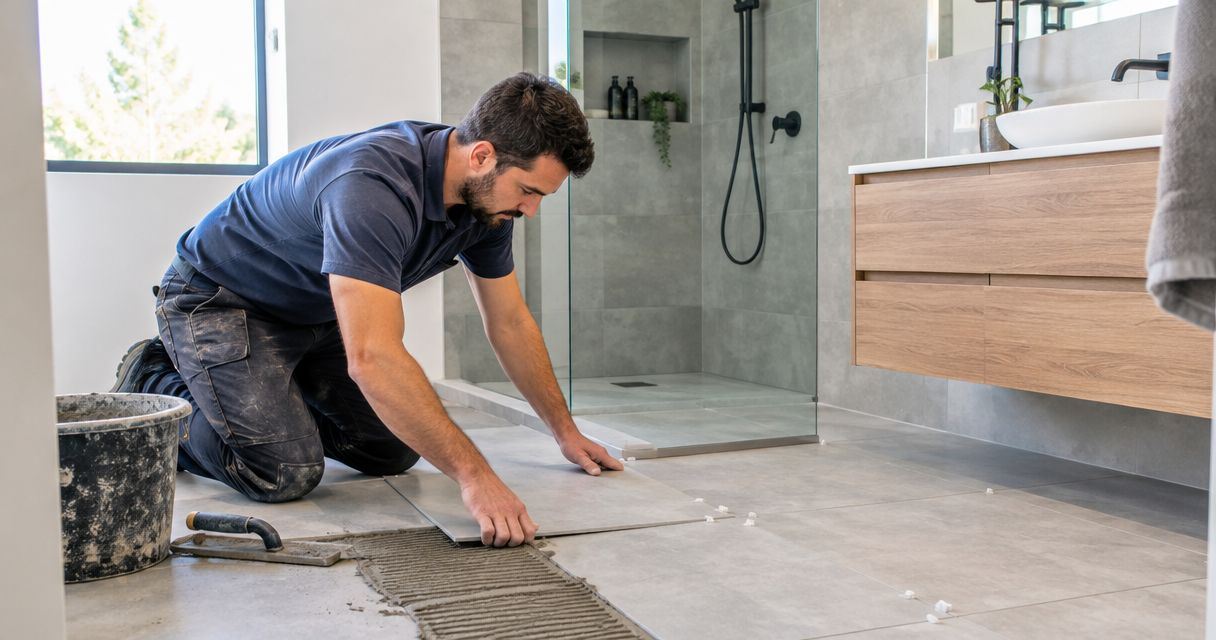
Melbourne Tiling Group is suited to Melbourne homeowners seeking residential bathroom wall and floor tiling. Its stated services also cover kitchen and floor tiling, rather than establishing that every bathroom renovation task is included.
The practical benefit of a defined tiling service is a clear installation package. The limitation is that you must separately confirm demolition, waterproofing, plumbing, electrical work and any overall building responsibility unless the written proposal expressly includes them.
Discuss the exposed base, tile layout, shower falls and adjoining finishes before agreeing to installation. For an affordable result, compare matching scopes rather than choosing the shortest quote. Excluded preparation can leave two proposals covering very different jobs.
Discuss your bathroom tiling scope
Clarify preparation, tile installation and responsibility for adjoining work before booking.
FAQ
Do I need a licensed tiler for bathroom renovations in Melbourne in 2026?
Not automatically for standalone tiling: Victoria provides a single-trade exemption from domestic builder registration for wall and floor tiling. A broader bathroom renovation needs a separate assessment of the contracted scope, value and applicable registration requirements.
Is a tiling qualification the same as builder registration?
No. A tiling qualification concerns trade training, while builder registration concerns authorisation to carry out particular building work. Ask for the exact credential relevant to your contract.
Can my tiler also waterproof my shower?
Do not assume waterproofing is included or authorised simply because the contractor installs tiles. Confirm the waterproofing scope, applicable registration requirements, installer and documentation before work starts.
Where can I check a Melbourne bathroom builder’s registration?
Check the Building and Plumbing Commission’s public register. Match the practitioner’s name and registration category to the entity and work identified in your agreement.
Does a bathroom tiler’s registration cover plumbing and electrical work?
No. Plumbing and electrical work have separate authorisation requirements. Check plumbing credentials through the Building and Plumbing Commission and electrical credentials through Energy Safe Victoria.
Do I need a building permit just to replace bathroom tiles?
Replacing tiles alone does not automatically mean a building permit is required. Changes to the structure or other building work need a separate permit assessment; confirm the scope with a building surveyor where necessary.
Does Melbourne Tiling Group provide bathroom tiling?
Yes. Melbourne Tiling Group provides residential and commercial wall and floor tiling, including bathroom tiling. Confirm the proposed preparation, waterproofing responsibility and installation scope in the written agreement.
One last thing
Ask for waterproofing photographs before the first tile goes down. Finished bathroom photos cannot show the covered corners, penetrations or membrane connections.
For a 2026 renovation, keep those photographs with the product details and contractor records. The useful handover is not just a clean bathroom; it is a clear record of what sits underneath it.