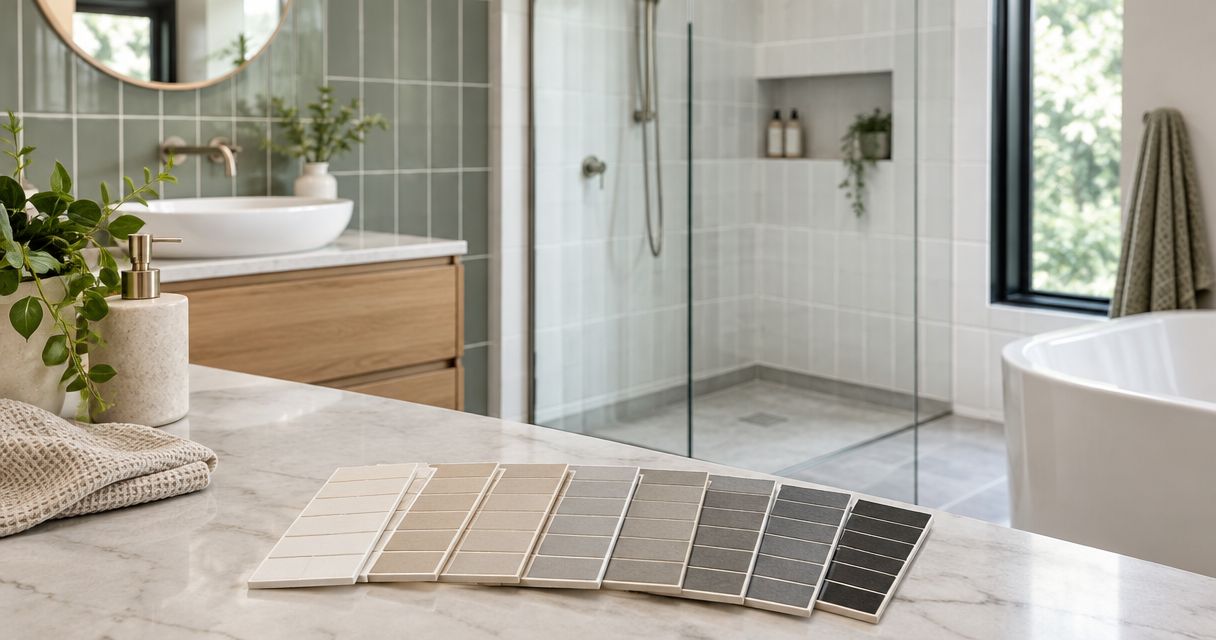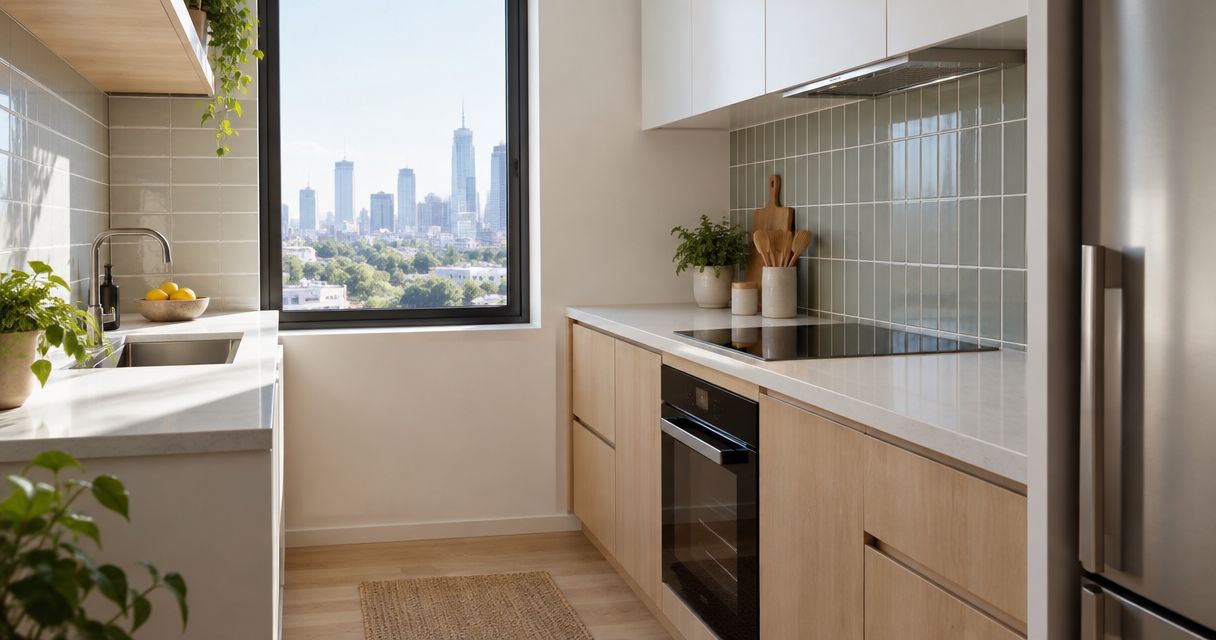

Dr Tiles belongs on your shortlist when its written proposal covers the work your property needs. Among dr tiles alternatives in 2026, Melbourne Tiling Group is a fit for residential and commercial wall and floor tiling; a builder-led renovation suits projects that also need plumbing, electrical work or changes to the room layout.
- Compare dr tiles alternatives by installation scope, not tile appearance alone.
- Melbourne Tiling Group suits residential and commercial wall and floor tiling in Melbourne.
- Choose a builder-led renovation when your bathroom needs several trades coordinated.
- Choose a repair specialist when the task is diagnosis rather than a complete retile.
- Confirm bathroom waterproofing responsibilities before accepting any tiling proposal.
Why this matters
Choosing a tiler is different from choosing tiles. You need someone to assess the surface, explain preparation and set out the finished work. A tile sample cannot tell you whether the shower drains properly or whether the floor underneath needs attention.
For a Melbourne bathroom renovation in 2026, compare the whole job rather than the visible finish. Waterproofing, floor preparation, screeds, tile installation and finishing need clear responsibilities. A short quote that leaves those tasks unclear is difficult to compare with a detailed proposal.
The same rule applies to a kitchen splashback, laundry floor or outdoor paving project. Start with the problem you need solved, then choose the service model that matches it.
Dr Tiles alternatives at a glance
This comparison separates direct tiling services from broader renovation management and targeted repairs. These are different buying options, not interchangeable services. Use Dr Tiles as the benchmark by comparing its written proposal against the same requirements.
| Option | Best for | Main strength of the approach | Main limitation | How to compare with Dr Tiles |
|---|---|---|---|---|
| Dr Tiles | A project its written proposal fully covers | A proposal you can assess against your actual job | The name alone does not establish the included work | Check preparation, waterproofing responsibilities and finishing |
| Melbourne Tiling Group | Residential and commercial wall and floor installation | Stated services include kitchen, bathroom and floor tiling | A tiling brief alone does not cover every trade in a renovation | Compare the same rooms, surfaces and preparation requirements |
| Builder-led renovation | Bathrooms needing several trades or layout changes | A single renovation brief can coordinate connected tasks | Adds coordination to a job that might only need a tiler | Compare the full renovation scope, not just the tiling component |
| Specialist repair provider | A localised defect needing diagnosis | A focused investigation can establish the appropriate repair | A surface repair does not establish that underlying layers are sound | Compare the diagnosis and repair boundary before choosing |
For your 2026 shortlist, ask every provider to quote the same brief. Otherwise, an apparent difference in value can simply reflect work included by one provider and omitted by another.
1. Melbourne Tiling Group: best for wall and floor installation
Melbourne Tiling Group provides residential and commercial wall and floor tiling, including kitchen, bathroom and floor tiling. Its stated customers include homeowners and construction companies, with Melbourne suburbs such as North Melbourne, Port Melbourne and Richmond identified in its service description.
Best for: You need a tiling installation service for an identified room or set of surfaces. Bring a clear brief: what stays, what comes out, your tile selection and the condition of the existing floor or walls.
Where the installation approach shines
- It matches a defined kitchen, bathroom or floor tiling job.
- It gives homeowners and construction companies a relevant service to assess.
- It keeps the discussion centred on installation rather than tile shopping alone.
- It lets you compare room-by-room work against another tiling proposal.
For a kitchen splashback, show the installer where the benchtop, cupboards and power points sit. For a bathroom, identify the shower, floor waste, doorway and adjoining floor level. Those details shape the work more directly than a broad request for a modern finish.
Where the installation approach falls short
- Wall and floor tiling is not the same brief as a complete bathroom renovation.
- Plumbing, electrical work and structural changes need their own agreed responsibilities.
- A service description does not settle preparation requirements for your particular property.
- An outdoor natural stone paving project needs a separate discussion about drainage, ground preparation and material suitability.
These limits matter when you compare providers. Do not treat a tiling proposal as a promise to manage every part of the build. Ask who handles each connected task and where one contractor's responsibility ends.
Head-to-head with Dr Tiles
| Dimension | Direct installation brief | Dr Tiles proposal to check |
|---|---|---|
| Project type | Residential or commercial wall and floor tiling | Does the proposal cover your property and surfaces? |
| Room coverage | Kitchen, bathroom and floor tiling are stated services | Which rooms and areas are included? |
| Preparation | Agree removal, repairs and levelling for your site | Are the same preparation tasks included? |
| Wet-area work | Confirm waterproofing responsibilities in writing | Who handles the waterproofing and its documentation? |
For a south-east Melbourne project, confirm service coverage for your exact suburb before arranging the job. Do not assume that a general Melbourne service description settles travel, scheduling or site access.
Verdict: Hold until the site-specific scope is agreed; shortlist this option for wall and floor installation.
2. Builder-led renovation: best for bathrooms needing several trades
A builder-led renovation is an alternative buying approach, rather than another tiling product. It suits a brief that combines tile installation with changes to plumbing, electrical fittings, walls or the room layout. You appoint the renovation around the finished room, not just its tiled surfaces.
Best for: Your bathroom needs connected work that must happen in the right order. Moving a shower or changing a doorway creates a different coordination problem from replacing a splashback.
Where a builder-led renovation shines
- It provides a place to assign responsibility for the whole renovation brief.
- It connects demolition, plumbing, surface preparation and finishing in one programme.
- It makes trade handovers part of the discussion before work begins.
Where a builder-led renovation falls short
- It adds a management layer to a simple installation job.
- A broad renovation proposal can make the tiling component harder to compare.
- You still need the tile layout, waterproofing responsibilities and finishing details written down.
Do not assume that one point of contact removes the need for detail. Ask who completes the tiling, who checks the surfaces before installation and who addresses defects at handover. The useful difference is clear accountability, not the label on the proposal.
| Dimension | Builder-led renovation | Dr Tiles proposal to check |
|---|---|---|
| Brief | The complete room renovation | Is the scope tiling only or broader? |
| Trade coordination | Assign coordination within the renovation agreement | Who arranges connected trades? |
| Changes | Assess layout and fixture changes together | Are those changes included or separate? |
| Handover | Agree checks for the completed room | What work is covered at completion? |
Verdict: Hold for a coordinated renovation; skip this approach when the work is only a straightforward tiling installation.
3. Specialist repair provider: best for a localised defect
A repair-focused provider suits a different question: what has failed, and what needs replacing? Use this approach when you are investigating loose tiles, damaged grout or an isolated area before deciding on a larger installation.
Best for: You need a diagnosis and a defined repair boundary, rather than an immediate commitment to retile the room.
Where a repair approach shines
- It starts with the defect rather than assuming every surface needs replacement.
- It separates investigation from the final repair decision.
- It helps you identify whether a limited repair fits the problem.
Where a repair approach falls short
- Replacing grout does not repair a failed waterproofing membrane.
- Matching existing tiles and grout needs assessment before work starts.
- A visible defect can require investigation beyond the exposed surface.
| Dimension | Repair-focused brief | Dr Tiles proposal to check |
|---|---|---|
| Starting point | Investigate the fault | Is diagnosis included? |
| Work boundary | Define the affected area | What exactly will be removed or repaired? |
| Outcome | Address the identified cause | Does the proposal explain the cause and remedy? |
Verdict: Hold until the cause is identified; skip a cosmetic repair when it leaves the underlying fault unresolved.
Compare the work beneath the tiles
For bathroom tiling in 2026, waterproofing deserves its own line in the brief. Tiles and grout are not a substitute for the waterproofing system beneath them. Ask who prepares the surface, applies the membrane and records the work before tiles conceal it.
Do not select adhesives independently of the surface and installation conditions. Your installer needs to match the product to the tile, substrate and location. The guide to tile adhesives for wet-area installations explains the material choice to discuss before installation.
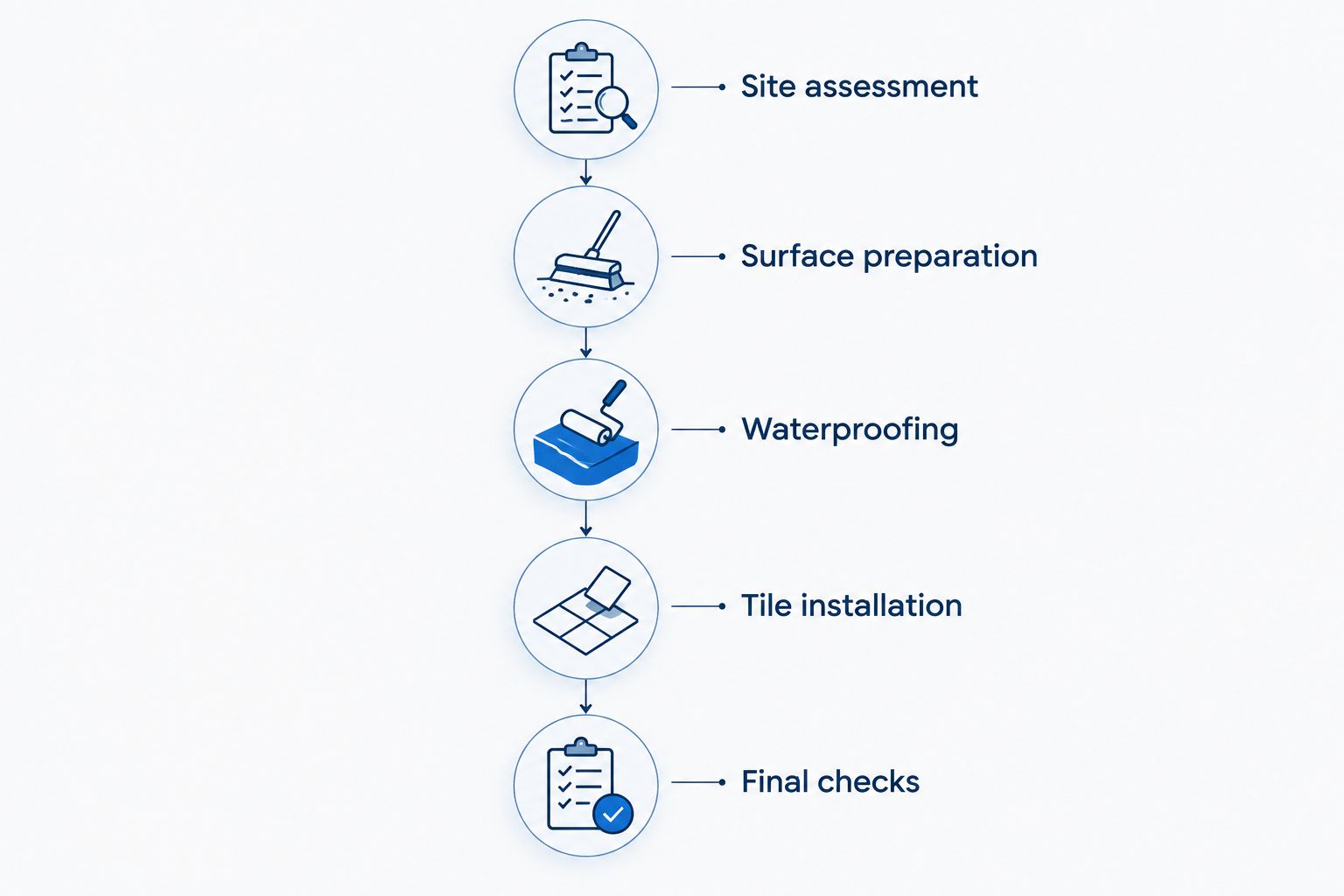
Use this sequence when comparing proposals:
- Site assessment: Identify existing surfaces, damage, access and adjoining finishes.
- Surface preparation: Agree removal, repairs, levelling and any screed work.
- Waterproofing: Assign responsibility for wet-area preparation and the membrane system.
- Tile installation: Confirm tile layout, cuts, edges and movement joints.
- Final checks: Agree how finished work and outstanding items will be reviewed.
For kitchen work, make the splashback boundary clear. Confirm whether the tiles stop at the cupboards, extend around a window or return along another wall. Ask how exposed edges and power-point cut-outs will be finished.
For floor tiling, discuss thresholds and adjoining rooms. Preparation affects the finished floor level, so show the installer doors, skirting and transitions to other flooring. These are practical details to settle before installation, not after the last tile goes down.
For natural stone paving, start with the outdoor conditions. Discuss water drainage, the supporting base and the stone's suitability for its location. Keep that scope separate from an indoor bathroom proposal.
How to make the quotes comparable
A useful 2026 comparison begins with the same information sent to every provider. Give each contractor photos, the room dimensions you have, the intended tiles and a clear description of the work. Request a site assessment where the existing condition needs checking.
Ask each proposal to distinguish these responsibilities:
- Who removes existing tiles and disposes of the waste.
- Who repairs or replaces unsuitable wall and floor surfaces.
- Who completes waterproofing and supplies the relevant documentation.
- Who supplies tiles, adhesives, grout, trims and sealants.
- Who coordinates plumbing or electrical work around the installation.
- How changes discovered after removal will be agreed.
Affordable work starts with a controlled brief. Choose the required work first, then compare proposals covering that same work. Omitting necessary preparation is not a useful saving.
Also settle tile layout early. A feature strip, recessed niche or complicated pattern changes the installation brief. If your priority is a practical bathroom, explain that before asking contractors to plan decorative details.
Discuss your tiling project
Outline your room, surfaces and preparation needs before agreeing the installation scope.
Why compare alternatives before switching from Dr Tiles?
Switch only when another proposal solves a specific problem in your current brief. A different company name is not a reason by itself. The useful comparison is whether you can see who does the work and what the finished result includes.
Use these decision points:
- Scope mismatch: Your job needs tasks that the proposal excludes.
- Unclear handovers: Nobody is clearly responsible for connected trades.
- Unresolved preparation: The proposal does not explain how unsuitable surfaces will be handled.
- Repair uncertainty: The proposed treatment does not address the identified cause.
- Incomplete finishing: Edges, thresholds or adjoining surfaces remain undefined.
These are checks to apply to every provider, including your preferred alternative. Ask for clarification before rejecting an otherwise suitable proposal. A revised written scope can resolve a misunderstanding without changing contractors.
When staying with Dr Tiles is the right call
Stay with Dr Tiles when its written proposal matches the work you need, assigns responsibilities clearly and addresses your site conditions. An alternative is useful only if its agreed scope is a better match.
For a straightforward splashback or floor installation, avoid turning the comparison into a whole-house renovation discussion. For a bathroom with several connected trades, do the opposite: assess the complete room rather than the tile installation alone.
The right provider is the one you can appoint against a clear, complete brief. Use that rule for your 2026 decision, regardless of which name heads the quote.
FAQ
What's the best Dr Tiles alternative for wall and floor tiling?
Melbourne Tiling Group is a relevant Dr Tiles alternative for residential and commercial wall and floor tiling in Melbourne. Compare its site-specific proposal with the same preparation, installation and finishing requirements given to other providers.
Is a tiling contractor better than a bathroom renovation builder?
A tiling contractor fits a defined installation job, while a builder-led renovation fits a room needing several trades coordinated. Choose by the work required rather than treating the two services as interchangeable.
Does bathroom tiling include waterproofing?
Do not assume bathroom tiling includes waterproofing; confirm that responsibility in the written proposal. Ask who completes the membrane system and supplies the relevant documentation before tiles cover the work.
Should I repair grout or replace the bathroom tiles?
Identify the cause of the problem before choosing grout repair or tile replacement. New grout does not repair a failed waterproofing membrane, so a cosmetic treatment must not stand in for diagnosis.
What should I ask a tiler before accepting a quote?
Ask what preparation, waterproofing responsibilities, installation and finishing the quote includes. Also confirm material supply, waste removal, connected trades and how unexpected work will be agreed.
How do I compare Dr Tiles alternatives in Melbourne's south-east?
Confirm coverage for your exact suburb and give every provider the same project brief. Compare site preparation, wet-area responsibilities and finishing rather than assuming all Melbourne tiling proposals include the same work.
Can I use the same brief for indoor tiling and natural stone paving?
Indoor tiling and outdoor natural stone paving need separate site-specific briefs. Outdoor work requires discussion of drainage, the supporting base and material suitability, while indoor work has its own surface and wet-area requirements.
One last thing
Before accepting a bathroom proposal, ask: what will be hidden once the tiles are installed? That question brings preparation and waterproofing back into focus. A finished tile surface cannot show you every layer beneath it.
Keep records of the agreed work and ask how concealed stages will be documented. Then choose your tiles. The installation plan should lead the finish, not follow it.