Bathroom tiling takes the time needed to prepare the surfaces, install the tiles and let each material cure before the next stage starts. For a bathroom project in 2026, get separate dates for tile installation and shower use: demolition, repairs, waterproofing and plumbing are separate tasks that must be included in the overall renovation schedule.
- How long does bathroom tiling take? Count preparation, installation and curing, not just the days spent laying tiles.
- Melbourne Tiling Group provides bathroom tiling; confirm preparation responsibilities and handover dates before booking.
- A finished-looking shower is not ready for water until its materials have cured.
- Agree on tile layout, drainage details and trade access before installation starts.
Why this matters
Your tiler's last installation day is not automatically the day you can shower. Adhesive, grout and sealant have different requirements, and the finished bathroom also needs its fittings connected and checked.
Plan around the usable-bathroom date, not just the last tile laid. If you are coordinating a full renovation, the demolition-to-new-tiles bathroom workflow explains the work surrounding tile installation. That distinction matters most when you have no second bathroom.
How long does bathroom tiling take to complete?
Bathroom tiling is complete only after the agreed preparation, tile laying, grouting and finishing work is finished. Shower use comes later if the installed materials still need to cure or other trades have not completed their work.
For your 2026 schedule, ask the tiler to identify the starting condition of the room. A prepared bathroom and a bathroom with old tiles still attached are different jobs, even when their floor areas match.
| Scope | Best for | What the schedule includes | Advantage | Limitation |
|---|---|---|---|---|
| Tile installation on prepared surfaces | Homeowners with preparation already completed | Surface checks, layout, tile laying, grouting and finishing | A clearly defined installation scope | Preparation must be accepted before tiling starts |
| Full bathroom retiling | Homeowners replacing existing finishes | Removal, assessment, necessary repairs and new finishes | Exposes the surfaces that need attention | Hidden damage changes the work required |
| Local tile replacement | Homeowners addressing a defined damaged area | Investigation, removal and a compatible repair approach | Restricts disruption to the repair area | Damage to waterproofing can make a local repair unsuitable |
These are scope comparisons, not promises about completion speed. Ask for a schedule based on your actual bathroom, rather than a day count borrowed from another renovation.
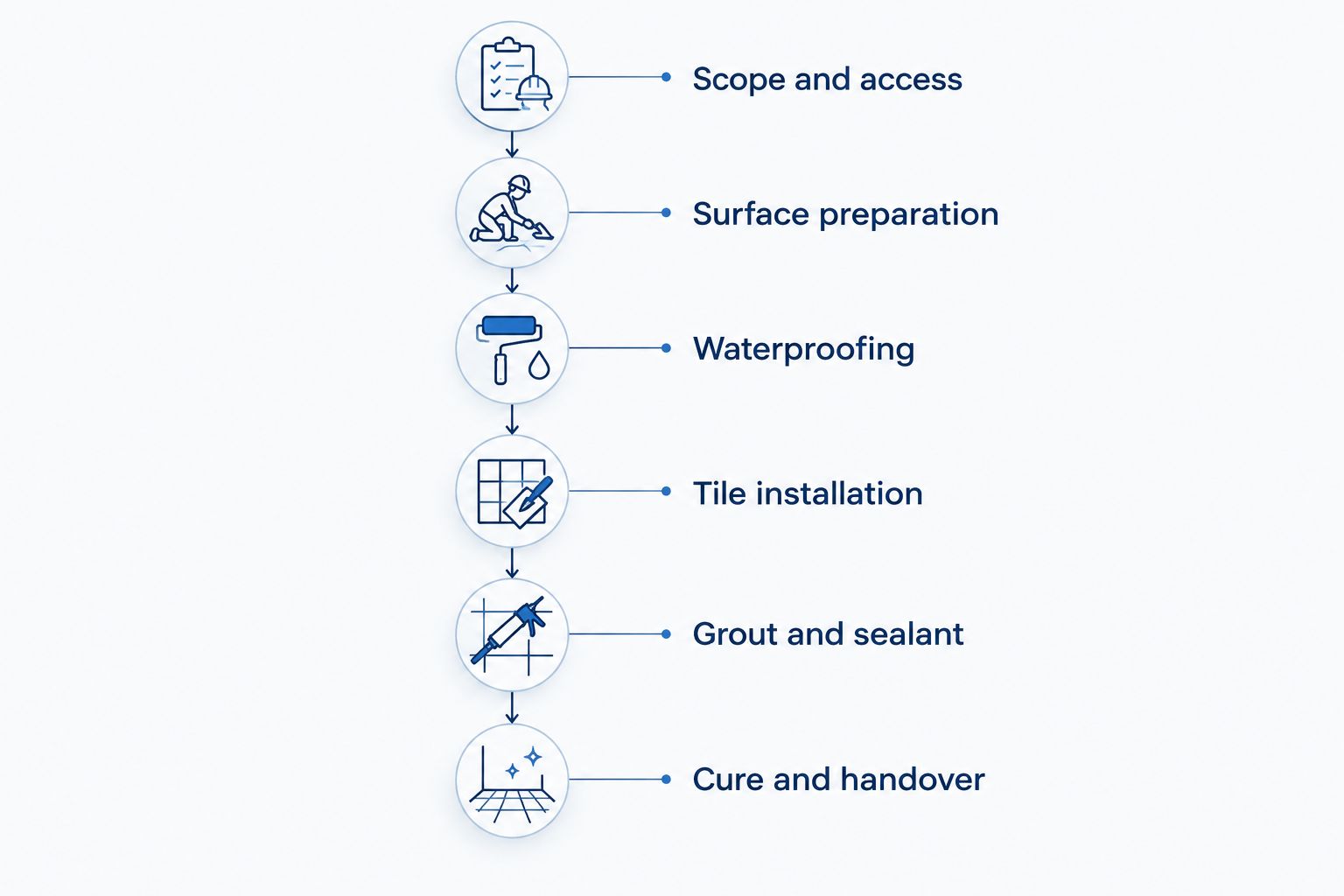
Follow the work in this order
- Scope and access. Confirm the surfaces being tiled, who removes existing finishes and when the room is available.
- Surface preparation. Check the base, complete necessary repairs and establish suitable levels and shower falls.
- Waterproofing. Complete the specified wet-area system and required checks before covering it.
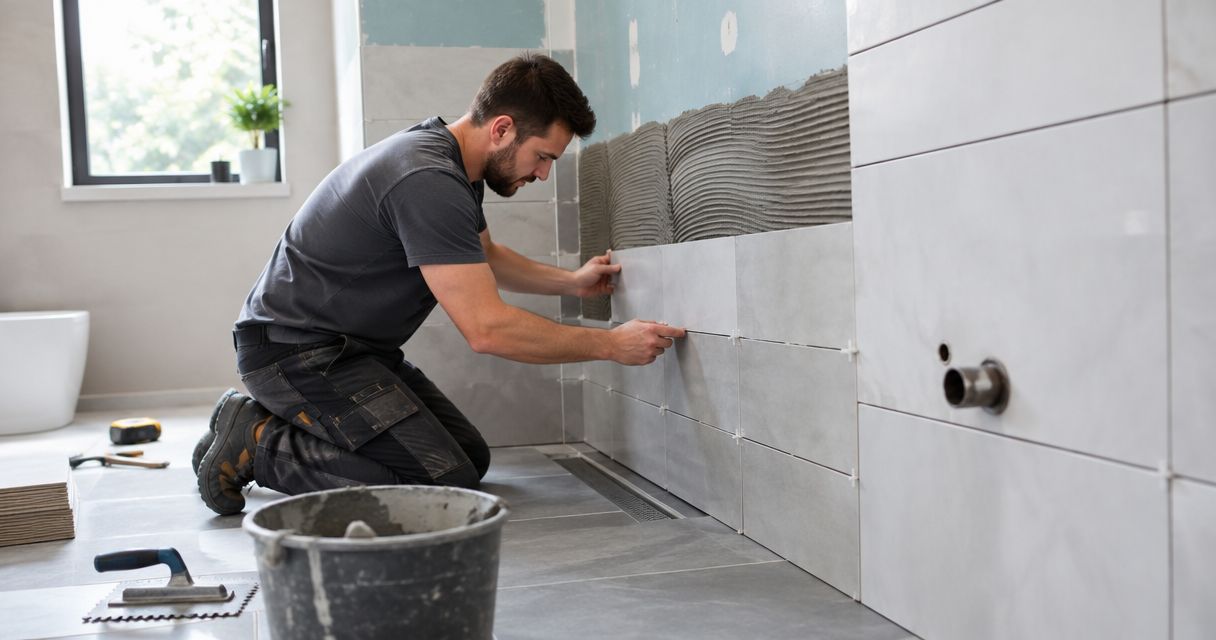
- Tile installation. Set out the layout, cut tiles and fix them with a suitable adhesive.
- Grout and sealant. Finish joints after the preceding materials are ready for the next operation.
- Cure and handover. Follow product instructions and confirm when foot traffic, fittings and shower use are permitted.
Some preparation details depend on the chosen construction system. Get that sequence agreed before work starts; do not assume waterproofing and screeding always happen in the same order.
Prepared surfaces: confirm what is ready
A room is not ready for tiling just because the old fixtures have gone. The surfaces need to suit the tile system, and wet-area preparation must be complete at the appropriate stage.
Ask who accepts the preparation before installation. This prevents a gap between the builder saying the bathroom is ready and the tiler finding work that still needs attention.
Your ready-to-tile checklist should cover:
- Sound surfaces: no loose material or movement that needs correction.
- Suitable levels: surfaces prepared for the intended tile finish.
- Drainage details: shower falls and waste positions resolved.
- Waterproofing readiness: the specified system ready to receive tiles.
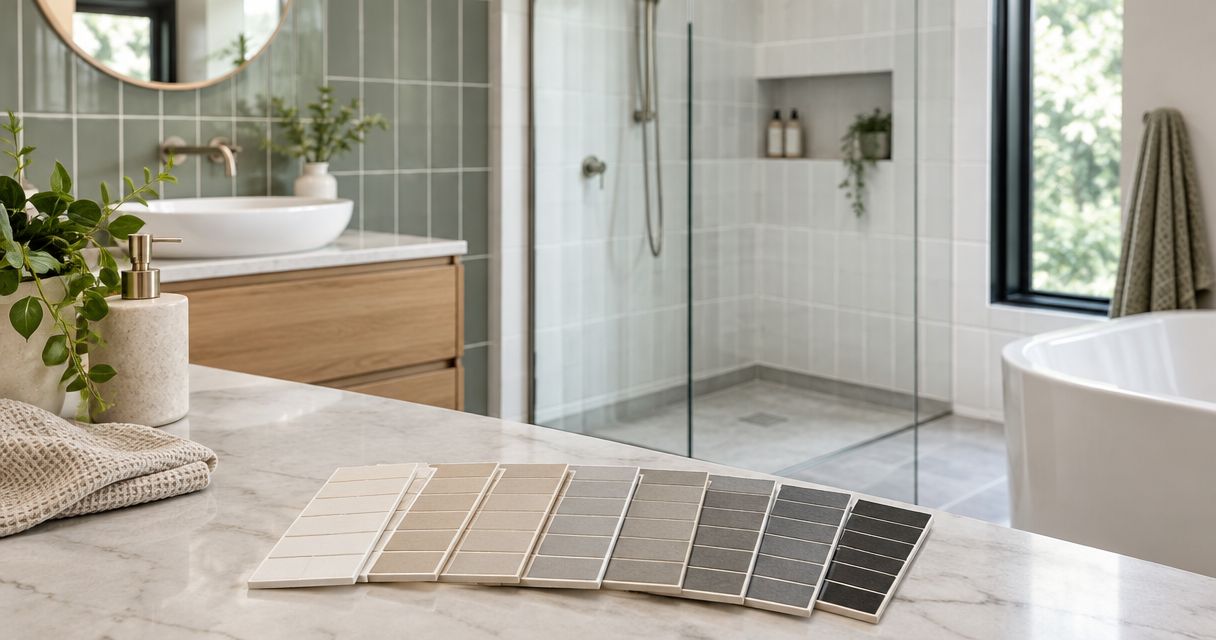
- Finished layout: tile direction, grout lines, trims and feature areas agreed.
Do not book the installation on the assumption that preparation will sort itself out. Ask for the readiness check to happen before the tiler's planned start, with responsibility assigned for any correction.
Full retiling: allow for what removal reveals
Removing existing tiles exposes the condition underneath. Damaged lining, loose screed or evidence of moisture needs assessment before the new finish covers it.
For a 2026 bathroom renovation, agree on a decision process for discoveries during removal. Ask who documents the problem, who approves the repair and when the revised programme will be issued.
Keep the process practical. Photographs and a clear description of the affected area help you understand why the scope has changed without relying on vague explanations.
The benefit of full removal is access to the underlying surfaces. The drawback is that the original schedule cannot account precisely for damage that is still concealed. Require an updated completion date after the exposed surfaces have been assessed.
Why bathroom tiling time varies
The main drivers are the work involved, the materials selected and the condition of the bathroom. Room size alone does not describe the job.
- Surface condition. Loose material, uneven surfaces and damaged linings add preparation before tile installation.
- Waterproofing requirements. The specified system determines preparation, application stages and readiness for covering.
- Tile layout. Niches, mitred edges, feature patterns and numerous penetrations add setting-out and cutting work.
- Material instructions. Adhesive, grout and sealant determine when the next operation or exposure to water is permitted.
- Trade coordination. Plumbing, electrical work, glazing and cabinetry need access without damaging unfinished surfaces.
- Site conditions. Temperature, ventilation and moisture conditions affect drying and curing; follow the relevant product instructions.
For a home in Melbourne's south-east, provide the same detail you would for any other Melbourne bathroom: room photographs, tile selections, access restrictions and the proposed scope. A suburb name does not replace a site-specific assessment.
Tile layout: make decisions before installation
Choose the layout before adhesive goes on the wall. Moving a feature line or changing a niche detail during installation interrupts work and can require finished areas to be altered.
Ask the tiler to show where cut tiles will sit around the doorway, shower, vanity and window. Check how wall joints meet floor joints where that alignment is part of your design.
Detailed layouts have benefits and trade-offs. A carefully positioned feature area gives you the finish you want, but additional edges and cuts require more work than an uninterrupted tiled surface.
Check these details together
- Tile direction and the starting reference line.
- Cut positions at visible corners and doorways.
- Niche edges and shelf finishes.
- Trims and exposed tile edges.
- Junctions with the vanity, bath and shower screen.
For your 2026 plan, settle these choices before the installation booking. Keep late design changes out of the tiling stage wherever possible. This controls avoidable rework without asking the tradesperson to rush.
Waterproofing and curing: do not compress the waiting stages
Tiles and grout are not a substitute for a correctly specified waterproofing system. The waterproofing beneath the finish needs suitable preparation and continuity around junctions, penetrations and drainage details.
Ask which system is being used and what must happen before tiles cover it. Request the relevant records and product information as part of the handover, rather than trying to reconstruct those details after the bathroom is finished.
Curing is also different from simply looking dry. A surface that feels firm does not establish that the material is ready for grouting, traffic or regular shower use.
Use the installed product instructions to set waiting periods. Do not transfer a drying time from another adhesive, grout or sealant to your bathroom. Keep the room protected while the specified process finishes, including when other trades return.
How soon can you use the shower after tiling?
Use the shower only after the installed adhesive, grout and sealant have met their relevant curing requirements and the bathroom is handed over for use. Ask for a specific date or written instruction tied to the products used.
A visual check is not enough. Finished grout lines and a fitted shower screen do not establish that the shower is ready for water.
Does a small bathroom always take less time to tile?
A small bathroom does not automatically take less time to tile. Tight access, multiple corners, niches and detailed cuts can make a compact room labour-intensive.
Preparation and curing still apply regardless of floor area. Compare the actual surfaces and details rather than assuming the smallest bathroom has the shortest programme.
Can other trades work while bathroom tiling is underway?
Other trades should enter only when their work will not disturb preparation, waterproofing or newly installed tiles. Arrange access with the person coordinating the bathroom.
Set clear rules for ladders, tools and loads on new floors. Protection helps prevent damage, but protection is not permission to load a surface before it is ready.
Get a schedule you can actually use
For your 2026 bathroom project, ask for a written programme with clear milestones. A start date and a rough finishing date leave too much room for different expectations.
Melbourne Tiling Group is suited to Melbourne homeowners seeking residential wall and floor tiling services. When discussing bathroom tiling with Melbourne Tiling Group, confirm whether your proposed scope includes removal, preparation and finishing, or installation alone.
Ask these questions before accepting the programme:
- What condition must the bathroom be in before work starts?
- Who handles repairs discovered after removal?
- Which work is included in the tiling scope?
- When can following trades enter the room?
- When can you walk on the floor and use the shower?
- Who confirms the final handover instructions?
A defined scope helps you compare quotes fairly and control the renovation budget. Removing necessary preparation from a quote does not remove the need to do it.
Melbourne Tiling Group provides bathroom tiling, but your complete renovation programme must also account for work outside the agreed tiling scope. Keep those responsibilities visible rather than assuming one booking covers every trade.
Discuss your bathroom tiling scope
Confirm preparation, installation and handover responsibilities before setting your renovation dates.
FAQ
How long does bathroom tiling take from start to finish?
Bathroom tiling takes the time required for preparation, tile installation, finishing and curing. Ask for a programme that distinguishes the tile-laying stage from the date the bathroom is ready to use.
Can I shower as soon as the grout looks dry?
No. Use the shower only after the installed materials meet their curing requirements and the bathroom is handed over for use; appearance alone does not confirm readiness.
Does waterproofing happen before bathroom tiling?
The specified waterproofing system must be ready to receive tiles before it is covered. Confirm its preparation, application sequence and required checks with the responsible tradesperson.
Will large tiles make my bathroom quicker to finish?
Large tiles do not guarantee a quicker bathroom installation. Handling, surface preparation, cuts and the layout all affect the work involved.
What should I organise before the tiler arrives?
Finalise the tile selection, layout, access and preparation responsibilities before installation starts. Confirm that the bathroom has been checked for readiness rather than assuming it is ready.
What happens if damage is found under my old tiles?
Damage needs assessment before new finishes cover it. Agree on the repair scope and request an updated programme after the exposed surfaces have been inspected.
Does Melbourne Tiling Group provide bathroom tiling?
Melbourne Tiling Group provides residential and commercial wall and floor tiling, including bathroom tiling. Confirm the preparation, installation and finishing work included in your particular job.
One last thing
Ask for separate milestones for last tile laid, floor access permitted and shower ready for use. Those are different events, and a single completion date can hide that distinction.
Put the shower-use instruction somewhere everyone in the household will see it. That simple handover step is more useful than a bathroom that looks finished but has no clear permission to use it.