Bathroom waterproofing cost in Melbourne in 2026 depends on the area being treated, the condition of the surfaces and the work included in the quote. Preparation, damaged flooring, drainage changes and tile removal need separate attention because a waterproofing-only quote does not necessarily cover them. Get a written, site-specific scope before comparing totals.
- Bathroom waterproofing cost Melbourne: compare preparation, membrane coverage and exclusions before accepting a quote.
- Melbournetilinggroup provides bathroom wall and floor tiling; clarify responsibility for waterproofing before booking installation.
- Tiles and grout do not replace the waterproofing system beneath them.
- Confirm surface repairs, drainage details and curing requirements before setting the tiling date.
Why this matters
Waterproofing sits beneath your finished bathroom. Once tiles cover it, checking or repairing the membrane involves disturbing the finish above it. That makes the preparation and installation sequence just as important as the quoted total.
Your aim is an affordable bathroom that stays serviceable, not simply the shortest quote. The waterproofing sign-off to tile installation workflow explains the handover point to plan before your tiler starts.
How much does bathroom waterproofing cost in Melbourne in 2026?
The useful figure is the total for your bathroom's agreed scope, not a rate detached from the room. A cleared bathroom with suitable surfaces is a different job from an existing shower with loose tiles, damaged flooring and an unidentified leak.
Ask the contractor to separate the following work. This breakdown shows whether competing quotes cover the same job and where additional work requires approval.
| Work item | What the quote should identify | What to clarify |
|---|---|---|
| Removal | Tiles, existing finishes and waste handling | Whether demolition is included or already completed |
| Surface preparation | Cleaning, repairs and suitable backing surfaces | How concealed damage will be assessed |
| Falls and drainage | Screeding and work around the waste outlet | Who checks drainage before waterproofing |
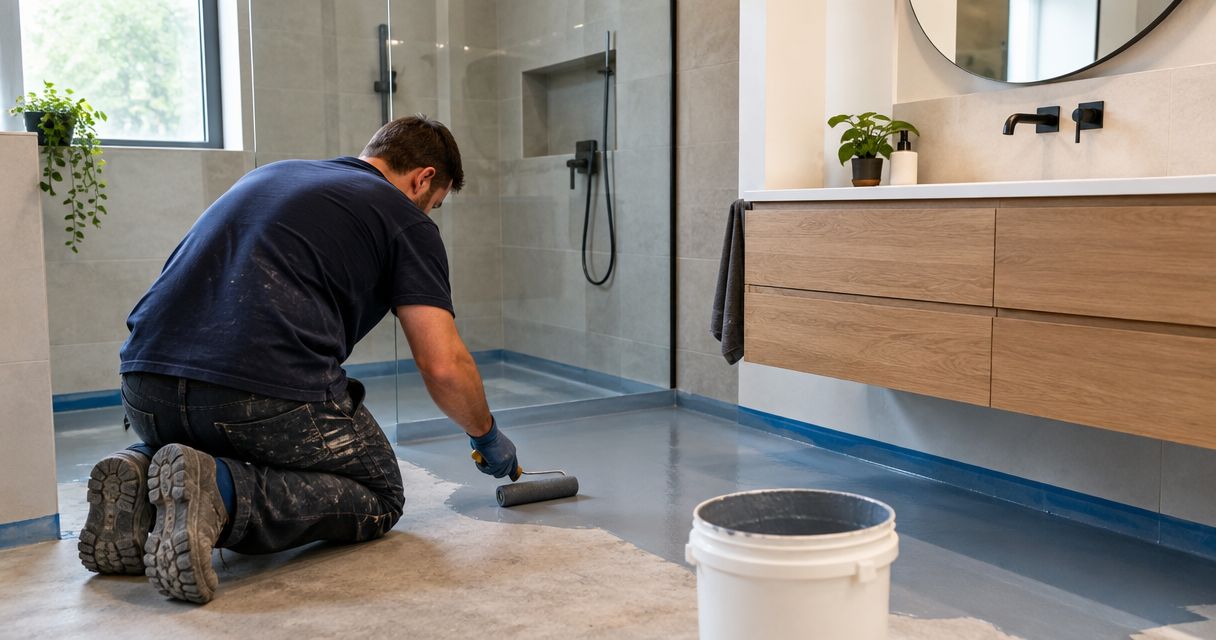
| Waterproofing | Treatment areas, membrane system and junction details | Which walls, floors and shower features are included |
| Handover | Curing requirements, checks and documentation | Who confirms readiness for tiling |
| Finished tiling | Adhesive, tiles, grout and movement joints | Whether this is a separate scope |
Compare complete scopes, not matching headings. Two quotes labelled bathroom waterproofing can cover different preparation, treatment areas and handover responsibilities.
What belongs in your bathroom budget?
Keep waterproofing separate from the rest of the renovation when reviewing the paperwork. Plumbing, demolition, screeding, waterproofing and tiling connect physically, but they are not interchangeable tasks.
For your 2026 bathroom budget, mark each task as included, excluded or supplied by another trade. Leave nothing described only as by others without naming who is responsible. That simple check prevents a gap between the person preparing the floor and the person applying the membrane.
New bathroom surfaces: best for a clearly defined installation
A new bathroom or fully stripped renovation gives the contractor access to the surfaces that need assessment. That helps establish the preparation and waterproofing scope before tiles hide the work.
The advantage is visibility. The limitation is that new surfaces still need checking; new sheeting or screed is not automatically ready for a membrane.
Ask whether the proposed backing surfaces suit the selected waterproofing system. Confirm who handles joints, fixings, penetrations and any corrections needed before application. Do not treat new construction as permission to skip preparation.
Existing bathroom renovation: best for a coordinated replacement
An existing bathroom needs a clear removal plan. The condition of the floor and walls beneath the tiles becomes easier to assess after those finishes come off.
A coordinated replacement lets you address preparation, drainage and the new tile layout together. The drawback is uncertainty before demolition, particularly where water damage or previous alterations are concealed.
Ask how the contractor handles newly exposed defects. The written process should explain how you receive the findings, approve additional work and confirm the revised scope before installation continues.
Local shower repair: best for an assessed, limited defect
A local repair makes sense only when the defect and repair boundaries have been established. Replacing grout or silicone does not, by itself, establish that a concealed membrane problem has been repaired.
The attraction is a smaller work area. The limitation is the connection between repaired waterproofing and the existing system, which needs assessment rather than assumption.
Before choosing a local repair, ask what caused the leak and how the proposed work addresses that cause. A small visible stain does not define the size of the underlying repair.
Which scope matches your bathroom?
| Scope | Best for | Main advantage | Main limitation |
|---|---|---|---|
| New bathroom surfaces | A room with exposed, assessable backing surfaces | Preparation can be agreed before finishes go on | Surface suitability still needs checking |
| Existing bathroom renovation | Replacing finishes and addressing underlying conditions together | Access to concealed surfaces after removal | Hidden defects complicate the initial scope |
| Local shower repair | A defect assessed as suitable for a limited repair | Restricts disturbance to an agreed area | Existing membrane connections need careful assessment |
These are scope choices, not interchangeable packages. Choose the approach that addresses the condition of the bathroom rather than the one with the least demolition on paper.
Why bathroom waterproofing quotes vary
Bathroom size matters, but floor area alone does not describe the work. A shower includes junctions, outlets and other details that need treatment as part of the waterproofing system.
Check these factors against your own room:
- Treatment area: Ask which floor and wall surfaces are included. A room measurement is not a substitute for a marked treatment scope.
- Surface condition: Loose, damaged or unsuitable backing surfaces need attention before waterproofing proceeds.
- Shower details: Niches, hobs, corners and pipe penetrations introduce connections that need detailing.
- Drainage preparation: Falls and the connection at the waste outlet need coordination with the waterproofing work.
- Existing finishes: Tile removal and disposal are separate from applying a membrane unless expressly included.
- Trade sequencing: Plumbing alterations, surface preparation and curing requirements affect when each trade can start.
For a south-east Melbourne bathroom renovation, send the same room information to every contractor. Include photographs, the proposed layout and whether you are keeping the existing shower position. Consistent information produces quotes you can compare more fairly.
How to compare waterproofing quotes in 2026
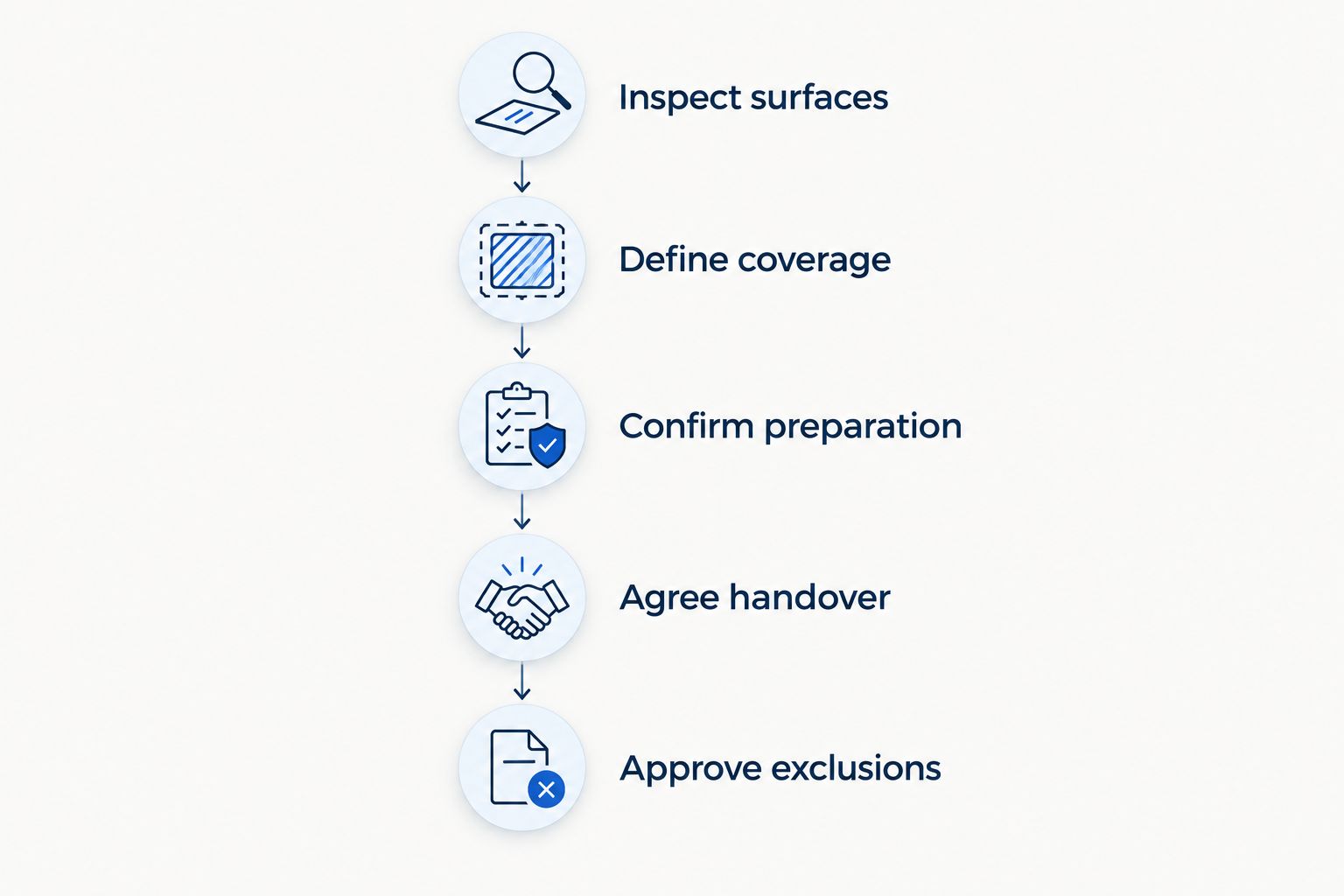
Use a short approval sequence before you commit. You do not need to choose a membrane yourself, but you do need to understand what the contractor intends to install and what must happen around it.
- Inspect surfaces. Arrange an assessment of the bathroom and identify any areas that remain concealed. Ask what needs another inspection after removal.
- Define coverage. Request a written description of the treatment areas, including shower features and relevant junctions. Have unclear boundaries marked on a sketch.
- Confirm preparation. Identify who repairs backing surfaces, forms the required falls and prepares the waste connection. These tasks must have an owner.
- Agree handover. Record the selected system's curing requirements and the checks needed before tiling. Ask what documentation accompanies completion.
- Approve exclusions. Read demolition, plumbing, tiling and waste clauses separately. Agree how additional work gets authorised before it starts.
The comparison works only when each contractor responds to the same scope. If a quote changes the proposed treatment area or leaves preparation unresolved, ask for clarification before treating it as a like-for-like alternative.
Questions to put in writing
Ask who takes responsibility for the complete waterproofing system, not just the membrane application. Confirm how the installer will follow the selected manufacturer's instructions and coordinate the system with the bathroom's construction.
Request clarification of any proposed testing, inspection or completion records. Do not assume that a test, certificate or warranty is included because the quote uses the word compliant. Ask exactly what will be supplied and who supplies it.
How do you keep the scope affordable without cutting corners?
Settle the layout before preparation begins. Moving a shower outlet, changing a niche or altering a screen fixing location after waterproofing creates more coordination and work.
Keep the design decisions separate from the protective work. Tile colour and pattern affect the finish; they do not remove the need for suitable backing surfaces, sound waterproofing details or proper curing.
You can make the quote clearer by preparing the following information:
- Whether the bathroom is occupied or already stripped.
- Whether the shower, toilet and vanity positions will change.
- Whether you want niches, a hob or a level-entry shower.
- Who is arranging demolition, plumbing and tile installation.
- Any known leaks, loose finishes or previous repairs.
Avoid buying materials for the contractor without agreement. A membrane, primer, adhesive and backing surface need to work together as a specified system. Choosing components separately is not a substitute for confirming compatibility.
Coordinate waterproofing with the bathroom tiler
Melbournetilinggroup is best suited to Melbourne homeowners seeking bathroom wall and floor tiling. Its stated service covers tiling installation, so confirm who will perform the waterproofing rather than assuming it is part of the tiling booking.
You can discuss the bathroom tiling scope with Melbournetilinggroup while keeping preparation and waterproofing responsibilities explicit. The benefit is a defined conversation about the finished surfaces; the boundary is that a tiling scope alone does not establish who owns every earlier stage.
Before booking installation, give the tiler the proposed waterproofing system and handover requirements. Agree who protects the membrane from damage between trades and what happens if someone identifies a defect before tiles are laid.
Discuss your bathroom tiling scope
Clarify wall and floor tiling requirements alongside your bathroom preparation plan.
Does waterproofing include screeding and tile removal?
Waterproofing includes screeding and tile removal only when the written scope says so. Screeding forms or corrects the surface and falls; demolition removes existing finishes. Ask for both tasks to be listed separately so you know who completes them.
Can I waterproof over existing bathroom tiles?
Waterproofing over existing bathroom tiles requires assessment of the existing surface and the proposed system. It is not a default substitute for investigating a leak. Ask how the method deals with adhesion, drainage connections and the condition of the layers underneath.
When can the tiler start after waterproofing?
The tiler can start after the selected system has met its curing and handover requirements. Follow the manufacturer's instructions for the actual conditions rather than booking from a generic drying-time estimate. Keep the treated area protected until the next trade takes over.
FAQ
How do I get an accurate bathroom waterproofing quote in Melbourne?
Get a site-specific quote that identifies preparation, treatment areas, drainage details and exclusions. Give each contractor the same bathroom layout and explain whether existing finishes will be removed.
What should a bathroom waterproofing quote include in 2026?
A bathroom waterproofing quote should define the work area, surface preparation, selected system, handover requirements and responsibility for related tasks. Ask how concealed damage and additional work will be approved.
Is bathroom waterproofing included in a tiling quote?
Bathroom waterproofing is included only when the tiling quote explicitly lists it. Confirm who performs the work and who authorises the handover before tile installation.
Will replacing grout fix a leaking shower?
Replacing grout does not repair a failed waterproofing membrane beneath the tiles. Have the leak assessed before choosing a repair, because the visible symptom does not establish the cause.
Is a smaller bathroom always a simpler waterproofing job?
A smaller bathroom is not automatically simpler to waterproof. Niches, penetrations, drainage details and damaged backing surfaces all affect the work beyond the floor area.
Can Melbournetilinggroup help with bathroom tiling?
Melbournetilinggroup provides residential bathroom wall and floor tiling in Melbourne. Confirm the project scope and responsibility for waterproofing before arranging installation.
One last thing
Before approving your 2026 bathroom quote, ask: Who checks the waterproofing before the tiles cover it? Get a named responsibility and a clear handover requirement. A finished tile surface cannot show you whether every concealed junction was prepared correctly.