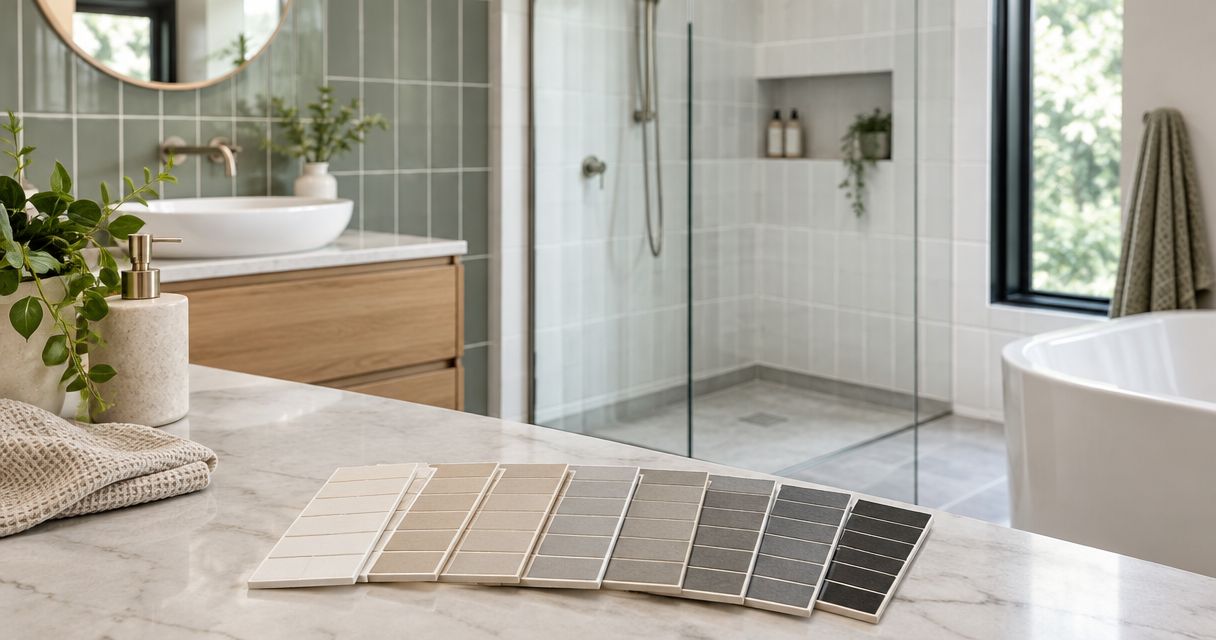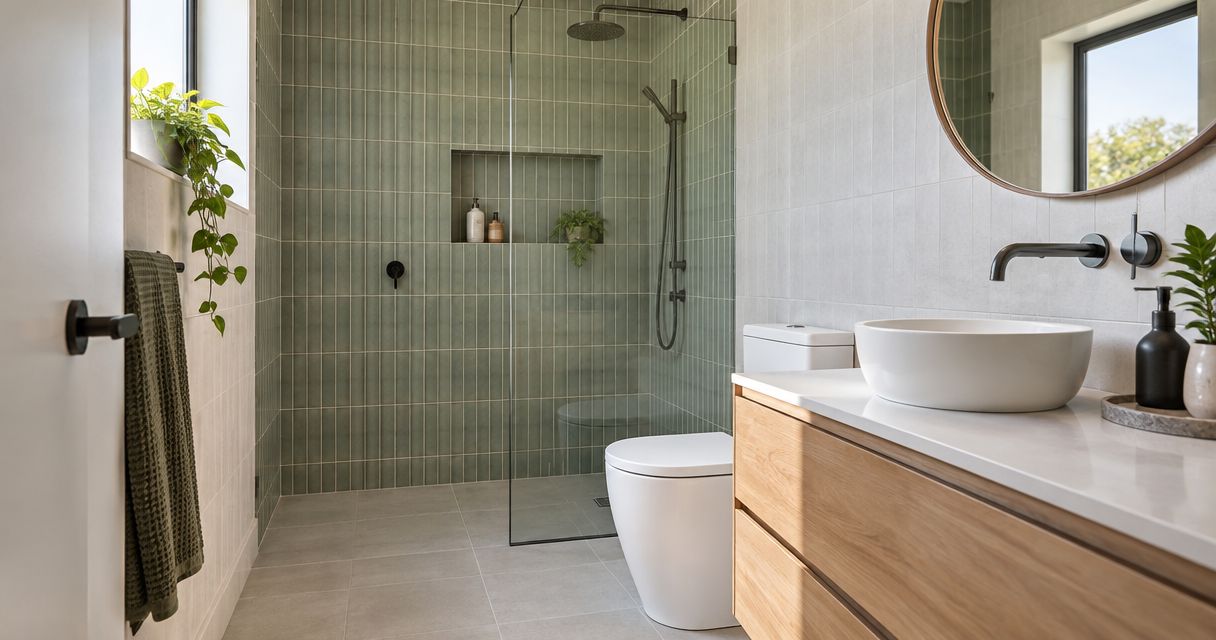
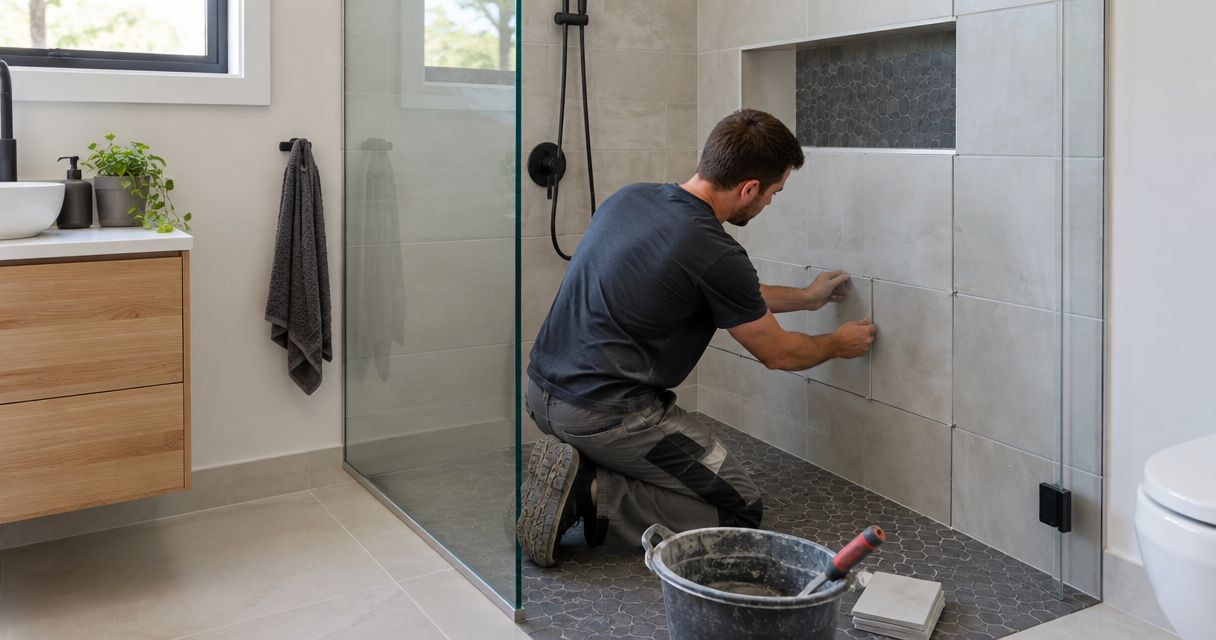
The cost to retile a shower in Melbourne depends on the removal work, the condition underneath, the waterproofing scope and the new tile layout; get an itemised site quote before setting your 2026 budget. A tile-installation quote alone does not cover every part of a shower rebuild, so check demolition, substrate repairs, plumbing and shower-screen work separately.
- Melbourne Tiling Group provides bathroom tiling for Melbourne homeowners planning a shower renovation.
- Your cost to retile a shower in Melbourne depends on preparation, waterproofing and installation—not tiles alone.
- Compare written scopes before totals; removal, repairs and shower-screen work need clear inclusions.
- Tiles and grout are not substitutes for the waterproofing system underneath.
Why this matters
A shower can look like a small tiling job while involving several connected trades. Removing tiles exposes the backing beneath them. The condition of that backing helps determine whether the job stays within the original scope or needs additional repairs.
Melbourne Tiling Group is a fit for Melbourne homeowners seeking residential bathroom tiling. You can discuss the tiling portion of your renovation with Melbourne Tiling Group, while confirming who handles waterproofing, plumbing and glass.
For a 2026 renovation, your first decision is the repair scope—not the tile colour. That decision gives each contractor the same job to quote and makes the final comparison useful.
How much does it cost to retile a shower in Melbourne?
Your shower-retile budget needs to cover the complete agreed scope, not just laying new tiles. Ask for the following items to be included, excluded or separately identified in writing.
| Work item | What the quote should explain | What to check |
|---|---|---|
| Protection and removal | Protecting access areas, removing existing tiles and clearing waste | Whether disposal and shower-screen removal are included |
| Substrate repairs | Preparing or replacing the surface behind the tiles | How concealed damage will be assessed and approved |
| Screed and drainage | Preparing the shower floor and falls towards the waste | Whether the existing floor arrangement is being retained |
| Waterproofing | Preparing and applying the specified wet-area system | Who completes it and what records you receive |
| Tile installation | Setting out, cutting, fixing and finishing the tiles | Whether the scope covers walls, floor, niches and edges |
| Grout and sealant | Filling tile joints and sealing the specified junctions | Which materials and locations are included |
| Reinstatement | Refitting fixtures and the shower screen | Which trade is responsible and whether replacements are excluded |
Ask the contractor to distinguish confirmed work from work that depends on demolition findings. A clear allowance or exclusion is more useful than a total that hides unresolved decisions.
Also confirm whether you supply the tiles. If you do, agree on the tile choice before the installer finalises the scope. Format, thickness and layout affect the installation method and detailing.
Local tile repairs: best for an isolated tile problem
A local repair suits an isolated damaged tile only after the underlying issue has been assessed. The benefit is a smaller work area. The limitation is that replacing the visible tile does not establish that the surrounding waterproofing is sound.
Ask whether removing the damaged tile will disturb the membrane behind it. Also check whether a suitable replacement tile can be sourced; a close match still needs your approval before installation.
Do not treat a tile patch as a leak repair without a diagnosis. If water is escaping the shower, identify the source before choosing the repair method.
Shower-only retiling: best for a defined renovation area
Retiling the shower walls and floor keeps the work focused on the enclosure. It lets you address the tiled surfaces without automatically extending the project across the whole bathroom.
The limitation is the junction between new work and retained surfaces. Waterproofing connections, floor levels, wall edges and the shower screen all need a workable detail. Keeping the same layout does not remove those requirements.
For your 2026 quote, mark the exact work boundary on photographs or a simple sketch. Include the shower entry, wall height, niche and any adjoining tiles that must remain.
A wider bathroom renovation: best when connected work needs attention
A wider renovation suits a project where the shower work connects with changes to the bathroom floor, plumbing layout or adjoining walls. The benefit is the ability to plan those interfaces together rather than treating each surface separately.
The trade-off is a broader scope with more decisions and trade coordination. Do not expand the project simply because the shower is being retiled. Ask what additional work is necessary and what is an optional improvement.
| Approach | Best for | Main benefit | Main limitation |
|---|---|---|---|
| Local tile repair | An assessed, isolated tile defect | Limits the area disturbed | Does not establish the condition of the whole waterproofing system |
| Shower-only retiling | A clearly defined enclosure renovation | Keeps the work boundary focused | New-to-existing junctions need careful planning |
| Wider bathroom renovation | Connected floor, wall or layout work | Allows adjoining details to be planned together | Adds scope and coordination |
Why shower retiling costs vary
These factors change the work involved. Use them to explain differences between quotes rather than assuming each contractor has allowed for the same job.
- Removal conditions: Tile removal, access and waste handling belong in the scope. Ask what happens if the backing comes away with the tiles.
- Surface condition: Loose, damaged or unsuitable backing needs attention before installation. Covering it with new tiles does not correct the underlying defect.
- Waterproofing interfaces: Corners, the waste, pipe penetrations and the shower entry need planned details. Confirm how new work connects with retained areas.
- Tile layout: Niches, patterns, exposed edges and cuts affect the installation work. Supply the proposed layout when requesting a quote.
- Plumbing and glass: Moving fittings or changing the shower enclosure creates work beyond tile installation. State whether those elements stay or change.
- Site access: Stairs, parking arrangements and protection of occupied rooms affect how the work is organised. Describe your property accurately before the visit.
For a home in Melbourne's south-east, provide the suburb and access details with your enquiry. The location helps organise the assessment; it does not replace inspecting the shower itself.
Plan the job before choosing the finish
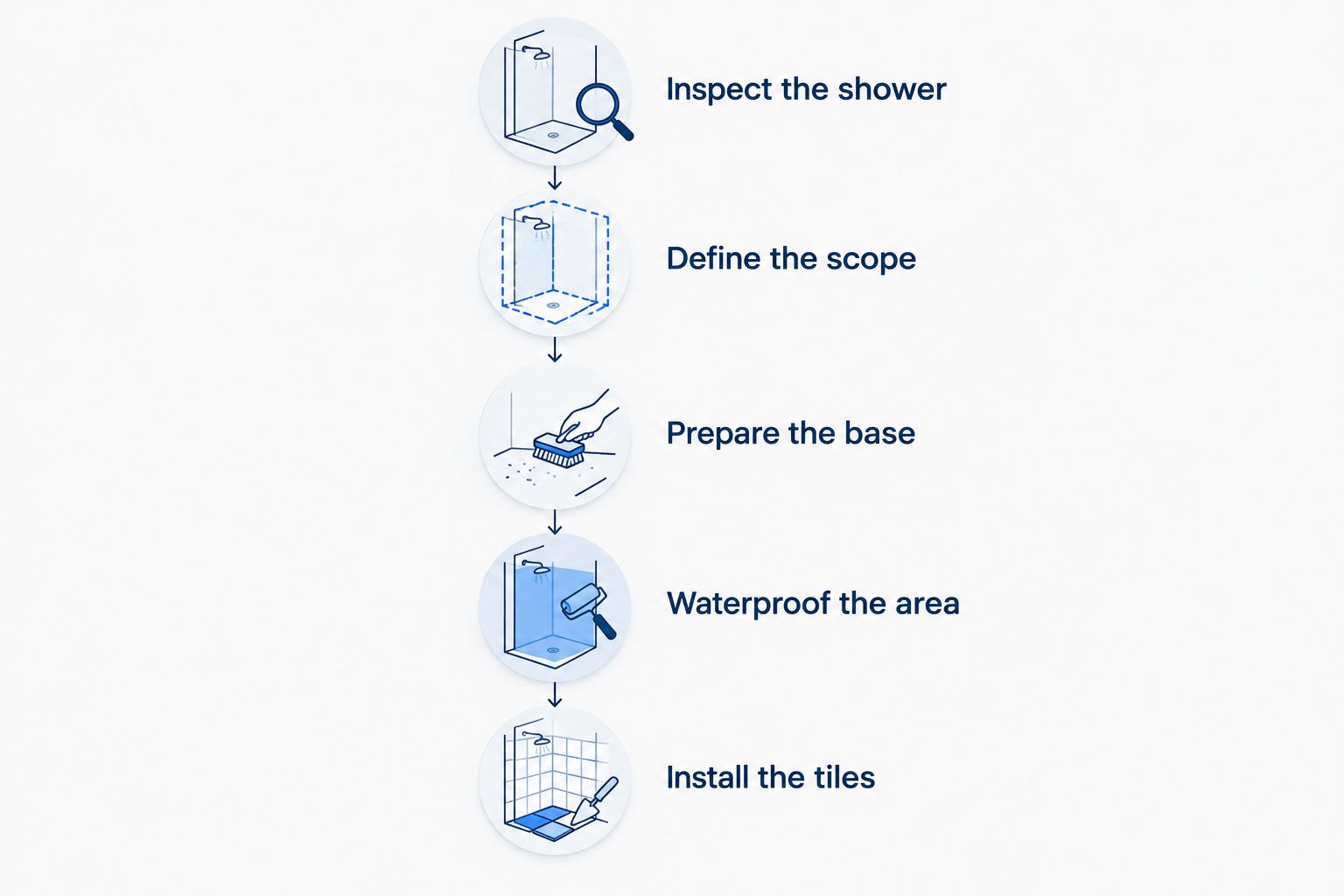
A good installation starts with decisions about what sits underneath the tiles. Use this sequence to organise the conversation with your contractor.
- Inspect the shower. Explain visible cracking, loose tiles, damp areas or previous repairs. Let the appropriate trade assess the cause rather than selecting a cosmetic fix first.
- Define the scope. Mark what comes out and what stays. Include fittings, the shower screen, tiled heights and adjoining surfaces.
- Prepare the base. After removal, assess the backing and floor preparation. Get approval for additional repairs before they proceed.
- Waterproof the area. Confirm the specified system, responsible trade and required checks. Follow the product instructions for preparation and curing.
- Install the tiles. Agree on the layout, edge treatment, grout and sealant. Obtain clear instructions before returning the shower to use.
The order matters because later finishes rely on earlier preparation. The plumber rough-in to tiled shower workflow explains the handover between plumbing preparation and tiling.
Ask who coordinates the handovers between trades. If you arrange them separately, make sure each contractor knows what must be completed before the next stage starts.
How to compare shower-retile quotes in 2026
Send each contractor the same photographs, dimensions and written brief. Include the tile selection if it is decided, and identify anything still undecided. Otherwise, the quotes can describe different jobs despite appearing to cover the same shower.
Your comparison should answer these questions:
- Does each quote cover the same wall and floor area?
- Are demolition, waste removal and surface preparation included?
- Who is responsible for waterproofing and its documentation?
- Are the shower screen, plumbing fittings and reinstatement included?
- How are concealed defects and changes approved?
- What handover information and care instructions will you receive?
Resolve exclusions before accepting the quote. An excluded task still needs someone responsible for it. Write down who supplies materials, who arranges each trade and who approves changes.
Keep the accepted quote and any later variations together. If demolition reveals damage, ask for a written description of the additional work before authorising it. This protects the agreed scope without pretending every concealed condition can be known in advance.
Discuss your shower tiling scope
Explain your shower layout, tile plans and the work you want included.
Can you reduce the scope without weakening the result?
Keep optional changes separate from necessary preparation. Retaining a suitable layout removes the need to plan a different arrangement, but the existing plumbing and drainage still need assessment.
Choose the tile format and finish before ordering materials or confirming installation. A straightforward layout reduces design decisions; it does not justify skipping substrate preparation, waterproofing or movement joints.
Ask for optional features to be listed separately. A niche or decorative pattern is a design choice. Repairing an unsuitable surface is preparation. Keeping those categories distinct helps you decide where to simplify without cutting out necessary work.
Does regrouting fix a leaking shower?
Regrouting does not replace a failed waterproofing membrane. Grout fills the joints between tiles; it is not a substitute for the waterproofing system beneath the tiled finish.
A leak needs assessment because its source determines the repair. Do not approve regrouting solely because it disturbs less of the shower. Ask what evidence supports the proposed fix and what the work will—and will not—address.
Can you tile over the existing shower tiles?
Tiling over existing tiles requires an assessment of the existing surface and the proposed installation system. It does not repair damaged backing or establish that concealed waterproofing is sound.
The added finish also changes the relationship with fittings, edges and the shower entry. If the reason for renovating is a leak or loose tiles, address that problem before considering an overlay.
FAQ
How do I get an accurate shower retiling quote in Melbourne?
Get an itemised site quote based on a defined work area and tile selection. Ask the contractor to identify removal, repairs, waterproofing, installation and reinstatement separately.
Does a shower tiling quote include waterproofing?
Waterproofing is included only when the written quote says it is. Confirm who completes the work, which areas are covered and what documentation you receive.
Is regrouting the same as retiling a shower?
Regrouting replaces grout between retained tiles, while retiling replaces the tiles. Neither description alone confirms that the underlying waterproofing will be repaired or replaced.
Can I keep my existing shower screen when retiling?
Keeping the existing shower screen depends on its condition and compatibility with the finished opening. Confirm removal, storage and refitting responsibilities before demolition.
How long before I can use a newly retiled shower?
Use the shower only after the specified materials have cured and the installer has cleared it for use. Ask for a handover date based on the actual waterproofing, adhesive, grout and sealant instructions.
Does Melbourne Tiling Group provide residential bathroom tiling?
Melbourne Tiling Group provides residential bathroom wall and floor tiling across Melbourne. Discuss your shower project and confirm the included work before accepting a quote.
Should I buy shower tiles before getting a quote?
Agree on the tile selection with your installer before purchasing. Confirm suitability, layout, quantity and edge details so the installation scope matches your chosen finish.
One last thing
For your 2026 shower renovation, ask this before approving the work: What happens if tile removal reveals damaged backing? The answer should identify who assesses it, who proposes the repair and how you approve the change.
That agreement is more useful than a tile-only estimate. It gives you a clear decision point when the concealed part of the shower becomes visible.