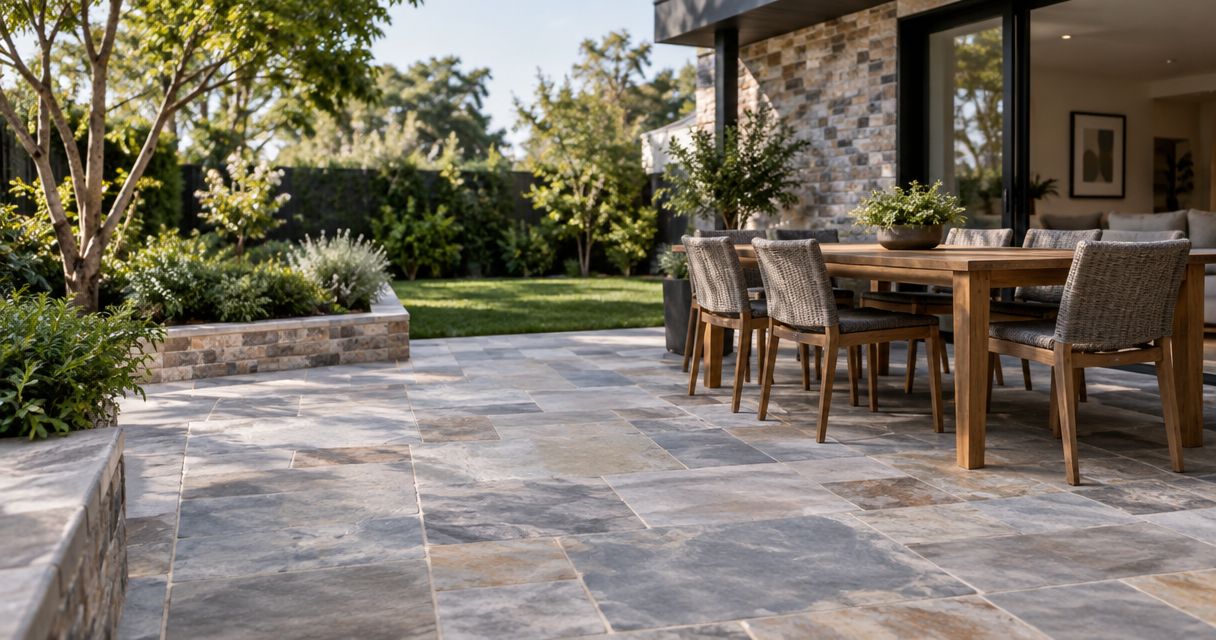
Natural stone paving cost in Melbourne depends on the stone, the installation method and the work needed beneath it, so budget from an itemised, site-specific quote in 2026 rather than a stone-only rate. The total needs to account for preparation, drainage, laying, joints and finishing—not just the paving you can see.
- Natural stone paving cost Melbourne comparisons need the same scope: stone, preparation, drainage, installation and finishing.
- A supply-only stone quote is not an installed paving quote.
- Melbourne Tiling Group suits Melbourne homeowners seeking wall and floor tiling installation.
- Confirm finished levels, drainage and maintenance requirements before choosing your outdoor paving.
Why this matters
A paving quote is only useful when you know what it includes. A lower total with excavation or drainage left out is not a like-for-like alternative to a quote covering the complete installation.
If your project also includes indoor floors, a bathroom or a kitchen, Melbourne Tiling Group provides residential and commercial wall and floor tiling. Keep those tiling areas clearly separated from the external paving scope so you can check each part of the work.
Compare the completed job, not the stone alone. That means agreeing on the surface, the support beneath it and where rainwater will go before accepting a quote.
How much does natural stone paving cost in Melbourne?
The useful figure is the total for your measured area and agreed construction method. A rate per square metre, written as m², helps you compare similar work, but it does not explain fixed tasks such as removing an old path or altering drainage.
For a 2026 paving budget, request the following breakdown. Ask the contractor to mark each item as included, excluded or subject to further inspection.
| Quote component | What to have described | What to check |
|---|---|---|
| Stone supply | Stone type, finish, dimensions and quantity | Whether delivery and cutting allowance are included |
| Removal | Existing paving, bedding and waste disposal | Whether the old base stays or comes out |
| Ground preparation | Excavation and preparation of the supporting ground | How unsuitable ground will be handled |
| Base or substrate | The support specified for the chosen paving system | Whether existing concrete is suitable for reuse |
| Drainage and levels | Surface falls, outlets and connections within scope | Where water goes at doors, walls and boundaries |
| Installation | Laying method, cutting, edges and steps | Whether detailed edge work is included |
| Joints and finishing | Joint treatment, cleaning and any specified sealing | Which products suit the selected stone |
Do not add these items twice. Some contractors combine preparation and laying; others show them separately. Ask for clarification wherever the wording overlaps.
Supply-only versus installed paving: what are you comparing?
Supply-only is best for checking the material component. A complete installation quote is best for setting the project budget. Neither replaces the other.
| Quote scope | Best for | Useful feature | Limitation |
|---|---|---|---|
| Supply-only stone | Comparing the same stone specification | Separates the material choice from labour | Does not cover the completed outdoor surface |
| Installation-only | A project with stone already selected | Makes the contractor's laying scope clear | Responsibility for material suitability needs agreement |
| Supply and installation | Budgeting for an agreed finished area | Brings material and installation responsibilities together | Exclusions still need checking |
A quote described as supply and installation is not automatically complete. Removal, drainage alterations and sealing still need an explicit answer.
New paving: establish the ground and drainage scope
A new paved area starts with the ground, not the stone sample. The proposed use, existing levels and drainage route shape the supporting construction.
Show the contractor where the paving will meet the house, garden beds, gates and neighbouring surfaces. Include steps and narrow side access in the inspection. Those details affect how materials reach the work area and how the finished paving connects to the property.
Ask for the proposed installation method in plain language. You should understand what supports the stone and how the surface sheds water without needing to interpret trade shorthand.
Do not approve the surface finish while leaving finished levels undecided. Resolving those levels after work starts can change the agreed scope.
Replacement paving: check what can actually stay
Replacing existing paving adds a separate question: what lies underneath? An intact-looking surface does not establish whether its base suits the replacement system.
Ask the contractor to distinguish removal from reuse. If an existing slab is to remain, the quote should explain the assessment required and any preparation included before laying begins.
Keep potential extra work defined. Rather than accepting a vague allowance for repairs, agree on how the contractor will document a problem, explain the proposed work and obtain your approval.
For a replacement project quoted in 2026, record the visible site condition before work starts. Photographs help establish which areas were included and which existing defects were already present.
Why natural stone paving quotes vary
The same measured area can involve different work. These are the main scope differences to settle before comparing totals:
- Stone specification: Type, finish, size and thickness determine what is being supplied and which installation details need checking.
- Existing conditions: Removing old paving and preparing the ground are different tasks from laying over a suitable, prepared substrate.
- Drainage: Falls, outlets and connections need a defined scope rather than a general promise that water will drain away.
- Layout: Borders, steps, curves and repeated cuts add work beyond a straightforward field of paving.
- Site access: The route for delivering stone, moving equipment and removing waste affects how the job is organised.
- Finishing: Joint treatment, cleaning and specified sealing need to match the stone and appear in the written scope.
A south-east Melbourne courtyard with narrow access needs its own assessment. Do not transfer another property's quote to your home simply because the paved areas look similar.
The suburb name alone does not describe the work. Access, levels, ground conditions and the chosen construction method are the details to compare.
How to get a useful natural stone paving quote
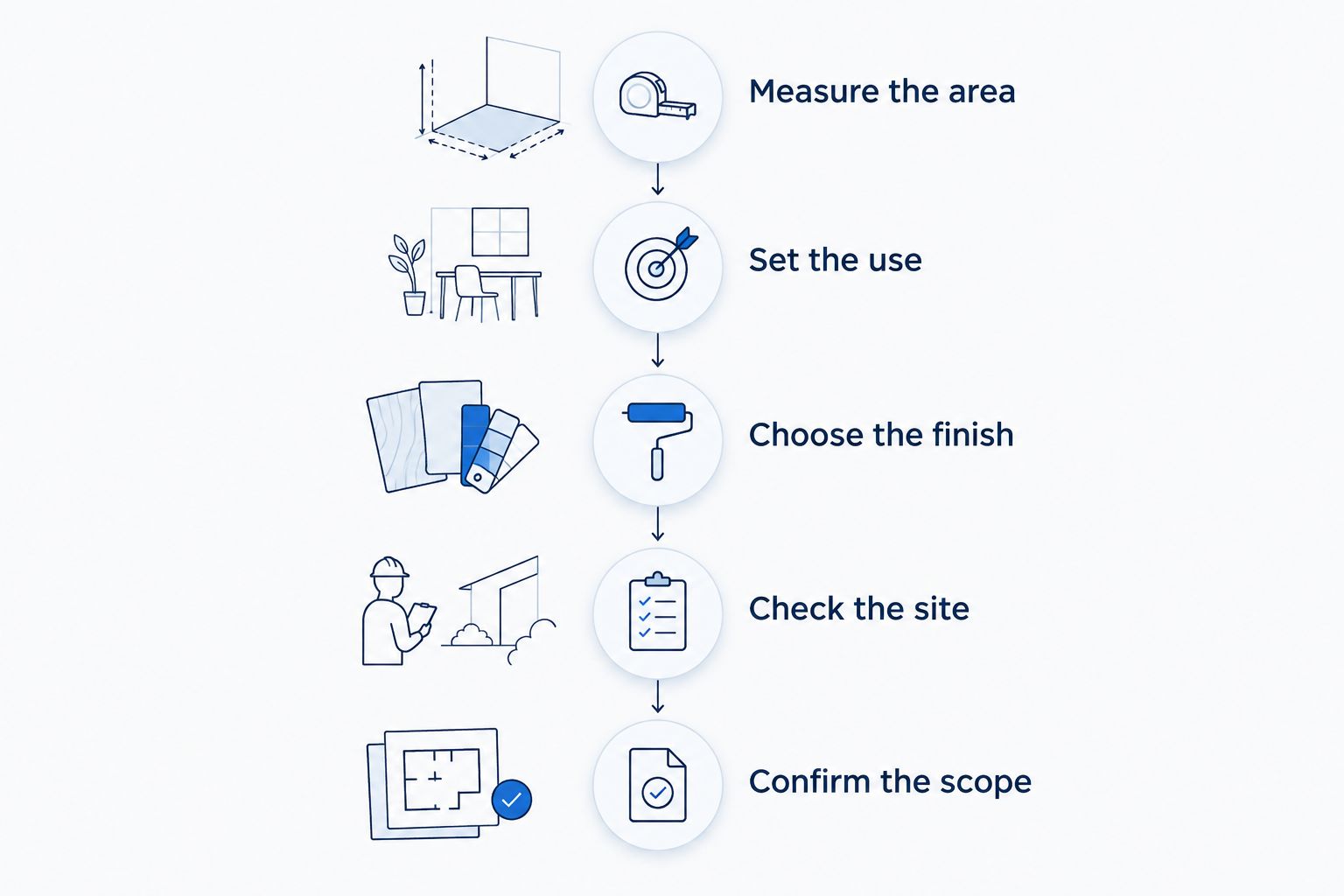
Prepare a short project brief before requesting quotes. Give every contractor the same information, then ask them to identify anything that needs a site inspection.
- Measure the area. Record the proposed paving footprint and identify steps, edges and separate sections. Let the contractor verify quantities before ordering.
- Set the use. State whether the area is a pedestrian path, entertaining space, pool surround or driveway. Do not treat those uses as interchangeable.
- Choose the finish. Bring a stone sample or a clear specification. Ask about suitability for outdoor use, wet conditions and the intended installation.
- Check the site. Walk through access, drainage, existing surfaces and door thresholds with the contractor.
- Confirm the scope. Obtain a written description of inclusions, exclusions, responsibilities and the process for approving changes.
These steps make a 2026 quote easier to assess because each contractor is responding to the same job. They also expose disagreements before materials are ordered.
Ask who checks quantities if you are supplying the stone yourself. Also agree on who handles damaged material, unsuitable selections and additional orders. Clear responsibilities matter as much as a clear laying description.
Choose stone for the setting, not just the sample
A dry sample indoors does not show how an outdoor surface behaves when wet or dirty. Ask the supplier for information about the exact stone and finish, rather than relying on a general description such as natural or textured.
For an entertaining area, consider furniture movement, food spills and routine cleaning. Around a pool, discuss wet barefoot use and exposure to pool water. A driveway needs an assessment for vehicle loading, not simply approval as an outdoor material.
The guide to natural stone for outdoor paving in Melbourne helps frame the material discussion. The final specification still needs to suit your site and the proposed installation system.
Natural stone provides variation between pieces, but that variation needs acceptance before laying. Inspect representative pieces together and agree on how visible differences will be distributed across the paved area.
Keep drainage and waterproofing separate
Drainage moves water away. Waterproofing protects parts of a structure from water penetration. A paved surface does not remove the need to address either requirement where it applies.
For paving beside a house, agree on finished levels and the path water will take. Do not assume a grout joint or a coat of sealer makes the whole construction waterproof.
Balconies, terraces and areas above occupied rooms need particular attention to the underlying waterproofing and drainage design. Ask who is responsible for that work and how the paving installation connects to it.
Melbourne Tiling Group provides wall and floor tiling services. Where a renovation combines tiling and outdoor paving, confirm the boundary between trades and scopes before work starts, particularly at thresholds and adjoining wet areas.
How can you control the total without weakening the job?
Control the scope before cutting necessary preparation. Start by deciding which areas need paving now and which decorative details are optional.
Ask whether a simpler layout reduces cutting and edge work for your chosen stone. Compare suitable material specifications against the same installation scope, rather than changing the stone and construction method at the same time.
Keep drainage, substrate suitability and movement provisions in the discussion. Removing an essential installation detail is not the same as choosing a simpler finish.
For value, make the 2026 quote easy to check: a defined area, a named material specification, a clear preparation method and written exclusions. That is more useful than an unsupported promise of an affordable job.
Does sealing belong in the paving quote?
Sealing belongs in the quote when it is specified for the selected stone and its use. It should not be assumed necessary, unnecessary or included without checking the supplier's guidance.
Ask what the sealer is intended to do and whether it changes the appearance. Some treatments affect colour or sheen, so approve a suitable test area before treating the whole surface.
Sealing does not correct poor falls or replace waterproofing. Keep those responsibilities separate when reviewing the installation proposal and maintenance instructions.
FAQ
How do I compare natural stone paving quotes in Melbourne?
Compare quotes for the same measured area, stone specification and installation scope. Check preparation, removal, drainage, edges, joints and finishing before comparing totals.
Is a per-square-metre paving rate enough to set my budget?
A per-square-metre rate is not enough to establish the complete project budget. Ask whether it includes the stone, base preparation, drainage, installation and disposal.
Can I keep the existing concrete under new stone paving?
Existing concrete needs assessment before it is accepted as a substrate for new stone paving. Ask the contractor to check its condition, levels and compatibility with the proposed installation system.
Should I buy the stone before booking a paving contractor?
Confirm the stone specification and installation requirements before ordering. Agree on quantities, delivery access and responsibility for material suitability with the contractor.
Does natural stone paving need sealing?
Sealing requirements depend on the selected stone, finish and use. Follow the stone and treatment suppliers' guidance, and check any appearance change on a test area.
Does Melbourne Tiling Group provide wall and floor tiling?
Melbourne Tiling Group provides residential and commercial wall and floor tiling, including kitchen, bathroom and floor tiling. Confirm the scope of your proposed work directly before booking.
One last thing
Before approving your 2026 paving quote, ask the contractor to show you where rainwater will go. Trace it from the house edge across the proposed surface to its discharge point.
If that explanation is unclear, settle it before choosing the final stone. The most useful paving decision is often beneath or beside the stone—not the colour on top.