Tile regrouting cost in Melbourne depends on the area, joint condition, grout choice and preparation needed; get an itemised quote for your actual surfaces rather than budgeting from floor area alone. For a 2026 bathroom repair, separate grout replacement from silicone renewal, damaged tiles and any waterproofing investigation. Regrouting renews tile joints; it does not repair a failed waterproofing membrane.
- Tile regrouting cost Melbourne quotes need a defined area, removal method and repair scope—not just a room size.
- Compare grout choices using the bathroom conditions, tile material and cleaning requirements.
- Investigate loose tiles, recurring cracks and leaks before approving cosmetic work.
- Melbourne Tiling Group provides wall and floor tiling installation when your project requires replacement tiles.
Why this matters
A bathroom can look tired because the grout is stained, or because the joints are breaking down. Those are different jobs. Cleaning sound grout, removing failed grout and rebuilding a damaged shower should not share the same scope.
Start with the condition of the installation, then choose the repair. The guide to grout types for bathroom tiling explains the material decision that belongs in your quote—not as an unspecified substitution after work starts.
For Melbourne homeowners, including those planning work in the south-east suburbs, a useful quote explains what stays, what gets removed and what happens if removal exposes another problem. That makes the proposed work easier to compare.
How much does tile regrouting cost in Melbourne?
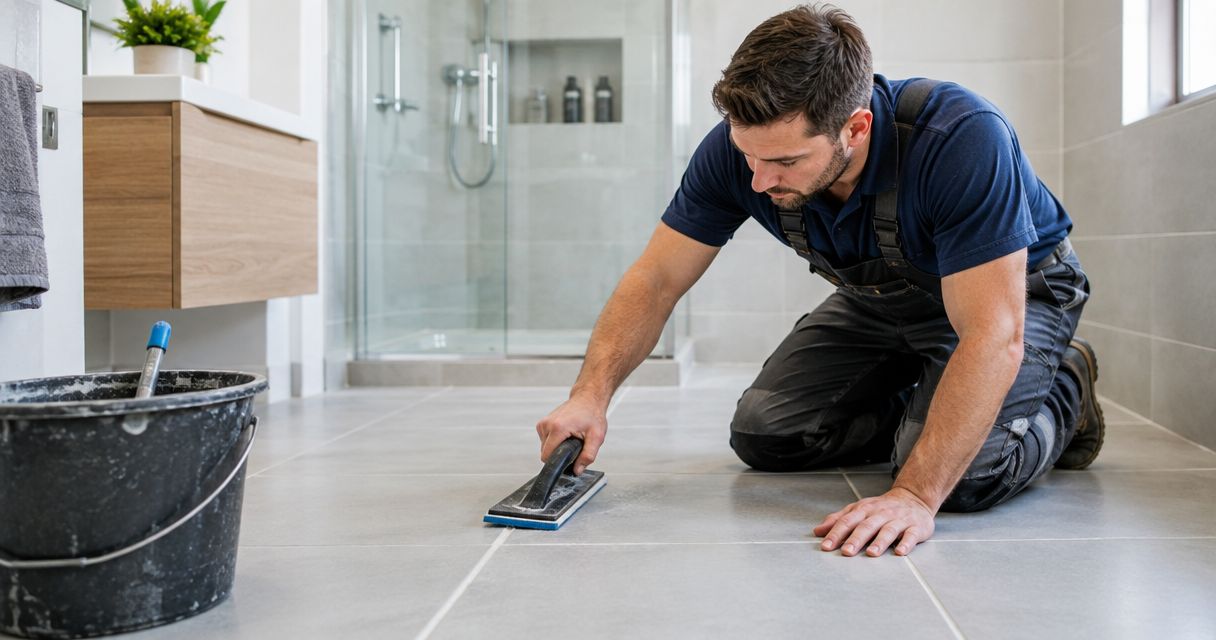
Your tile regrouting cost should cover a clearly measured repair area and the work required to prepare and refill its joints. A floor measurement alone leaves out wall surfaces, recesses, edges and the amount of existing grout that needs removal.
Compare the work included before comparing the total. For your 2026 quote, ask the contractor to identify each part below rather than providing an unexplained bathroom allowance.
| Quote component | What the scope should identify | What to clarify |
|---|---|---|
| Work area | Exact walls, floors or splashback sections | Whether the entire surface or selected joints are included |
| Grout removal | Removal of existing grout and joint preparation | How tile edges and nearby fittings will be protected |
| Replacement grout | Grout type, colour and suitability | Whether the selection suits the tile and wet-area conditions |
| Flexible joints | Silicone or other specified flexible sealant work | Whether old sealant removal and replacement are included |
| Associated repairs | Loose, chipped or damaged tiles | Whether repairs require separate approval |
| Completion | Surface cleaning and care instructions | When the area can be cleaned and used again |
Ask whether the quoted total includes GST, protection of nearby surfaces and removal of waste from the work. Keep any exclusions in writing. A verbal assumption about silicone or damaged tiles is not an agreed scope.
Should you compare quotes per square metre?
A square-metre rate is useful only when the preparation and inclusions match. Small tiles create more joints across the same surface than large tiles, so equal areas do not necessarily mean equal work.
Compare the measured area alongside tile size, joint condition and access. Do not apply a floor-only rate to a shower with tiled walls, a niche and several changes of direction.
Cleaning, regrouting or retiling: which job do you need?
Choose the treatment that matches the defect. Regrouting is not automatically the next step whenever a grout line looks dark.
| Option | Best for | Main benefit | Main limitation |
|---|---|---|---|
| Grout cleaning | Sound joints with surface dirt or staining | Keeps intact grout in place | Does not replace missing or crumbling grout |
| Regrouting | Deteriorated joints between otherwise sound tiles | Renews joints while retaining the tiles | Does not correct unstable tiles or failed waterproofing |
| Retiling | Damaged tiles or a project requiring access beneath them | Allows replacement of affected finishes | Disturbs more of the installation and needs a broader scope |
Choose regrouting for failed joints, not as a substitute for diagnosing a leak. If tiles move, joints repeatedly crack or moisture appears outside the shower, have the installation assessed before approving a surface refresh.
For a kitchen splashback, first distinguish cooking residue from damaged grout. In a bathroom, check the grout and flexible joints separately. On a tiled floor, report movement and cracking instead of treating every defect as discolouration.
What does regrouting leave untouched?
Regrouting works at the joints between existing tiles. It does not renew the entire layered construction beneath a shower or floor.
Ask the contractor to explain any limits to the proposed repair. Keeping existing tiles has value, but only when the retained installation is suitable for the work.
Why tile regrouting quotes vary
These factors explain why a detailed quote is more useful than a generic room allowance:
- Joint quantity: Tile size and layout determine how much joint work sits within the measured area. Mosaics and large tiles are not equivalent scopes.
- Existing grout condition: Loose grout and firmly bonded grout require different removal approaches. The contractor needs to see what must come out.
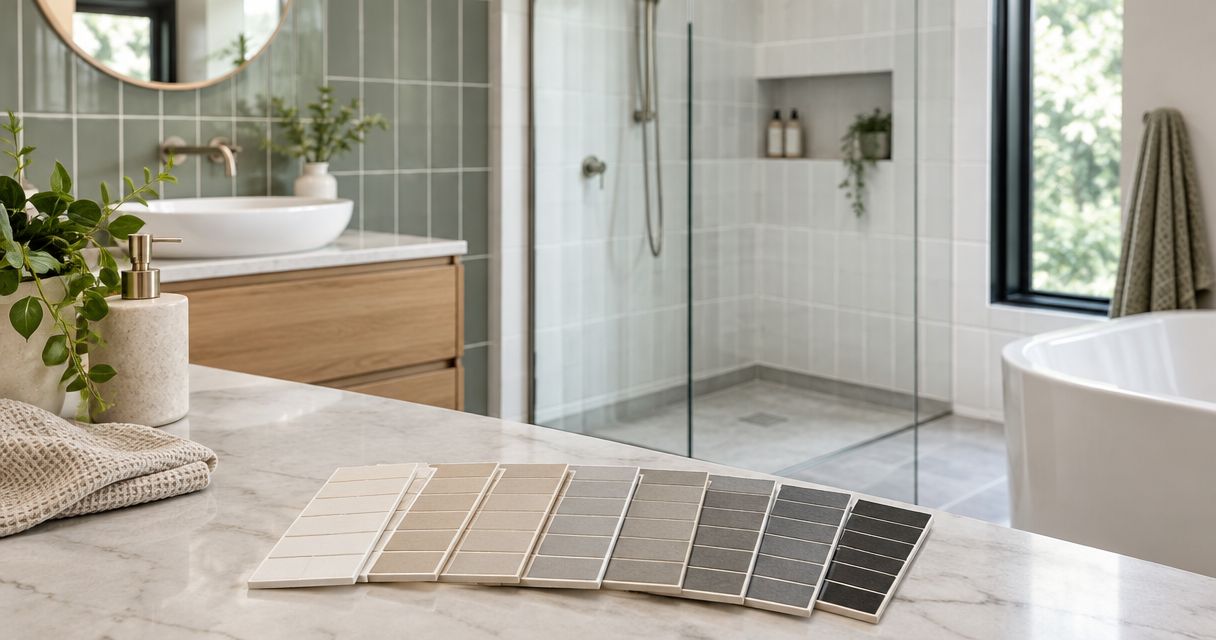
- Tile material: Glazed ceramic, porcelain and natural stone need suitable tools, cleaning methods and protection. Identify the material before work starts.
- Access and detail: Niches, corners, fittings and tight spaces affect how the joints can be reached and finished.
- Replacement material: Grout selection must suit the joint dimensions, tile and exposure. Ask for the proposed material to be named.
- Associated defects: Failed silicone, damaged tiles and movement require their own decisions. Keep these separate from the basic regrouting scope.
For a 2026 quote, send clear photos before arranging an inspection. Include the whole surface and close views of the worst joints. Photos help describe the job, but they do not show every concealed condition.
How to prepare for an accurate regrouting quote
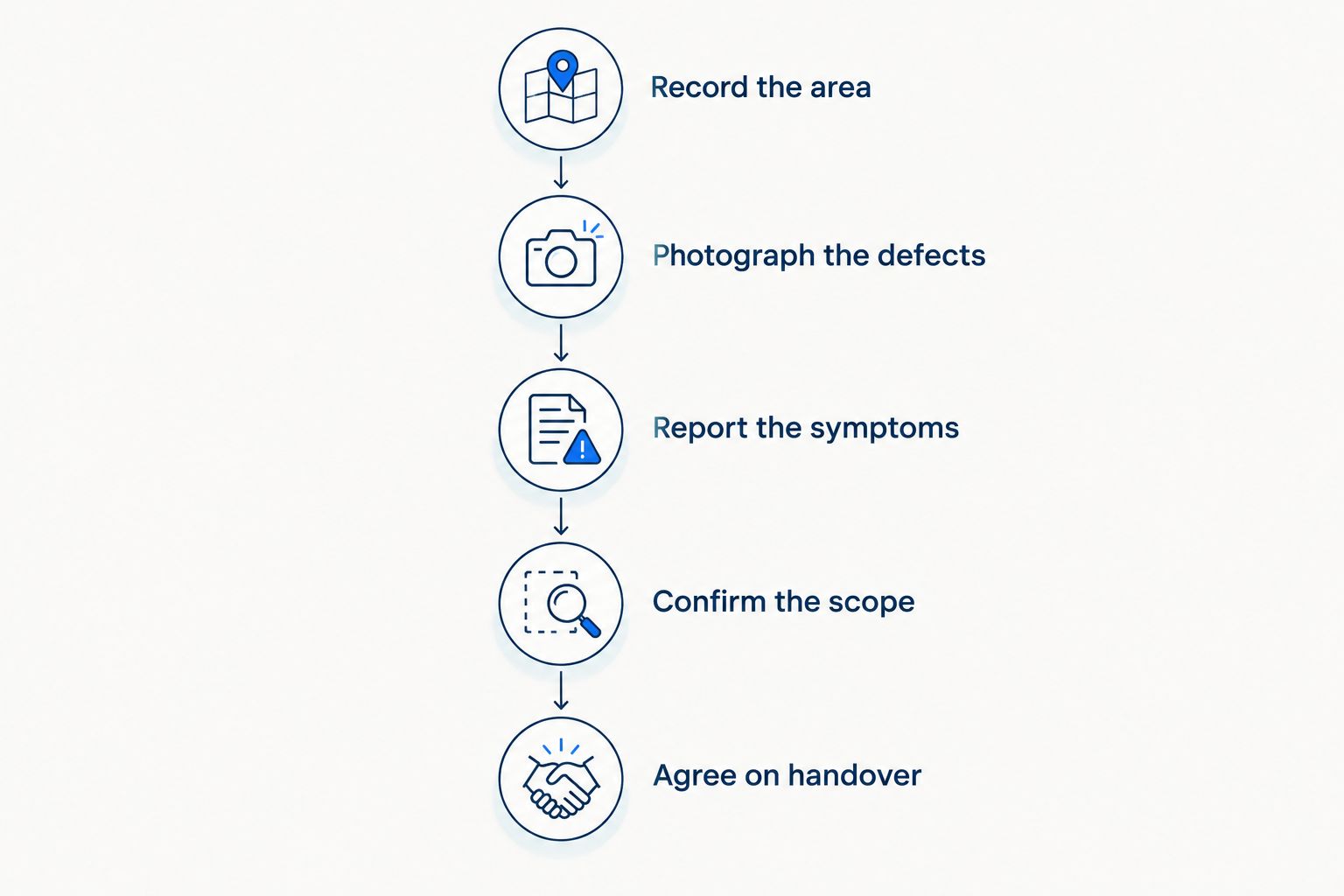
A short, consistent brief gives each contractor the same job to assess. Use the following sequence before you approve work.
- Record the area. Identify the bathroom, shower, kitchen splashback or floor. Measure each surface separately and note which sections need attention.
- Photograph the defects. Show missing grout, cracks, staining and failed sealant. Include nearby tile edges and corners rather than photographing only the centre of a joint.
- Report the symptoms. Explain whether tiles move, cracks return or water appears outside the wet area. Describe what you observe without guessing the cause.
- Confirm the scope. Request written inclusions for removal, replacement grout, flexible joints, protection and cleaning. Ask how additional repairs will be approved.
- Agree on handover. Obtain product-specific curing, cleaning and return-to-use instructions. Plan access around those instructions rather than a general promise.
Keep the brief practical. You do not need to diagnose the waterproofing system or select a removal tool; you need to show the affected area and explain the problem accurately.
For an occupied home, also explain access restrictions and whether the bathroom is your only bathing space. Ask the contractor to set out the work sequence before you arrange alternative use of the room.
What should the contractor check before regrouting a shower?
The contractor should assess the tiles, joints and visible signs of moisture damage before treating the job as grout replacement alone. Point out loose tiles, persistent damp patches, recurring cracks and any previous repair areas.
Grout, flexible sealant and waterproofing perform different jobs. Rigid grout is not a replacement for a flexible movement joint, and fresh grout does not establish that the concealed waterproofing is sound.
Changes of direction need separate attention
Ask how wall-to-floor junctions, internal corners and joints around fixtures will be treated. The correct detail depends on the installation; do not assume every gap should receive the same material.
If silicone renewal is included, have that scope written separately. This makes it clear whether the contractor is replacing grout, flexible sealant or both.
Recurring cracks need a cause assessment
A crack that returns after repair deserves more attention than another surface patch. Ask whether movement or an underlying defect needs investigation before the joint is refilled.
In your 2026 repair brief, record where the crack appears and whether it changes over time. That is more useful than describing the whole bathroom as needing new grout.
Is regrouting cheaper than replacing the tiles?
Regrouting retains the existing tiles, while replacement involves removing and installing tiles. Compare these as different scopes, not interchangeable quotes. The appropriate choice depends on whether the existing tiled surface can remain.
Regrouting avoids unnecessary tile replacement when the tiles and underlying installation are suitable. Its limitation is equally clear: renewing joints leaves defects outside that scope unresolved.
Melbourne Tiling Group is suited to Melbourne homeowners and construction companies needing wall and floor tiling installation. If your assessment identifies a need for replacement tiles, discuss the installation scope with Melbourne Tiling Group. Confirm any grout-repair requirements separately rather than assuming they form part of an installation service.
How long should you keep a shower unused after regrouting?
Follow the curing and water-exposure instructions for the grout and sealant actually installed. Do not use a generic overnight rule for every material.
Ask for return-to-use instructions before work begins, then confirm them at handover. The schedule should distinguish finishing the application from allowing the shower to get wet.
How can you keep the repair scope affordable?
Keep sound work where it is suitable to remain. Ask the contractor to distinguish stained but intact joints from joints that require removal, and confirm whether a local repair or a complete surface treatment is appropriate.
Avoid buying grout before the contractor confirms compatibility and quantity. Choosing material first can restrict the repair method or leave you with something unsuitable for the tile.
For your 2026 project, control changes through written approval. Agree on how the contractor will document unexpected damage and obtain permission before extending the work. Affordability comes from a suitable scope, not from leaving necessary preparation unexplained.
FAQ
How much does tile regrouting cost in Melbourne in 2026?
Tile regrouting cost in Melbourne depends on the measured surfaces, grout removal, replacement material and associated repairs. Request an itemised quote that separates grout work from silicone renewal, damaged tiles and waterproofing investigation.
Can I get a regrouting quote from photos?
Photos help a contractor understand the visible repair area, but an inspection is needed to assess conditions that photographs cannot establish. Send an overall view, close-ups of the joints and details of any leaks or moving tiles.
Will regrouting stop my shower leaking?
Regrouting does not repair a failed waterproofing membrane. Have the cause of the leak assessed before approving grout replacement as the repair.
Do I need new grout if the joints are only dirty?
Dirty but sound grout should be assessed for cleaning before removal. Missing, crumbling or repeatedly cracking grout needs a different assessment from surface staining.
Does a regrouting quote include new silicone?
Silicone renewal is included only when the written scope specifies it. Ask which flexible joints will be removed and replaced, rather than assuming they are part of grout replacement.
Can existing bathroom tiles stay during regrouting?
Existing bathroom tiles stay in place during regrouting when they are suitable to retain. Loose, damaged or unstable tiles require separate assessment and an agreed repair scope.
Does Melbourne Tiling Group install replacement tiles?
Melbourne Tiling Group provides residential and commercial wall and floor tiling installation. If your repair requires replacement tiles, confirm the affected surfaces and installation requirements before agreeing on the work.
One last thing
Ask this before approving the quote: What happens if grout removal exposes a loose tile or damaged edge? The answer should explain when work stops, how the finding is documented and who approves the next step.
A clear variation process matters as much as a clear starting scope. It keeps a straightforward joint repair from becoming an undefined renovation.