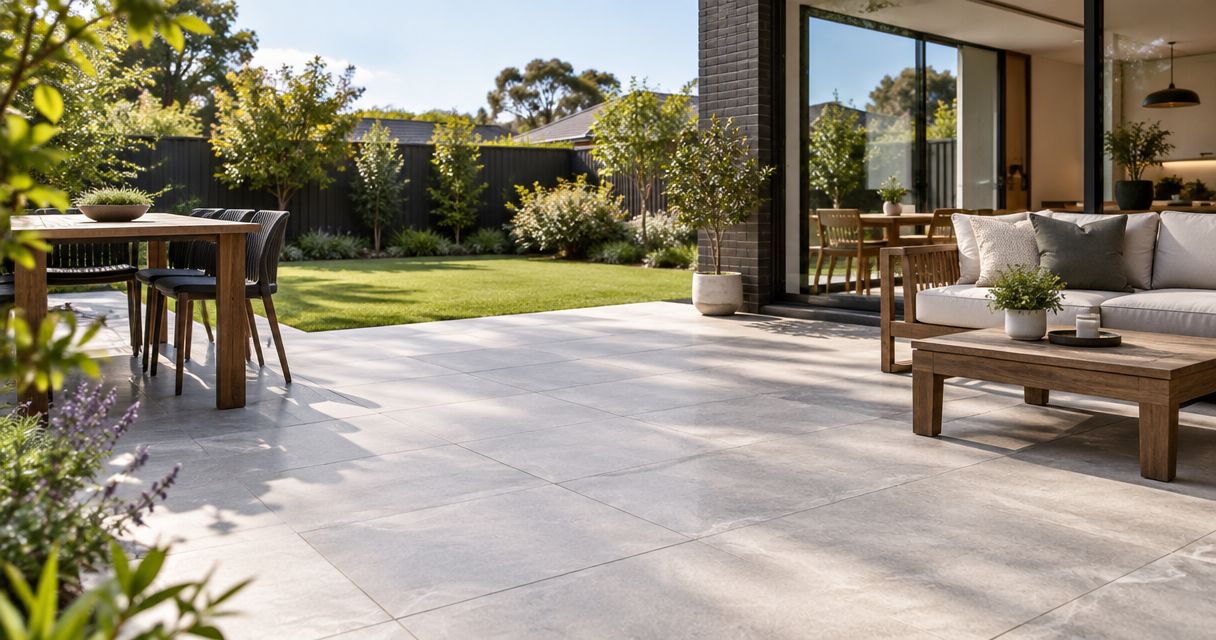
Yes, porcelain paving is worth considering for Melbourne backyards in 2026 when you want a low-absorption surface and a consistent finish. Its value depends on choosing an outdoor-rated product and a suitable installation system; porcelain does not fix poor drainage, an unstable base or inadequate waterproofing.
- Porcelain paving is worth it for Melbourne backyards when outdoor suitability, drainage and installation are confirmed.
- Choose porcelain for consistent finishes; choose natural stone when individual variation matters more.
- Porcelain's low water absorption does not make a paved area waterproof or slip-proof.
- Melbourne Tiling Group provides residential wall and floor tiling; confirm the scope before discussing outdoor paving.
Is porcelain paving worth it for Melbourne backyards?
Porcelain earns its place when you value straightforward surface care more than natural variation. It is less suitable when you want the individual texture of stone or intend to install an unspecified product over an unassessed base.
Start with how you use the space. A covered dining area, exposed garden path and pool surround need different surface assessments. The guide to tiles for outdoor entertaining areas in Melbourne covers that broader selection decision.
| Material | Best for | Main advantage | Main limitation |
|---|---|---|---|
| Outdoor-rated porcelain | Homeowners wanting a consistent manufactured finish | Low water absorption and repeatable colours and patterns | Edges can chip, and unsuitable finishes become slippery when wet |
| Natural stone | Homeowners wanting individual colour and texture | Natural variation gives each paved area a distinct appearance | Absorption, sealing needs and cleaning restrictions depend on the stone |
Neither material wins on appearance alone. Judge the actual product, its wet slip test information, the base it needs and the maintenance instructions supplied with it.
Why this matters
A backyard surface has to do more than look good beside the kitchen doors. It needs to shed water, meet adjoining surfaces safely and remain serviceable through everyday use.
For a Melbourne backyard project in 2026, decide these details before ordering. A neat-looking sample cannot tell you whether the finished paving will drain properly or whether a door threshold leaves enough room for the proposed build-up.
The same practical thinking applies in Melbourne's south-east suburbs: assess the individual property rather than treating the suburb as a specification. Existing levels, shade, access and the condition of the base are the useful starting points.
Porcelain paving: best for a consistent finish
Porcelain suits homeowners who want an orderly surface without the natural variation of quarried stone. Stone-look products offer a manufactured interpretation of that appearance, but repeated patterns remain possible. Lay out several pieces before approving the look.
Under the ISO 13006 classification, dry-pressed porcelain tiles fall within the group with water absorption of 0.5% or less. That classification concerns the tile body. It does not establish outdoor suitability, slip resistance, stain resistance or the performance of the whole installation.
Check the manufacturer's stated application. A product described as porcelain is not automatically suitable for an exposed backyard, a pool edge or a particular support system.
The trade-off: porcelain offers consistency, but damaged edges are not repaired by sanding them back like some other materials. Keep matching spare pieces and record the product details for future repairs.
Natural stone: best for individual variation
Natural stone suits homeowners who want the surface to show genuine differences in colour, grain and texture. Those differences are part of the material, not a defect to remove through tighter selection.
The practical limitation is that natural stone is not one uniform category. Different stones react differently to moisture, cleaning chemicals and staining. Ask for care instructions for the exact stone and finish rather than accepting a general promise that stone is easy to maintain.
Sealing requirements also depend on the material and application. A sealer does not replace drainage or waterproofing, and it does not make unsuitable stone suitable for every outdoor setting.
Choose natural stone for its character, not because it is automatically tougher or safer than porcelain. Compare documented products rather than relying on the category name.
Why porcelain paving value varies
The finished result depends on the site and installation, not just the paving surface. These factors determine whether porcelain is a sensible choice:
- Base condition: Cracks, movement and weak areas need assessment before the installation method is chosen. New paving does not strengthen a failing base.
- Drainage and levels: Water needs a planned route away from the house. Check doors, drains, garden beds and adjoining paving together.
- Surface finish: Wet slip resistance matters in exposed areas. Texture also affects how readily dirt collects and how the surface feels underfoot.
- Installation system: Bonded paving, supported systems and other laying methods have different requirements. Use only a system approved for the selected product and application.
- Layout and access: Cuts, edges, steps and restricted access affect the work involved. A simple rectangle and a detailed courtyard are different installation tasks.
- Ongoing care: Leaves, cooking spills and garden debris still need attention. Low absorption does not mean the surface cleans itself.
For a 2026 quote, ask for these items to be described separately. That makes it easier to compare the actual work rather than comparing totals with different inclusions.
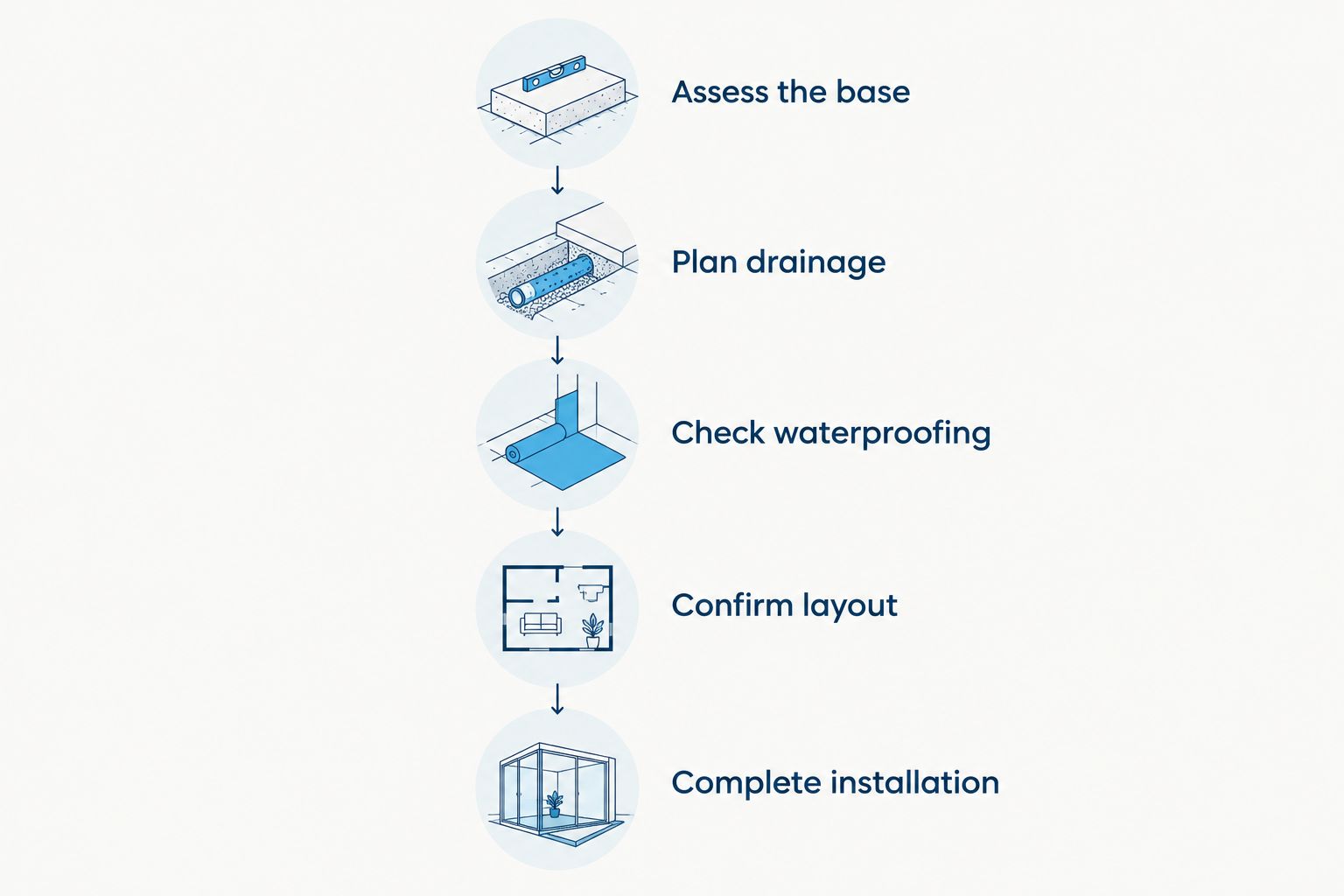
How should you plan porcelain paving installation?
Agree on the installation system before choosing the final paving size. The right sequence starts below the surface and finishes with layout, joints and handover instructions.
Assess the base
Have the existing surface assessed for condition, stability and suitability. An existing concrete slab is not automatically ready for paving simply because it looks flat.
Record visible cracks, previous repairs and any areas where water sits. Ask how these findings affect the proposed installation rather than expecting adhesive to solve them.
Plan drainage
Establish where water will go and how finished levels meet the house. Consider door openings, drains, steps and neighbouring surfaces as one connected area.
A surface can look level while still holding water in isolated spots. Drainage planning needs to happen before the finished height is fixed.
Check waterproofing
Determine whether the location requires waterproofing and how it connects to adjacent construction. A ground-level garden path and a terrace over an occupied room are not equivalent projects.
Porcelain, grout and sealant do not replace a designed waterproofing system. Where waterproofing is required, follow the specified system and its inspection and curing requirements.
Confirm layout
Set out the paving to check cuts, edges, drainage points and junctions. Include movement joints in the plan rather than leaving them as an afterthought.
If you want the backyard to align visually with an adjoining kitchen floor, check the outdoor requirements first. Matching colour does not justify using an indoor-only finish outside.
Complete installation
Follow the product and system instructions for preparation, fixing, jointing and protection. Ask the installer to explain when the area can be used and how it should be cleaned.
The handover should identify the paving, grout and any care products used. Keep that information with photographs of concealed work where available.
What should you check on a porcelain sample?
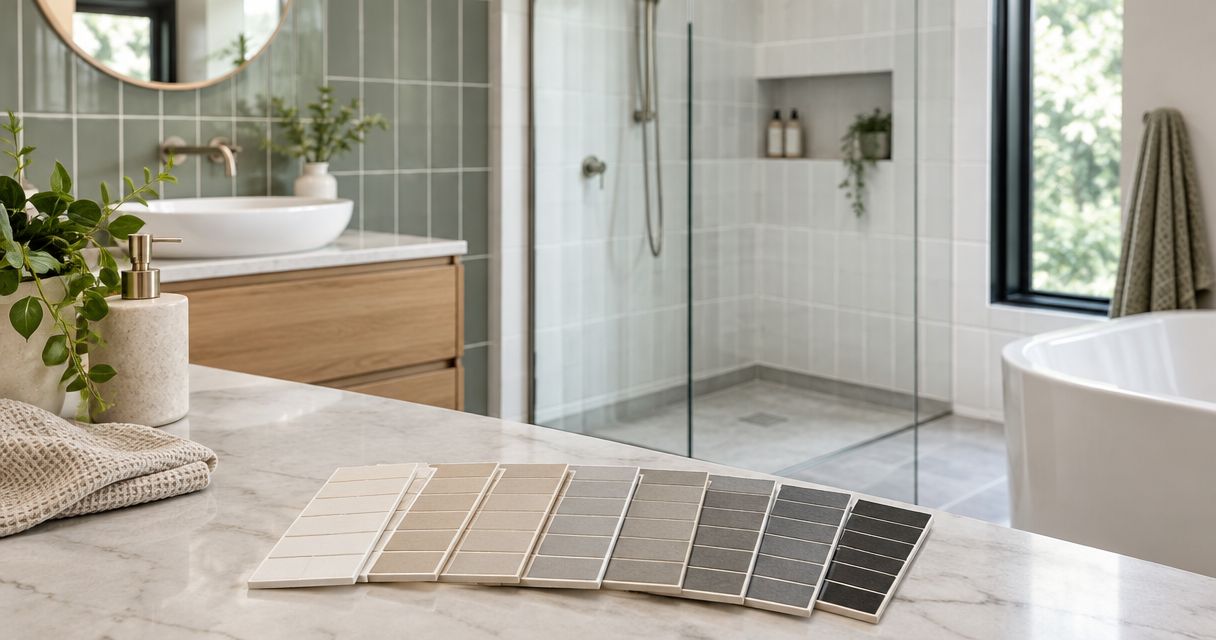
Check the actual finish, not just the display name. Ask for current technical information showing the intended applications and relevant slip testing. A showroom description such as outdoor or textured is not a substitute for the product documents.
Look at the sample outside in shade and direct light. A colour that works indoors can look quite different beside brickwork, timber fencing or planting. Check whether the texture suits the way you expect to use the space.
For your 2026 selection, use this short approval checklist:
- Confirm that the exact product and finish are suitable for the proposed outdoor application.
- Review wet slip test information for that finish, especially near pools or frequently wet paths.
- Ask how exposed edges, steps and drainage outlets will be finished.
- Check cleaning instructions before using acidic, abrasive or high-pressure methods.
- Agree on spare material and retain the product identification details.
Do not treat a sample as proof of installed performance. Drainage, workmanship, maintenance and the condition of the surface remain part of the result.
Is porcelain paving slippery when wet?
Porcelain paving is not automatically slip-resistant. The finish, contamination, wear and site conditions affect how it performs underfoot. Choose using the exact product's test information and suitability for the location.
A rougher surface is not a complete answer either. It can hold dirt and require more cleaning, so balance grip with practical maintenance rather than choosing by touch alone.
Can you lay porcelain paving over existing concrete?
Porcelain paving can be installed over suitable concrete using an appropriate specified system. The slab still needs assessment for condition, levels, moisture-related issues and movement before work starts.
Check the finished height at doors and drains. Adding paving to an existing slab changes those junctions, even when the old surface appears sound.
Does porcelain paving need sealing?
Do not assume porcelain paving needs a general-purpose sealer. Follow the manufacturer's instructions for the exact product, including any special treatment required for its finish.
Grout and adjoining stone can have different care requirements. Applying an unsuitable coating can change the surface appearance or create a maintenance problem rather than prevent one.
Where professional tiling advice fits
Melbourne Tiling Group is best suited to homeowners seeking residential wall and floor tiling services. For a backyard project connected to a kitchen, bathroom or internal floor renovation, discuss the adjoining tiling work and confirm whether the outdoor paving scope is offered.
Melbourne Tiling Group provides residential and commercial wall and floor tiling, including kitchen, bathroom and floor tiling. Keep the project brief specific: identify the surfaces, existing base, drainage concerns and where new work meets the house.
Do not assume that a tiling service includes excavation, drainage alterations, structural work or every waterproofing task. Confirm responsibilities in writing so the project has no unassigned preparation work.
FAQ
Is porcelain paving worth it for a small Melbourne backyard?
Porcelain paving is worth considering for a small Melbourne backyard when you want a consistent finish and a low-absorption surface. Check drainage, outdoor suitability and the cutting layout before ordering.
Is porcelain paving better than natural stone?
Porcelain is better for a consistent manufactured appearance; natural stone is better for individual variation. Neither is automatically safer or more durable without checking the exact product and installation.
Can I use indoor porcelain tiles outside?
Use porcelain outside only when the manufacturer approves the exact product for the proposed outdoor application. Being porcelain does not establish wet slip resistance or suitability for the installation system.
Will porcelain paving stop water getting into my house?
Porcelain paving will not stop water entering a house if drainage, thresholds or waterproofing are wrong. Low water absorption describes the tile body, not a watertight installation.
Does porcelain paving stay cool in summer?
Porcelain paving is not guaranteed to stay cool in summer. Sun exposure, colour and shade affect surface temperature, so assess the sample in conditions similar to your backyard.
What should a porcelain paving quote include?
A porcelain paving quote should identify preparation, drainage responsibilities, the installation system, jointing, edges and waste removal. Confirm exclusions and who supplies the paving before accepting it.
Can Melbourne Tiling Group help with my renovation?
Melbourne Tiling Group provides residential and commercial wall and floor tiling, including kitchens, bathrooms and floors. Confirm whether the proposed outdoor paving work falls within the offered scope.
One last thing
Before approving porcelain paving in 2026, ask the installer to show you where rainwater will go. Trace the route from the house to the discharge point, including doorways and drains. If that explanation is unclear, resolve the levels and drainage before choosing the final colour.
A good-looking surface cannot compensate for a poor plan underneath it. Spend your attention there first.