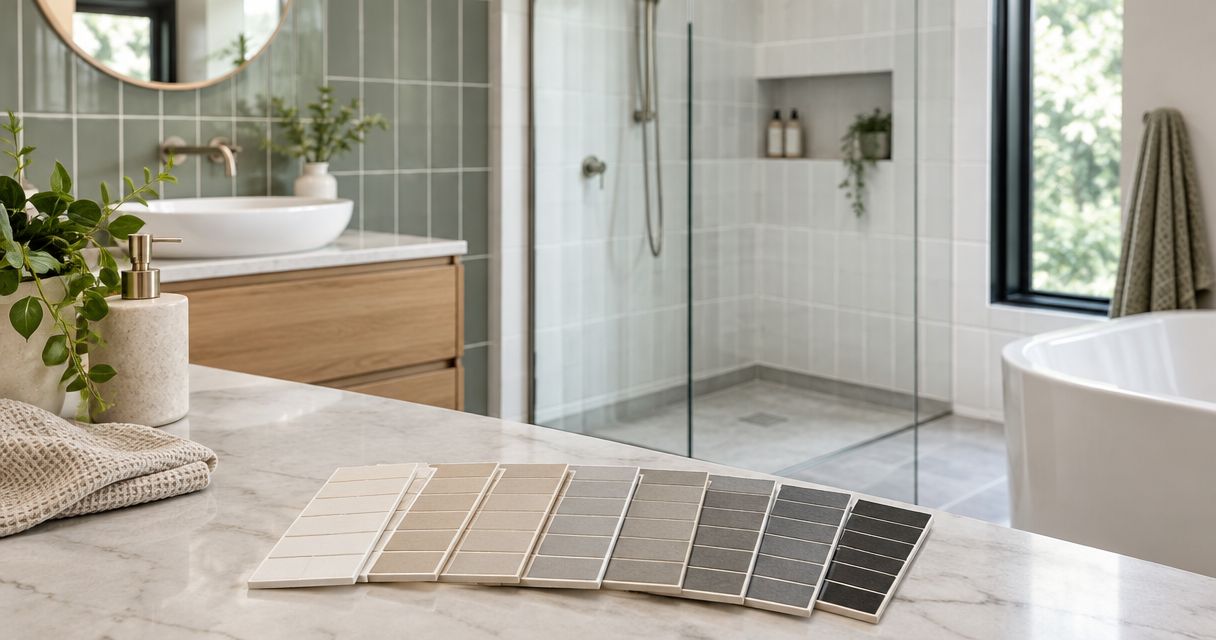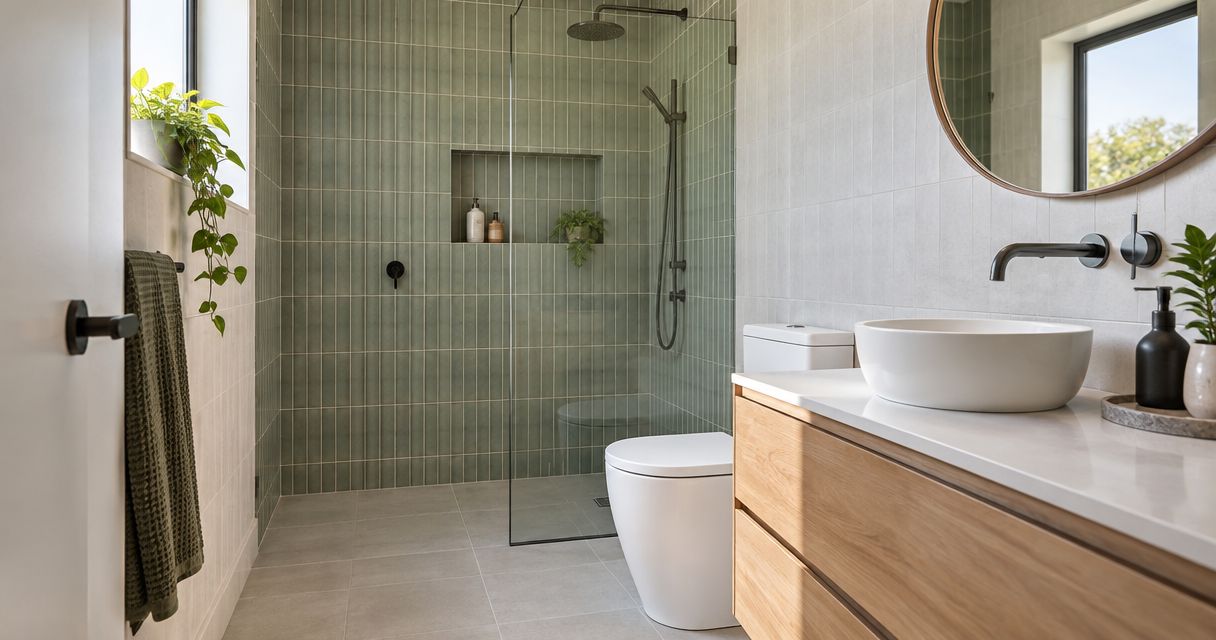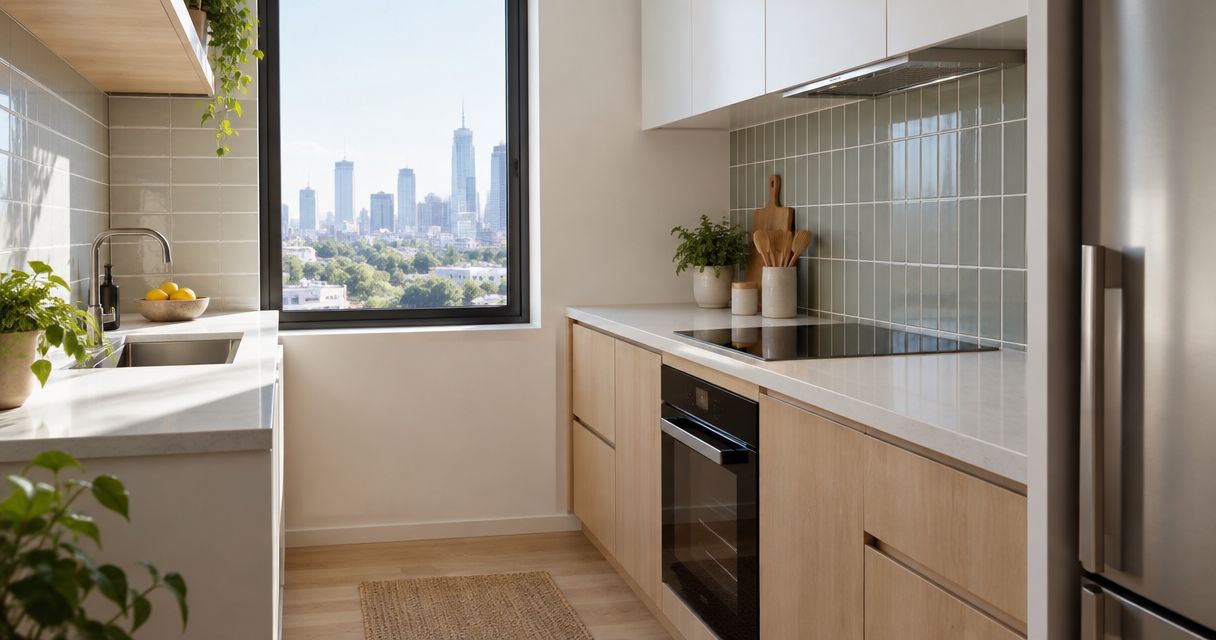

Choose Melbourne Tiling Group if you need residential or commercial wall and floor tiling in Melbourne; choose City Tile if its written proposal better meets your installation scope, site requirements and handover needs. For your 2026 project, compare responsibility for the finished work—not just tile selection or the total on a quote.
- Melbourne tiling group vs city tile: choose by installation scope, waterproofing responsibility and written exclusions.
- Melbourne Tiling Group provides residential and commercial wall and floor tiling across Melbourne.
- Choose City Tile when its written proposal better matches your project requirements.
- Compare bathroom tiling quotes against the same preparation, waterproofing and finishing brief.
Why this matters
A bathroom renovation needs more than tiles fixed neatly to a wall. Surface preparation, waterproofing, drainage and finishing all need clear responsibility. A kitchen splashback has a different brief, with cut-outs, exposed edges and the junction against the benchtop taking priority.
Melbourne Tiling Group provides kitchen, bathroom and floor tiling for homeowners and construction companies. That makes the business a direct fit for an installation enquiry. It does not, by itself, establish who includes demolition, plumbing, waterproofing or waste removal in your particular job.
The better tiling contractor is the one whose written scope matches the work your property actually needs. Use the comparison below to separate an appropriate service from an appropriate project proposal.
At a glance
Use this 2026 comparison as a quote-checking framework. A service description establishes the starting point; your written agreement establishes the job.
| Dimension | Melbourne Tiling Group | City Tile |
|---|---|---|
| Best for | Homeowners and construction companies seeking Melbourne wall and floor tiling | Buyers whose project requirements are better met by its written proposal |
| Installation scope | Residential and commercial kitchen, bathroom and floor tiling | Confirm the installation work included in your enquiry |
| Waterproofing responsibility | Confirm preparation, waterproofing and documentation in the quote | Apply the same written-scope check |
| Kitchen finishing | Kitchen tiling is within the stated service scope; specify edges and cut-outs | Confirm splashback installation and finishing details |
| Floor preparation | Floor tiling is within the stated service scope; confirm preparation separately | Confirm substrate preparation and installation responsibility |
| Location fit | Serves Melbourne, including North Melbourne, Port Melbourne and Richmond | Confirm attendance at your exact address |
| Pricing model | Establish whether the proposal is fixed-scope or uses measured rates | Establish the same basis before comparing totals |
| Standout feature | Stated installation scope covers residential and commercial projects | Judge the proposal against your project's specific requirements |
Melbourne Tiling Group fits a defined installation brief
Melbourne Tiling Group is a direct fit for Melbourne homeowners seeking wall and floor tiling installation. Its stated services cover bathroom, kitchen and floor tiling, along with residential and commercial work.
That is useful when you already know the room and the work you need. For example, you can describe a bathroom wall-and-floor installation rather than make a general enquiry about tiles. Construction companies can also start with a commercial installation brief.
The limitation is scope, not tile choice. Do not treat the words bathroom tiling as confirmation that every renovation trade is included. Ask who removes existing finishes, repairs the base, organises plumbing changes and takes away debris.
Choose City Tile instead when its proposal addresses a requirement that your other proposal leaves unresolved. That is a genuine reason to choose an alternative. A business name or a general service description is not.
Neither name replaces a written waterproofing scope
For a bathroom, waterproofing responsibility is a tie until the proposals spell it out. Tiles and grout are not a substitute for a properly specified waterproofing system.
Ask each business to identify the preparation required, who applies the waterproofing and what records you receive. The system needs to suit the substrate and the wet-area design. Junctions, penetrations and the connection to drainage need particular attention.
Use these 3 checkpoints before approving the work:
- Surface preparation: What must be repaired, cleaned or made suitable before waterproofing starts?
- Waterproofing responsibility: Who supplies and applies the system, and who checks readiness for tiling?
- Handover records: What product details and completion documentation will you receive?
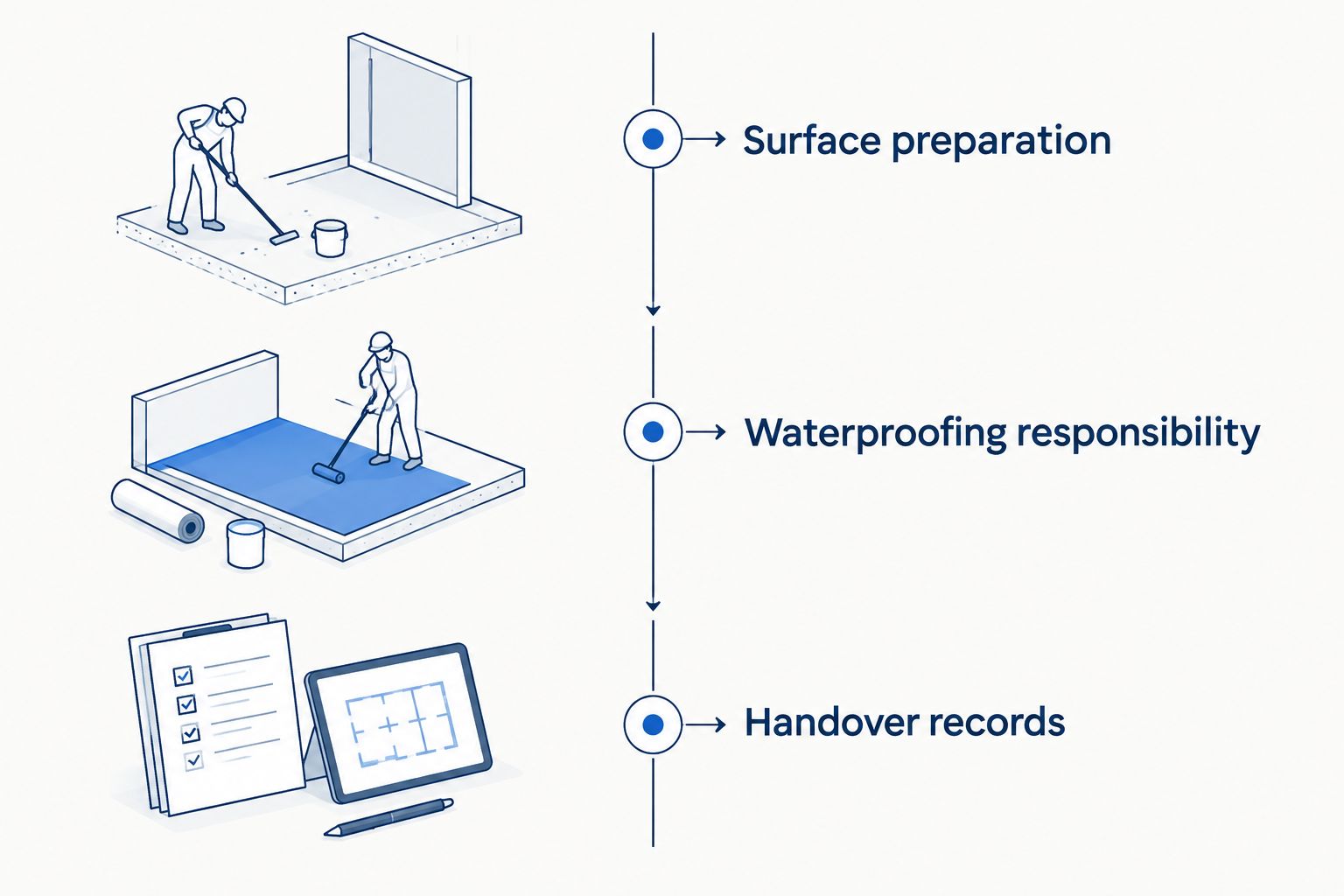
For a 2026 bathroom renovation, settle these points before installation begins. The guide to waterproofing membranes for shower renovations helps you prepare questions about the system, rather than choosing on a product name alone.
City Tile wins when its finishing scope is more complete
Choose City Tile for a kitchen splashback if its written finishing details better match your kitchen. The useful comparison is what happens at edges, corners, sockets and the benchtop—not an unsupported claim about workmanship.
Kitchen tiling falls within the client's stated service scope. Still, your quote needs to describe the actual finish. An exposed end without an agreed trim or edge treatment is an unresolved decision, even when the tile itself has been selected.
Give both businesses the same brief:
- Identify where the splashback starts and stops.
- Mark power points and other penetrations.
- State the proposed tile size and laying pattern.
- Agree on exposed edges and internal corners.
- Confirm responsibility for electrical work and access.
Ask how the layout will look around the most visible feature, such as the cooktop or window. A drawing or marked-up photograph gives you something concrete to approve. Do not assume the installer and homeowner picture the same starting point.
Both proposals need to explain what happens beneath floor tiles
Floor tiling is another tie until preparation is defined. A finished tile surface tells you little about what the quote allows for underneath it.
Ask the installer to assess the existing base. Unevenness, movement, cracks and old adhesive need a project-specific response. The appropriate preparation depends on the substrate and the selected tile system; there is no honest universal preparation allowance for every Melbourne home.
Large tiles also make layout and surface flatness important. Discuss transitions into adjoining rooms, door clearance and any change in finished floor height. These details affect how the room works after installation.
For natural stone paving, use a separate brief. Ask about the stone, base, drainage, joints and any sealing requirements. Do not assume an indoor floor-tiling proposal also covers outdoor stone installation.
The practical advantage belongs to whichever proposal explains the necessary work clearly. Neither a shorter quote nor a longer inclusions list proves that the preparation is right.
City Tile wins on location only when attendance is confirmed
Choose City Tile when it confirms your address and project dates and the alternative cannot meet those requirements. Local fit is a practical question, not a claim based on a business name.
The client's stated coverage includes Melbourne suburbs such as North Melbourne, Port Melbourne and Richmond. If your property is in Melbourne's south-east, confirm the exact address at the enquiry stage. Do not assume a general Melbourne service description settles travel, access or scheduling arrangements.
For an apartment, explain parking, lift access and building work rules. For an occupied home, identify the route through the property and the facilities that must remain usable. These details belong in the discussion before you accept a quote.
In 2026, compare proposed dates alongside the work sequence. A start date means little without clarity on preparation, waterproofing, tiling and access between stages. Ask how changes will be communicated rather than relying on a verbal promise that the job will fit.
Pricing: compare the quote model before the total
Neither business wins on affordability without equivalent written scopes. Compare what you are buying before deciding which proposal offers better value.
Ask whether each proposal uses a fixed sum for defined work, measured rates, provisional allowances or a combination. A fixed-scope proposal gives you a stated amount for stated inclusions. Measured rates link the calculation to quantities. Provisional allowances leave an item to be resolved under the agreement.
Each approach needs clear boundaries. A fixed sum still needs a process for hidden damage or changes you request. A measured rate still needs an agreed measurement method. An allowance still needs an explanation of what happens when the actual requirement differs.
| Quote approach | What to establish | Main trade-off |
|---|---|---|
| Fixed scope | Exact inclusions, exclusions and variation process | Clear scope, but changes require separate agreement |
| Measured rates | Measurement method and included preparation | Quantity-based calculation, with the final scope still important |
| Provisional allowances | What remains undecided and how it will be resolved | Flexibility, with unresolved items requiring later decisions |
For your 2026 project, request 2 written quotes against 1 shared brief. Separate tile supply, preparation, waterproofing, installation, finishing and disposal. This exposes differences without treating every excluded item as poor value.
Compare the proposals in the same order
Start with the room and finish you want, then work backwards to the tasks required. This keeps an attractive tile choice from distracting you from an incomplete installation scope.
Send one shared brief
Include the address, photographs, room measurements and the intended work. State whether the existing tiles remain in place for inspection or will be removed beforehand. Describe your selected tiles if you have already chosen them.
For a bathroom, identify shower areas and proposed layout changes. For a splashback, include the benchtop and cabinetry junctions. For floors, show doorways and adjoining surfaces.
Resolve exclusions before acceptance
Read exclusions as carefully as inclusions. Ask who handles plumbing, electrical work, substrate repairs, waterproofing and rubbish. An excluded task is not automatically a problem; an unassigned task is.
Record any agreed changes in the proposal. A conversation can explain the job, but the accepted scope needs to reflect that conversation.
Agree on inspection and handover
Ask when you can review the layout before fixing starts. Confirm how you will raise concerns and what care instructions you receive at completion.
Do not set a generic deadline for walking on tiles, grouting or using the shower. Those instructions need to follow the products used and the installation conditions.
Final verdict: choose the proposal that closes the gaps
Choose Melbourne Tiling Group if you need a defined tiling service
Best for: a Melbourne homeowner or construction company seeking residential or commercial wall and floor tiling. The stated service range matches kitchen, bathroom and floor installation enquiries.
Proceed when the written proposal also resolves preparation, waterproofing responsibility, finishing and access for your property. Do not extend the stated service range into an assumed whole-renovation package.
Choose City Tile if its project proposal is the better match
Best for: a buyer whose specific installation, finishing or scheduling requirements are better addressed in City Tile's written proposal.
Choose that proposal when it assigns responsibility more clearly or meets a requirement the alternative does not. Apply the same checks to both businesses; do not accept a gap simply because the overall offer looks attractive.
| Dimension | Winner |
|---|---|
| Defined residential and commercial installation enquiry | Melbourne Tiling Group matches the stated brief |
| Waterproofing responsibility | Tie until documented |
| Kitchen finishing | City Tile if its finishing scope better matches your kitchen |
| Floor preparation | Tie until assessed and specified |
| Location and dates | City Tile if it confirms requirements the alternative cannot meet |
| Pricing model | Whichever clearly defines scope, measurement and changes |
| Overall project fit | The proposal with the right inclusions and assigned responsibilities |
FAQ
Is Melbourne Tiling Group better than City Tile for bathroom tiling?
Melbourne Tiling Group is a stated fit for bathroom tiling installation, but the better project proposal must also address preparation, waterproofing responsibility and finishing. Compare those inclusions before accepting either quote.
Should I choose City Tile if its quote is lower?
Choose City Tile on value only after checking that the scope matches the alternative. Compare preparation, waterproofing, installation, finishing and disposal rather than the total alone.
Does bathroom tiling automatically include waterproofing?
No, you should not assume bathroom tiling includes waterproofing. Ask who supplies and applies the system and what documentation forms part of the agreed work.
What should I send when asking for a tiling quote?
Send your address, room measurements, photographs and a clear description of the work. Include your tile selection, layout changes and access restrictions where relevant.
Can I use the same tiler for a kitchen splashback and bathroom floor?
Ask the business to quote both areas as separate parts of the same brief. A splashback needs edge and cut-out details, while a bathroom floor also needs a clear wet-area preparation and waterproofing scope.
How do I compare tiling quotes in Melbourne's south-east?
Confirm attendance at your exact address, then compare equivalent written scopes. Include access, preparation, waterproofing responsibility, finishing and the proposed work sequence.
When can I use a newly tiled shower?
Follow the installer’s written instructions for the products and conditions on your job. Do not substitute a generic waiting period for the specified curing requirements.
One last thing
Ask what needs approval before it disappears beneath the tiles. Preparation and waterproofing become harder to inspect once covered. For your 2026 renovation, agree on those checkpoints before work starts—not during the final walkthrough.