
Melbourne Tiling Services belongs on your shortlist if its written quote covers your job properly; look elsewhere when you need a different installation scope or someone to manage the whole renovation. The best Melbourne Tiling Services alternative in 2026 is Melbourne Tiling Group for residential or commercial wall and floor tiling; a bathroom renovation contractor is the better route when you need several trades coordinated.
- Compare Melbourne tiling services alternatives by installation scope, surface preparation and responsibility for waterproofing.
- Melbourne Tiling Group suits homeowners and construction companies needing wall and floor tiling.
- Choose a bathroom renovation contractor when plumbing, electrical work and tiling need coordinated management.
- Keep Melbourne Tiling Services if its written proposal meets your scope and clearly assigns responsibilities.
Why this matters
Changing tilers will not fix an incomplete brief. Before you compare providers in 2026, decide whether you need tile installation, a bathroom renovation or repairs to the surface underneath.
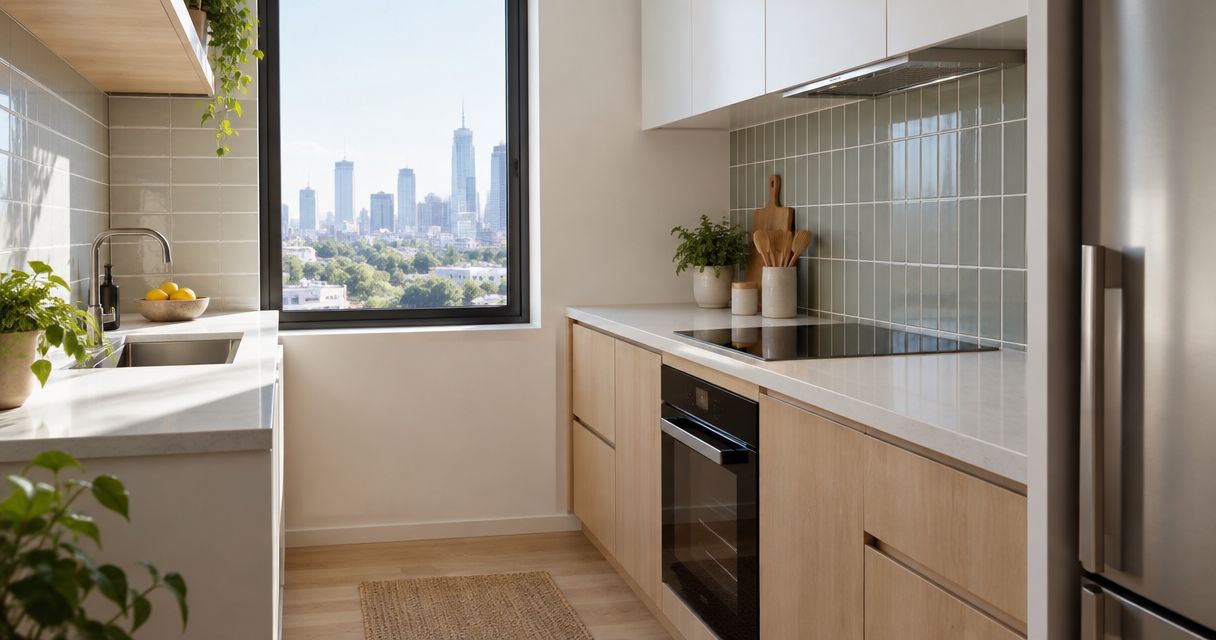
A neat tile finish is only part of the job. Bathroom waterproofing, floor preparation and junction details need clear responsibility before installation starts. For a kitchen splashback, your questions will centre more on layout, cut edges and coordination around fittings.
Melbourne tiling services alternatives at a glance
| Option | Best for | Main distinction | What to check against Melbourne Tiling Services |
|---|---|---|---|
| Melbourne Tiling Services | Keeping your existing shortlist option when its proposal fits | Benchmark against the actual written scope | Preparation, exclusions, waterproofing responsibility and handover |
| Melbourne Tiling Group | Residential and commercial wall and floor tiling | Stated services include kitchen, bathroom and floor tiling | Compare the same rooms, surfaces and preparation requirements |
| Bathroom renovation contractor | A bathroom needing several trades | A renovation-management route rather than tiling alone | Confirm who coordinates demolition, plumbing, electrical work and tiling |
| Independent tiler | A clearly defined installation package | Direct appointment of the installer | Check who handles preparation and interfaces with other trades |
| Builder-led renovation | Tiling within a wider building project | Tiling sits within the building scope | Identify the tiling contractor and responsibility for defects |
| DIY tiling | A manageable decorative project outside wet areas | You take responsibility for the installation | Assess your skills, tools and ability to correct mistakes |
These are different ways to organise the work, not interchangeable service packages. Use the table to choose the right route first. Then compare providers within that route.
1. Melbourne Tiling Group: best for wall and floor tiling
Melbourne Tiling Group provides residential and commercial wall and floor tiling for homeowners and construction companies. Its stated work includes kitchen, bathroom and floor tiling across Melbourne suburbs, including North Melbourne, Port Melbourne and Richmond.
Best for: You need a tiling contractor rather than someone to manage every part of a renovation. For a south-east Melbourne property, confirm service coverage for your address before arranging a site visit.
Where Melbourne Tiling Group shines
- Its stated services match bathroom, kitchen and floor installation enquiries.
- It serves both homeowners and construction companies, so those project types fit its stated scope.
- Wall and floor tiling sit within the same service offering, which helps you frame a room-by-room brief.
Where Melbourne Tiling Group falls short
- Its stated tiling scope is not a complete bathroom renovation package. Do not assume plumbing or electrical coordination is included.
- A bathroom tiling enquiry still needs a separate answer about waterproofing responsibility and documentation.
- Natural stone paving needs its own scope discussion; do not treat outdoor paving as automatically included in an indoor tiling proposal.
| Decision point | Melbourne Tiling Group | Melbourne Tiling Services benchmark |
|---|---|---|
| Stated project types | Residential and commercial tiling | Match the provider's written proposal to your project |
| Stated installation areas | Kitchen, bathroom and floor tiling | Confirm every room and surface you need covered |
| Whole-renovation management | Keep separate from the stated tiling scope | Confirm whether other trades are included or excluded |
| Wet-area responsibility | Ask who supplies and installs the waterproofing system | Require the same clear allocation of responsibility |
Send a brief that identifies the room, existing surface, proposed tile and work needed before tiling. Ask for preparation and finishing tasks to be described separately. That makes your 2026 comparison about the actual job rather than a vague promise of a finished room.
Verdict: Hold on choosing a provider until both quotes cover the same installation scope.
2. Bathroom renovation contractor: best for several trades
A bathroom renovation contractor is a different purchasing route from a tiling-only appointment. Choose this route when the project needs demolition, plumbing, electrical work and tiling coordinated under one agreed scope.
Best for: You are changing the bathroom layout or replacing fixtures as part of a larger renovation. The useful difference is responsibility for the sequence of work, not simply who lays the tiles.
Where this route shines
- You can ask for a single plan covering the work before and after tiling.
- You can define who checks the substrate and waterproofing before those layers are covered.
- You can make responsibility for trade coordination part of the agreement.
Where this route falls short
- The person managing the renovation is not necessarily the person installing your tiles.
- A bundled proposal can make individual exclusions harder to spot.
- A small splashback replacement does not automatically need whole-renovation management.
Ask who will install the tiles, who will inspect the waterproofing and who will resolve defects at the boundary between trades. Get those answers in writing. One contact is useful only when that contact has clearly accepted responsibility.
Compared with Melbourne Tiling Services, this route makes sense only if your existing proposal leaves coordination with you and you do not want that role.
Verdict: Hold this route for bathrooms that genuinely need several trades managed.
3. Independent tiler: best for a defined installation package
An independent tiler is a practical option when you already know what needs installing and someone else manages the wider renovation. The job still needs a written scope, even when you deal directly with the installer.
Best for: A kitchen splashback, floor replacement or clearly specified tiling stage within a larger project.
Where this route shines
- You can discuss layout, cuts and finishing details directly with the person appointed to install the tiles.
- A narrow installation scope is easier to compare with another narrow scope.
- You can separate the tiling package from unrelated renovation work.
Where this route falls short
- You retain coordination duties unless the agreement assigns them elsewhere.
- Another trade's delay or unfinished preparation still needs someone to resolve it.
- Direct communication does not replace checks on suitability for the work.
For a splashback, agree on the starting point, exposed edges, power-point coordination and finishing around cabinets. For floor tiling, agree on the treatment of thresholds and existing surface problems before work begins.
Verdict: Hold this route for well-defined work with clear preparation responsibilities.
4. Builder-led renovation: best for wider building work
Use a builder-led route when tiling forms part of a larger renovation or construction project. Keep the tile specification inside the building scope rather than relying on a separate verbal conversation.
Best for: You are already appointing a builder to manage broader work.
Where this route shines
- Tiling requirements can be planned alongside changes to walls, floors and room layouts.
- You can make preparation and trade interfaces part of the wider agreement.
Where this route falls short
- You need to establish how much direct input you have into tile layout and finishing.
- A general building scope can omit small but visible details such as trim positions and threshold finishes.
Ask to approve the layout before installation. Also establish whether tiling questions go to the builder or installer, so instructions do not conflict.
Verdict: Hold this route when tiling belongs within an existing building contract.
5. DIY tiling: best for limited decorative work
DIY is an alternative to hiring a service, not an equivalent professional installation package. Keep your decision tied to the consequences of getting the work wrong.
Best for: A manageable decorative project outside a wet area, where you understand the substrate and can correct mistakes.
Where DIY shines
- You control the layout and pace of the work.
- You can practise cuts and placement before committing to the finished surface.
Where DIY falls short
- You take responsibility for preparation, material compatibility and the finished result.
- Shower waterproofing and drainage are not suitable places to learn by trial and error.
Buying tiles does not mean the surface is ready. If the project involves uncertain waterproofing, damaged flooring or an unfamiliar substrate, get the scope assessed before proceeding.
Verdict: Skip DIY for shower waterproofing and work beyond your skills.
Before you change providers: check the installation plan
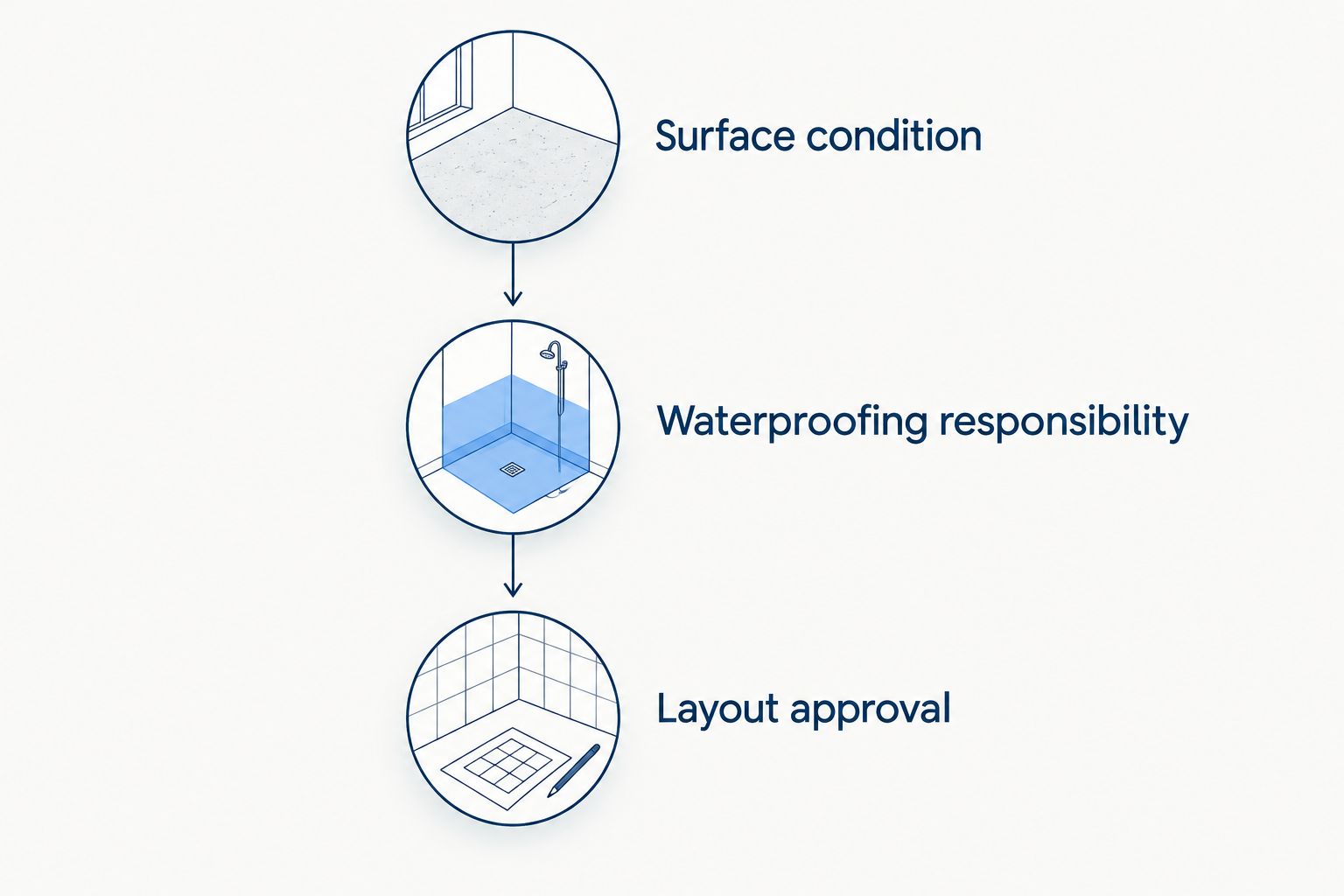
For a useful 2026 comparison, give every provider the same brief. Request 2 written quotes, work through 3 preparation checks, and keep 1 agreed scope for the provider you appoint. These are planning steps, not guarantees of workmanship.
Surface condition
Describe what is there now. Include loose tiles, cracked grout, uneven areas and any signs of dampness. Ask whether removal, repairs or levelling sit inside the proposal.
Do not cover a known problem simply because the new tiles will hide it. The installer needs to understand the surface that will support the finished work.
Waterproofing responsibility
For a bathroom, identify who is responsible for the waterproofing system and what evidence you receive before it is covered. Tiles and grout do not replace a waterproofing system.
Ask how the proposal addresses corners, penetrations and the connection around the drain. Keep the questions practical: who does the work, who checks it and who supplies the documentation?
Layout approval
Agree on the layout before adhesive goes down. Check cuts at doorways, alignment around fixtures and the position of visible edges.
For a small kitchen splashback, look at where narrow cuts will land beside cabinets and power points. For a bathroom floor, review the tile arrangement around the drain as part of the installation plan.
Finish the brief with your material choices and expected handover documents. If grout selection is still undecided, use the guide to grout types for bathroom tiling to prepare questions for the installer. Material selection belongs in the scope, not in a rushed decision after installation begins.
Discuss your tiling project
Explain the rooms, existing surfaces and installation work you need before comparing proposals.
Why people switch from Melbourne Tiling Services
Switch providers because another proposal fits your requirements better, not because an alternatives list places a name first. For your 2026 project, valid reasons include a mismatch between the work you need and the scope offered, or a preference for a different way of coordinating the renovation.
Use these decision triggers:
- Scope mismatch: Your project needs work outside the proposal you received.
- Unclear responsibility: Preparation, waterproofing or finishing tasks remain unassigned after you ask for clarification.
- Different management needs: You want a renovation contractor to coordinate trades rather than managing separate appointments yourself.
- Different installation needs: Your final material or layout requires an installation approach that the proposed scope does not address.
These are checks on your proposal, not claims about Melbourne Tiling Services. A provider can be a good fit for one job and the wrong fit for another.
When staying with Melbourne Tiling Services makes sense
Stay with Melbourne Tiling Services when its written proposal covers your work, answers your preparation questions and clearly assigns responsibility. A different business name is not a reason to discard a suitable proposal.
Before accepting, check exclusions and confirm that verbal answers have made it into the agreement. Compare the total work included, not just the visible tile installation. This is the fairest way to assess value without confusing a smaller scope with a better deal.
FAQ
What's the best Melbourne Tiling Services alternative in 2026?
Melbourne Tiling Group is a suitable alternative for residential and commercial wall and floor tiling. Choose a bathroom renovation contractor instead when your main need is coordination across plumbing, electrical work and tiling.
Is a tiler or a bathroom renovation contractor better for my bathroom?
A tiler suits a defined installation package; a bathroom renovation contractor suits a project needing several trades coordinated. Decide who will manage preparation and waterproofing before choosing the route.
Does bathroom tiling include waterproofing?
Do not assume bathroom tiling includes waterproofing. The written proposal should identify who supplies, installs and documents the waterproofing system before tiles cover it.
What should I send when asking for a tiling quote?
Send the property location, rooms involved, photos of existing surfaces and your proposed tiles. Describe removal, preparation, waterproofing and finishing requirements so providers quote the same work.
Can I use the same tiling brief for a splashback and a shower?
No, a splashback and a shower need different installation questions. A shower brief must address waterproofing and drainage, while a splashback brief should address layout, exposed edges and fittings.
What should I check for a south-east Melbourne tiling job?
Confirm that the provider serves your exact address and accepts your project scope. Then check preparation, waterproofing responsibility where relevant, and who coordinates other trades.
Should I replace Melbourne Tiling Services just to get another quote?
No, getting another quote does not require replacing your current shortlist choice. Compare equivalent written scopes and keep the provider whose proposal meets your requirements.
One last thing
Before work starts, ask the installer to show you where the least attractive cut will land. That single conversation brings doorway edges, fixture alignment and splashback ends into focus while the layout can still change.
For a 2026 tiling project, an agreed layout is more useful than a broad promise of a neat finish. Put it beside the preparation scope and waterproofing responsibilities before you commit.